Newsletters




Türkiye’s economic expansion is set to slow this year, with growth projected at 2.8% for 2026, down from an earlier estimate of 3.7%, according to the World Bank’s latest regional update.
The revision reflects mounting pressure from higher energy and food prices due to the Iran conflict, which are weighing on household spending while keeping financing conditions tight. Elevated borrowing costs continue to restrain domestic demand, limiting the pace of recovery.
Türkiye's gross domestic product (GDP) grew 3.6% to reach $1.6 trillion in 2025, led by fixed capital formation and household consumption.
The report framed consumption as the main pressure point. Rising living costs reduce purchasing power, while tighter financial conditions keep credit expensive for both households and businesses.
At the same time, a prolonged pause in rate cuts is expected to keep borrowing costs elevated, further weighing on economic activity. The Turkish central bank held its policy rate steady at 37% in March to confront inflationary pressures from rising energy costs and geopolitical risks, after lifting the effective funding cost to 40% earlier during the conflict.
Despite the near-term slowdown, the outlook improves beyond this year, the report noted. Growth is projected to firm to 3.7% in 2027 as disinflation continues and policies become more accommodative. Easing inflation is expected to support a gradual rebound in consumption and investment, helping stabilize economic momentum.
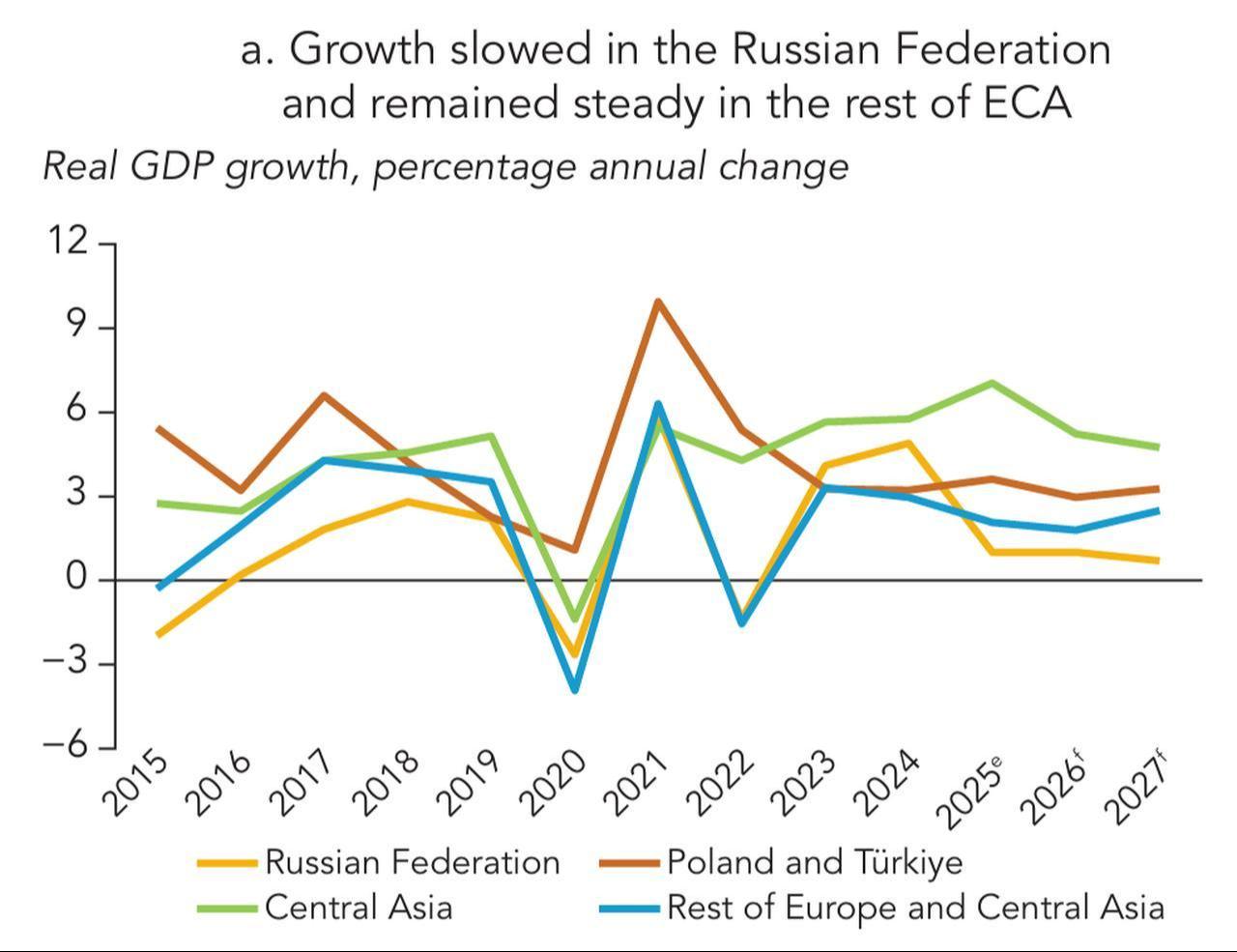

Türkiye’s downgrade comes against a broader cooling across Europe and Central Asia, where growth is expected to weaken as external pressures intensify. Regional growth is projected to slow to around 2.1% in 2026, down from 2.6% in 2025, with spillover risks from Russia’s slowdown adding to regional headwinds.
The World Bank flagged the Middle East crisis as a key risk, warning that disruptions to global energy flows could push oil and gas prices higher, lift inflation, and further curb growth across the region.
Energy-importing economies—covering most countries in the region—face rising fiscal and external pressures, while uncertainty is expected to hold back investment and trade.


 Set as preferred source
 Set as preferred source


 1 min read

 1 min read