Newsletters


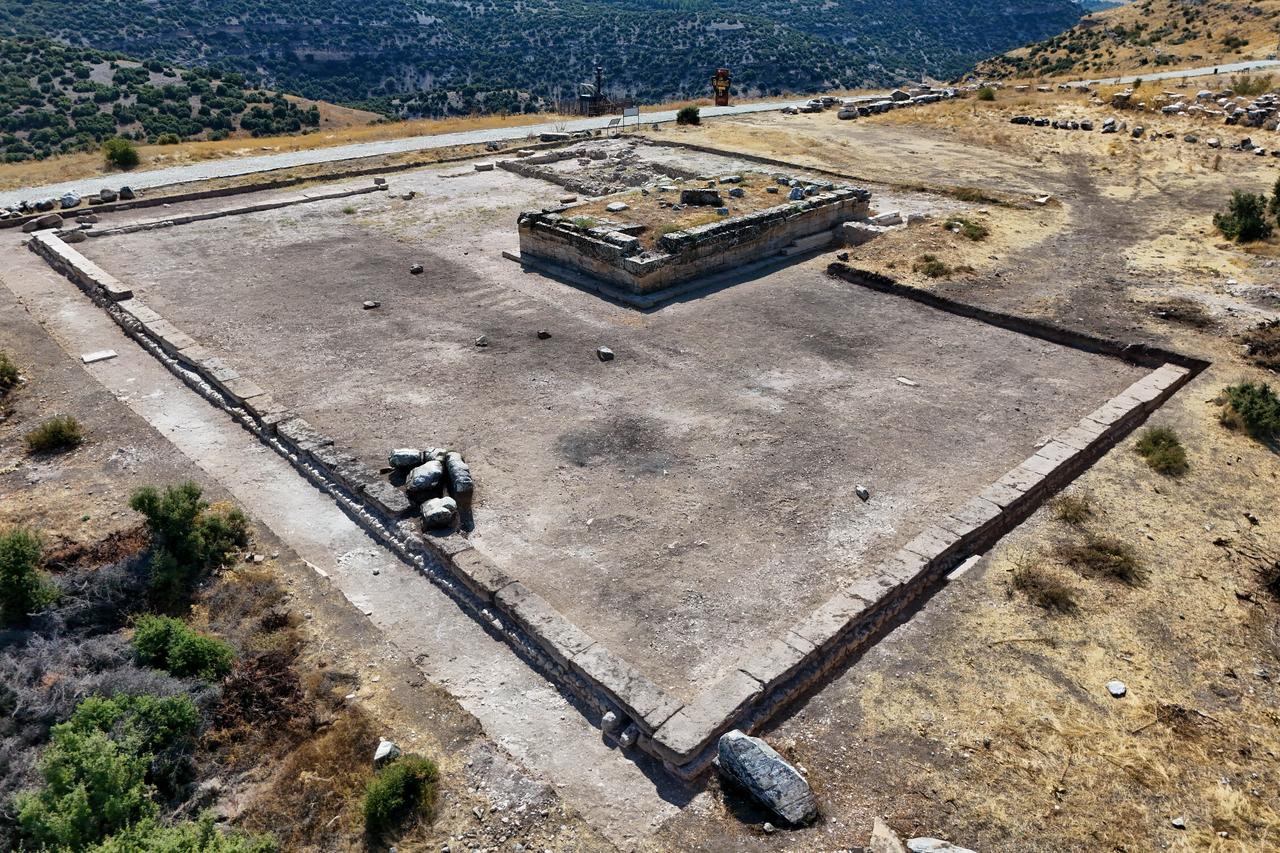
As water levels in Keban Dam Lake dropped near the town of Pertek in the eastern Turkish province of Tunceli, museum experts identified a large fragment of a stone grave chest, known in Turkish as a sanduka, on the eastern side of Pertek Fortress. Keban Dam Lake is an artificial reservoir created by a hydroelectric dam, and Pertek Fortress stands today on an island within this lake.
The find was made during a surface survey carried out by Tunceli Museum teams, who regularly go into the field to record and protect cultural assets. Officials explained that Tunceli has hosted many different civilizations over time and still preserves numerous castles, historic bridges, tombstones, mosques, churches and archaeological mounds, known locally as hoyuk, which are settlement mounds formed by long-term human occupation.
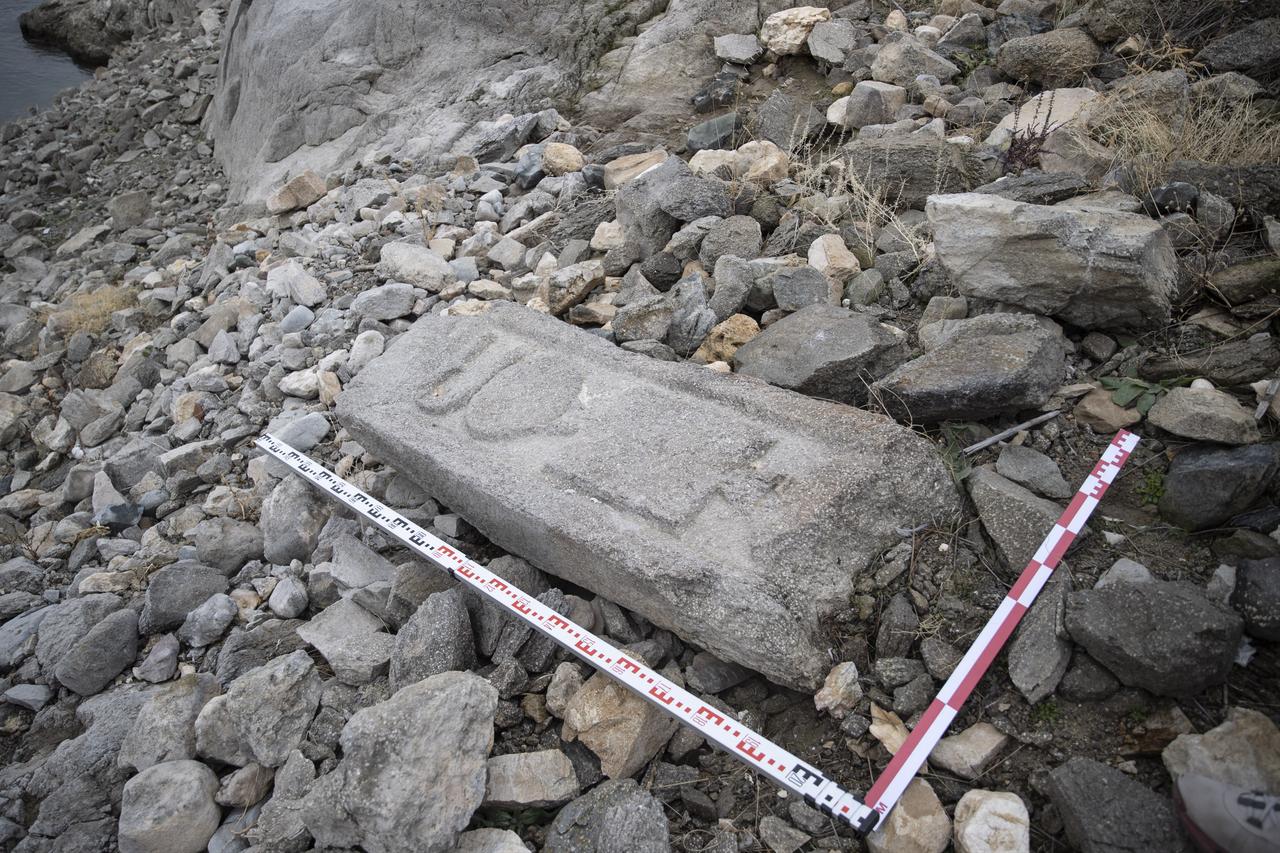

Once the grave chest fragment was identified, museum experts began to plan how to remove it safely from the fortress area. The piece, which weighs around 800 kilograms and measures roughly 2 meters in length and 1 meter in width, could not be moved by hand from the rocky shoreline of the island.
After preparations were completed, a crane was brought to Pertek Pier and loaded onto a ferry. Provincial Culture and Tourism Director Ismail Kaya, Tunceli Museum Director Kenan Oncel and archaeologists Ozgur Sahin and Koray Yilmaz then travelled by ferry for about half an hour to reach Pertek Fortress. Working together with the technical crew, they ensured that the heavy tomb element was lifted carefully with the crane and placed securely on the vessel for transport.
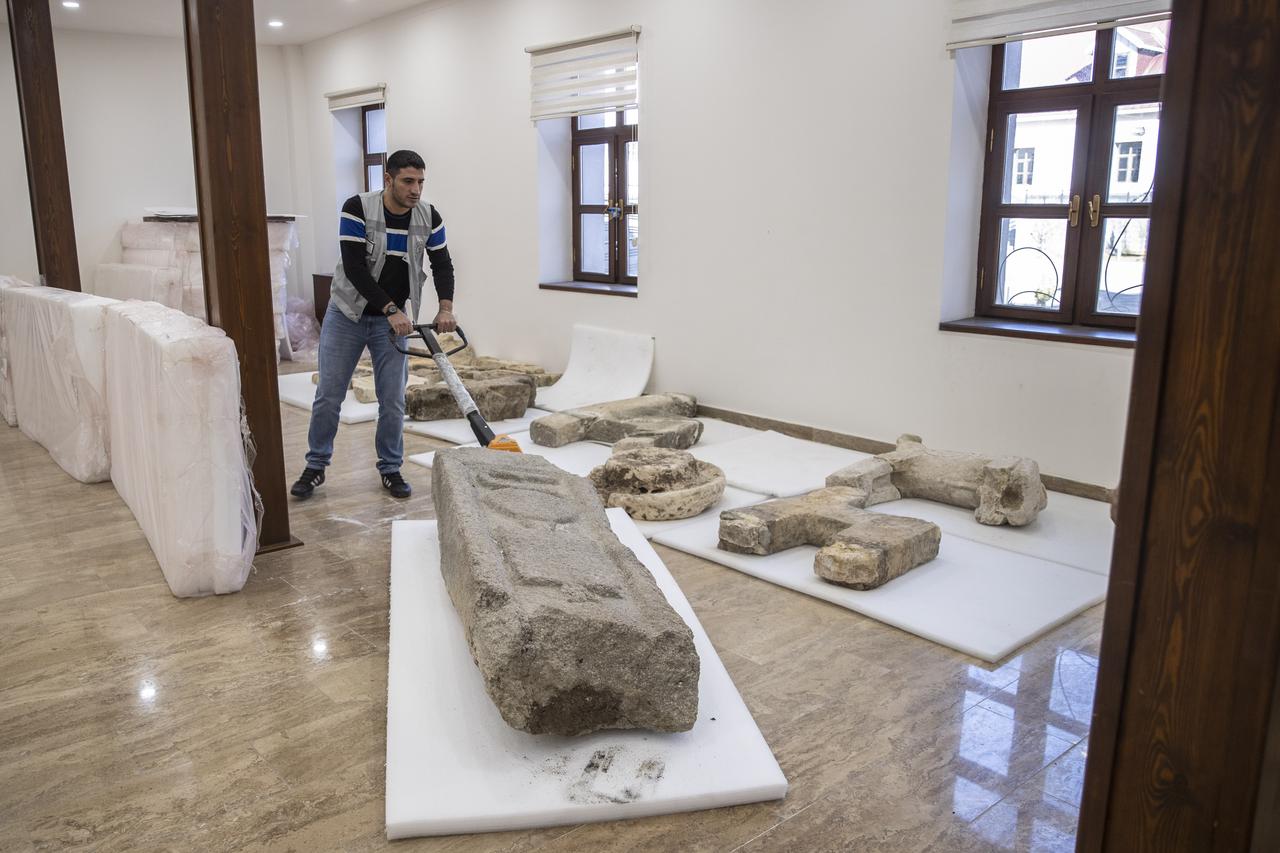
The stone fragment was taken to Tunceli Museum, where it is now under protection. Authorities stated that experts will carry out further work on the object and that, after these procedures are completed, it will be put on display in the museum’s garden so that visitors can see it at close range.
Director Ismail Kaya said that the team had carried out a very important operation together with museum staff when they recovered what is believed to be a fragment of a sanduka from Pertek Fortress after the waters of Keban Dam Lake receded. He noted that they had succeeded in bringing the cultural asset to the Tunceli Museum and adding it to the museum’s collection.
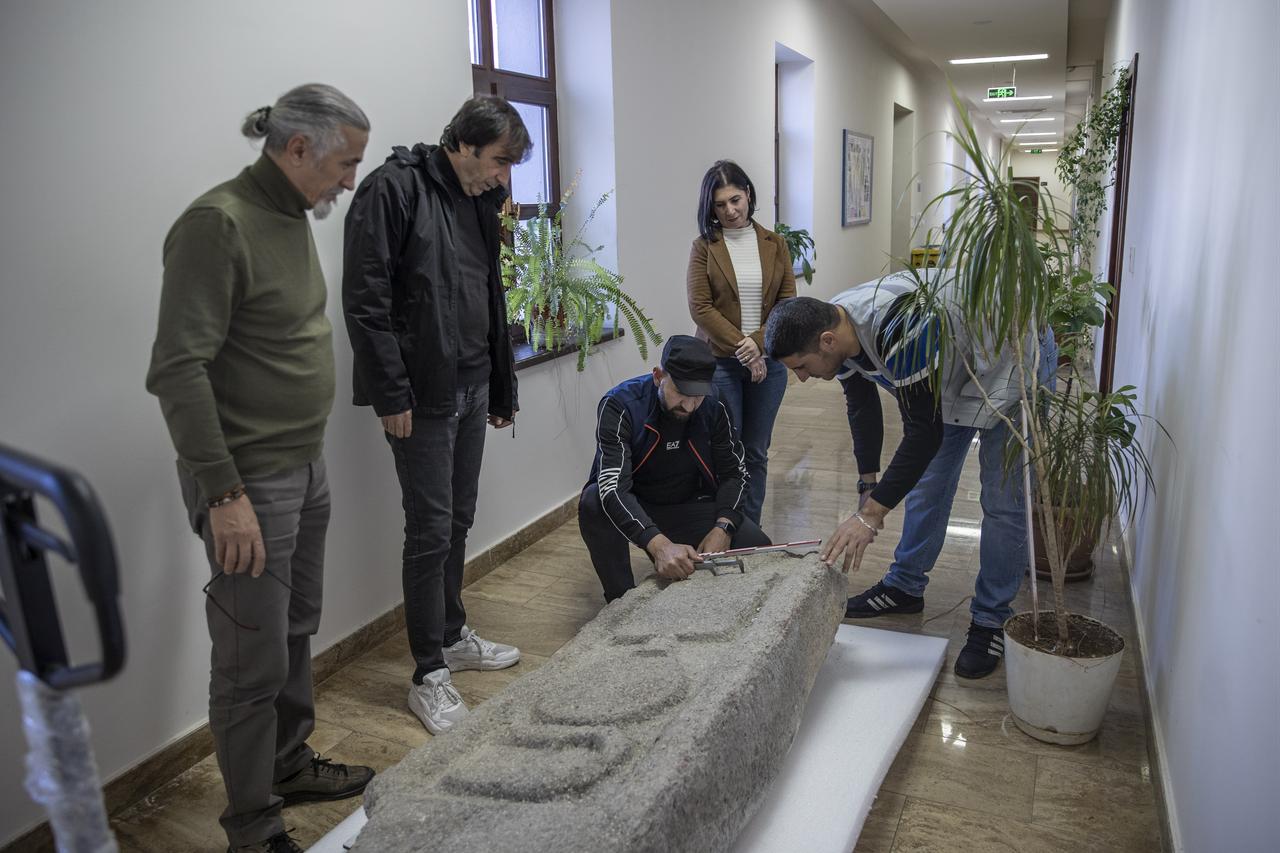
Kaya underlined that Tunceli has served as a home to many civilizations and that the authorities are trying to safeguard the city’s cultural and historical heritage. He pointed out that museum staff not only register some of these assets, but also open them to tourism where possible.
He also remarked that a demanding process had been necessary to transport the grave chest fragment from the fortress island to the museum. Looking ahead, Kaya said there are still many cultural assets in Tunceli that have yet to be discovered and documented. He added that they plan to increase the intensity of fieldwork as weather conditions improve and temperatures rise.


 Set as preferred source
 Set as preferred source


 1 min read
 1 min read