

 Newsletters


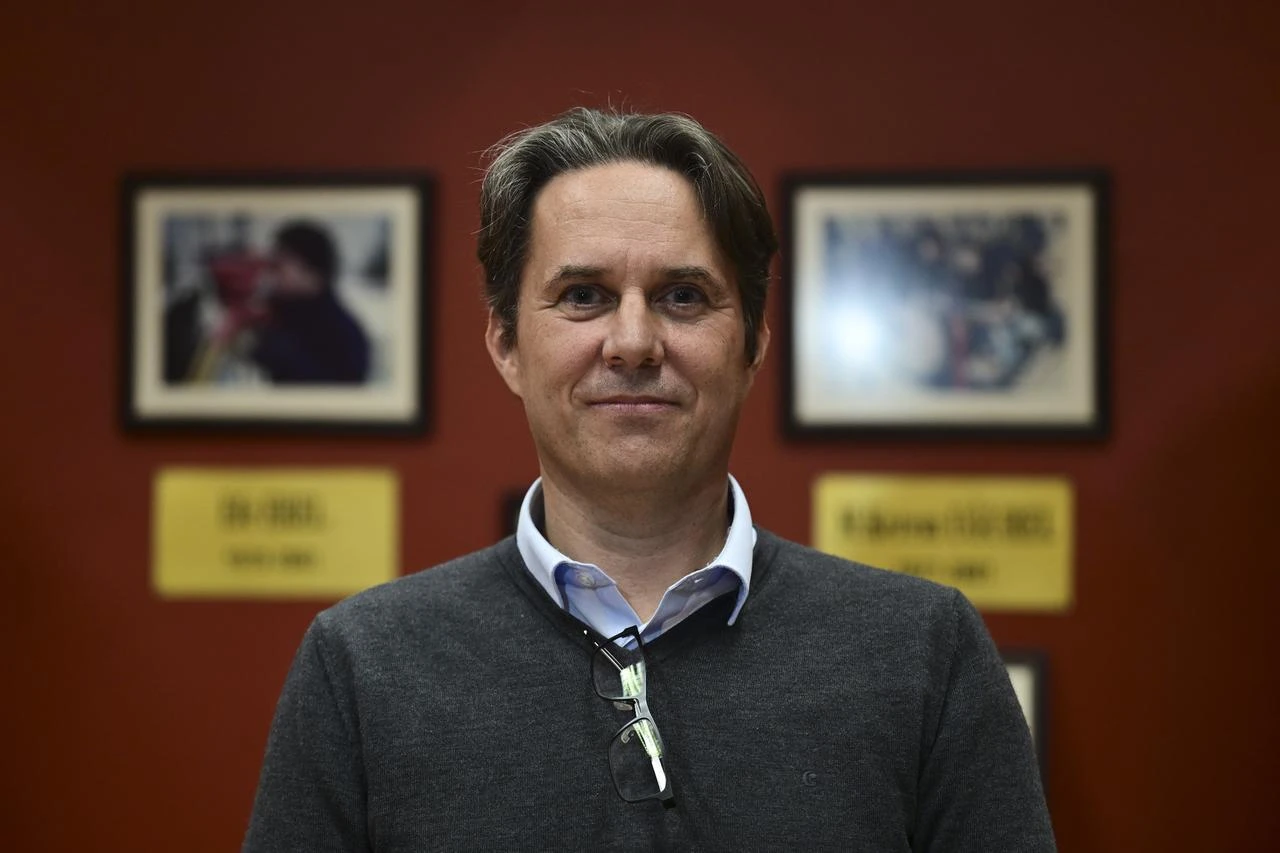


Belgian archaeologist Professor Peter Talloen, who first arrived in Türkiye as a university student in 1995 and went on to build his academic and family life in the country, has become a Turkish citizen after nearly three decades of work centered on Anatolian archaeology.
Talloen currently heads the excavations at Sagalassos, an ancient city in the southwestern province of Burdur, while also serving as head of the archaeology department at Bilkent University in Ankara.
Speaking about the decision, he said Turkish citizenship represented far more than a change in his official status.
"Our home is here. Our children were born here. They have Turkish names and go to Turkish schools. I work at a Turkish university, teach Turkish students, and carry out excavations in Türkiye. Almost our entire life takes place here. I can perhaps say that I am Turkish too," Talloen said.
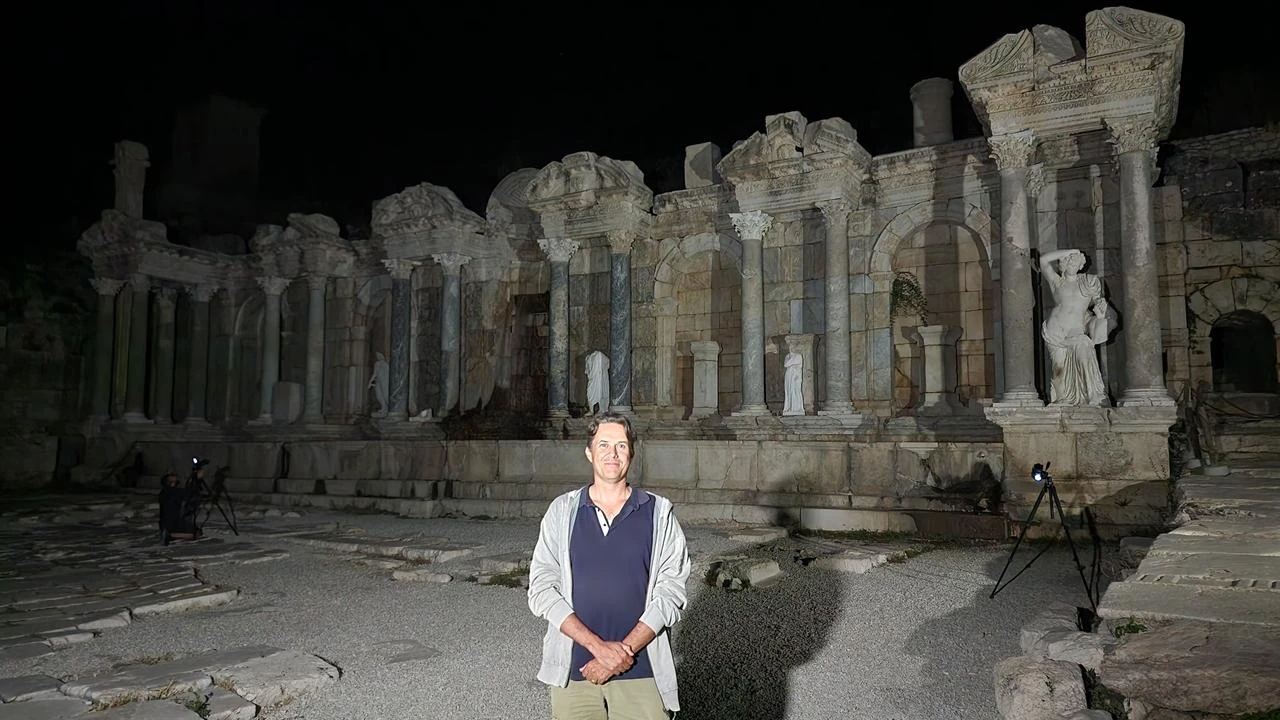

Born in Bruges, Belgium, Talloen first came across Türkiye while studying classical archaeology at Leuven University. His professor, Marc Waelkens, was leading the excavations at Sagalassos and brought him into the project.
Talloen arrived in Türkiye as an undergraduate student in 1995, and his growing interest in Sagalassos gradually shaped the direction of his academic career.
He focused on the ancient cities of Anatolia throughout his undergraduate, graduate and doctoral studies before carrying on with Türkiye-based research during his postdoctoral career.
Over the years, he worked at the British Institute at Ankara, Koc University's Research Center for Anatolian Civilizations, and Suleyman Demirel University in Isparta. After returning to Belgium for professional reasons, he moved back to Türkiye in 2023 to take up his position at Bilkent University.
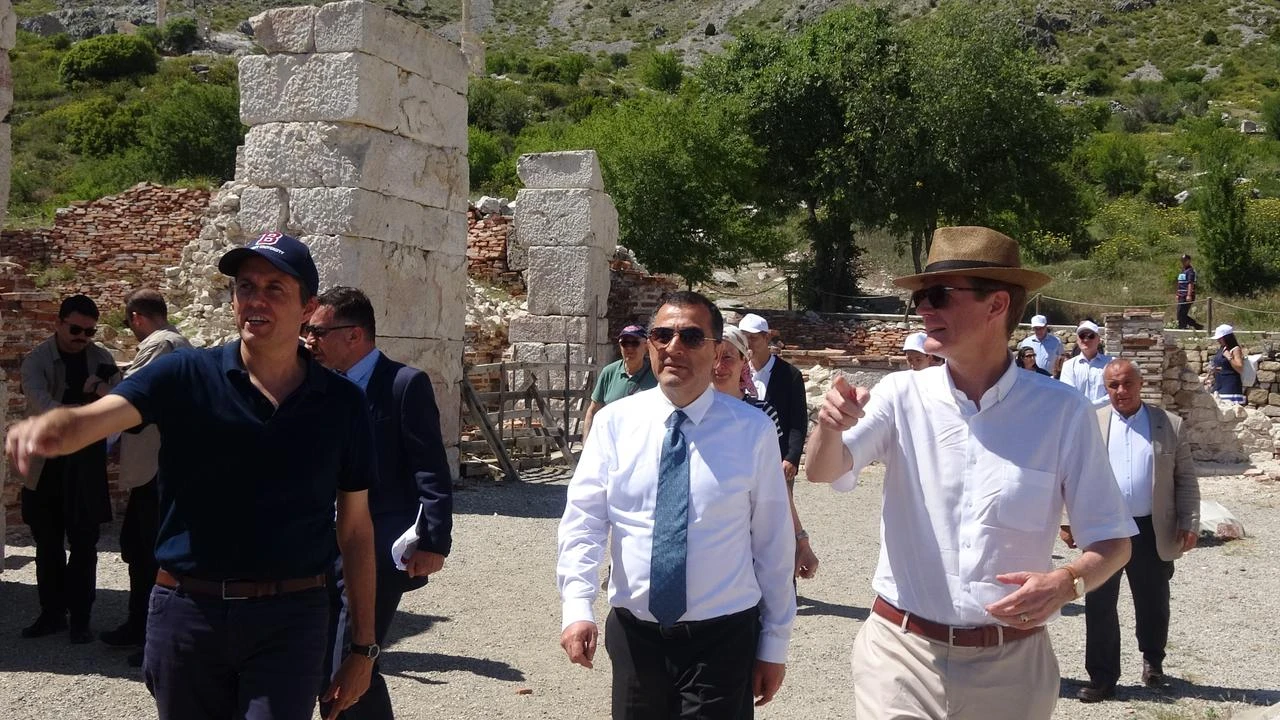
Talloen, who is married to a Turkish archaeologist, said learning Turkish became a priority after he settled in the country.
He explained that anyone working in another country should make an effort to learn its language. Although he still makes mistakes, he said he continues to speak Turkish whenever possible.
His citizenship application was pushed back for several years because of legal arrangements in Belgium and later the COVID-19 pandemic. After completing the required procedures, he received Turkish citizenship in September.
Talloen also pointed to the strong sense of patriotism he had encountered in Türkiye. Referring to the Istiklal Marsi, Türkiye's national anthem, he said he had not memorized it completely but knew it better than Belgium's anthem.
For Talloen, Türkiye's cultural and archaeological richness remains one of the country's most striking qualities.
He said the concentration of ancient monuments across Anatolia allows archaeology students to see many of the buildings discussed in their classes directly at excavation sites.
"In almost every ancient city in Türkiye, you can see a theater, a bath and monumental structures. There are very few places in the world with such a dense cultural heritage," he said.
Talloen also highlighted Turkish cuisine and the opportunity to come across different regional cultures and culinary traditions while traveling around the country.
 1 min read
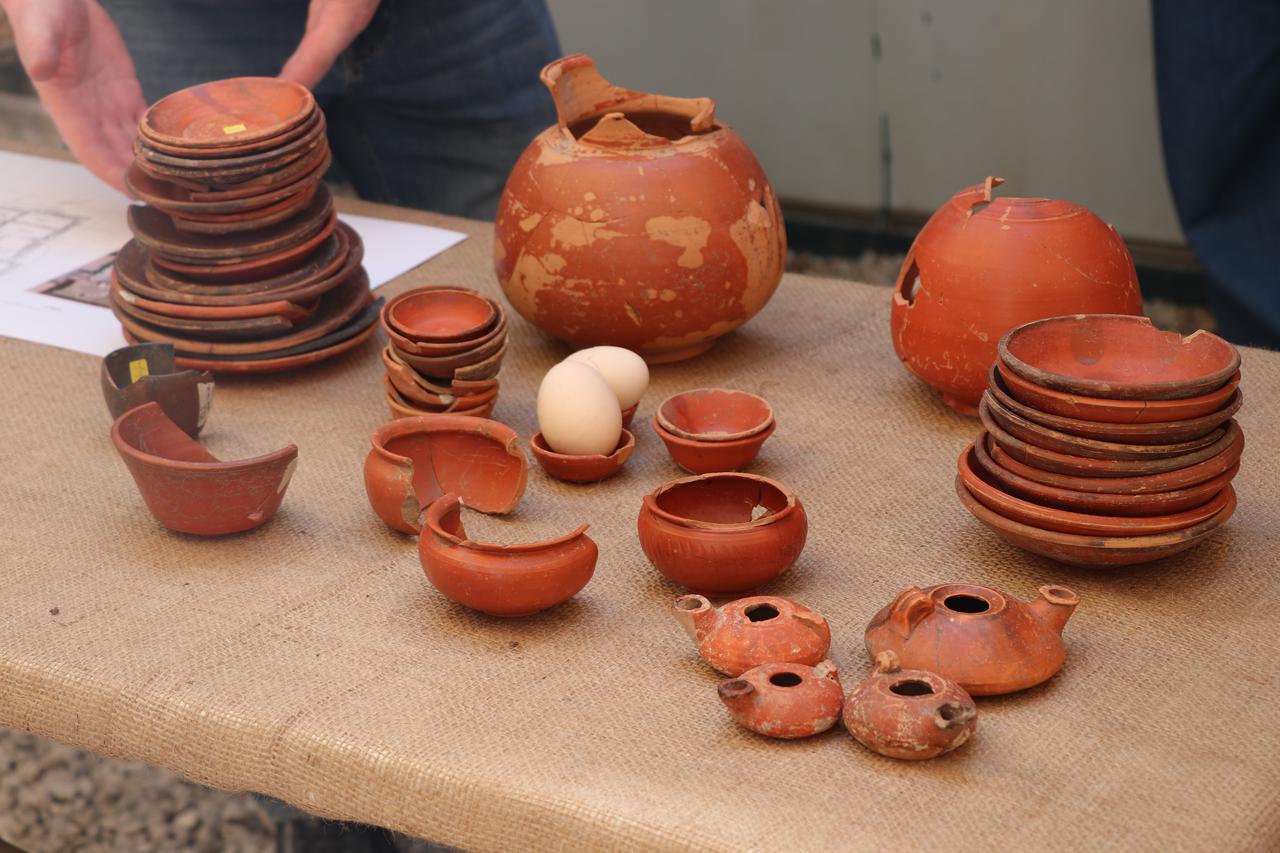
Recent excavations at Sagalassos have turned up findings that reveal how cultural influences moved across the Roman Empire.
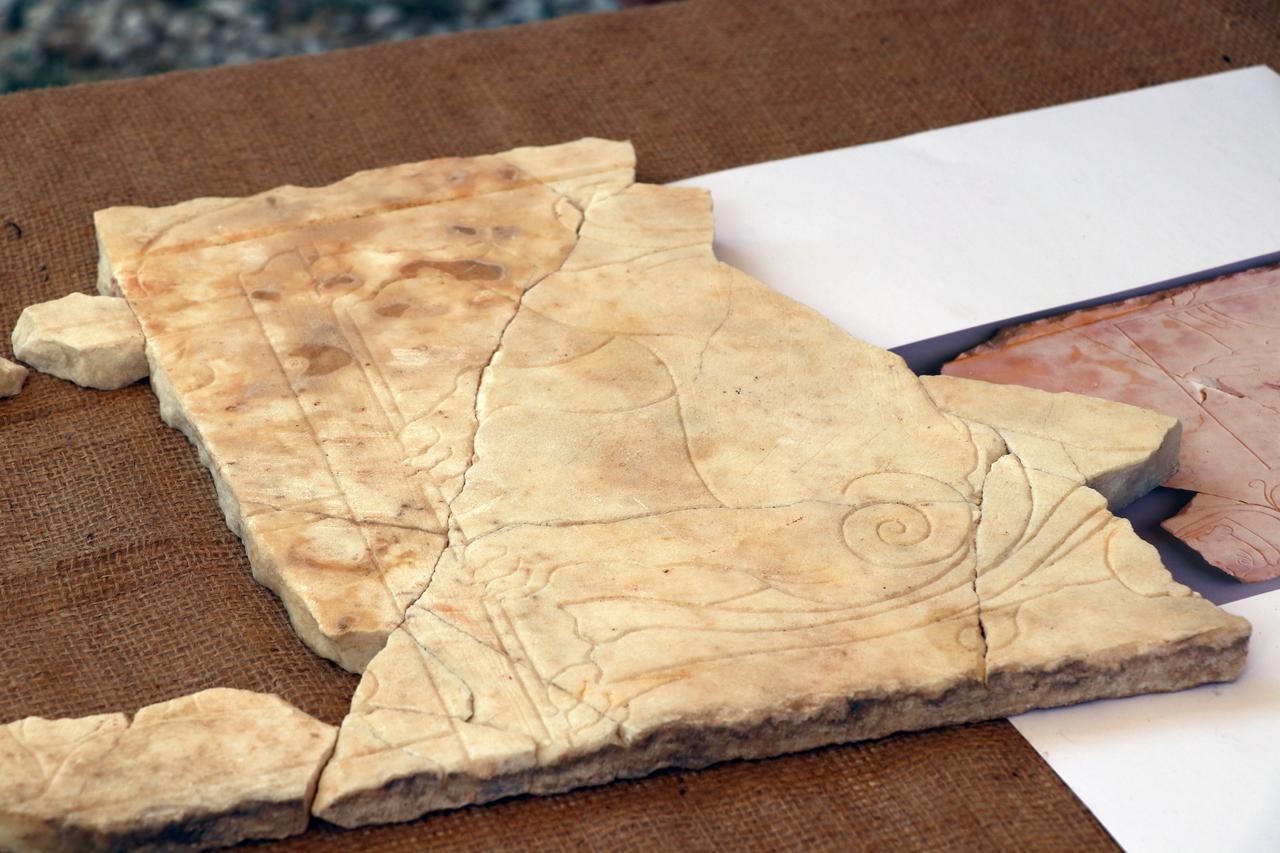
Talloen said archaeologists uncovered Egyptian-themed reliefs made from marble brought from Afyon. Although local craftspeople produced the works, the carvings drew on Egyptian imagery.
The reliefs feature figures including the Sphinx and Sobek, the crocodile-headed Egyptian deity. According to Talloen, the discoveries demonstrate how artistic and religious ideas circulated between different regions under Roman rule.
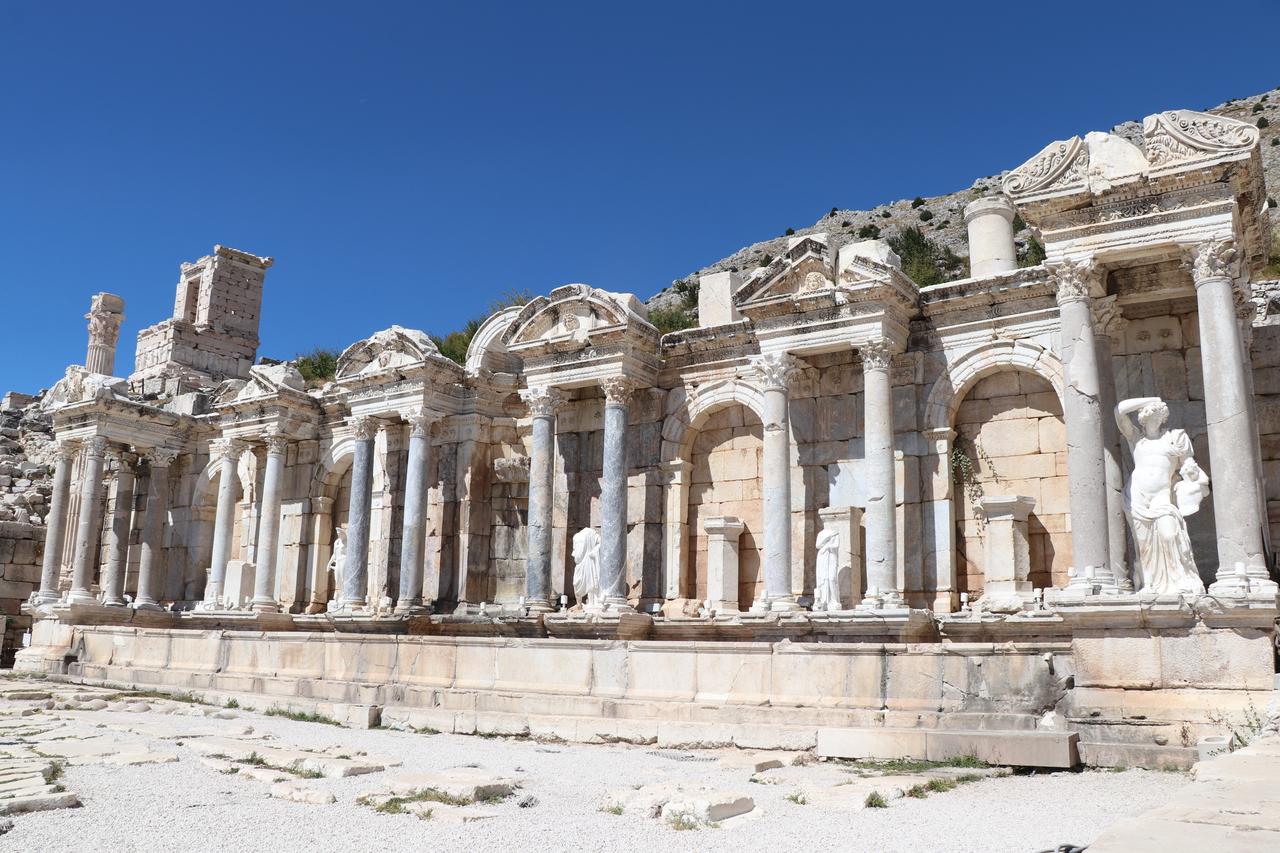
Excavations have recently centered on the ancient city's stadium complex, where archaeologists have brought to light two churches, a sacred fountain and a large religious complex dating to late antiquity.
Researchers believe the area may have served as a regional pilgrimage center. Special ceramic bottles found during the excavations were likely produced to carry sacred water away from the site.
The excavation team now plans to fully uncover the fountain and put its surviving architectural blocks back together.
"All of the structure's blocks are there. We want to raise it again like Lego. If possible, we aim to bring the water back and make the sacred water flow again," Talloen said.
The team also hopes to locate the tomb of a saint within the complex. Talloen said the work in the area is expected to be completed within approximately five years.


 Set as preferred source
 Set as preferred source


 1 min read


