Sign in
 Newsletters


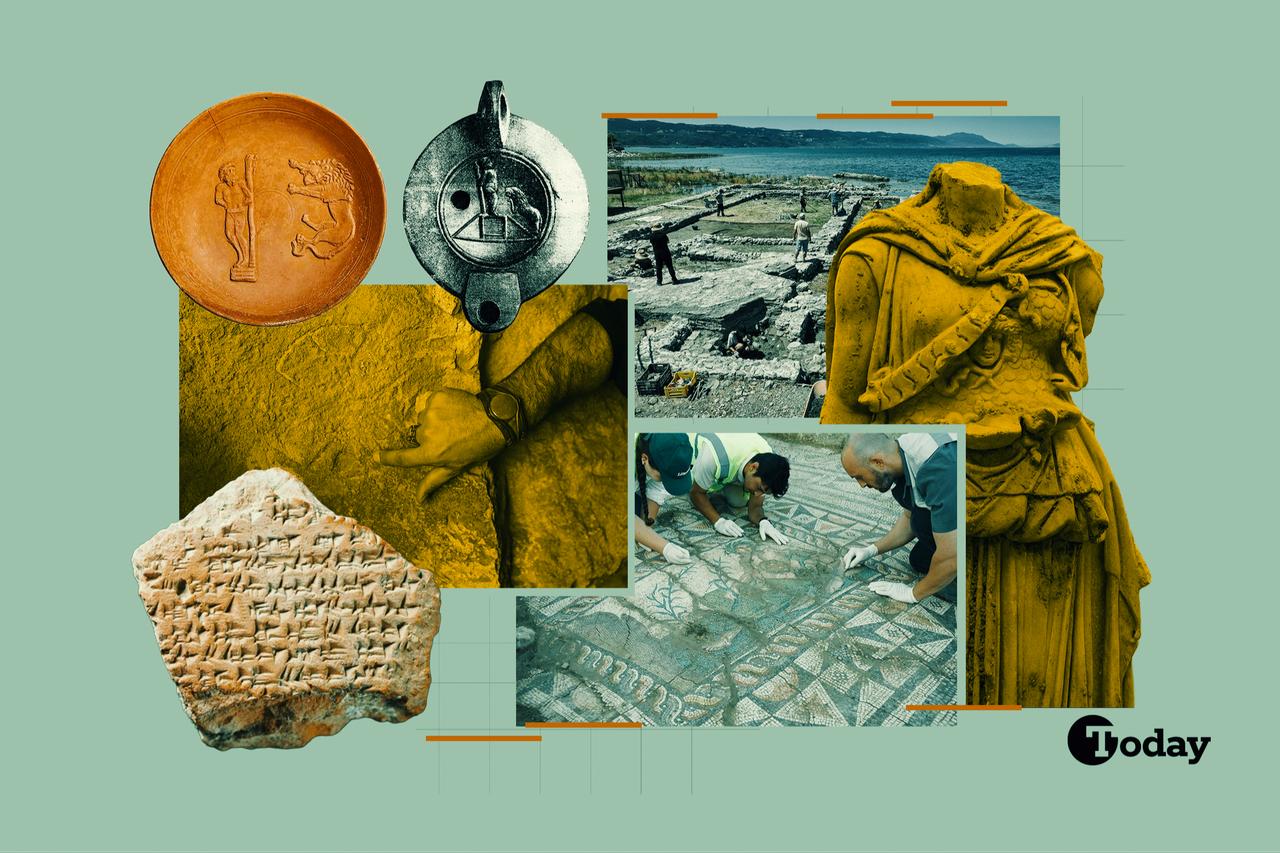


Türkiye's soil has a habit of answering questions nobody asked.
This year it produced a Roman execution arena, a goddess missing her head, a fragment of a peace treaty written on clay, and a road that had been hiding under one of the world's most famous buildings.
Here are 10 finds that corrected, complicated, or simply enlarged the story of Anatolia, the Asian part of Türkiye.
At Perge, in the south, archaeologists found that part of the Roman-era stadium was converted in the late third or fourth century A.D. into an arena for spectacles and executions. These included damnatio ad bestias, the Roman punishment of condemning people to wild animals. The team found an elliptical arena, animal holding cells (known as carceres), vaulted corridors, tethering holes, and base blocks tied to individual executions.
A five-door setup on the south side, with vertical gates in the style of a guillotine, worked as a coordinated release mechanism. The findings were published in two articles in the Oxford Journal of Archaeology.
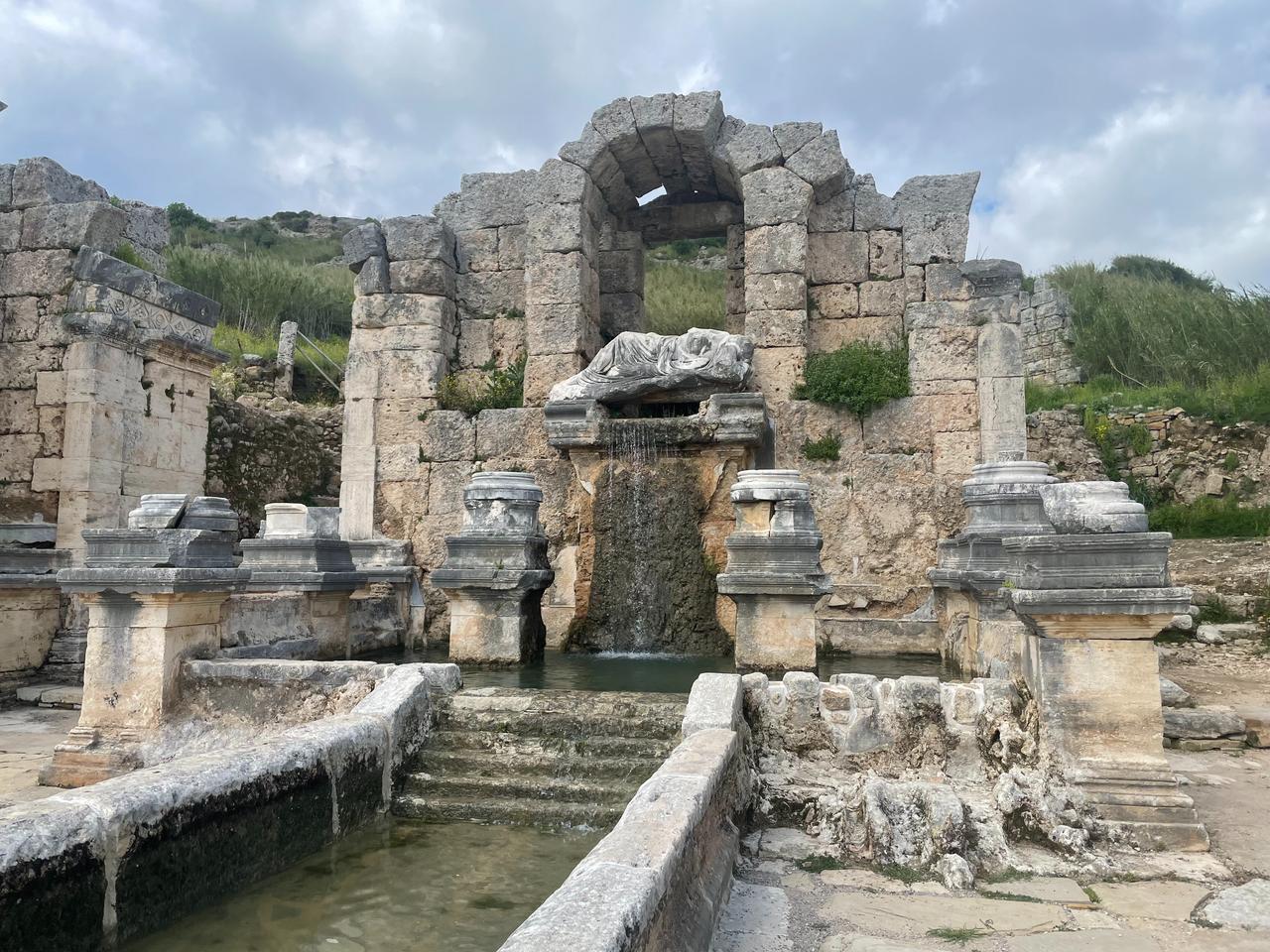
Perge also had better news. The ancient Kestros fountain, built in the second century A.D., probably under Emperor Hadrian, and fed from Kursunlu Waterfall, was tested with a municipal tanker and now flows again into nearby farmland after about 1,800 years. Few modern plumbing projects can promise that.

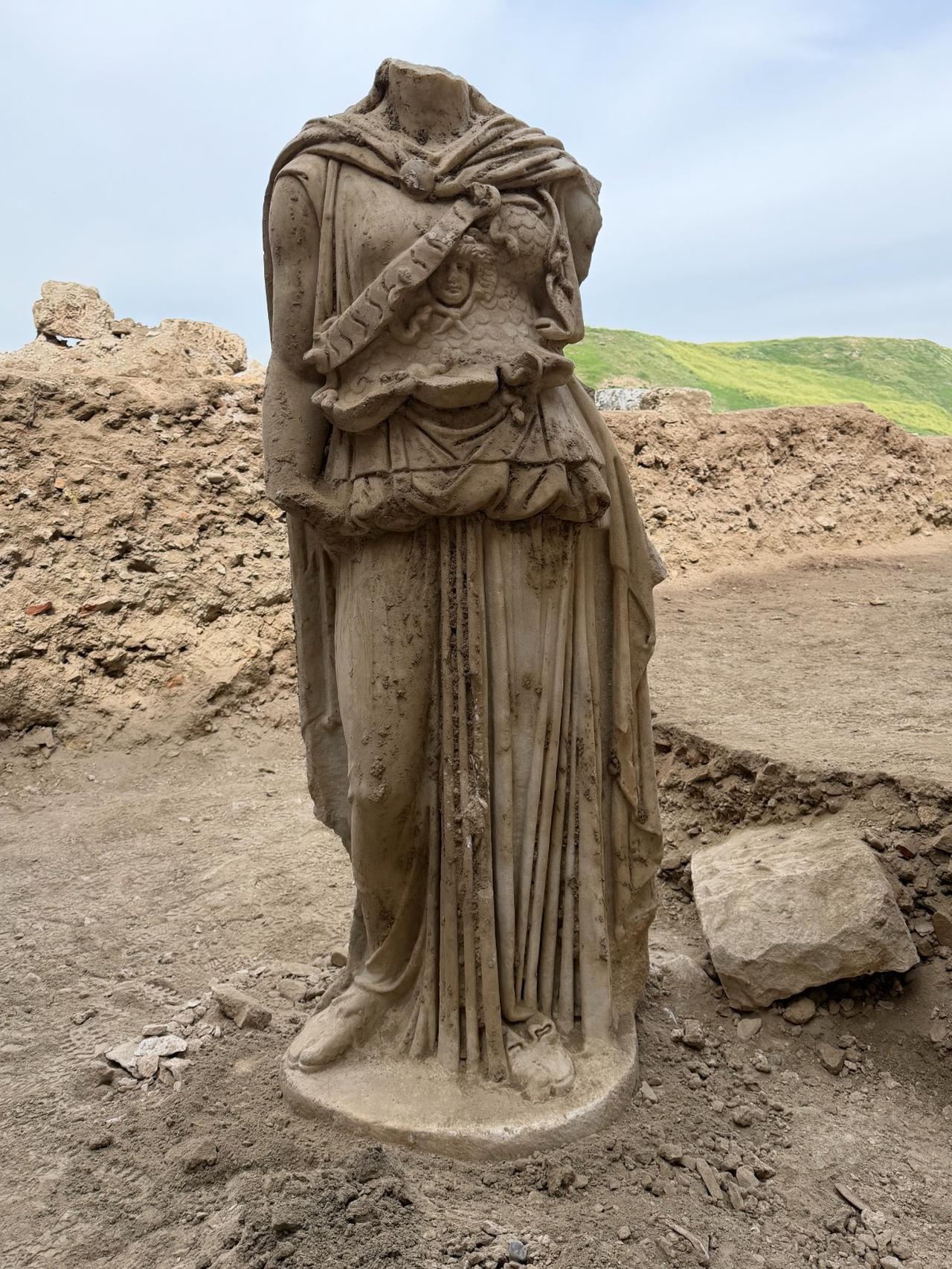
At Laodicea, in the southwest, archaeologists uncovered a roughly 2-meter-tall white marble statue of Athena at the West Theater. It was found headless and face down in rubble near the outer wall of the stage building, though the marble body is well preserved.
The statue dates to the reign of Emperor Augustus (27 B.C.–14 A.D.). Athena wears a sleeveless peplos (a long robe), a rare cloak called a hylamis, and an aegis, a protective garment, decorated with Medusa's head and snakes.
Because the figure stood between columns, the back was left rough while the front was carved in detail. Laodicea celebrated Athena not only as a warrior goddess but as the patron of weaving, the city's main industry.
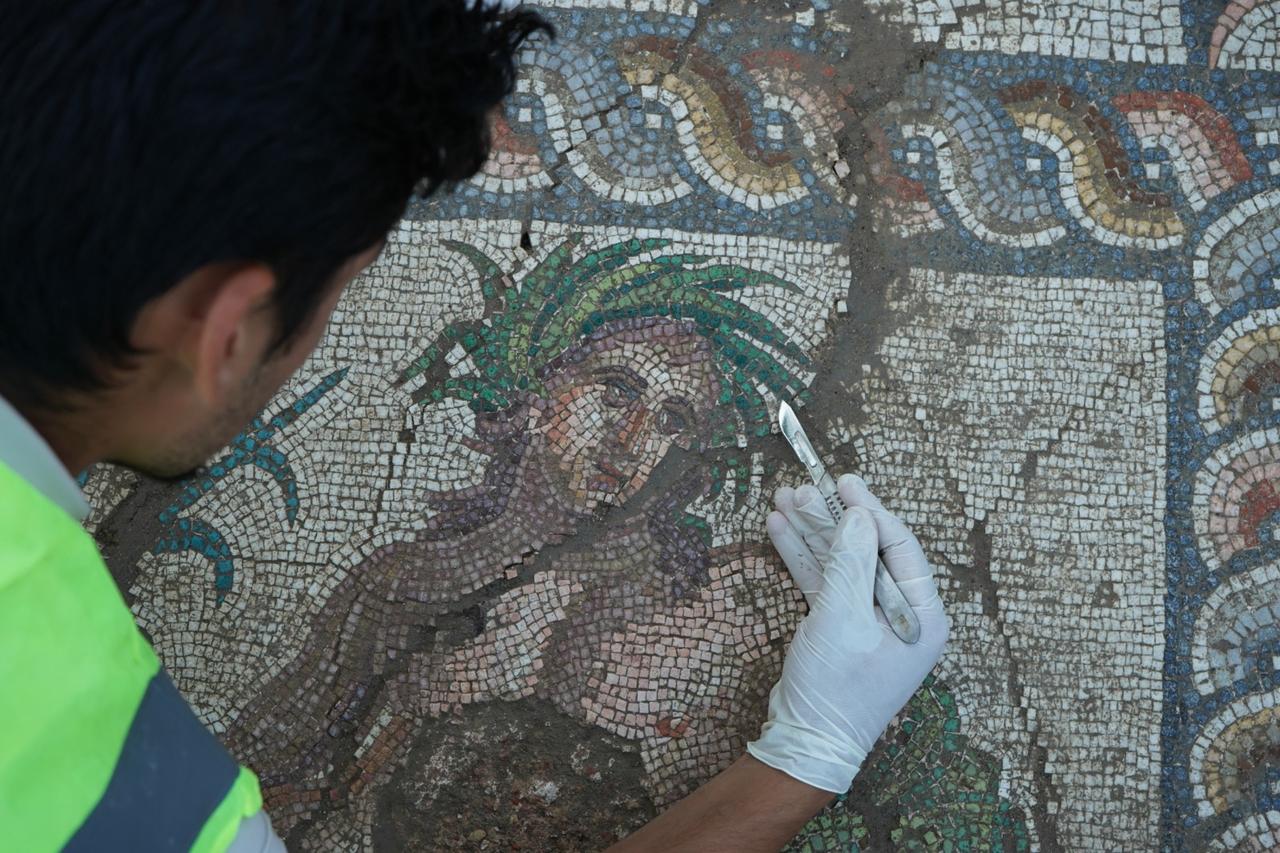
Aspendos offered a third-century A.D. mosaic, "Young Eurymedon," the river god of the Eurymedon River, crowned with reed leaves and leaning on a water-flowing amphora while fish swim in opposite directions.
It was found in a 6-by-25-meter structure that began as a pool and was divided by interior walls after the 262 A.D. earthquake. River god images are rare in Roman-period Anatolian mosaics, and the fine tesserae, the small tiles that make up a mosaic, drew praise from the culture minister.
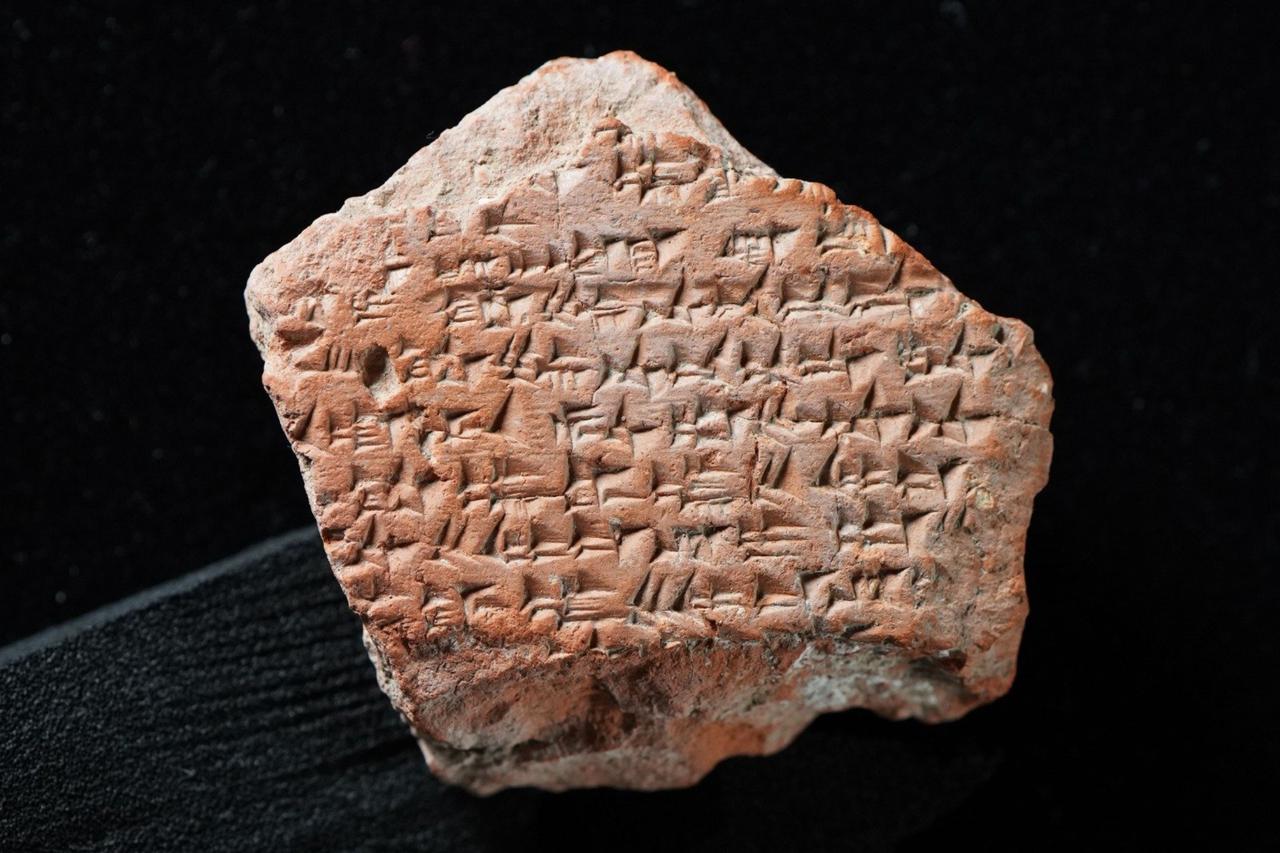
At Hattusa, the capital of the Hittite Empire in the central province of Corum, a cuneiform clay tablet fragment found near the "E" building at Buyukkale was confirmed as part of the Kadesh Peace Treaty after about a year of examination.
The treaty was agreed between Hittite King Hattusili III and Egyptian Pharaoh Ramses II. The fragment matches Articles 12 to 20 and describes how refugees crossing between Egypt and Hatti should be treated, including a rule that their homes must not be destroyed.
The announcement came on Sept. 21, World Peace Day. Earlier fragments found at Hattusa between 1906 and 1912 sit in museums in Istanbul, Ankara, Berlin and St. Petersburg, so the treaty remains a puzzle scattered across four cities.
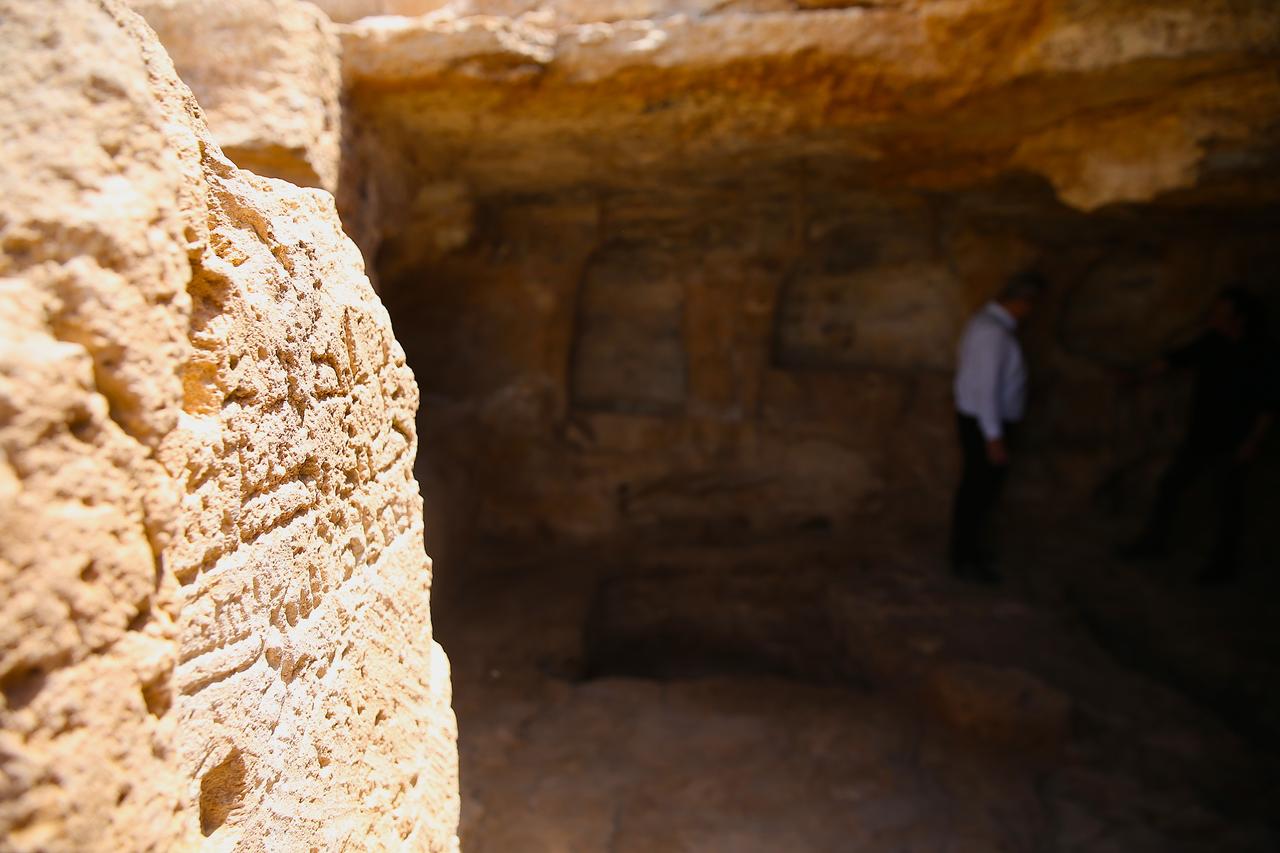
In Diyarbakir, exactly at Zerzevan Castle, a newly deciphered Old Aramaic inscription at the entrance of an underground Mithras Temple shows that early Christians symbolically sealed the sanctuary about 1,700 years ago.
The text dates to the third or fourth century A.D., carries an engraved cross, and refers to both Jesus and the "Invincible Sun God Mithras." It is the first known Old Aramaic record of a Mithras temple's closure.
The excavation director said it confirms earlier coin evidence and shows how Mithraism, once popular among Roman soldiers, was shut down or replaced after Roman emperors adopted Christianity.
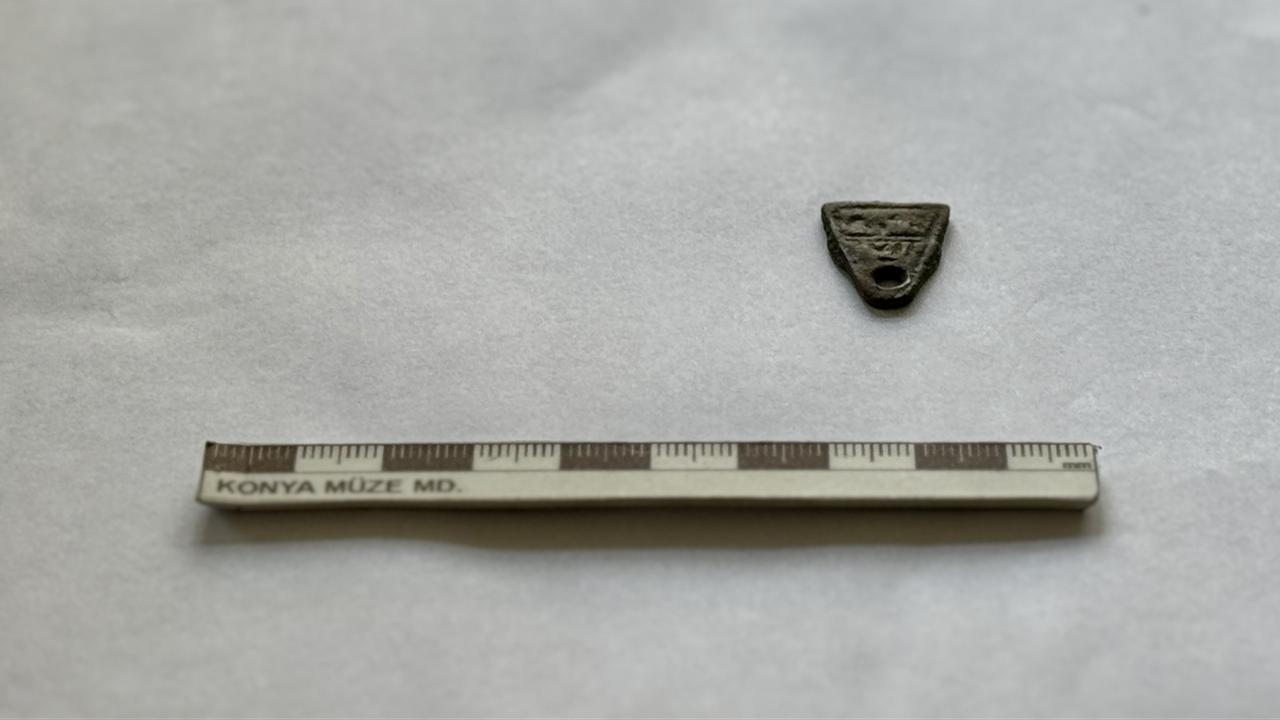
At Lystra in Konya, a triangular bronze Seljuk-era amulet was found next to a green-glazed inkwell. It carries two lines of reverse-oriented inscriptions on each side and is being restored so the text can be read.
Researchers interpret it as a protective talisman, which is rare in Anatolia, though similar charms were worn by soldiers and travelers in Central Asia. Nearly 80 Seljuk-era Christian graves around the main church also point to peaceful coexistence under Seljuk rule, and a 17th-century Austrian silver coin links the site to European trade.
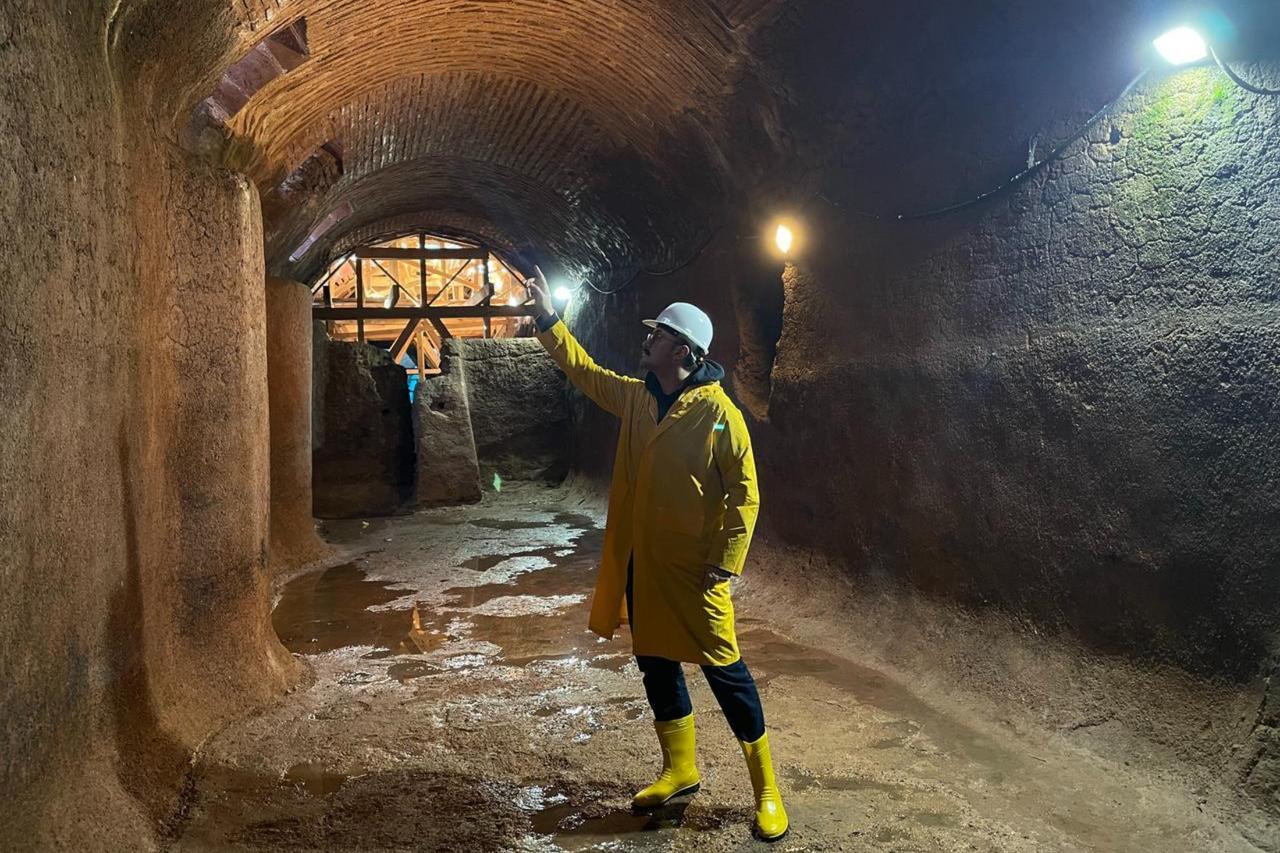
Beneath Hagia Sophia in Istanbul, teams uncovered a 180-meter section of Roman road dating to at least the early fifth century. It ran straight from Sarayburnu to Little Hagia Sophia, effectively splitting the historic peninsula in two and prompting a rethink of how the city developed.
Since early 2025, teams have removed roughly 3,000 tons of fill and cleared 600 meters of underground passages, revealing six chambers and nine interconnected tunnels, likely for drainage and water distribution. Officials are developing a plan to open suitable sections to visitors.
The ancient Nicaea, Iznik now, was discovered to be home to wall sections, floor paving and a column base beyond the basilica's eastern room. Archeologists confirm that the Church of Saint Neophytos, the small building where the First Council of Nicaea met in 325 before an earthquake destroyed it in 368, lies directly beneath the larger Church of the Holy Fathers, built around 380.
Finds also included a thimble and a gold ring with a palm tree and sword from the Umayyad or Abbasid era. The excavation is in its 11th year, and Italian researchers are studying eight graves in the central nave, a year after Pope Leo XIV visited Iznik on Nov. 28, 2025, for the council's 1,700th anniversary.
At Hattusa, a team found 16 large storage jars about 3,800 years old, from the Assyrian Trade Colonies period of 1800 to 1750 B.C. A landslide crushed the upper sections and filled the jars with debris, so researchers are now analyzing soil from the bottom to identify surviving seeds and learn what was stored. The pantry is still keeping its secrets.
At Karahantepe, a 12,000-year-old Neolithic site near Sanliurfa, laboratory analyses show that the earliest inhabitants mainly ate gazelle and relied heavily on legumes rather than grains.
That sets them apart from the nearby residents of Gobeklitepe, who ate a broader range of animals. Seven years of excavation have uncovered 6,000 square meters of the 12-hectare site, including more than 250 T-shaped pillars. A protective roof is nearly ready to go up.
So wash your hands and pull up a chair if you have an appetite for history and archeology: Türkiye's table runs from a Neolithic gazelle supper to a Roman road under Hagia Sophia, and the next course is still being dug up.


 Set as preferred source
 Set as preferred source



 3 min read