Newsletters


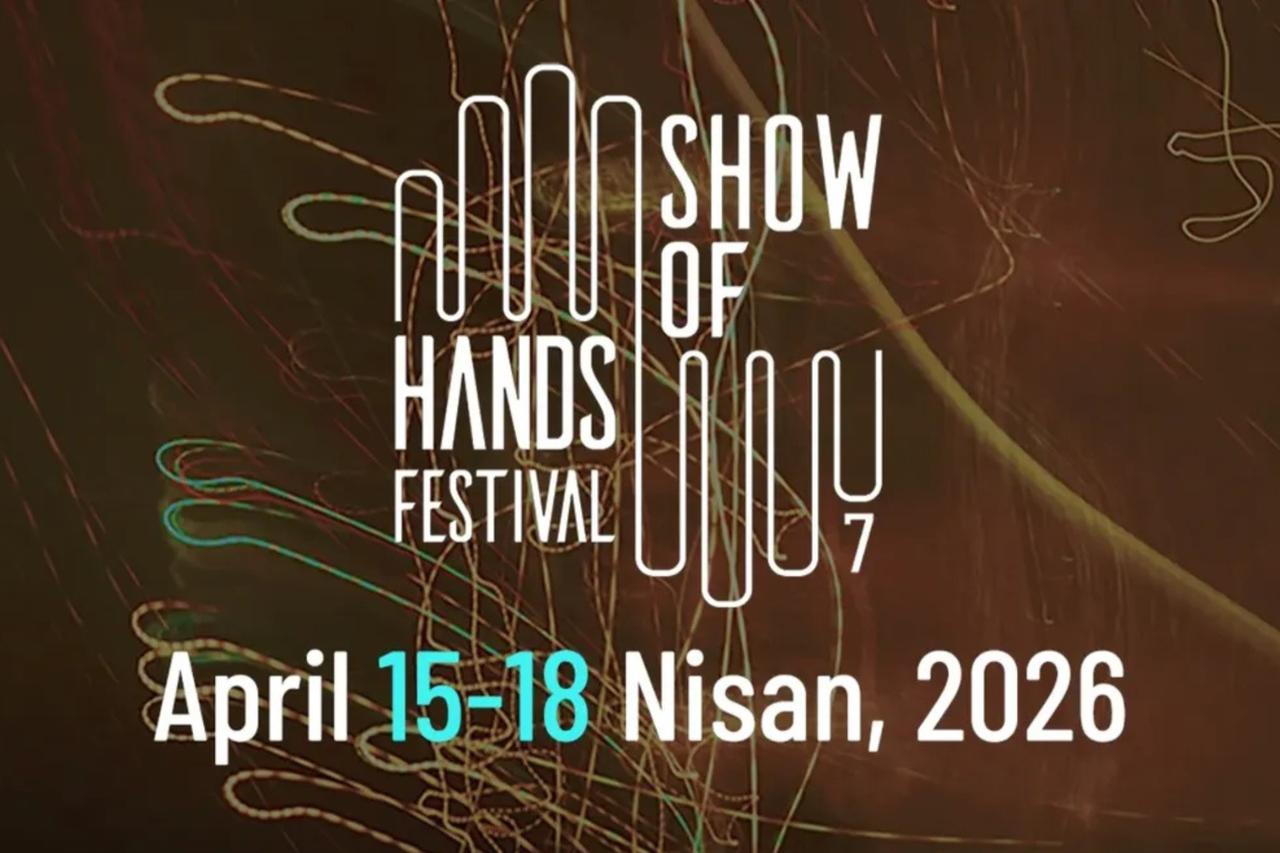


Istanbul prepares to host the seventh Show of Hands Music Festival between April 15 and 18.
Artists and music professionals from nine countries will perform at the Arter venue.
Hermes Records started the event in 2017. Arter previously hosted the festival three times and now serves as the official producer as Ramin Sadighi curates the four-day program.
Audiences often view improvised music as chaotic or highly abstract.
Ramin Sadighi rejects this perspective completely. "I do not see improvisation as a mystical thing or something detached from reality," Sadighi said to the Magger. He defines the practice as a standard composition format.
"The only difference is that the time between composing and performing has dropped to almost zero," he explains. Musicians face strict consequences on stage.
"There is no possibility to correct or go back," Sadighi adds. Performers must accept their mistakes and develop them in real time.
Musicians frequently bring their geographical and ethnic backgrounds to the microphone.
Simin Tander bridges Western jazz with her Afghan roots. Tander sings in the Pashto language to honor her late father.
"Working with my Afghan heritage has become an important part of who I feel I am," Tander says to ArtDog.
Tayis Yildizci plays electric guitar and represents the Armenian musical heritage of Istanbul through her alternative group Vomank. "Everything we do specific to that project is a cultural heritage," Yildizci says.
The music industry still struggles with severe gender biases.
Selen Gulun compiled the book "Women and Music in Türkiye."
She dismisses the necessity of highlighting gender in musical performance. Gulun notes that children often cannot distinguish between male and female composers.
"There is absolutely no difference," Gulun asserts regarding the artistic output of different genders. She actively fights stereotypical expectations during her performances.
"I live by ignoring the expectation to be someone who plays the piano sweetly on stage as a woman or to have soft expressions in my music," she states.
The festival features several English-language panels at the Sevgi Gonul Auditorium.
These sessions interrogate modern music consumption trends. Sadighi observes that shrinking attention spans and algorithmic choices manipulate how listeners interact with sound.
The program breaks down these complex issues into focused discussions:
Festival organizers want attendees to seek lasting meaning rather than constant novelty. "My wish for the festival is this: that the audience returns for a familiar but profound experience that resonates again and again," Sadighi concludes.


 Set as preferred source
 Set as preferred source



 2 min read