

 Newsletters


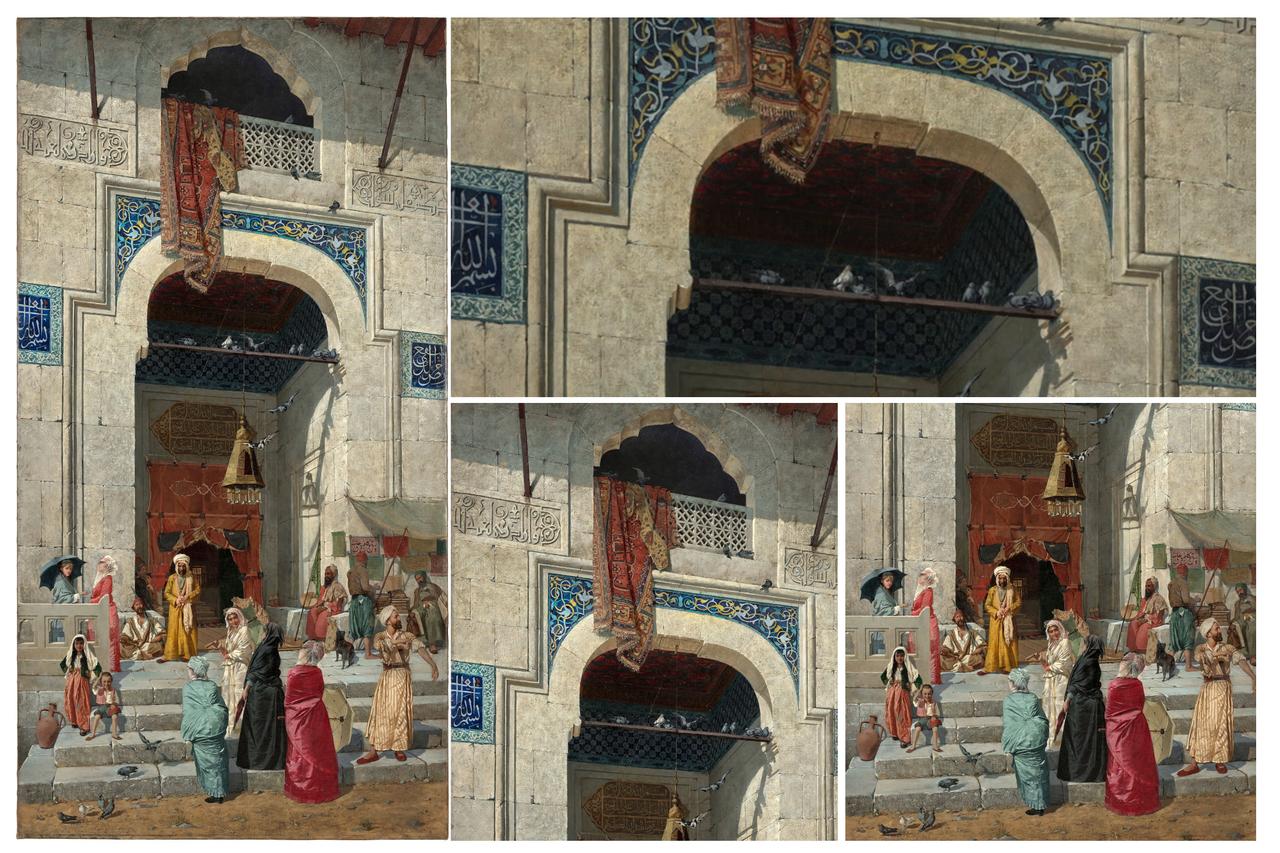


Osman Hamdi Bey's "At the Mosque Door" will go on sale for the first time since it was bought directly from the artist in 1895, with Bonhams set to offer the painting in London on March 25. Estimated at £2 million (over $2.6 million) to £3 million (over $4 million), the work stands out not only for its scale but also for its place in the painter's career and in late Ottoman art.
Measuring 208 by 109 centimeters, the canvas is among the artist's major works and is described by Bonhams as one of his first paintings on such monumental dimensions. The sale also marks the first time the picture has returned to the market since it entered the collection of the University of Pennsylvania in the late 19th century.
According to Bonhams, the painting is a major example of Osman Hamdi Bey's ability to blend a contemporary street scene with architectural features drawn from a 15th-century Ottoman mosque. The setting has been identified as the main entrance of the Muradiye Mosque in Bursa, and the artist is known to have painted the same location in four other works.
Although the site is real, the composition is presented as a carefully assembled scene rather than a direct record of daily life. Bonhams points out that the artist built up the image almost like a collage, enlarging the doorway, adding steps and bringing in familiar Orientalist elements. In this context, "Orientalist" refers to a style of art popular in Europe that portrayed scenes from the Ottoman world and the wider Middle East for Western audiences.
The figures in the painting also add to that constructed effect. Women wearing feraces - loose overcoats worn by Muslim women outside the home in Ottoman cities - place the scene in a contemporary rather than historical setting. One of the books shown appears to be a Quran, while another bears the word Kamus, a term generally linked to the well-known Arabic dictionary of Firuzabadi. Bonhams also notes that the artist hid his own name in Arabic script on one of the books as a "secret signature."
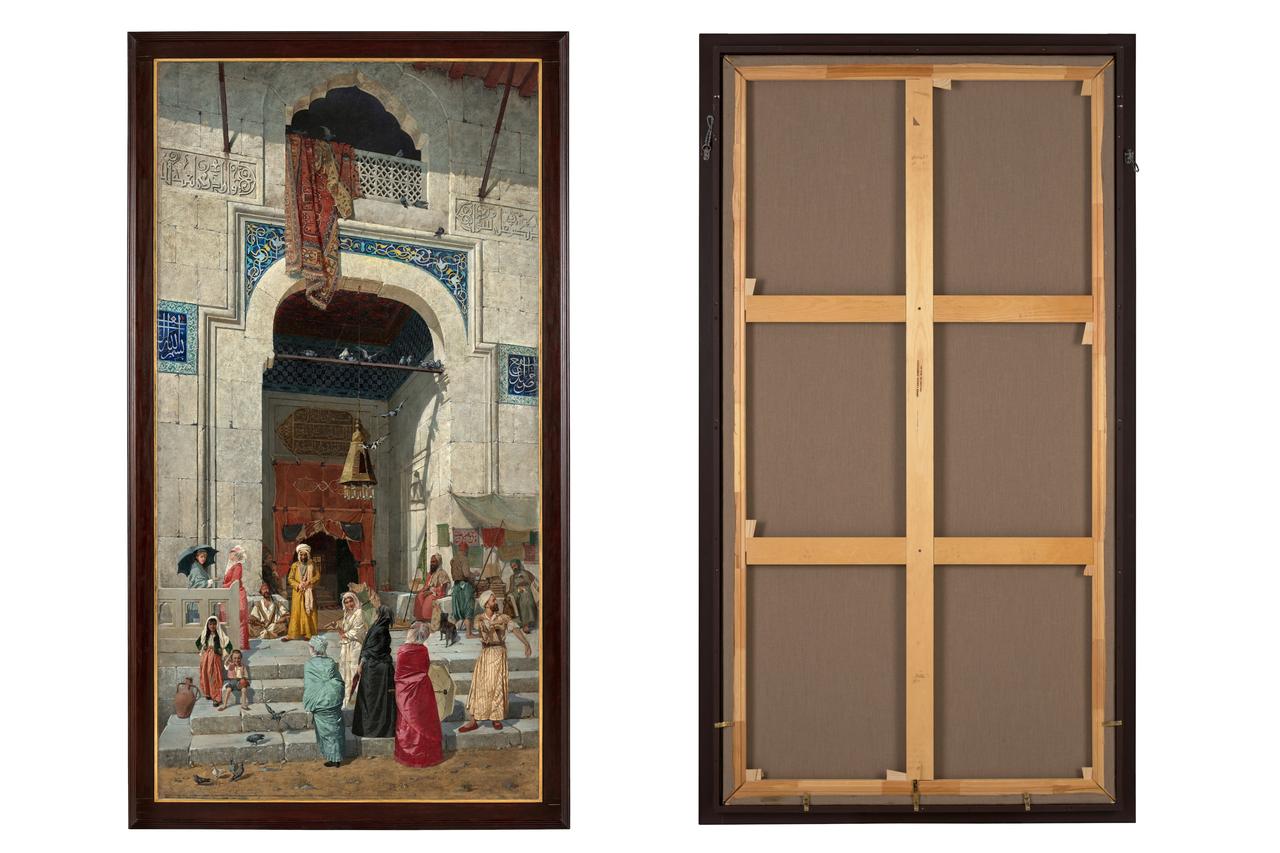

Bonhams describes the work as unusually personal in another way, saying Osman Hamdi Bey appears in the painting not once but three times. From left to right, he is said to be represented as a cross-legged beggar, a turbaned standing man and a man in the foreground rolling up his sleeve.
That layered self-insertion fits into a broader reading of the painting as a turning point in his work. Bonhams suggests the canvas can be seen as a move away from the artist's softer harem scenes toward a different version of Orientalism, one shaped by stronger attention to Ottoman heritage, especially through architecture and decorative detail, while still being made for a Western audience.
Born in 1842, Osman Hamdi Bey received informal artistic training in Paris, where he worked under the influence of Gustave Boulanger and Jean-Leon Gerome. He later emerged as one of the first Ottoman painters to bridge the artistic worlds of Türkiye and France, with works that often took up subjects that had already found success in Europe.
After returning to Türkiye in 1868, he entered government service and was posted to Baghdad before coming back to Istanbul in 1871, where he continued to paint. In 1881, he was appointed head of the newly formed Archaeology Museum in Istanbul. Bonhams says that, with the 1884 bylaw banning the export of finds, he effectively secured state control over antiquities, strengthening both his museum and his own standing among foreign archaeologists and governments active in the Ottoman lands.
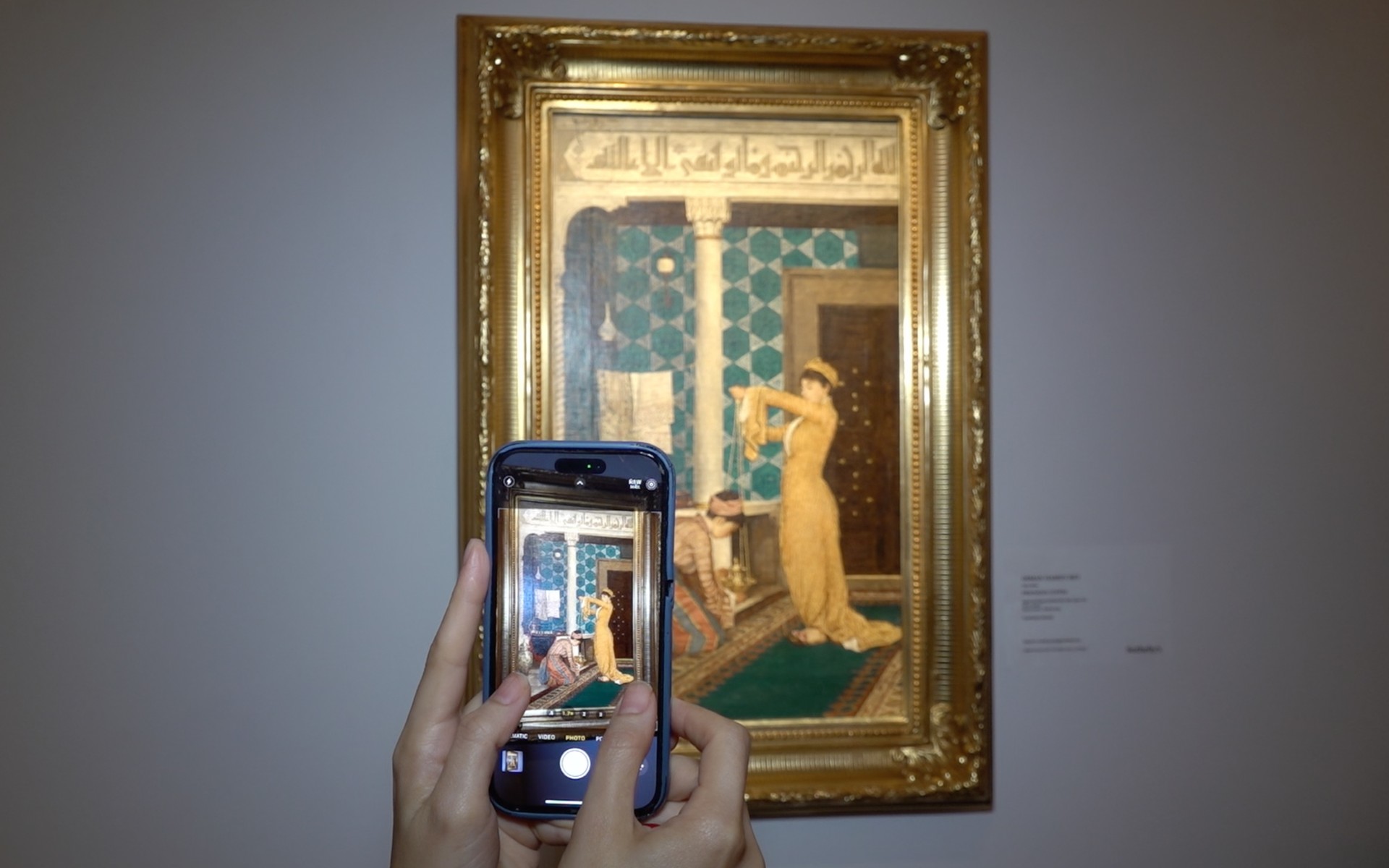
The upcoming sale arrives several years after Bonhams set a world auction record for the artist. In 2019, the house sold Young Woman Reading for £6.6 million (over $8.8 million), the highest price achieved for an Osman Hamdi Bey work at auction.
With At the Mosque Door returning to the market after 131 years, the London sale brings back into view a painting that Bonhams presents as central to understanding both the artist's career and the Ottoman version of Orientalist art.


 Set as preferred source
 Set as preferred source


 1 min read
 1 min read


