Newsletters


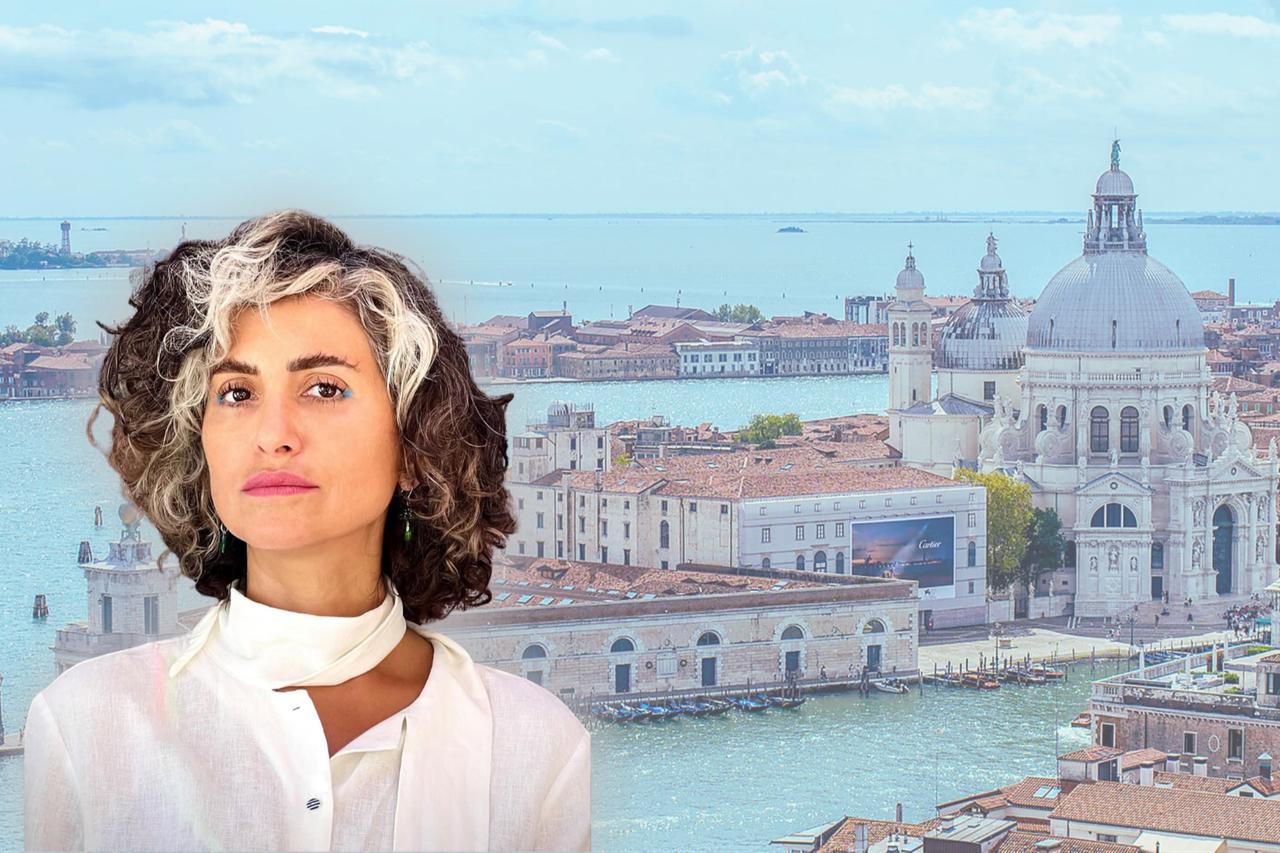


As the 61st Venice Biennale opens its doors, the Türkiye Pavilion in the Arsenale prepares to host an artist who is admittedly weary of the very stage she is about to occupy.
Nilbar Gures, an Istanbul-born artist who has spent a quarter-century navigating the cultural landscapes of Europe, represents Türkiye from May 9 through November 22, 2026.
Her exhibition "A Kiss on the Eyes" arrives not as a celebratory national anthem but as a poignant, sophisticated critique of the imperialist pressures often exerted by the global art establishment.
Born in Istanbul in 1977, Gures has built a broad international career over the past two decades.
She earned her bachelor's degree in painting from Marmara University before continuing her education in Austria. She secured a master's degree in painting and graphics from the Academy of Fine Arts in Vienna, later studying art and textile pedagogy at the University of Applied Arts.
Operating today between studios in Naples, Vienna, and Istanbul, her experiences living abroad directly inform her work.
Her artistic practice spans photography, film, painting, performance, sculpture, installation, and mixed media collage on fabric. Gures routinely departs from personal biographical elements to address larger societal issues.
She researches and documents ways to flout established conventions through her figurations. Audiences have encountered her work through solo exhibitions stretching from Osmos in New York to Vortic Art in London, alongside showings in Berlin, Tel Aviv, and Istanbul.
This international track record contrasts sharply with her current stance toward the Western gaze.
Living outside her home country for 25 years has generated a profound fatigue regarding the expectations that the global art industry places on artists from non-Western backgrounds. She simply refuses to conform to foreign demands.
"I’m tired of having to explain myself to other cultures," Gures told ArtReview. "And I am weary of the imperialist and colonialist pressures that constantly demand that you adapt, learn their language, eat and drink like them, express yourself like them, and translate things into an expression they can understand, even if it doesn’t actually express oneself."
"A Kiss on the Eyes" leans heavily into this refusal to compromise. The title itself refers to a culturally specific gesture of affection. Gures stated explicitly that she is gently excluding those who do not share this culture because she cannot translate it for them. She no longer wishes to travel to places where people lack empathy and curiosity.
"I’m tired of explaining my colors, my forms, their origins, my misunderstood excitement and my sheeplike gaze eagerly searching for curious eyes to communicate with to the West," she noted. "And I’m utterly fed up with the white, normative artworld dominated by men and Western rules. The inspiration for my exhibition lies here, in this disgust and exhaustion itself."
Personal exhaustion connects directly to her frustration with broader global crises.
Organizers note that her exhibition explores themes of identity, gender, migration, and social inequalities. Venice Biennale leaders chose "In Minor Keys" as the overarching theme for 2026.
Gures confirmed this concept did not serve as a compass for her preparation, preferring that exhibitions engaging with crucial sensitivities speak for themselves. She articulated a highly critical view of major international art events today.
"I believe many biennials have lost their previous significance," Gures explained. "We are currently witnessing numerous wars and massacres, as well as very serious humanitarian crises. With hospitals and children having been bombed in Palestine while curators, galleries, and museums remained silent, I honestly lack enthusiasm for art anymore."
Addressing the role of a national pavilion, she emphasized that countries fail to respond to regional or global crises unless financial interests are at stake. Discussing shared sensitivities remains far more constructive than focusing on nationalism in a time of intense industry censorship.
"Artists who express opinions about Palestine are being excluded from exhibitions, and curators are losing their jobs over these matters," she said. "All the while, I feel as if I’m swimming in a corrupt visual garbage dump."
Navigating the physical event requires significant compromise from an individual who disdains the accompanying social environment.
In these massive settings, Gures shifts the focus away from the solitary creator.
"In large exhibitions like this, the production team is more important than the artist," she explained. "You’ll be watching a team effort. It’s not just about me."
Despite the high-profile nature of the Arsenale exhibition, she describes herself as an individualist. Her approach to the Biennale opening is strictly a professional duty rather than a celebration.
"As someone who normally meets with no more than two people for three hours each week, I’m already looking for ways to hide in Venice and feeling the stress of it," she admitted.
Questioning if art can truly change the world, she offers a grounded perspective. She suggests humans might not be intelligent or sensitive enough for the task.
"Maybe octopuses could change the world because they have not one but three hearts and sense the things they come into contact with better than we do," she proposed.
Visitors of the exhibition in Venice should expect no easy translations this year. Instead, they will encounter a presentation stemming entirely from an artist's explicit refusal to compromise.


 Set as preferred source
 Set as preferred source



 2 min read