Sign in
 Newsletters


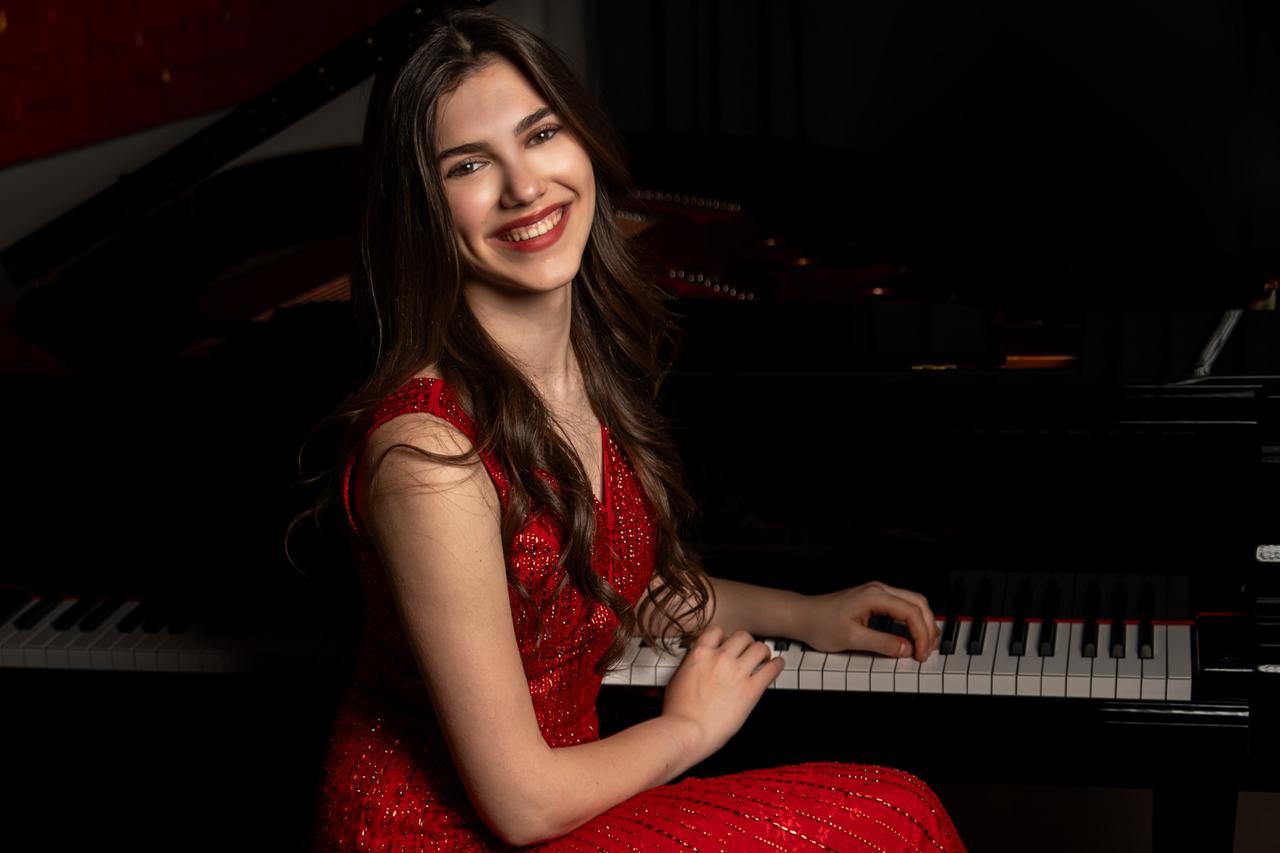


Turkish pianist Ilyun Burkev, 18, is preparing for a series of international performances, including concerts with the Sofia Philharmonic Orchestra and Borusan Istanbul Philharmonic Orchestra, as she begins a new stage of her musical education at Salzburg's Mozarteum University.
The young pianist, who has gained recognition on international classical music stages, will also appear in the chamber music project "Resonance" in Istanbul on Nov. 24, bringing together musicians for a program built around collaborative performance.
Her upcoming appearances follow her acceptance into Mozarteum University's undergraduate piano performance program, where she will continue her studies under Professor Claudio Martinez Mehner.
Burkev will return to the stage with Bulgaria's Sofia Philharmonic Orchestra under conductor Natalia Ponomarchuk, performing Camille Saint-Saens' Piano Concerto No. 2. The appearance marks her second invitation to perform as a soloist with the orchestra.
She is also scheduled to give a solo recital at Sofia's Vivacom Art Hall on Nov. 20 during a special evening organized by the Turkish Embassy for international diplomatic representatives and invited guests.
Following her performances in Bulgaria, Burkev will head back to Istanbul for "Resonance" at the ENKA Auditorium on Nov. 24. She will share the stage with violinist Elvin Hoxha Ganiyev and cellist Dilbag Tokay, performing selected chamber music works, a form of classical music written for small groups of instrumentalists.
On Dec. 10, Burkev will perform Sergei Rachmaninoff's Piano Concerto No. 2 with the Borusan Istanbul Philharmonic Orchestra under conductor Gurer Aykal as part of the orchestra's season-opening concert.
Discussing the Rachmaninoff concerto, Burkev highlighted its romantic expression, dramatic depth and the complex relationship between piano and orchestra. She said her interpretation would focus on bringing out the balance between the soloist and the wider musical narrative rather than simply placing the piano in the spotlight.


Speaking to Anadolu Agency (AA), Burkev reflected on her years of working with Professor Pavel Gililov at Salzburg's Mozarteum, describing the experience as central to her development both as a pianist and as an artist.
She said Gililov had encouraged her to look beyond technical accuracy and explore the ideas, emotions and stories behind each composition, while developing her own interpretation rather than relying on established answers.
"Technical proficiency is, of course, the foundation of a musician. However, what truly shapes an artist's identity is their outlook on life, experiences, curiosity and courage to constantly question themselves," she said.
Burkev also emphasized that music allows performers to express their inner worlds and accumulated life experiences through sound.
Reflecting on her second invitation from the Sofia Philharmonic, she described it as a meaningful expression of trust and appreciation. She added that working with an orchestra involves bringing together different musical personalities to create a shared interpretation, with each ensemble offering its own distinctive character.
Burkev described her admission to Mozarteum University's Konzertfach Klavier undergraduate program, which focuses on professional piano performance, as a major turning point in her career.
Having previously studied in the institution's Pre-College program, she said returning as an undergraduate student would allow her to build on her earlier training while expanding her repertoire and exploring music from different periods and composers.
She also expressed excitement about joining Professor Claudio Martinez Mehner's class, particularly as she takes on greater responsibility for her artistic and personal development after completing high school.
Despite the changes taking place in her life, Burkev said her priority remains maintaining her enthusiasm for music and her willingness to learn.
Beyond her formal education, Burkev highlighted the influence of prominent musicians, including Turkish pianist Gulsin Onay, whose musical knowledge, stage presence and dedication have helped broaden her perspective.
She also recalled receiving a handwritten cadenza from pianist Alfred Brendel, describing it as a meaningful musical and historical experience. A cadenza is a passage in a musical work that typically allows a soloist to demonstrate individual interpretation and technical ability.
For Burkev, these encounters have reinforced the importance of passing down musical knowledge between generations while continuing to develop an individual artistic identity.
As she prepares for her upcoming concerts, she said her aim is to explore each composition more deeply and convey not only its musical elements but also the broader emotional and artistic world it represents.


 Set as preferred source
 Set as preferred source


 1 min read


 1 min read