

 Newsletters


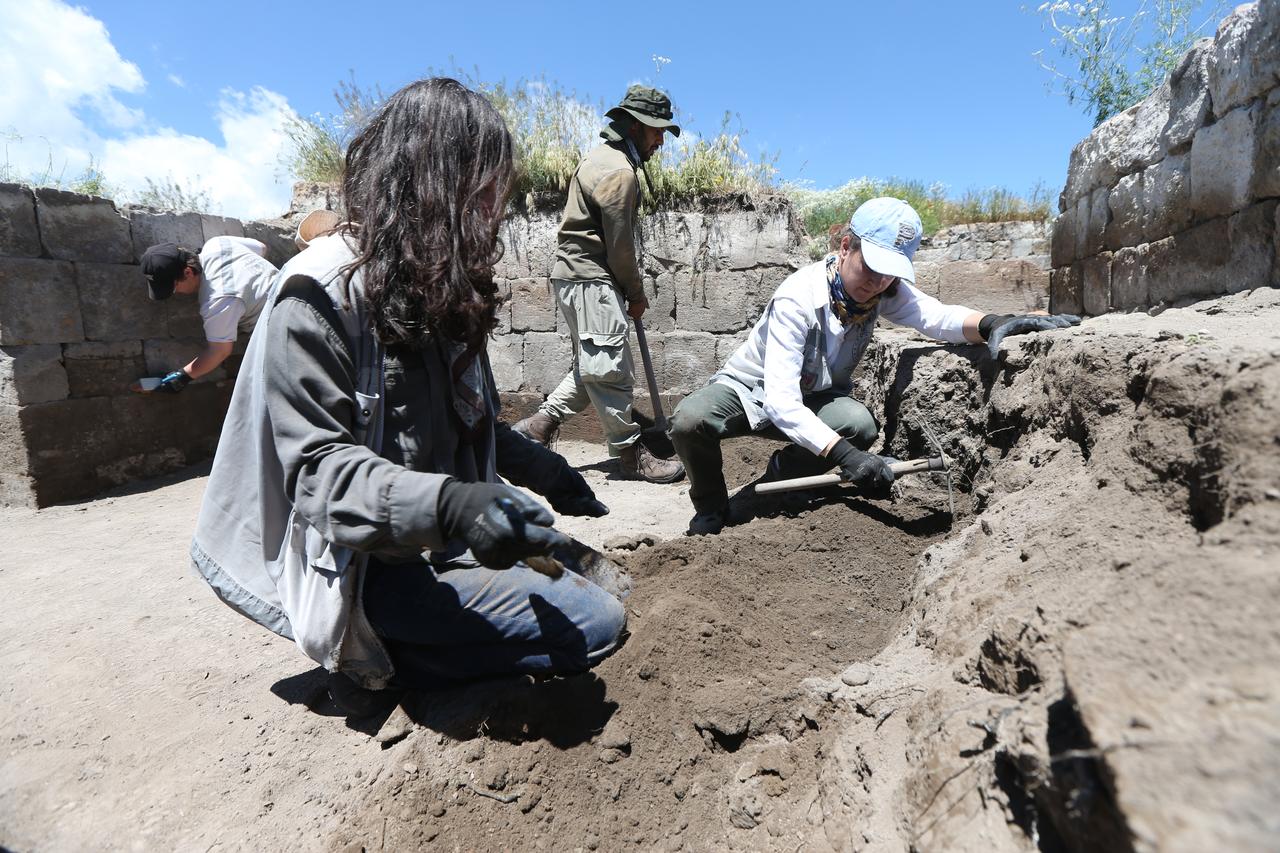


Excavations are continuing at five different points in Ani, the UNESCO-listed archaeological site in Kars, as teams work to bring out movable and immovable remains linked to the city's layered medieval past.
Located in eastern Türkiye, Ani is described as one of the key gateways from Central Asia to Western Asia and from the Caucasus into Anatolia.
The site contains important examples of Turkish-Islamic architecture from the 11th and 12th centuries, while its wider history reflects the rule of the Bagratid Dynasty, Byzantium, the Great Seljuks, the Georgian Kingdom, the Mongols, the Ilkhanids, the Karakoyunlu, the Akkoyunlu and the Ottoman Empire.


The excavations are being carried out in cooperation with the Culture and Tourism Ministry and Kafkas University. A team of 100 people, including art historians, archaeologists, architects and restoration architects, is working to uncover historical structures and artifacts beneath the soil.
Ani Excavation Head Assoc. Prof. Muhammet Arslan said the site was one of the most magnificent cities of the Middle Ages and gained particular importance after the Seljuk conquest.

He said Ani became the gateway of Turks into Anatolia after it was conquered by Seljuk Sultan Alparslan in 1064, adding that the city also marked the beginning of Turkish-Islamic history in Anatolia.
"Ani, with its mosque, masjid, bath, bazaar and examples of civil architecture, is a city where we see the first examples of Turkish-Islamic civilization that formed the beginning of Turkish-Islamic architecture in Anatolia," Arslan said.

Arslan said this season's work is continuing at five points, including the Seljuk bazaar, Seljuk residences, Seljuk cemetery and the oil production facility, one of the main spaces linked to Ani's rich commercial life.
He added that the team is not only carrying out excavations but also working on conservation. Architectural remains brought out from underground are being preserved, while environmental arrangements are also continuing.
As part of these efforts, walking routes inside the city walls are being developed to give visitors a more comfortable route through Ani and to improve visitor management at the site.
Arslan said Kars has gained strong tourism momentum in recent years, with Sarikamis, Cildir Lake and the historic texture of the city center standing out among the main routes.
Ani, he said, remains the most important archaeological destination in the city. Long-term excavation, conservation and environmental works, which now continue almost throughout the year, have also contributed to higher visitor numbers.
According to Arslan, Ani reached a record of about 450,000 visitors in 2025. He said work would continue in 2026 with the aim of carrying that number higher.


 Set as preferred source
 Set as preferred source


 2 min read
 1 min read


