Newsletters


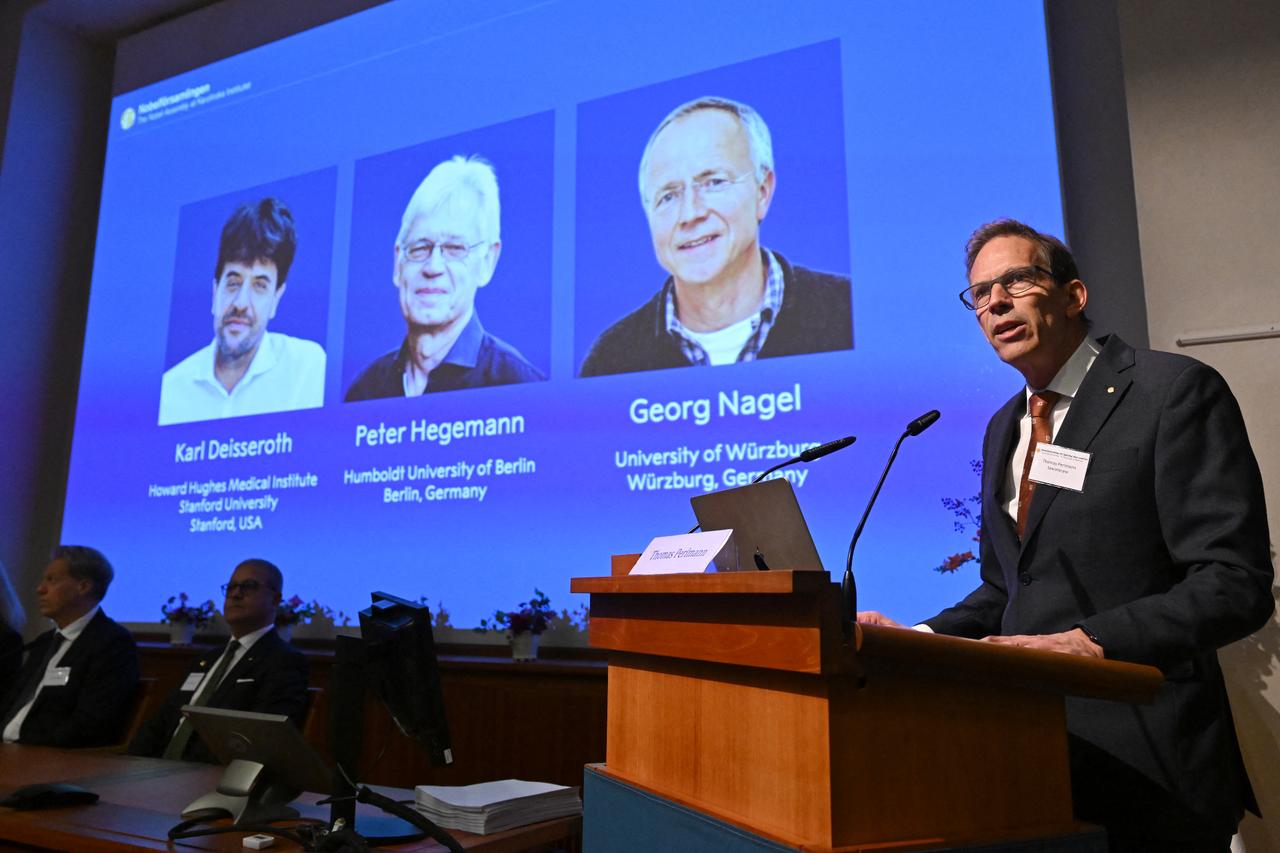


The Nobel Assembly at Karolinska Institutet awarded the 2026 Nobel Prize in Physiology or Medicine on Monday to American scientist Karl Deisseroth and German scientists Peter Hegemann and Georg Nagel for discoveries that made it possible to control nerve activity with light.
The three were honored for "their discoveries concerning light-gated ion channels and optogenetics," the assembly said in a statement.
Their work laid the foundation for optogenetics, a method that uses light to switch nerve cells on and off.
Hegemann and Nagel discovered channelrhodopsin, a protein that makes cells sensitive to light.
Deisseroth later introduced its gene into rat nerve cells and triggered nerve signals with blue light. He then developed the technique to control nerve cells in the brains of living mice.
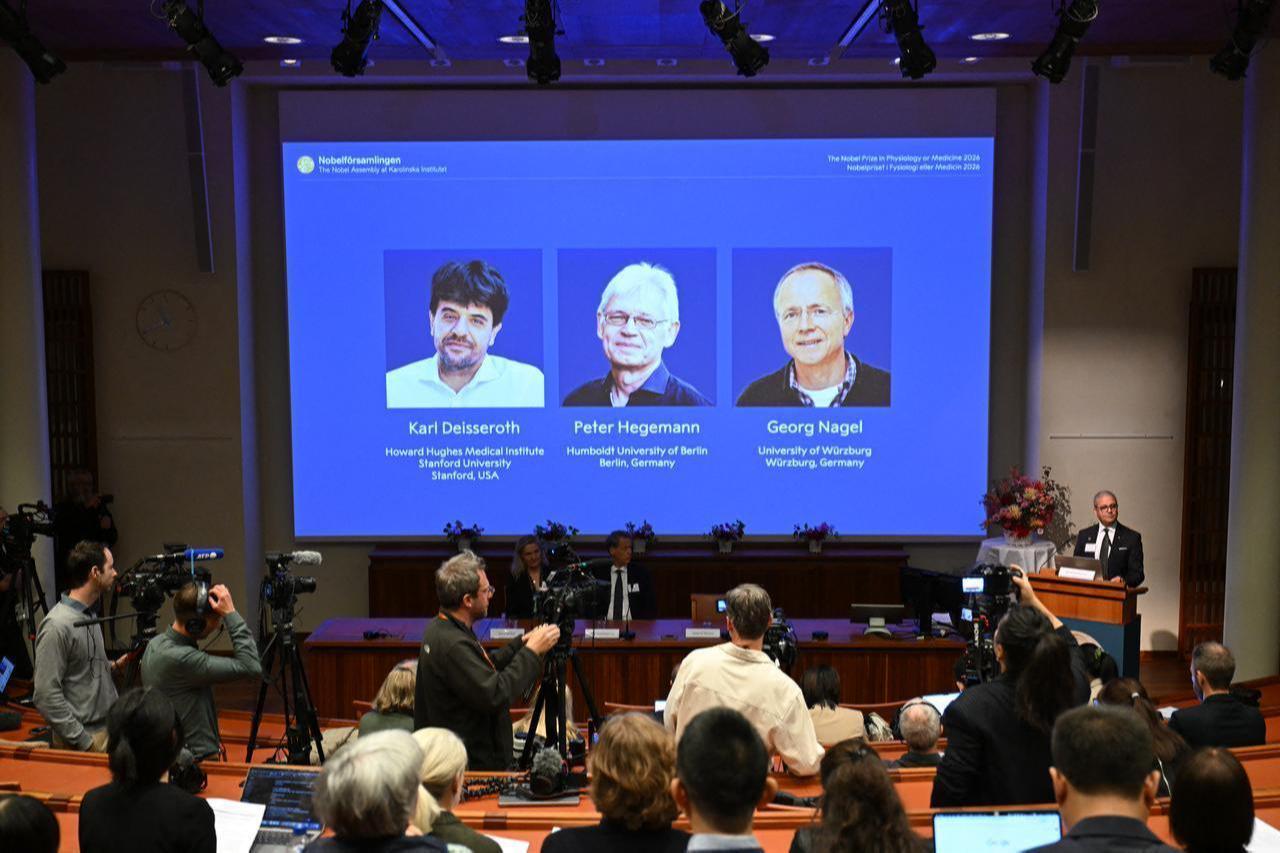

Hegemann, a professor at Humboldt University of Berlin, spent decades studying how green algae sense light, which led to the proteins later used in neuroscience.
Nagel, a German biophysicist, has worked at the University of Wurzburg, he and Hegemann showed together that the protein makes cells respond to light. Deisseroth is a professor at Stanford.
Hegemann and Deisseroth also shared the 2021 Lasker Award for related work.
Research using optogenetics has produced insights into Parkinson's disease and other neurological and psychiatric disorders, including autism, schizophrenia, anxiety and depression.
"This method for controlling nerve signals with light is now called optogenetics, and it has rapidly gained global impact," the Nobel Assembly said in the statement.


 Set as preferred source
 Set as preferred source



 3 min read