Newsletters


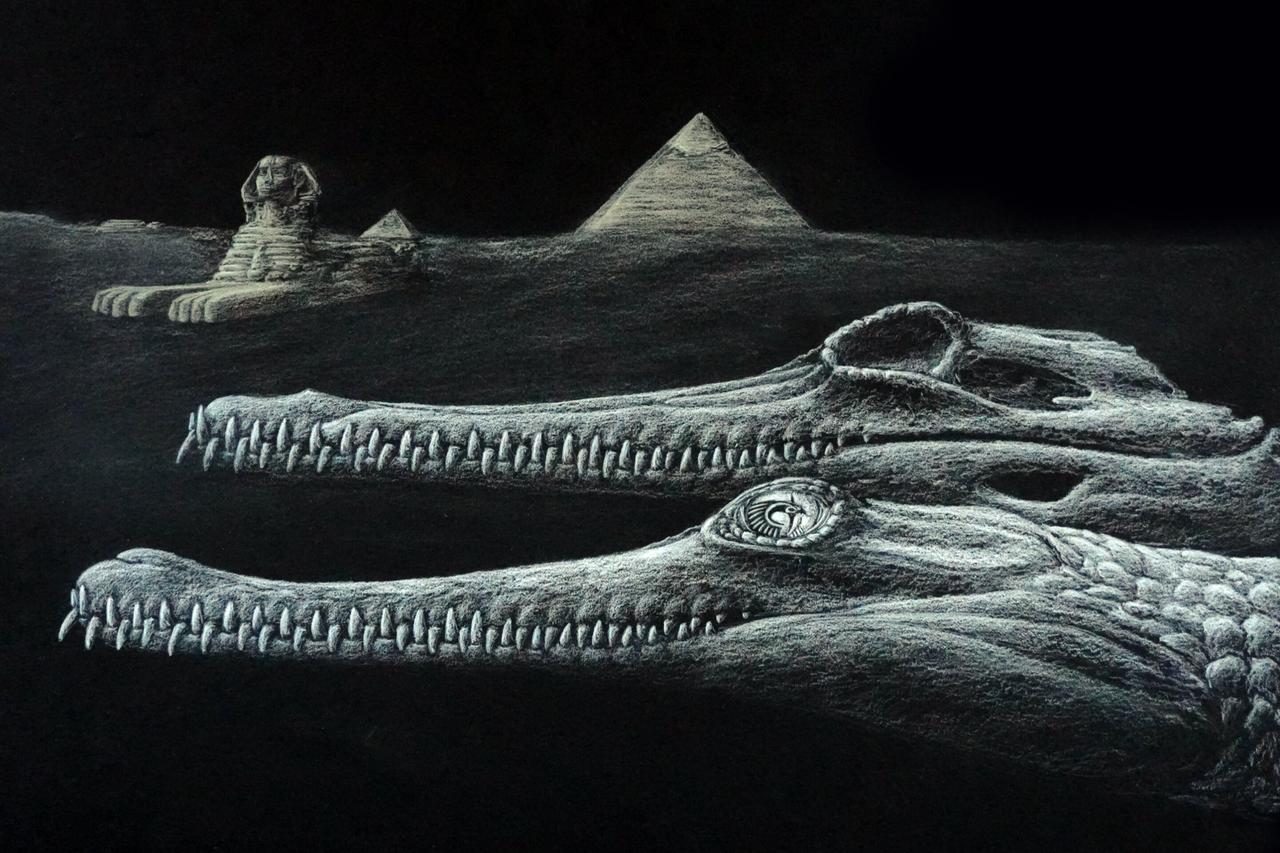


A previously misidentified 45-million-year-old crocodilian found in the limestone formation used to build Egypt's Great Sphinx has been recognized as a new genus, with researchers naming it after an ancient Egyptian god linked to the monument.
The species, named Herugavialis cairensis, once inhabited a shallow tropical sea covering what is now northern Egypt, according to a study published in Royal Society Open Science.
Its fossils were recovered from the Mokattam Formation, a limestone deposit containing the remains of ancient fish, sharks and early whales. Stone from the same formation was later used to construct some of Egypt's most recognizable monuments, including the Great Sphinx and the Giza pyramids.
The discovery centers on a nearly complete skull unearthed in the 1920s, which researchers had previously assigned to Tomistoma, the genus that includes Southeast Asia's modern false gharial.
Using computed tomography (CT) scans to examine the skull's internal structure, scientists compared more than 300 anatomical features with those of living and extinct crocodilians. The results revealed enough differences to establish Herugavialis cairensis as a separate genus.
The new name combines Heru, another name for the Egyptian god Horus, with a reference to gharials, a group of crocodilians known for their long, narrow snouts. The species name cairensis refers to Cairo.
Researchers also drew a connection between the fossil and the Great Sphinx because the skull is missing the tip of its snout, resembling the monument's famously missing nose.
"Given this coincidence with the famously missing nose of the Great Sphinx, we decided to name the new crocodile after the Egyptian god Heru, who was possibly the inspiration for this iconic monument," said study co-leader Philip Mannion of University College London.
The identification also adds to scientists' understanding of how gharial-like crocodilians spread across ancient marine environments.
Only two gharial species survive today: the critically endangered Indian gharial and the endangered false gharial, both found in parts of South and Southeast Asia.
However, fossil evidence indicates that their ancient relatives once occupied a much wider geographical range, with several species inhabiting the Mediterranean region over millions of years.
Researchers said identifying Herugavialis cairensis as a distinct genus helps clarify the evolutionary history of these crocodilians and their presence in ancient marine ecosystems.


 Set as preferred source
 Set as preferred source



 3 min read