Newsletters


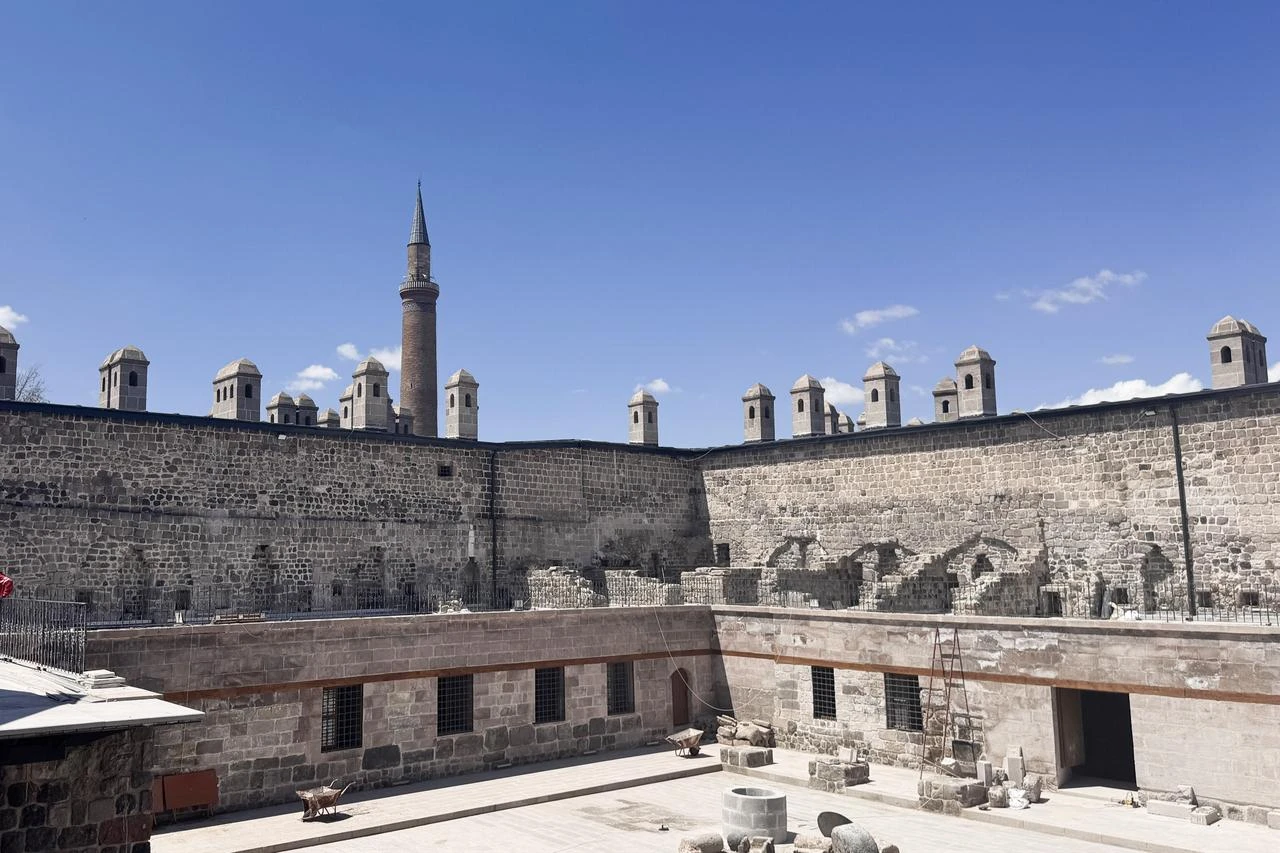


In Kayseri, a 507-year-old caravanserai known as the Gon Hani, which had been closed for around 50 years and gradually buried under earth over time, is being restored and prepared for tourism.
The caravanserai, which once provided lodging for merchants traveling along the Silk Road, was built in 1519 inside the historic Kayseri Grand Bazaar by Grand Vizier Piri Mehmet Pasa during the reign of Sultan Selim I.
Nearly hidden behind a door next to a shoe shop inside the bazaar, the structure features commercial units on its ground floor, while the rooms on its upper floor served as lodging areas.
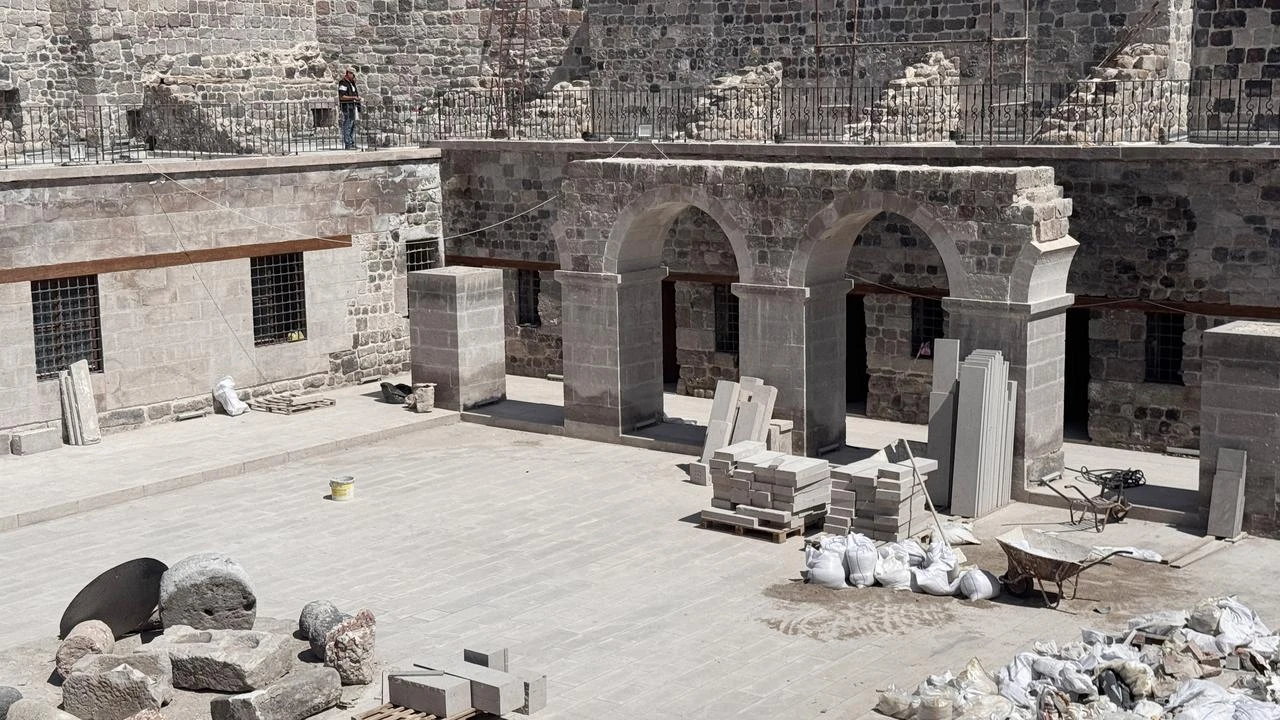
Left abandoned for many years, the historic site was taken up for restoration by the Melikgazi Municipality in 2021. A large portion of the building, which had filled with earth following an earthquake that struck the city in 1940, has since been uncovered through the ongoing restoration work.

Melikgazi Mayor Mustafa Palancioglu said that the caravanserai, located within the historic Kayseri Grand Bazaar, had been abandoned to its fate in the past.
Palancioglu said he first saw the door of the historic site, which had been closed for years, through the window of the Gungormez Mescidi (a small mosque) in the bazaar in 2019.
He said part of the 1,400-square-meter (15,070 square feet) caravanserai had collapsed during the 1940 earthquake, and that shopkeepers had built unauthorized storage units over the rubble.
Palancioglu said that after being elected mayor, the municipality leased the site from the Piri Mehmet Pasa Foundation and launched a large-scale restoration. "Everything we see now was actually buried underground," he said.
He explained that excavation work had reached depths of 5, 6 and 7 meters in places. To avoid disturbing shopkeepers, the digging was carried out in the mornings before they opened, with soil removed before business began each day.
Since trucks and excavators could not enter the area, the material had to be carried out by hand. According to Palancioglu, roughly 7,000 truckloads' worth of excavated soil were removed in the process. "With each trace we uncovered, more of the structure came to light," he said.
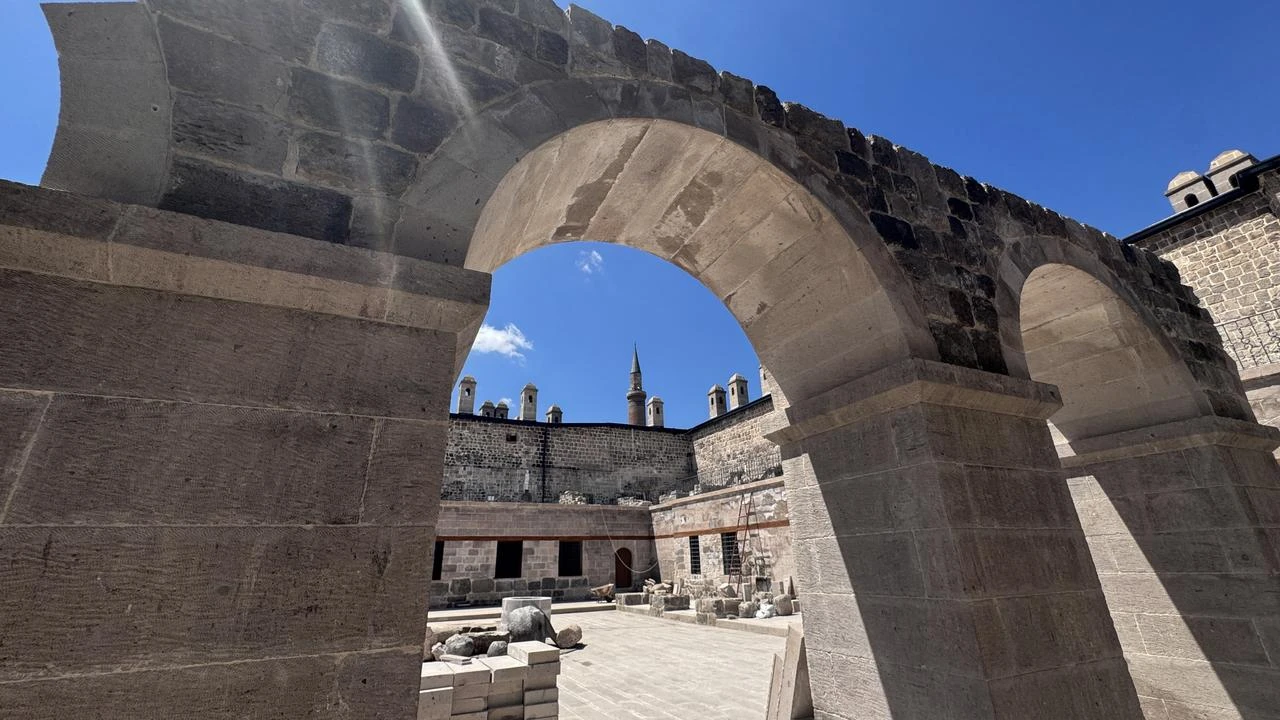
Palancioglu said the restoration had reached its final stage and that furnishing work would begin soon. He described the caravanserai as a structure built more than 500 years ago to support trade along the Silk Road and provide lodging for travelers, with commercial units on the lower level, 8-square-meter rooms on the upper floor, and two large vaulted structures below. "It's a space that will give the Kapali Carsi room to breathe," he said.
Palancioglu said local and foreign tourists visiting the Kapali Carsi would be able to take in this open-topped historic caravanserai. "We want to use this place as a center for social and cultural activities," he said, adding that visitors would be able to come, have tea or coffee, and talk.
He said the municipality also planned to use the site to host poetry readings, musical, talks, exhibitions and carpet auctions. "It will become a center for the social and cultural activities that will bring color to the Kapali Carsi and the city center," he said.


 Set as preferred source
 Set as preferred source


 3 min read