Newsletters




The "Avatar" city of Zhangjiajie drew 722,000 international visitors in the first seven months of 2025, bringing in $380 million in tourism revenue, according to an article by Xinhua News Agency.
These figures represent year-on-year increases of 14.2% and 16.4%, respectively, highlighting how the dramatic geological landscape that inspired the floating mountains in the movie "Avatar" continues to fuel massive growth in both China's domestic and international tourism sectors.
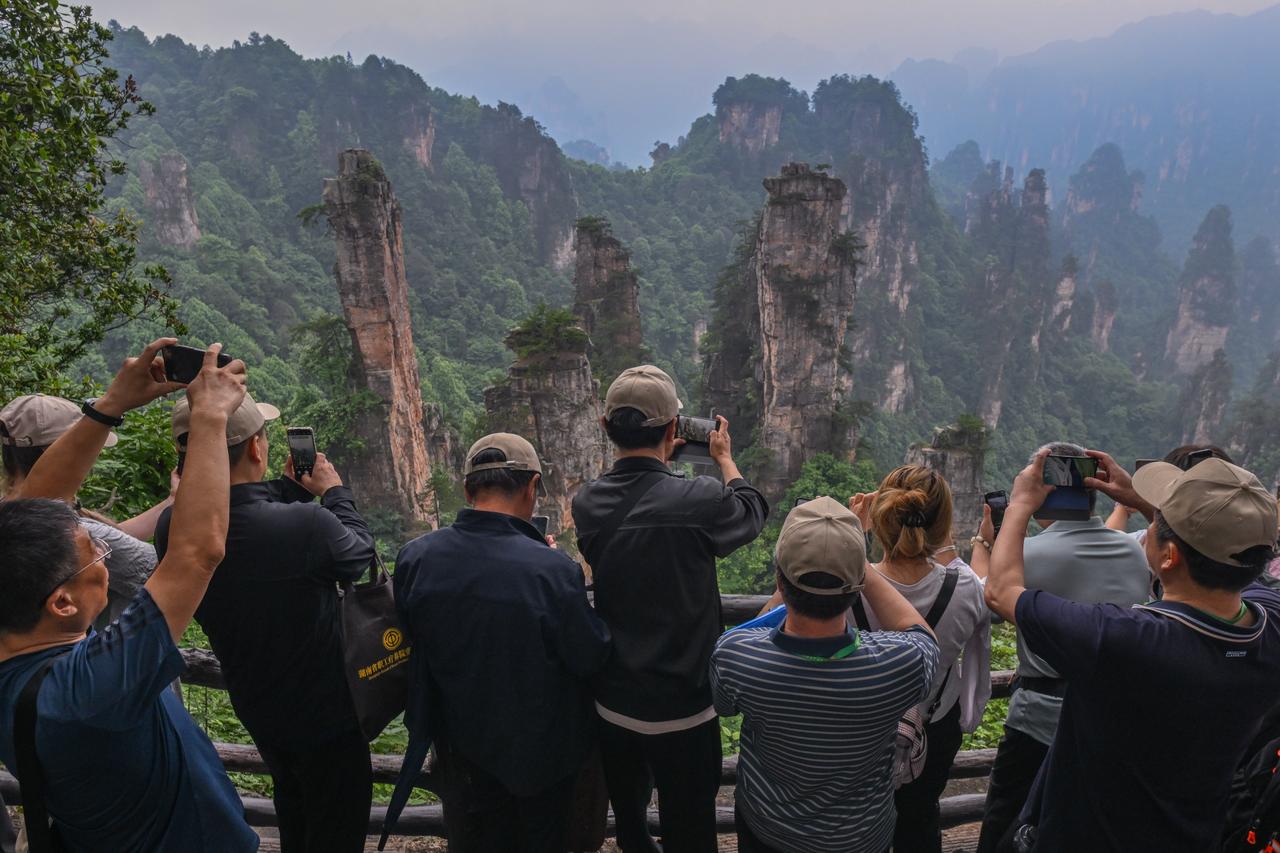
Visitors gather at an observation deck within the Wulingyuan Scenic Area of China's Zhangjiajie UNESCO Global Geopark to photograph the mist-veiled sandstone pillars near the "The Girl Holding a Bouquet" formation.

Zhangjiajie’s surging popularity is anchored by its largest market, the Republic of Korea, where a fascinating demographic shift is underway as younger South Koreans increasingly book trips for themselves rather than just sending their aging parents.
This massive influx is part of a broader wave of international interest, with the city now drawing travelers from more than 180 countries.
To accommodate this diverse crowd, local infrastructure has rapidly evolved to feature multilingual signage, global dining options, and seamless digital payment systems that accept foreign mobile wallets like the Philippines' GCash.
This international boom serves as a vital economic engine; despite the city's relatively small population, peak-season tourism supports over 300,000 local jobs, continually driving Zhangjiajie to upgrade its infrastructure and services to meet world-class standards.


 Set as preferred source
 Set as preferred source



 3 min read