Newsletters


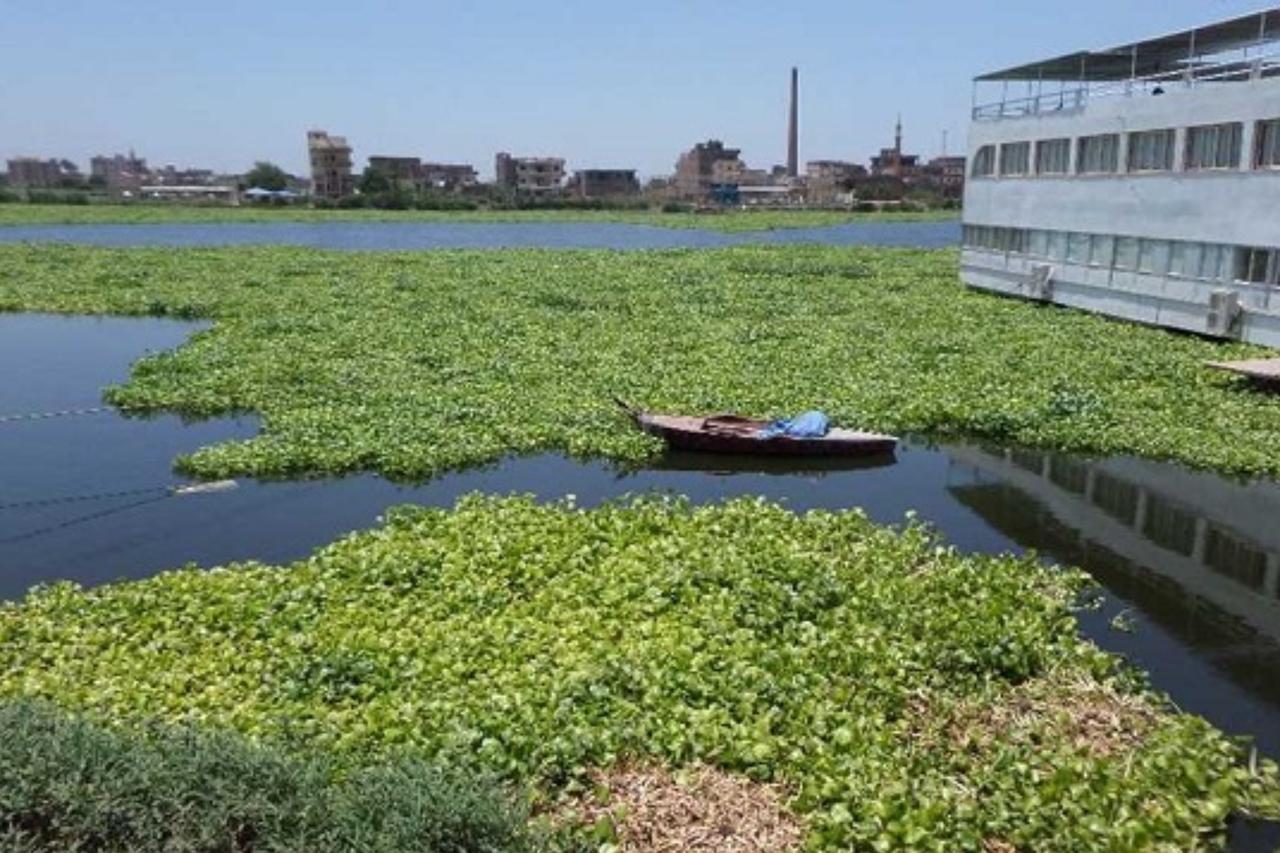


Egypt's Ministry of Water Resources and Irrigation is using satellite imagery, digital platforms and artificial intelligence to monitor and help remove water hyacinth from waterways as the ministry steps up digital transformation in the irrigation sector.
The meeting reviewed the efforts made by the ministry’s departments to use and analyze free satellite imagery to classify aquatic weeds.
It also showcased the use of digital platforms such as Digital Earth Africa and Google Earth Engine to monitor the spread of water hyacinth in real time, as well as efforts to further develop these tools to improve the accuracy of their outputs.
That would enable the ministry’s agencies to make immediate decisions to address aquatic weeds.
Water hyacinth (Eichhornia crassipes), native to South America, is a highly invasive aquatic plant threatening freshwater ecosystems worldwide.
It entered Egypt in the late 19th century for ornamental use during the reign of Khedive Tawfiq before gradually turning into an environmental and operational burden on waterways.
Afterward, the plant spread from gardens into waterways and, due to the absence of natural predators in the Nile environment, proliferated intensely over the decades.
It eventually covered thousands of feddans across the Nile and the Delta, preventing water from flowing in its natural course.
More than a century after water hyacinth entered Egypt, the Ministry of Irrigation is turning to technology to eliminate aquatic weeds that clog the Nile’s waterways and obstruct its flow.
The meeting also reviewed the current status of applications under development that rely on artificial intelligence, integrated with satellite imagery, to classify aquatic weeds with high precision.
This provides an accurate picture of where the weeds are spreading and helps guide the relevant teams in removing them.
Hani Sewilam, Egypt’s Minister of Water Resources and Irrigation, noted that these applications aim to ensure continuous monitoring of aquatic weeds and provide decision-makers across the ministry’s various bodies with the appropriate data to address them, ensuring the water system continues to run properly and avoiding the negative impacts of aquatic weed proliferation.
He added that adopting such applications comes within the framework of the ministry’s implementation of the second generation of the Egyptian Irrigation System 2.0 and its drive to strengthen reliance on the latest technologies and tools that support the ministry’s goals and activities and enhance the optimal management of water resources.
Sewilam also directed that the applications used to monitor these aquatic weeds be continuously updated and their accuracy improved to provide an effective tool for timely decision-making while saving the time, effort and costs associated with ongoing on-the-ground monitoring operations.
Water hyacinth is considered one of the most serious challenges facing Egypt’s irrigation system. It is a perennial aquatic herb that floats on the surface of fresh water, known for its thick green leaves and purple flowers.
However, it can trigger major environmental and economic crises, with losses reaching billions of Egyptian pounds.
The danger of this plant also lies in its exceptional ability to reproduce rapidly. Its biomass can double in as little as two weeks. This obstructs water movement, as it forms dense vegetative "dams" that hinder flow in canals and drains, preventing water from reaching the ends of canals and depriving farmers of their share.


 Set as preferred source
 Set as preferred source


 3 min read