Newsletters


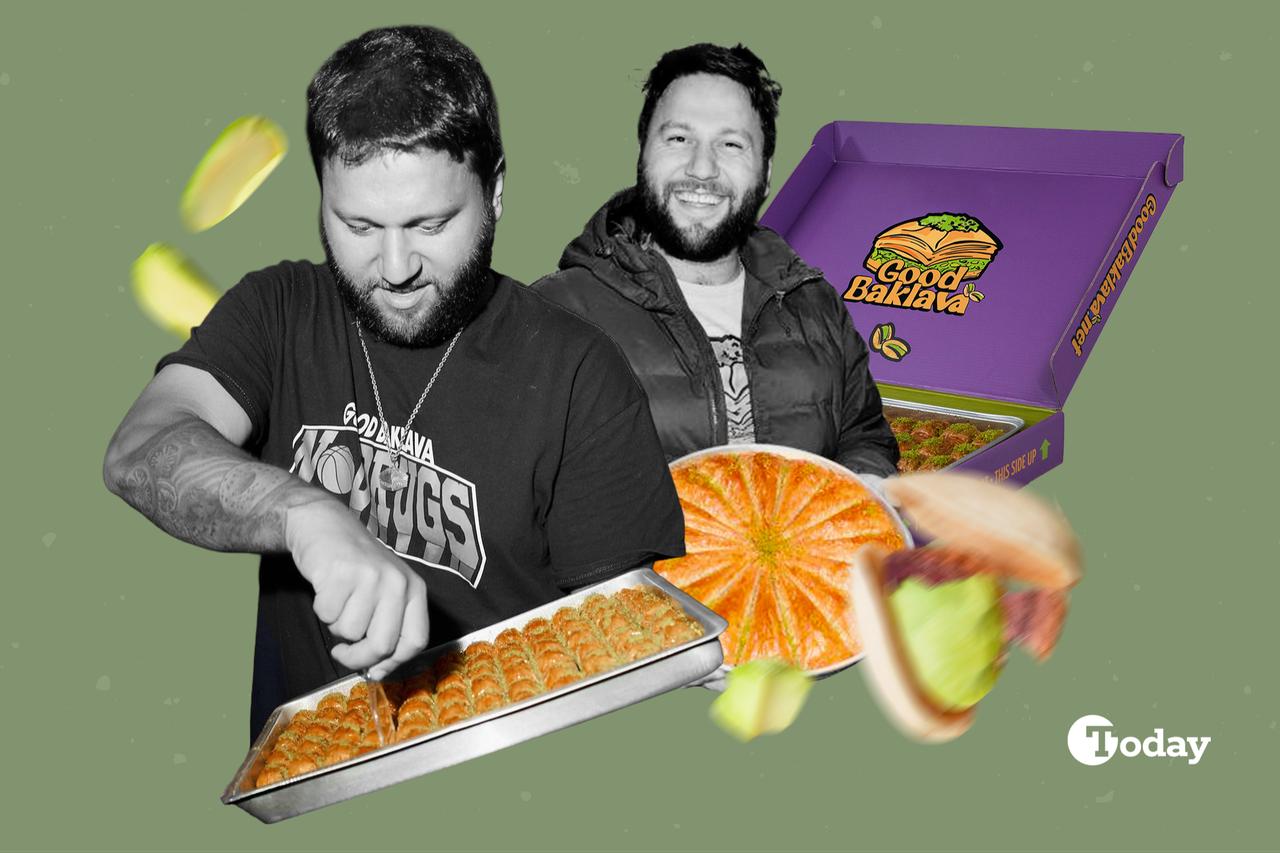


Roy Donk started selling baklava as a joke.
Then Turkish baklava—or baa·Kla·Vaah as he pronounces it in his drawn-out American accent—"literally changed my life," the Good Baklava founder says.
Five years later, the high-school dropout has quit his day job and gone "all in."
Donk went viral in June when he handed out free baklava to Knicks fans outside Madison Square Garden, according to Entrepreneur. The New York Times (NYT) profiled him.
Turks send him fan mail and gifts. Istanbul exporters want him on stage.
Donk said the company was never part of a plan.
"It happened as a joke. It happened randomly. I never woke up one morning and said, I'm going to start a baklava company or I'm even going to sell baklava," he said.
"It kind of just happened as a joke and in a funny setting and it worked. So I kept rolling with it," he told Türkiye Today in an interview.
He spoke openly about his past in a post on his social media post before, saying, "I'm a drug addict with over five years clean and sober. I'm a high school dropout, and I started this company as a joke, and now it's my chance at a better life."
The side hustle is now his full-time job after he got fired from my job after doing this as a side hustle for the past five years, and now he's all in.
He called himself a "natural-born salesman" who could sell anything "useful, funny, interesting or optimal for the right price."
Then he added: "But I do love selling baklava."
The turning point came in Paterson, New Jersey, where he walked into what seemed like a baklava store. Until then, he said, he thought baklava came in one type, "maybe in a different couple of shapes."
"When I tasted Turkish baklava for the first time, I felt like I transcended into a new world, my head almost exploded," Donk said. "I've never tasted anything like it with the layers of the dough and pistachios. I've never tasted pistachios like this."
From that point on, he decided the company would sell only Turkish baklava "because it's the best in the world."
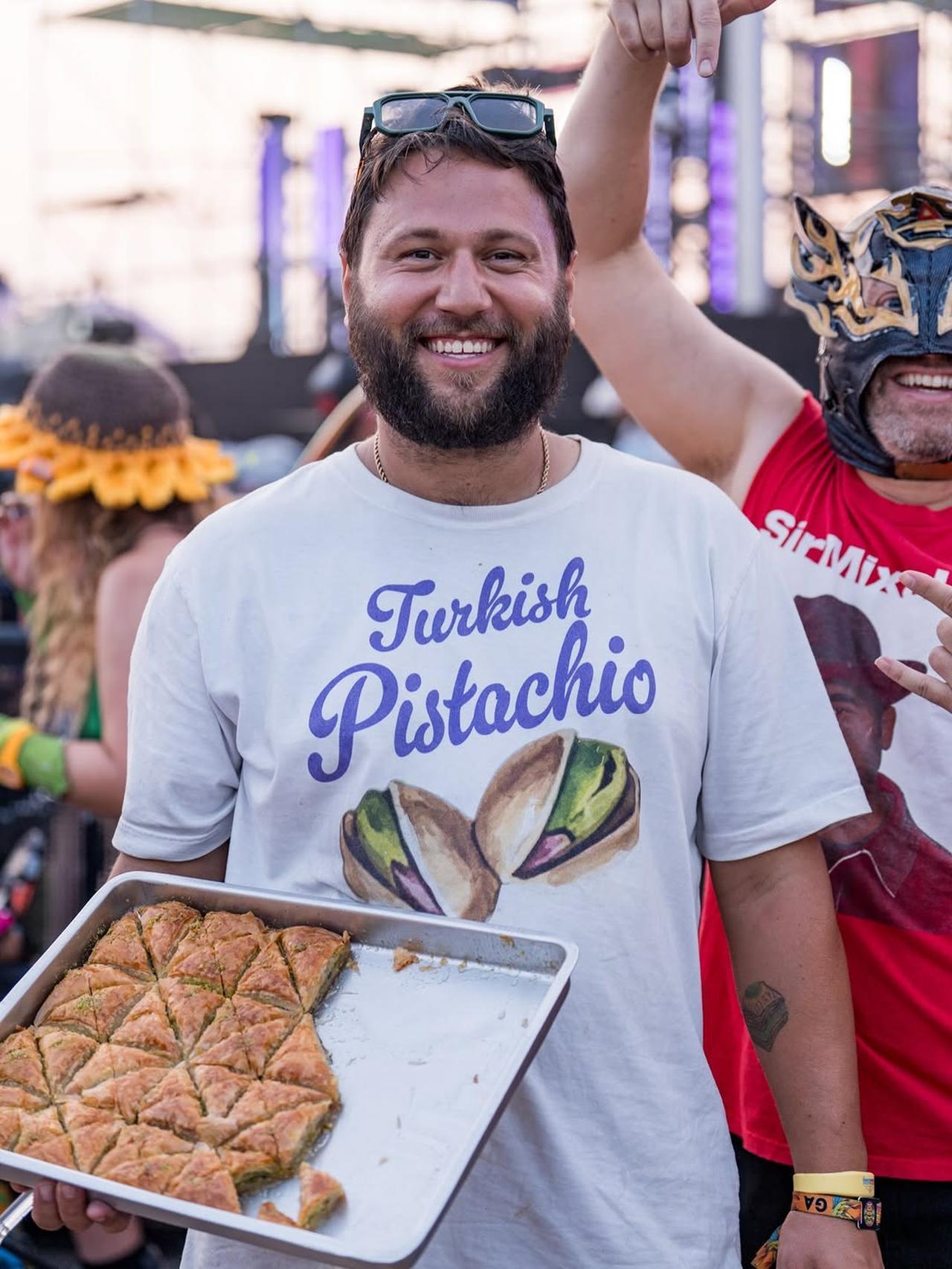

Donk said he has spent five years in the baklava industry. He said he is "not an expert on Turkish culture."
His apartment tells a different story.
A Turkish flag hangs there. "It is gifted to me by a Turk," he said.
He described Turks as a proud people with the "best hospitality in the whole world."
"You don't know until you know, and then you're inspired," he said.
The admiration runs both ways. Donk said he receives Turkish fan mail, and people message him on Instagram: "Hey, I'm so proud of what you're doing with our product. Thank you for sharing it with the world."
"People have gone as far as saying, I've done what the Turks could not do, which is share the product with the world that aren't Turkish," Donk said. "But I don't think that's necessarily true. I'm just doing my thing."
He said the Turkish government, through the Istanbul Exporters Association, recently invited him to speak at an event for Turkish confectionery and sweets at the American Food and Beverage Show in September.
"Whenever I go to Türkiye, I feel like a royal red carpet is rolled out," he said.
Turkish customers who spot him on the street often open with a question. Donk said he learned the phrase "Turk musun?" ("Are you Turkish?") because people kept asking him.
"They're not selfish. They're not scared to hold their product, their culture, their recipes internally. They want to share it," he said.
He said selling another culture's food can lead to "real big conflicts" in today's world, but not with the Turks.
"I think 99.9% of the Turks that I've ever met are like, wait, you're selling baklava. You're not Turkish. F--- yeah. All right, get after it, get after it," Donk said.
Good Baklava's trays come from a bakery in Gaziantep, Türkiye. Donk said his company white-labels the product.
"We're in constant communication," he said. "They're not a public-facing business."
He has stood on the bakery floor before sunrise.
"I know what the bakery sounds like at five in the morning, 'cause I've been there at five in the morning, when the lights go on," he said.
From 5:00 to 5:30 a.m., workers make the dough. Then everyone eats breakfast together and returns to work, he said.
"It's a madhouse, but I just love factories," Donk said. "The smell is out of this world. You smell the butter. And once it starts baking, you smell the pastry, smell the pistachio."
"It's not only seeing it, it's hearing it, it's smelling it, it's being there," he added.
If he landed in Gaziantep tomorrow, he said, he would eat beyran, icli kofte, kebabs and kunefe. He would visit his "buddy Huseyin at Cigerci Huseyin. He's my kebab man."
"And of course I'd eat a ton of baklava," he said.
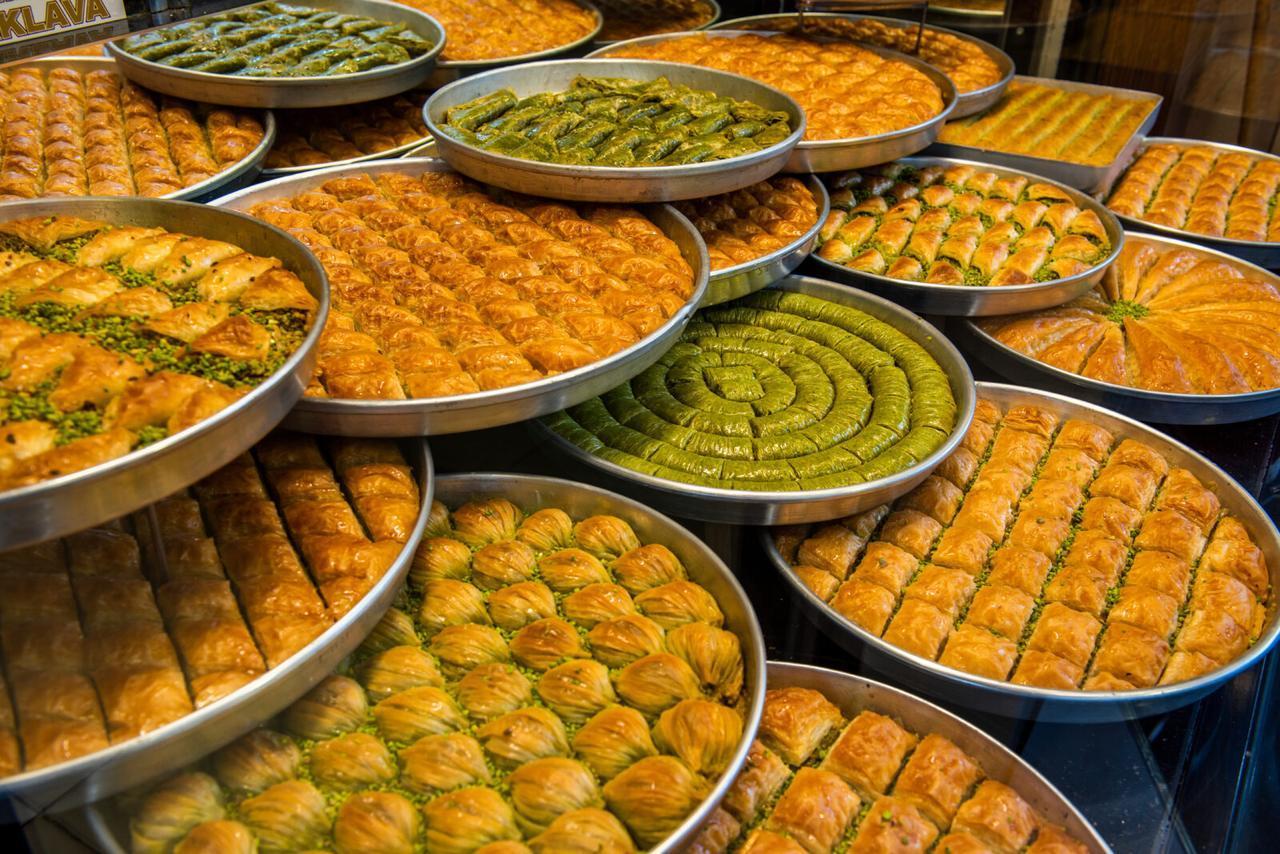
Donk has his own ritual.
"You got to flip it upside down," he said. He added that it is best with "Turkish kahve or some Turkish chai."
"This is 40 layers of Turkish baklava," he said, noting that "you taste each layer and then you taste the pistachios and then the sweet finish because all the syrup kind of sinks to the bottom."
He called it "a spectrum of texture from crispy to soft with nutty, flaky, earthy notes" and "a 10 out of 10 pastry experience."
His Turkish is still a work in progress. He called himself "busy and lazy," which, according to him, are "two bad combinations in order to learn a new language."
He uses "afiyet olsun" when feeding people and "cok guzel" when he is hyped up. His favorite phrase is "uyusturucu yok."
"Which is 'no drugs,' because there's no drugs in our baklava," he said.
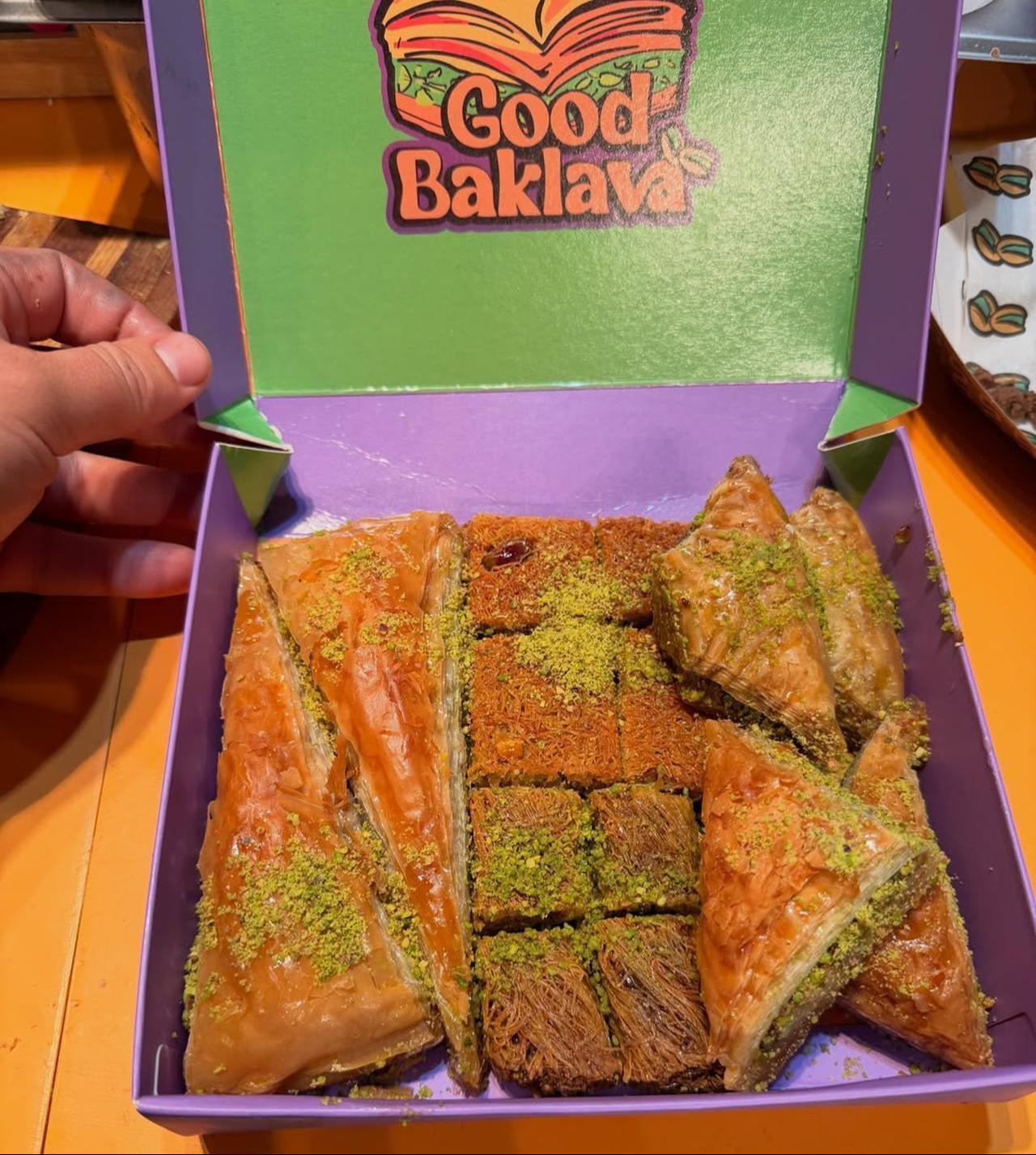
Donk named Madison Square Garden during Knicks games as the most unexpected place his baklava has been served. He has also sold on a Southern California beach, in a Brooklyn warehouse, and in Yosemite National Park.
"I love the element of surprise, and that's really a cornerstone of our business," he said. "I always have baklava on me."
His dream customer is Oprah Winfrey. "That'd be hilarious," he said.
His nightmare venue is Burning Man, he said, "because there's no economy there. There's only a trading economy." He said everyone there would look like a customer, "but no one will actually buy it."
Donk said he plans to hand out free baklava to runners and spectators at the New York Marathon on Nov. 1. "That's kind of like a dream day," he said.
He has also spotted strangers wearing Good Baklava shirts at concerts and on the street. "I want to see it everywhere," he said.
Donk also had a message for Turks who have never heard of him.
"If you run into me, I'm happy to give you a free piece or a good Turkish deal if it doesn't make sense to give you one for free," he said. "But thanks for letting me sell Turkish baklava. Thanks for sharing your culture with me."
"I vow to share what's been shared with me with the world," he added.
The hardest part, he said, is the pace. Business can run "a thousand miles an hour," then drop back to 50, and it is "hard to speed back up again."
He said he aims to build Good Baklava "to full consistency," and that he believes the goal is within reach.
"I feel like it's possible because I have the Turkish people supporting me in the background," Donk said.


 Set as preferred source
 Set as preferred source


 1 min read