

 Newsletters


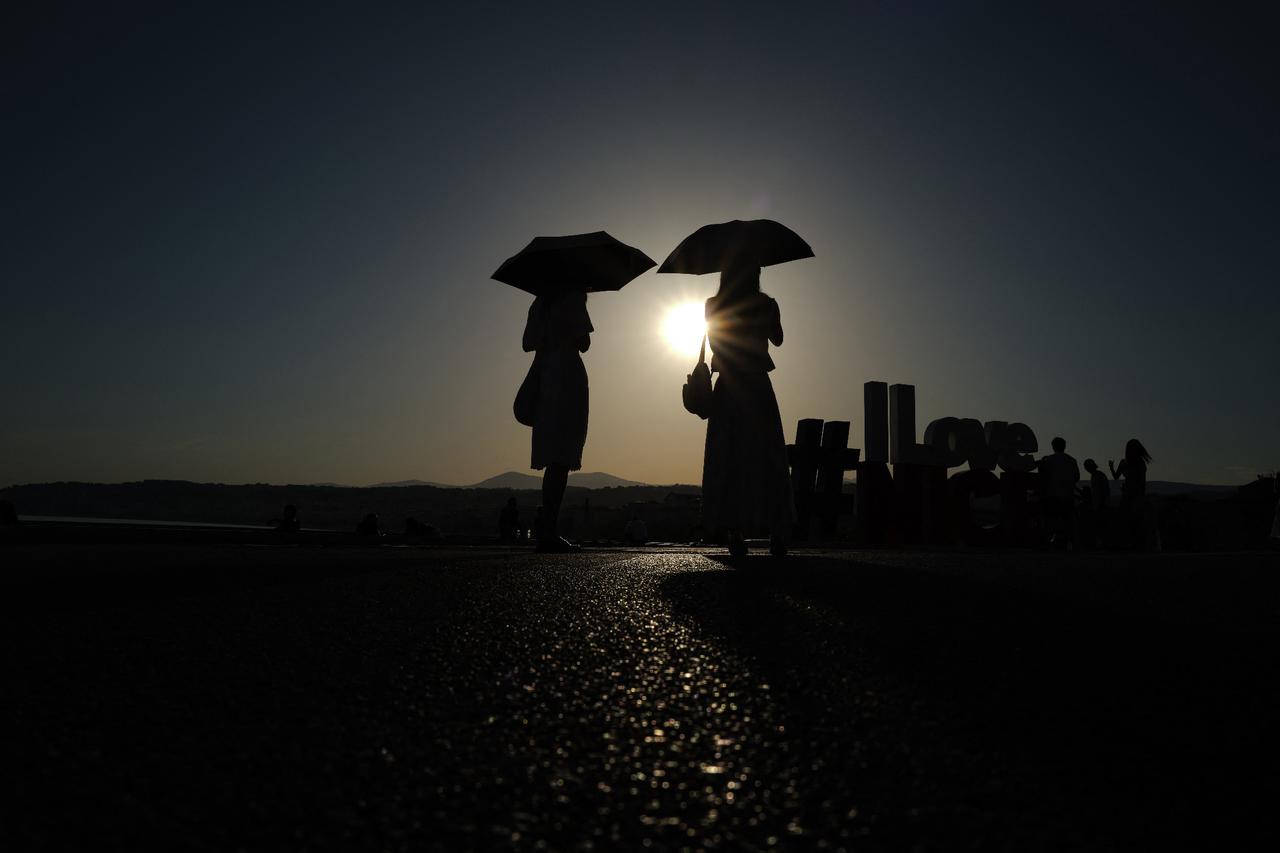


Spain is experiencing its first heat wave of the summer, with temperatures climbing to 42 degrees Celsius (107.6 degrees Fahrenheit) in many areas.
Authorities have issued red or orange alerts for 15 regions, except for the Canary Islands in the southwest and Murcia in the southeast.
Spain's national meteorological institute, AEMET, said the heat wave that started on June 20 will likely last until June 25. In Andalusia, temperatures could reach 42 degrees, while other regions may see between 38 and 41 degrees.
On Sunday, health teams helped 55 people who fainted from the heat in Catalonia and 25 more in the Basque region.
Several cities took down large outdoor screens set up for the World Cup match between Spain and Saudi Arabia due to extreme heat.
Wildfires started in different parts of the country, but there were no major blazes.


France has been dealing with extreme heat for about 10 days. Red alerts are in place for 49 departments and orange alerts for 40 more.
Broadcaster BFMTV reported that June 21 was the hottest night in France in seven years, with the average temperature staying at 21.4 degrees Celsius overnight.
In several cities, temperatures are expected to go over 40 degrees, and Bordeaux in the southwest could reach 43 degrees.
Since last week, some schools have changed their schedules, and by Monday, 845 schools had stopped in-person classes. Some universities have also postponed oral exams.
Since the weekend, 13 people, including two children, have drowned while trying to cool off in lakes and rivers.
On Sunday afternoon, a wildfire started in the town of Touchay in the Cher department, destroying about 25 hectares of farmland and causing minor injuries to three firefighters.

Italy is also dealing with the heat wave, which meteorologists have named "Cerberus."
Experts told Italian media that temperatures could average 40 degrees across the country. This heat system, originating in Africa, has already raised temperatures by 8 to 10 degrees above normal.
Meteorologists warned that sudden tropical changes could bring local thunderstorms in the next few days. Over the weekend, the Health Ministry issued red alerts for eight cities, mostly in the north.
The Royal Meteorological Institute of Belgium (IRM) says this week could be the hottest since early August 2020. Temperatures may reach 25 degrees on the coast, 32 degrees in central areas, and 34 degrees in the south near the French border.
IRM meteorologist David Dehenauw told local media, "We are going to experience a week that is even hotter than 2020. It will be a period in which temperatures remain above 30 degrees, with four or five days exceeding 35 to 36 degrees."
Dehenauw explained that Belgium is under a persistent high-pressure system, also called a heat dome, which is covering France, Spain, and much of Europe.
He also said climate change is a direct factor, noting that heat waves have become more frequent since 1990.

Several countries in the Balkans have issued heat warnings and are urging people to take precautions.
Bosnia-Herzegovina's Federal Hydrometeorological Institute said temperatures in the south could reach 38 degrees and advised the public to be careful. Afternoon thunderstorms are also expected in several cities, including Sarajevo.
Serbia's Hydrometeorological Service issued orange alerts for Belgrade and other regions, advising patients and older people to stay indoors during the hottest times of the day.
Croatia's State Hydrometeorological Institute issued orange and yellow warnings for most of the country. The Croatian Red Cross advised people to stay indoors between 10 a.m. and 5 p.m.
Slovenia's Environment Agency said the first heat wave of the summer has started and should last until the middle of next week.
The National Institute of Public Health warned that high temperatures could be dangerous, especially for the elderly, children, and people with health problems.
Montenegro's Hydrometeorological and Seismological Institute issued orange alerts for the north and south, and a yellow alert for the central region, with special concern for coastal areas.
Bulgaria is expected to start feeling the heatwave from Friday, with temperatures likely to reach 33 degrees across the country over the weekend.

Switzerland's Federal Office of Meteorology and Climatology (MeteoSwiss) said the heat wave, which started on June 17, should last at least until next weekend.
Level 3 and 4 heat warnings are in place until June 28 in the northern Alps and until June 29 in the southern Alps. Many places have already seen temperatures above 34 degrees since the heat wave began.
In Austria, temperatures could reach 37 degrees this week, which is above normal for this time of year. Austria's Meteorological Institute recorded the year's highest temperature on June 20 at 36 degrees, with Bad Deutsch-Altenburg in the east reaching 36.6 degrees.
Vienna has had "tropical nights," with overnight temperatures staying above 20 degrees. The heat wave is expected to last for the foreseeable future.
Denmark is currently seeing temperatures between 23 and 27 degrees. Forecasts suggest the heat wave will reach the country by Friday, with temperatures possibly rising to 30 degrees.


 Set as preferred source
 Set as preferred source


 1 min read




 1 min read


