Newsletters


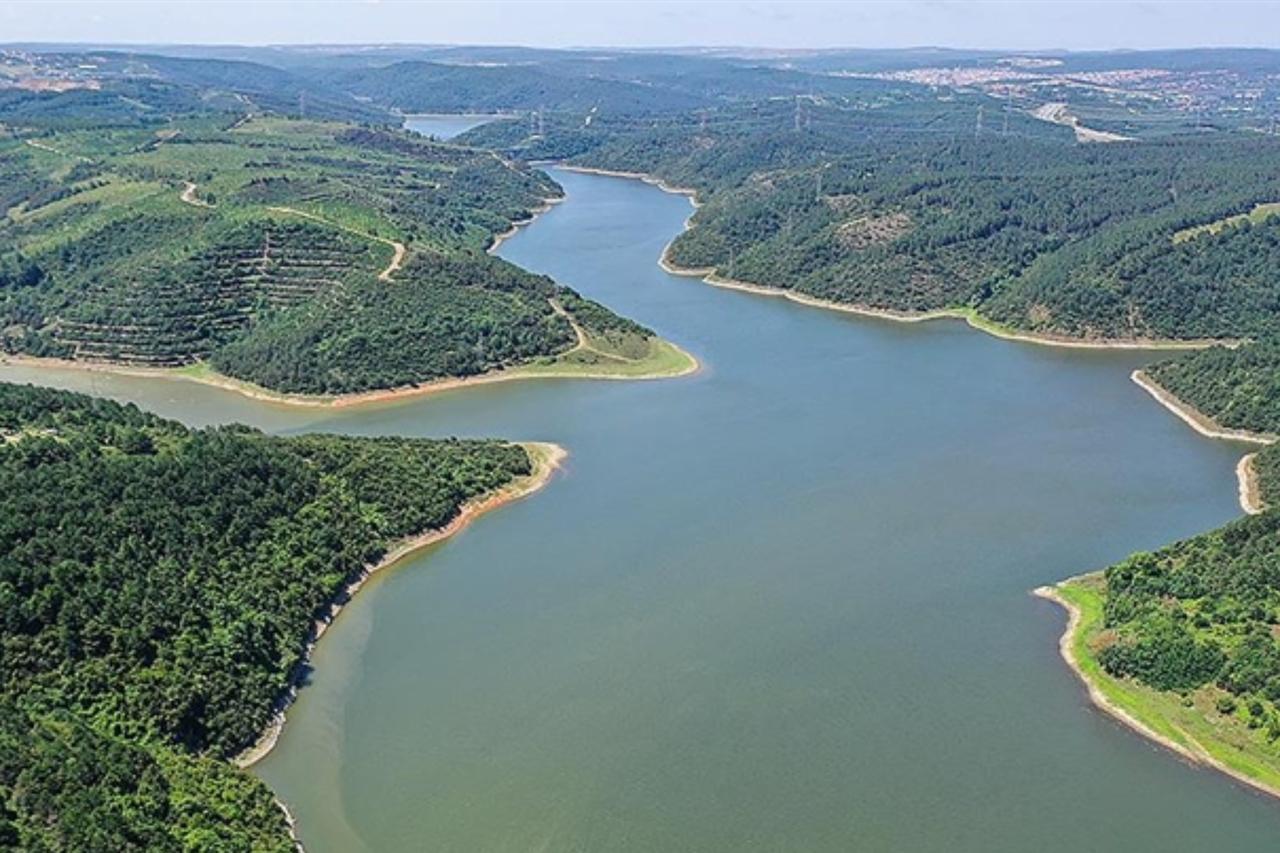


Reservoirs supplying Istanbul have fallen to an average fill rate of 17.83%, the lowest level for the same period in the past 10 years, according to data from the Istanbul Water and Sewerage Administration.
According to data from the Istanbul Water and Sewerage Administration, or ISKI, reservoir levels, which had risen to 82.22% on April 15, have continued to decline.
As of today, the overall fill rate of the city’s reservoirs stands at 17.83%.
Water levels were recorded at 16.45% in Omerli, 28.27% in Darlik, 53.44% in Elmali, 18.86% in Terkos, 12.46% in Alibey, 17.05% in Buyukcekmece, 15.62% in Sazlidere, 29.45% in Istrancalar, 1.81% in Kazandere and 2.71% in Pabucdere.
While the total storage capacity of reservoirs and ponds supplying Istanbul is 868.68 million cubic meters, the current water volume has fallen to 154.7 million cubic meters. Rainfall recorded in the reservoirs this year amounted to 573.4 kilograms per square meter.
In addition to reservoirs, Istanbul received 439.14 million cubic meters of water from the Melen system and 91.49 million cubic meters from Yesilcay, bringing the total volume supplied from these sources this year to 530.63 million cubic meters.
Daily water consumption in Istanbul yesterday reached 3.003 million cubic meters, with 2.363 million cubic meters supplied from regulators and 640,000 cubic meters from reservoirs.
ISKI statistics show reservoir fill rates on Dec. 17 stood at 60.98% in 2015, 38.17% in 2016, 55.44% in 2017, 69.18% in 2018, 34.67% in 2019, 21.94% in 2020, 44.68% in 2021, 34.22% in 2022, 47.45% in 2023, 30.09% in 2024, and 17.83% in 2025.
Speaking to Anadolu Agency, Professor Huseyin Toros, a faculty member at Istanbul Technical University’s Department of Climate Science and Meteorological Engineering, said the Mediterranean Basin has experienced increasing drought in recent years.
“A water-saving mobilization must begin immediately,” he said, stressing the need to raise public awareness and sensitivity toward water use. He recommended measures such as installing faucet aerators and pressure-regulating valves to reduce consumption.
Noting that southern and western Türkiye, as well as the Marmara region, have been affected by this drought, Toros said Istanbul’s reservoir levels have fallen to their lowest point of the past decade. “We are facing a serious test when it comes to water,” he said.
Toros explained that, under normal climate conditions, Istanbul receives most of its rainfall in December and January.
However, he noted that water consumption this month has nearly matched the amount of rainfall received, preventing any increase in reservoir levels.
He said there are two possible scenarios: “If heavy rainfall arrives in the coming days and reservoirs refill, we may avoid a water shortage.
But if significant rainfall does not occur, we must reduce water consumption. We need to cut our water use by half; otherwise, we will face water scarcity.”
Highlighting that nearly half of the water supplied to the city comes from the Melen and Yesilcay systems, Toros warned that without savings and reduced consumption, even these sources would be insufficient.


 Set as preferred source
 Set as preferred source


 1 min read
 1 min read