Newsletters


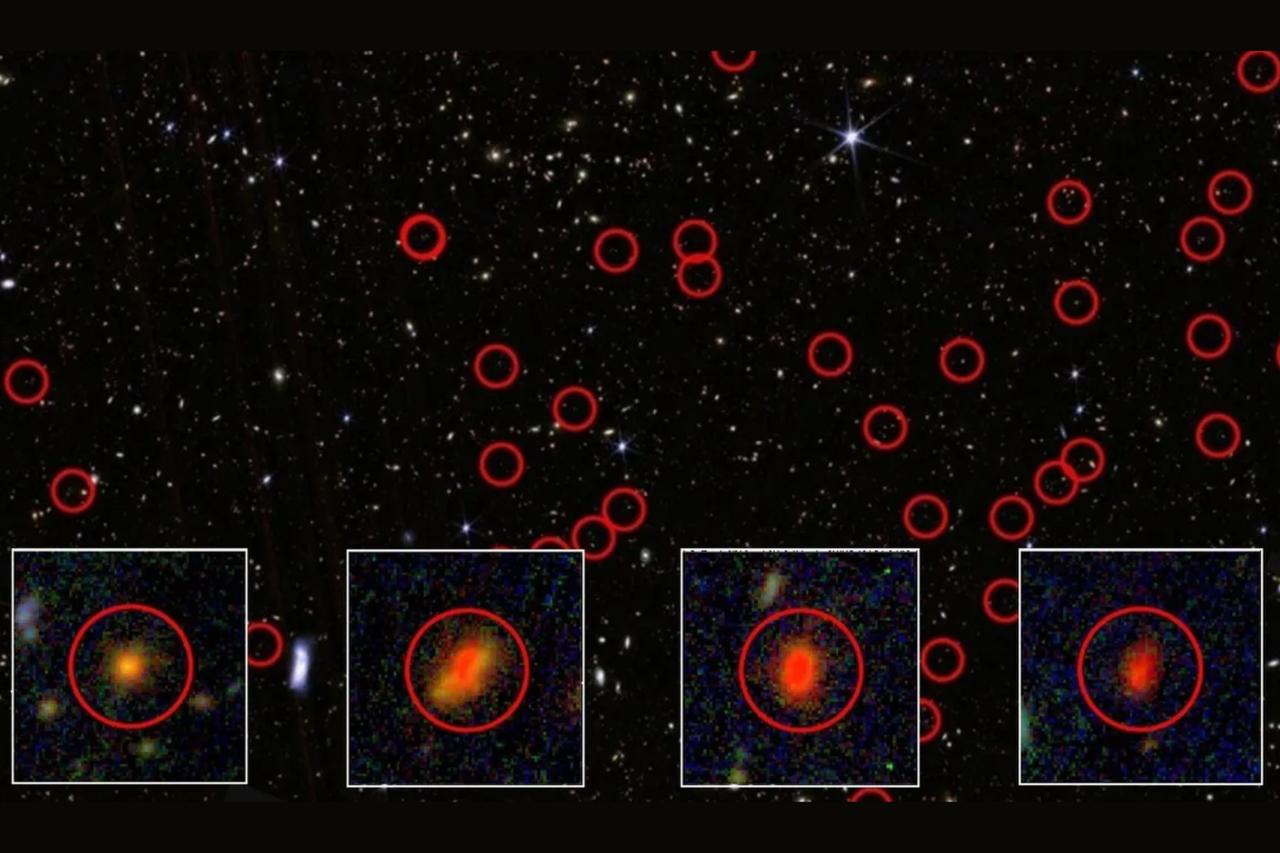


Astronomers using the James Webb Space Telescope (JWST) have identified mysterious, compact objects in the deep reaches of space known as "little red dots."
These objects appeared when the universe was less than a billion years old. They are currently challenging our understanding of how the first giant structures in the cosmos formed.
New research suggests these dots might be the elusive "missing link" in cosmic history. Scientists are debating whether they are supermassive "monster" stars or nurseries for the universe's first supermassive black holes.
A study published in The Astrophysical Journal proposes that some of these red dots are not black holes.
Instead, they may be supermassive stars from the first generation of stars, known as Population III stars. These "monster stars" form from primordial hydrogen and helium gas. They can reach masses up to one million times that of our sun.
Devesh Nandal, a researcher at the Harvard and Smithsonian Center for Astrophysics, explained that these stars produce specific light signatures. These signatures match the JWST observations. Unlike active black holes, these objects do not emit X-rays. They also do not show heavy metal signatures.
"If supermassive stars are real... then a little red dot would be the perfect place for them to hide," Nandal said to Live Science. These stars burn through their fuel quickly. They remain bright for as little as 10,000 years before they collapse.
Another theory suggests the little red dots are "heavy seeds."
These are black holes that formed directly from vast gas clouds rather than from dying stars. This process is called direct collapse. It allows a black hole to start its life with a massive head start. These seeds can be tens of thousands to a million times the mass of the sun at birth.
Elia Cenci of the University of Geneva leads a team connecting these dots to direct-collapse black holes.
They use high-resolution simulations to study cosmic evolution. This theory could explain why the JWST has found so many supermassive black holes existing only 500 million years after the Big Bang.
The mystery remains because little red dots disappear from the cosmic record about 1.5 billion years after the Big Bang.
This suggests the conditions required to create them only existed in the very early universe.
Astronomers are looking for specific clues to solve the puzzle:
"For the first time, we would have real laboratories to understand the conditions under which giant black holes have formed," Cenci noted regarding the potential of these discoveries.


 Set as preferred source
 Set as preferred source



 2 min read