Newsletters




A conversation with a friend, a relaxing stroll along the aisles of a bookstore, promotional stands, a review in the newspaper: that is how we used to discover books. Today, one TikTok community can convince you to purchase and read a 700-page novel in a single minute. It’s called BookTok, and it’s more than the sum of its parts.
BookTok creators post (often sentimental and amusing) video reviews on the books they read. Users engage with one another by sharing their TBR (to be read) lists and the books they DNF’ed (did not finish), as well as posting unboxing and bookshelf tour videos. The reviews are less about literary techniques, characterization, and structure than about emotional resonance, tropes, pacing, and world-building. Creators use emotive phrases like “shook,” “verklempt,” and “gutted” as they share their favorite quotes and thoughts on plot lines, hype up upcoming releases, and promote authors whose works they enjoy.
Like several other online communities, BookTok is a child of the COVID-19 pandemic, when “TikTok was downloaded 315 million times globally” in Q1 2020, “a 58% increase from the previous quarter,” according to a study by Yachao Li and colleagues. Stuck at home during lockdown, people began sharing their pastimes on TikTok, and thus BookTok was born.
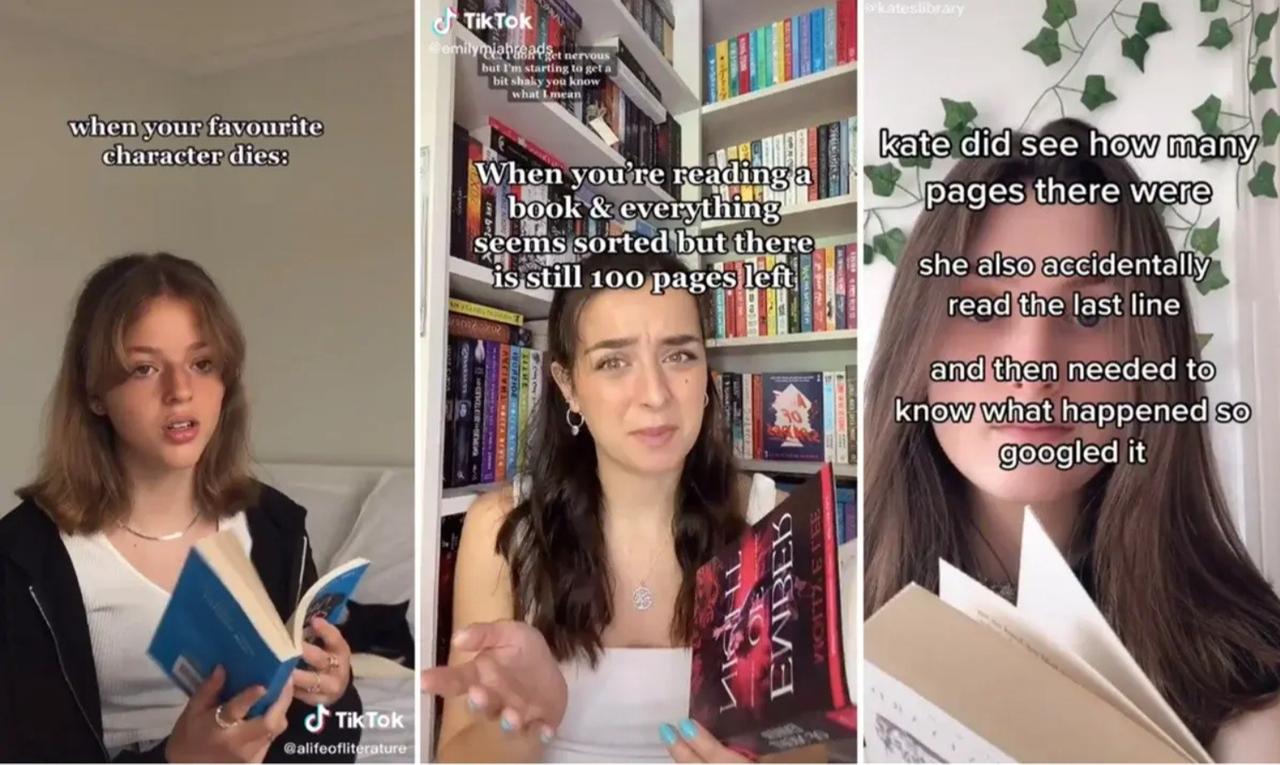

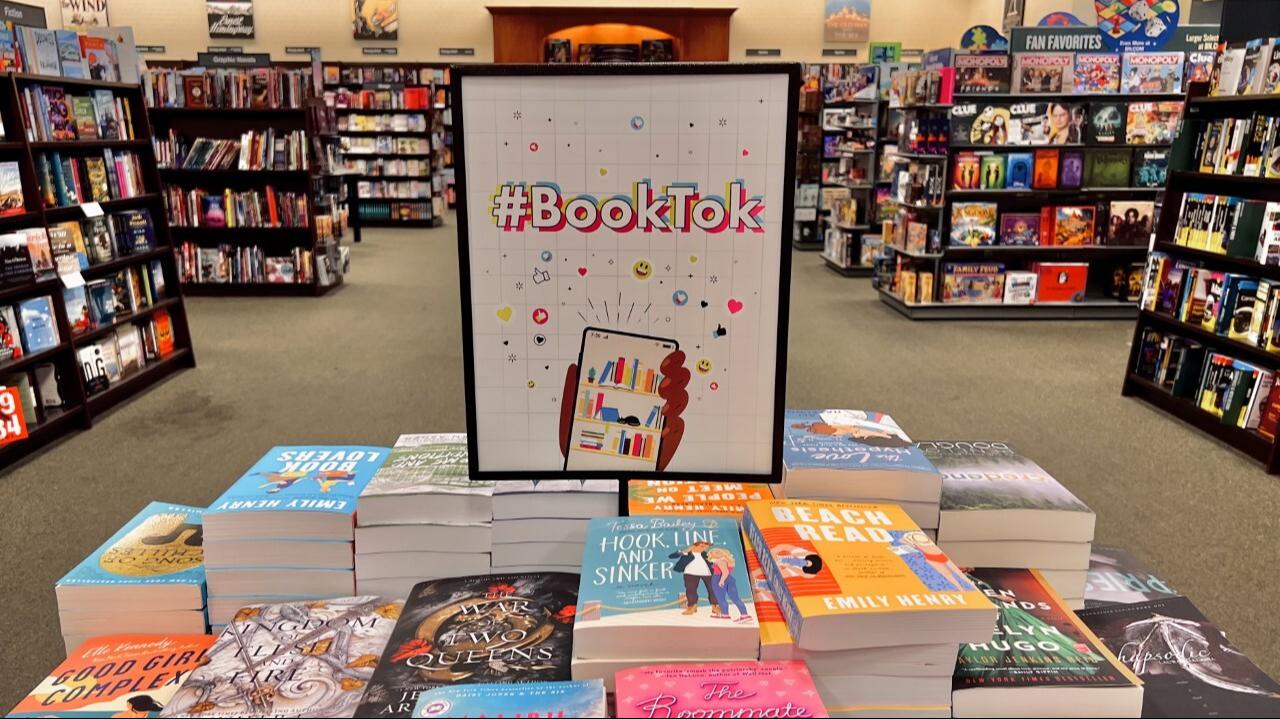
The community consists of millennial and Gen Z users, “particularly women aged 25-34,” according to a 2024 study by Jeroen Dera. Critics dismiss their emotionally charged and aesthetic-oriented reviews as performative and reductive, but publishers and researchers are increasingly taking note of the community’s power to send books flying off the shelves. Market analysis firm Media Control found that “more than 50 million books recommended by TikTok's #BookTok community have been sold across Europe, generating €800 million in revenue in 2025.”
The algorithm tests a BookToker’s content on a small audience and pushes content that generates strong engagement to a larger audience likely to be interested in it. The algorithm continuously evolves as users’ viewing habits change and TikTok adjusts its recommendation systems.
The biggest BookTok creators count their followers in the millions and post on a wide variety of genres from horror to classic literature. They help newer titles become more visible and even help younger readers rediscover classics like Dostoevsky’s “White Nights” or modern favorites like Madeline Miller’s “The Song of Achilles.”
After going viral on BookTok in 2020, Colleen Hoover’s 2016 novel “It Ends With Us” enjoyed a second wind of success. Hoover leaned into this popularity, growing her personal TikTok account by sharing snippets from her life to bond with her audience. Her community even shaped her later work: they demanded she write a sequel—which she did, to remarkable success.
Indie authors, meanwhile, use BookTok to build an audience base and become more attractive to traditional publishers. The platform helped writers like Shelly Leigh and Alex Aster secure re-releases and publishing deals, and acquisitions departments are increasingly following BookTok engagement metrics when signing new titles. But BookTok is affecting more than industry habits.
The titles that perform best within this community belong to a relatively new genre called “romantasy.” A portmanteau of the words “romance” and “fantasy,” the genre is characterized by high-stakes world-building and romance arcs that, unlike traditional fantasy novels, play a central role in the story.
While romantasy may be new, the demand for dramatic scenes, sudden plot twists, and love stories is not. And BookTok is helping to change the way we view this demand.
“I do conclude, that you are neither more nor less than some old Fellow of a College, who never saw any thing of the world beyond the limits of the University, and never conversed with a female, except your bed-maker and laundress. I therefore give you this advice…let us see some nice affecting stories, relating the misfortunes of two lovers…your hero and heroine must possess a great deal of feeling, and have very pretty names.”
This witty setdown is from a 1789 letter to The Loiterer, an Oxford periodical focused on student life, sent in by “Sophia Sentiment.” Sophia simultaneously makes light of romance tropes and demands them as she accuses the publishers of the periodical, Henry and James Austen, of overlooking the interests of their female readership, “[as] if you thought, like the Turks, we had no souls.” Uncalled for, Sophia. I love two things about this letter. One: Some attribute it to the publishers’ sister, a thirteen-year-old Jane Austen. Two: It reflects the age-old reflex to make self-effacing fun of our guilty-pleasure reading.
Literary value was, and to an extent still is, the purview of Western, male intellectuals who prize complex texts that take a specific kind of education and cultural background to decode. Works that are easily consumed are dismissed as “escapist fiction.” In this hierarchical structure, it is effort on the reader’s part that defines value, not enjoyment.
And if your reading habits veer more toward the gothic, the mysterious, and the entertaining, that means your identity as a reader is suspect too: you are a reader of trash, not a real one.
BookTokers are unapologetic and vocal about how much they enjoy their favorite books, which often include “escapist” elements like prophecies, unsolved mysteries, ancient artifacts, traumatic relationships, big bad, evil guys, and prolonged love scenes. It is a rejection of a long-standing tradition of letting others define what constitutes socially acceptable reading.
The result is a subversive celebration of feminine joy in a culture that often scorns one gender’s entertainment habits as lowbrow, while praising equivalent male-dominated genres (like superhero films) as financial powerhouses.
Ranting over cliffhangers under a ring light, showing off color-coordinated bookshelves, crying over quotes on video. Some of it is indeed performative. But I ask you, dear reader, is it any more or less performative than strutting around campus in an olive-green parka, carrying the Communist Manifesto with the cover facing out?
What makes BookTok a community to watch is not the interest in the performance of reading, fantastical creatures, or romance plots; it’s that readers themselves are driving discovery of new titles and challenging pre-established concepts of good reading.
More than two centuries after Sophia Sentiment delivered her facetious reprimand, her wish for recognition is validated by the millions. The tearjerker, the gruesome thriller, the bodice-ripper: they are no longer hidden in paper bags or behind dust jackets but displayed by the dozen. And if that leads more people to the bookstore, then all’s well that reads well.


 Set as preferred source
 Set as preferred source


 1 min read