Newsletters


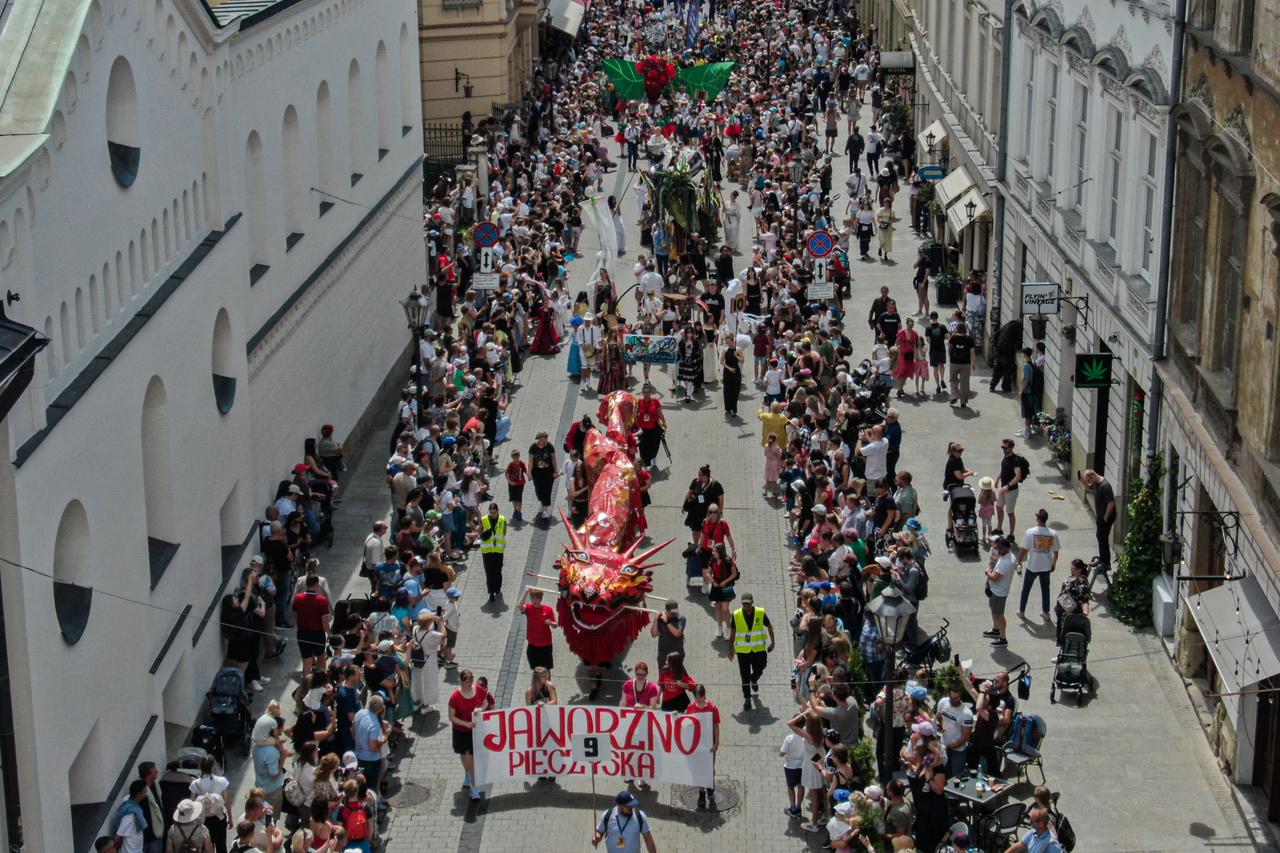


The 25th edition of the Great Dragon Parade concluded today, with its signature street procession through the historic center of Krakow.
Organised annually by the local Groteska Theatre, the two-day festival serves as a cultural celebration centered on the myth of the Wawel Dragon, an enduring symbol of the city’s identity and folklore.
The Sunday afternoon parade followed a large-scale multimedia outdoor spectacle held the previous evening on the Vistula River, shifting the focus of the weekend’s events from professional artists to local community participants and regional youth.
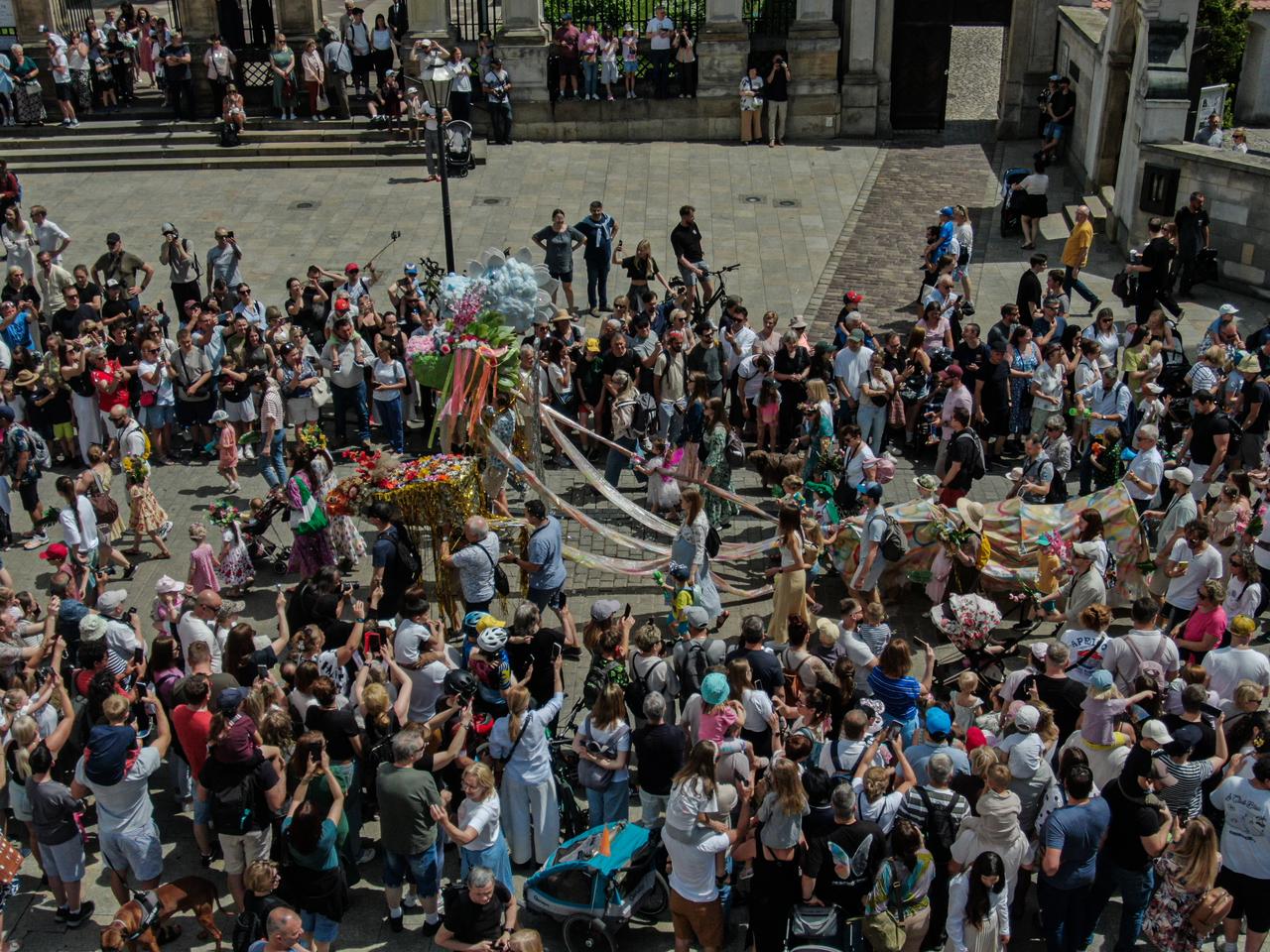

The street parade commenced promptly at 12:00 PM, forming near the green belt of Planty Park before moving down Grodzka Street, one of the oldest thoroughfares in Krakow.
The procession advanced into the Main Market Square (Rynek Glowny), one of Europe's largest medieval town squares, which served as the primary gathering point for spectators and officials.
The parade featured dozens of large-scale dragon puppets, many measuring several meters in length. These puppets were designed, constructed, and animated by children and teenagers representing schools, kindergartens, and community cultural centers from across the province of Małopolska.
The youth puppeteers were accompanied by a variety of performers, including stilt-walkers, dancers, jugglers, and regional youth brass bands providing live musical accompaniment.
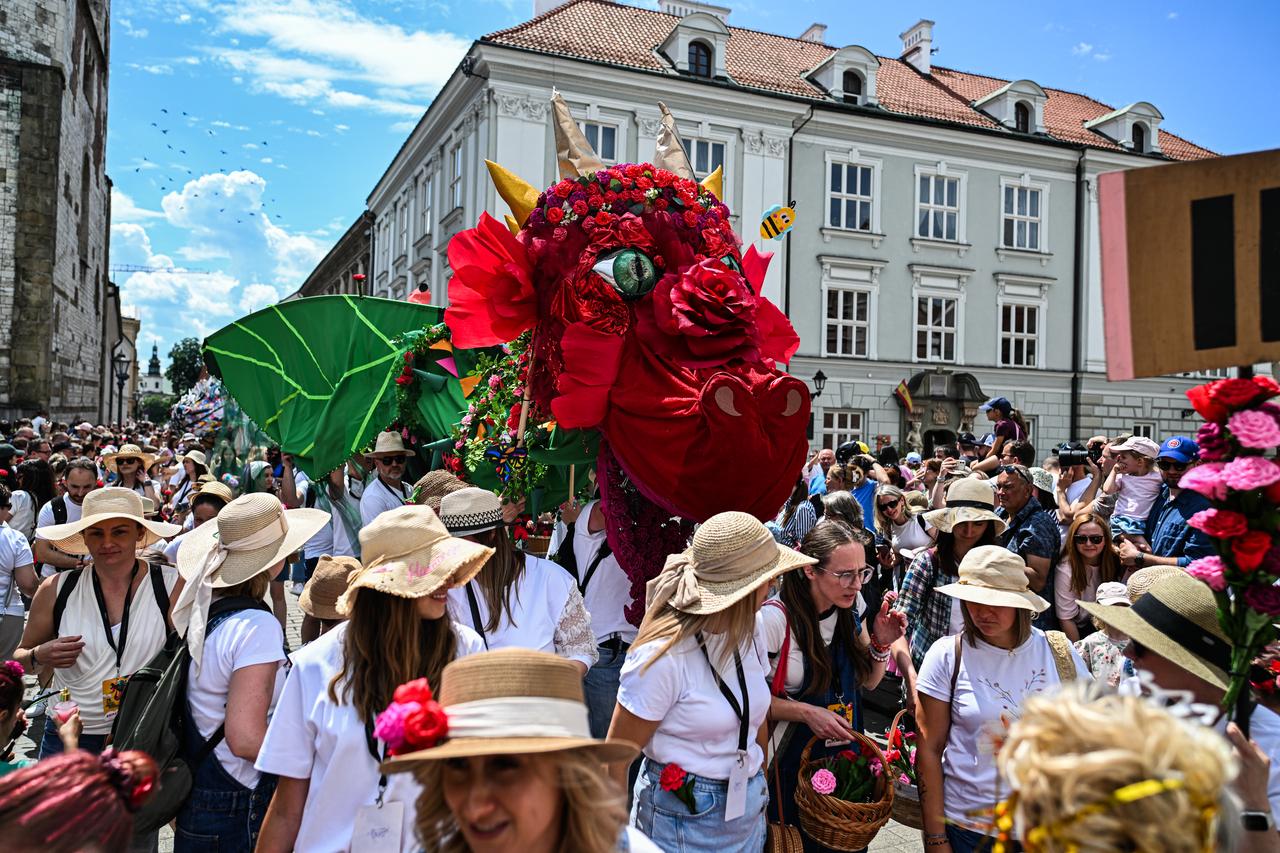
Upon arriving at the main square, the participants presented their handmade creations before a panel of judges positioned near the historic Cloth Hall (Sukiennice).
The panel evaluated each entry based on three primary criteria, starting with artistic design, which takes into account originality, color composition, and use of materials.
The judges also analyzed the structural engineering and mechanical functionality of the puppet during movement, alongside the collective choreography and animation demonstrated by the team.
The Great Dragon Parade was established 25 years ago to foster creative education and preserve regional heritage among younger generations.
Over the past two decades, the event has expanded in scale, becoming a fixture of Krakow's early summer tourism calendar that draws substantial crowds of both domestic residents and international visitors to the central district.


 Set as preferred source
 Set as preferred source



 1 min read