Newsletters


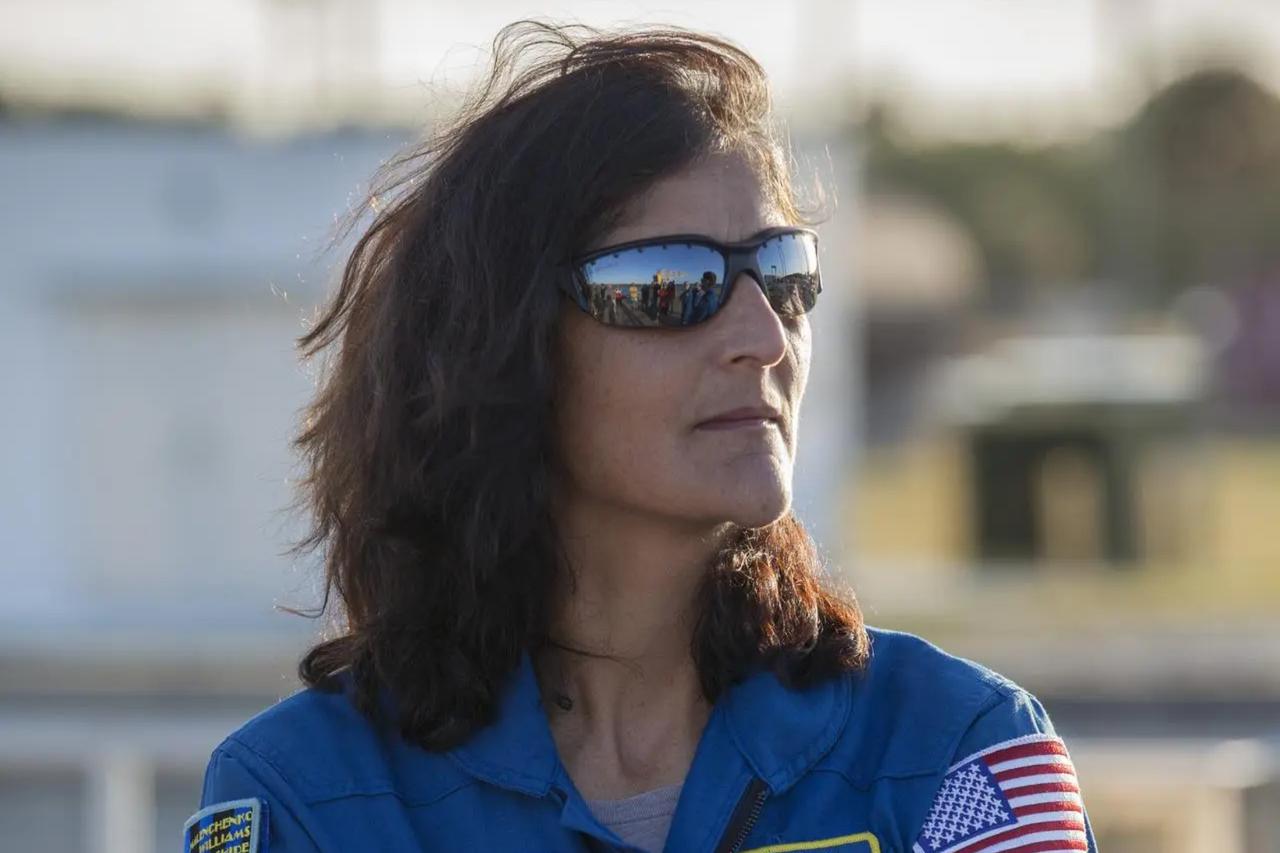


NASA astronaut Sunita “Suni” Williams has retired from the U.S. space agency after a 27-year career, closing one of the most accomplished chapters in modern human spaceflight. Her retirement became effective on Dec. 27, 2025, following a career that spanned space shuttle missions, long-duration stays aboard the International Space Station (ISS), and a central role in NASA’s transition toward commercial spaceflight.
Over three missions to the ISS, Williams logged a total of 608 days in space, placing her second among NASA astronauts for cumulative time spent off Earth. She also ranked among the top Americans for single-mission duration, having spent 286 consecutive days in orbit during missions involving Boeing’s Starliner and SpaceX’s Crew-9 spacecraft. These missions are part of NASA’s Commercial Crew Program, which relies on private companies to transport astronauts to and from low Earth orbit, a region of space where satellites and the ISS operate.
NASA Administrator Jared Isaacman said Williams’ leadership aboard the space station helped shape the future of exploration, while also laying groundwork for Artemis missions, NASA’s program aimed at returning humans to the Moon and eventually sending crews to Mars.
Williams carried out nine spacewalks, accumulating more than 62 hours outside the station. A spacewalk, formally known as an extravehicular activity, involves astronauts leaving the spacecraft to perform repairs or upgrades in open space. Her total time ranks as the highest by a woman and fourth overall in spaceflight history. She also became the first person to run a full marathon in space, using a treadmill adapted for microgravity conditions.
NASA officials at Johnson Space Center in Houston highlighted her pioneering role, noting that her test flight duties during the Boeing Starliner mission marked a significant step forward for future commercial missions to orbit.
Williams first flew in December 2006 aboard space shuttle Discovery and later returned on shuttle Atlantis, serving as a flight engineer during Expeditions 14 and 15. During that mission, she completed four spacewalks, a record at the time. In 2012, she launched from the Baikonur Cosmodrome in Kazakhstan for Expedition 32 and later commanded Expedition 33, leading station operations and overseeing critical repairs to power and cooling systems.
Her most recent mission began in June 2024, when she and fellow astronaut Butch Wilmore launched aboard Starliner for its crew flight test. They later joined Expeditions 71 and 72, with Williams again taking command of the ISS before returning to Earth in March 2025 aboard a SpaceX spacecraft.
Beyond flight duties, Williams held key leadership and training roles within NASA. She served as deputy chief of the Astronaut Office, later directed operations in Star City, Russia, and helped set up a helicopter training program designed to prepare astronauts for future Moon landings. Earlier in her career, she also took part in NASA’s NEEMO program, which places astronauts in underwater habitats to simulate the isolation and teamwork required for space missions.
A native of Needham, Massachusetts, Williams is a retired U.S. Navy captain with degrees from the U.S. Naval Academy and the Florida Institute of Technology. She logged more than 4,000 flight hours across 40 different aircraft, reflecting a career that bridged military aviation and space exploration.
As she reflected on her career, Williams said space had always been her favorite place, adding that the ISS, its people, and its science made the next steps toward the Moon and Mars possible. She expressed excitement about watching NASA and its partners make history in the years ahead.


 Set as preferred source
 Set as preferred source


 1 min read
 1 min read