Newsletters


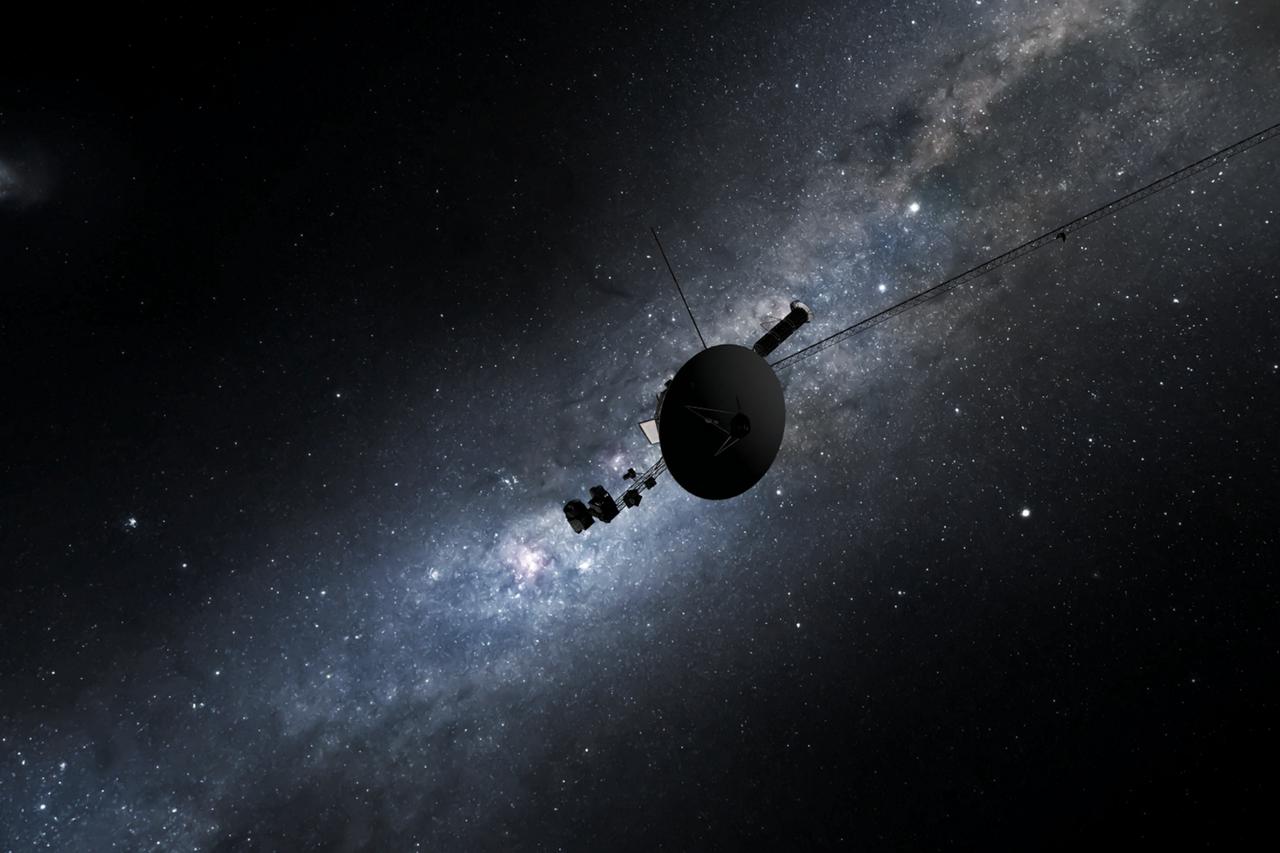


NASA’s Voyager 1 spacecraft is set to become the first human-made object to reach a distance of one light-day from Earth on Nov. 18, according to The Associated Press (AP).
The spacecraft is more than 26 billion kilometers (16.2 billion miles) from Earth. Light, which travels at about 300,000 kilometers (186,000 miles) per second, needs 24 hours to cover that distance
A command sent from NASA to Voyager 1 therefore takes one day to arrive, and the reply takes another day to return to Earth.
Voyager 1 is expected to need about 18,000 years to reach one light-year and more than twice that long to pass near another star.
Voyager 1 launched in 1977 alongside its twin, Voyager 2, to study the solar system's outer planets. It lifted off about two weeks after Voyager 2 but traveled faster and overtook its twin.
Voyager 1 flew past Jupiter in 1979 and Saturn in 1980, collecting images and scientific data on both planets. In 2012, it left the region of particles created by the sun and became the first human-made spacecraft to enter interstellar space.
Voyager 2 also visited Uranus and Neptune and entered interstellar space in 2018. It is expected to reach a distance of one light-day from Earth in 2035. Both spacecraft continue to travel at about 61,000 kilometers per hour (38,000 miles per hour).
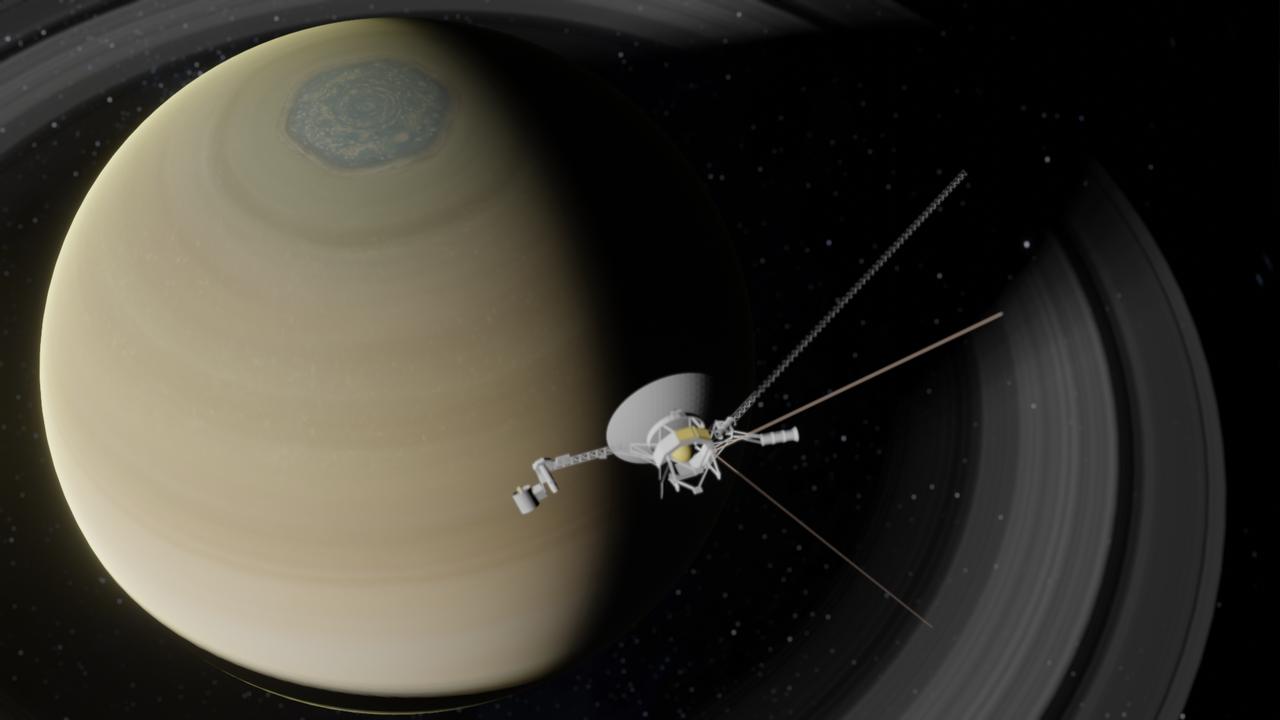

Despite their age and technical problems, both spacecraft continue to send scientific data to Earth. They collect information on the strength and direction of magnetic fields, pressure, dust particles and galactic cosmic rays in interstellar space.
Suzanne Dodd, NASA’s Voyager project manager who has worked on the mission since 1984, likened the spacecraft to weather satellites operating in deep space.
A small team at NASA’s Jet Propulsion Laboratory (JPL) in California sends commands to the spacecraft about once a week. When technical issues arise, the team consults retired engineers who previously worked on the project.
In September, NASA took new measures to reduce the power consumption of the plutonium-powered Voyager 1. The spacecraft briefly lost communication with Earth in October, and engineers are still investigating the cause.
In 1990, Voyager 1 took the photo of Earth known as “Pale Blue Dot” from beyond Neptune’s orbit. The image shows Earth as a small point of light against the darkness of space and is the farthest image of the planet ever captured.
Astronomer Carl Sagan, who proposed the photo, said it reminded humanity of its place in the universe and described Earth as an extremely small dot on a vast cosmic stage.
Each Voyager also carries a golden record, 30 centimeters (11.8 inches) in diameter, prepared under Sagan’s leadership to present life on Earth.
The records contain greetings in 55 languages, images of Earth and various drawings. They also hold a message from Sagan’s then 6-year-old son, Nick: “Hello from the children of planet Earth.”
Dodd described the records as a time capsule of life on Earth in 1977 and said she hopes another life form finds them one day.
NASA has invited people worldwide to join a light event after sunset on Tuesday, Nov. 17, to mark the milestone. Participants are asked to use phone lights or flashlights to send the letters “V-G-R”, Voyager’s call sign, toward the sky in Morse code.


 Set as preferred source
 Set as preferred source



 2 min read