Newsletters




Mithridates VI, ruler of Pontus, spent his reign solving a specific problem. His father had been poisoned, and his mother had tried to poison him.
The court was, in this respect, not a safe environment, forcing him to search for solutions with the thoroughness of a man who had run out of people to trust.
He assembled a team of botanists, physicians and shamans, tested compounds on prisoners, and consumed his evolving antidote daily until he had made himself so thoroughly poison-proof that when he eventually tried to kill himself—his armies defeated, his kingdom lost, the Romans at the gate—no toxin would take effect.
He increased the dose. Nothing. He tried a different preparation. Still nothing. Finally, he was obliged to ask a soldier to run him through with a sword, which, to nobody’s surprise, worked.
According to the conventional, rather tendentious, narrative, this highly effective recipe soon passed to Rome, where Pompey found it in his cabinet and had it translated. From there it went to Galen, who labeled it "theriac" (from "theriakos," a cure for animal bites and stings) and recommended it to Marcus Aurelius.
From Galen it travelled to Avicenna, who called it "tiryaq," and from there it went to the Venetians, who exported it across Europe under the name “Theriaca Andromachi,” the theriac of Andromachus, i.e., Nero’s personal doctor, and charged accordingly.
In this rather mad translatio medicinae, the English, who imported it by the galley-load and garbled the classical Greek, called it TREACLE, which is why the word that now means something a child pours on porridge originally meant a universal antidote compounded from 64 ingredients, including viper's flesh, opium and beaver musk. The English tongue has a gift for this kind of demotion.
The recipe travelled for 15 centuries, accumulating ingredients, sponsors, and implausible claims, without anyone being entirely sure it worked.
Any failure, the medical consensus held, was not the fault of the paste but defective ingredients or insufficient care in preparation. This is the logic of a dish that has learned to make its own credibility non-falsifiable, and the reasoning macun has triumphantly been running on ever since.
Finally, in 1527, macun appeared in the hands of Merkez Efendi, a Sufi physician attached to the Sultan Mosque madrasa. His patient was Hafsa Sultan—mother of Suleiman the Magnificent, recently widowed, mysteriously ill, and already surrounded by court doctors who had collectively failed her, despite being armed with the classic medical texts of trailblazers like Ibn Sherif.
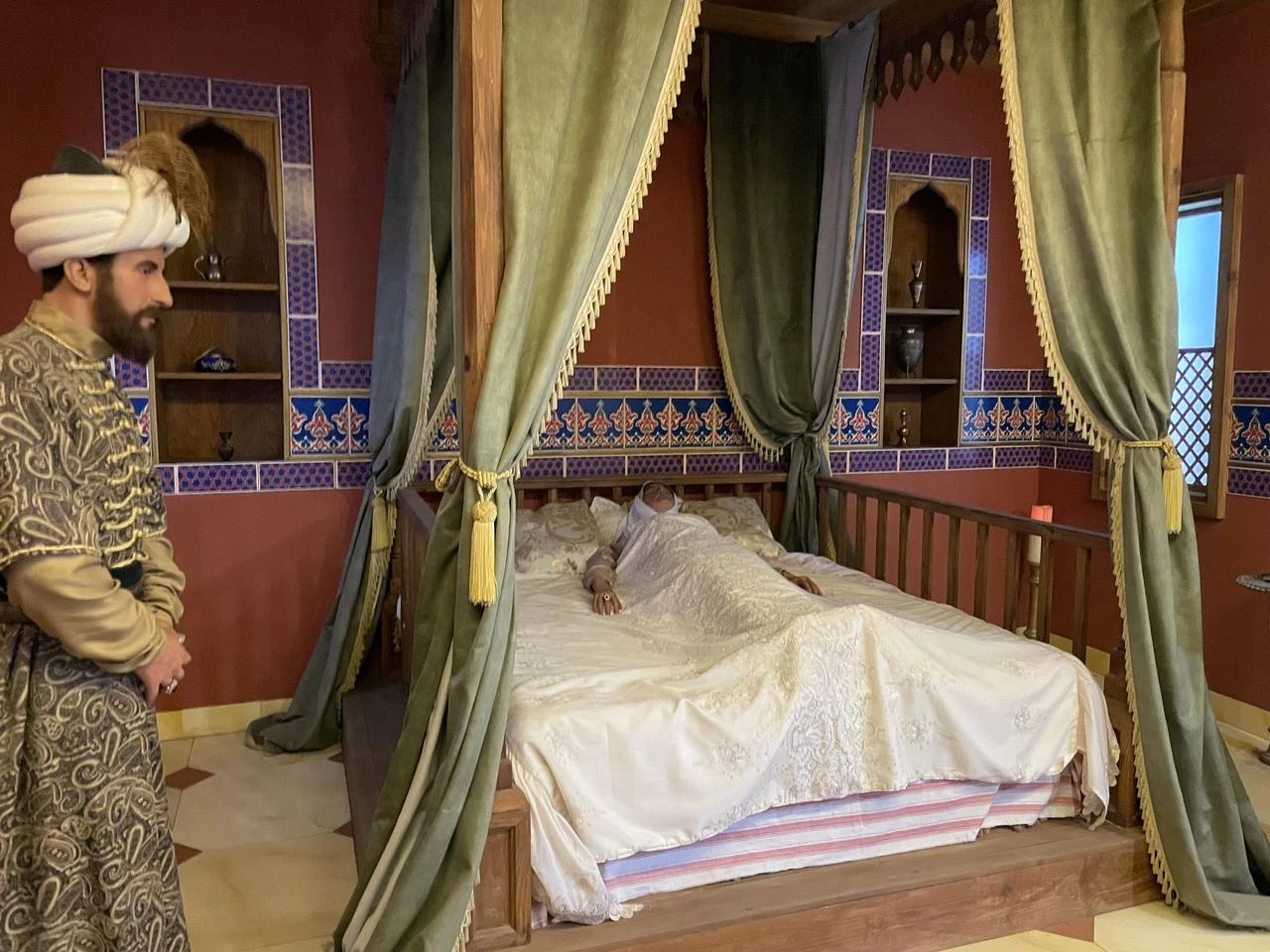

Merkez Efendi cured her, reportedly, with a paste of 41 herbs and spices, and in gratitude she ordered it distributed to the public each springtime.
The number 41 was not pharmacological; it simply carried symbolic weight in Islamic tradition.
Moreover, Merkez Efendi never wrote the recipe down, less out of artistic mystique than the fact that the spice trade was a cutthroat world of corporate espionage where a single loose page could turn your rival into a millionaire overnight.

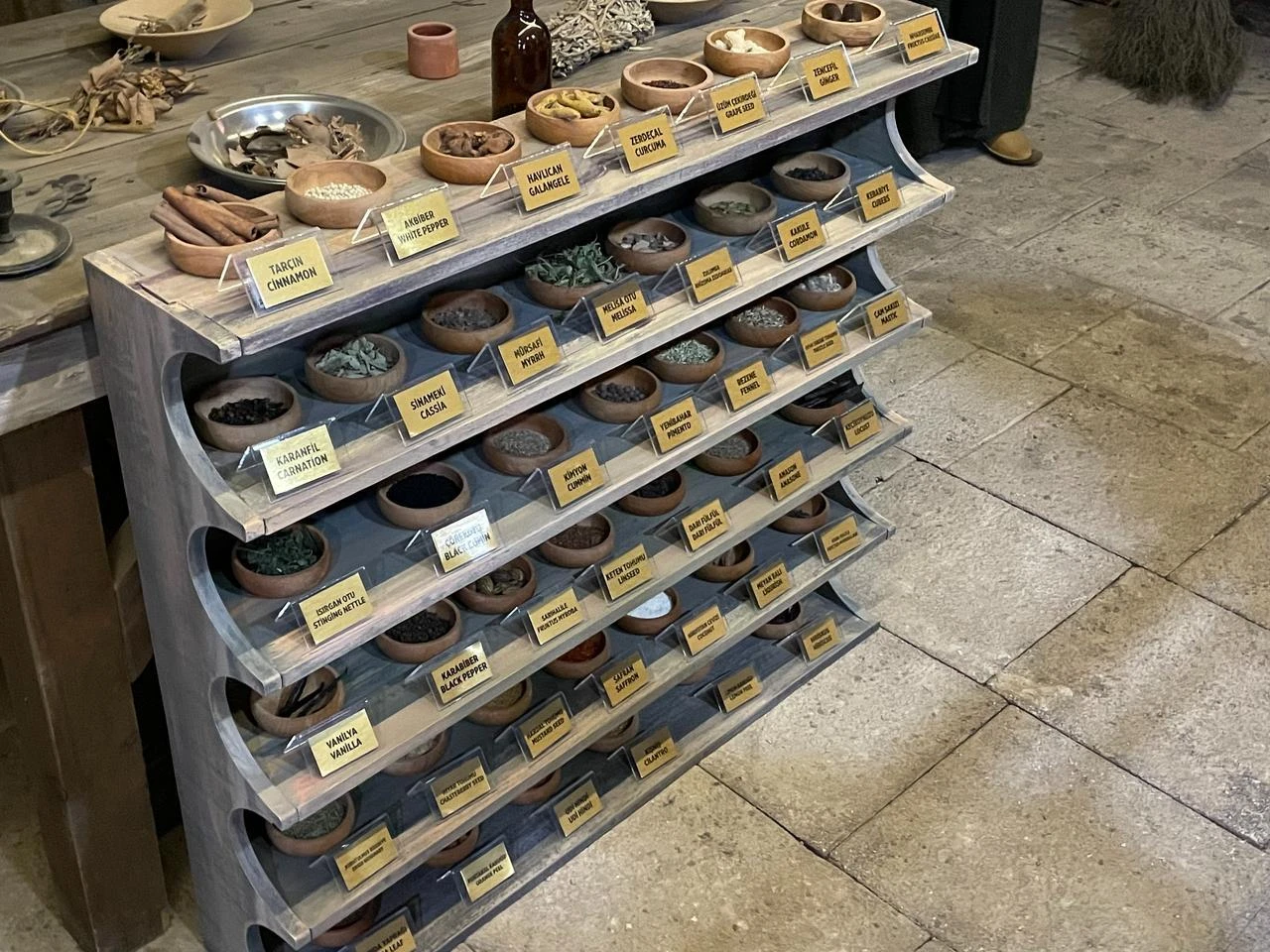
Modern producers work from 31 ingredients, several of the originals having been banned by the Turkish Ministry of Agriculture because they are actively harmful.
To reach the theologically necessary 41, some now quietly add vanilla and allspice, displacing old crowd-pleasers such as opium poppy (sending morphine and codeine direct to your bloodstream) and senna leaf (a violent laxative).
The result is magnificent nonsense.
A paste supposedly devised in the 16th century, blessed by 28 imams and distributed as public medicine, has been retrofitted with ingredients from a continent its inventors did not know existed to satisfy a number with no pharmacological meaning.
This is not hypocrisy, but tradition doing what it has always done, namely surviving by pretending its repairs are original features.
Macun has never really been a recipe. It is more of an argument with sugar in it.
Mithridates gave it paranoia. Galen gave it Latin. Avicenna gave it Arabic learning. Venice gave it packaging. The Ottomans gave it theology. The Ministry of Agriculture gave it paperwork.
At every stage it acquired a new authority and shed an old ingredient, which is more or less the history of civilization, except stickier.
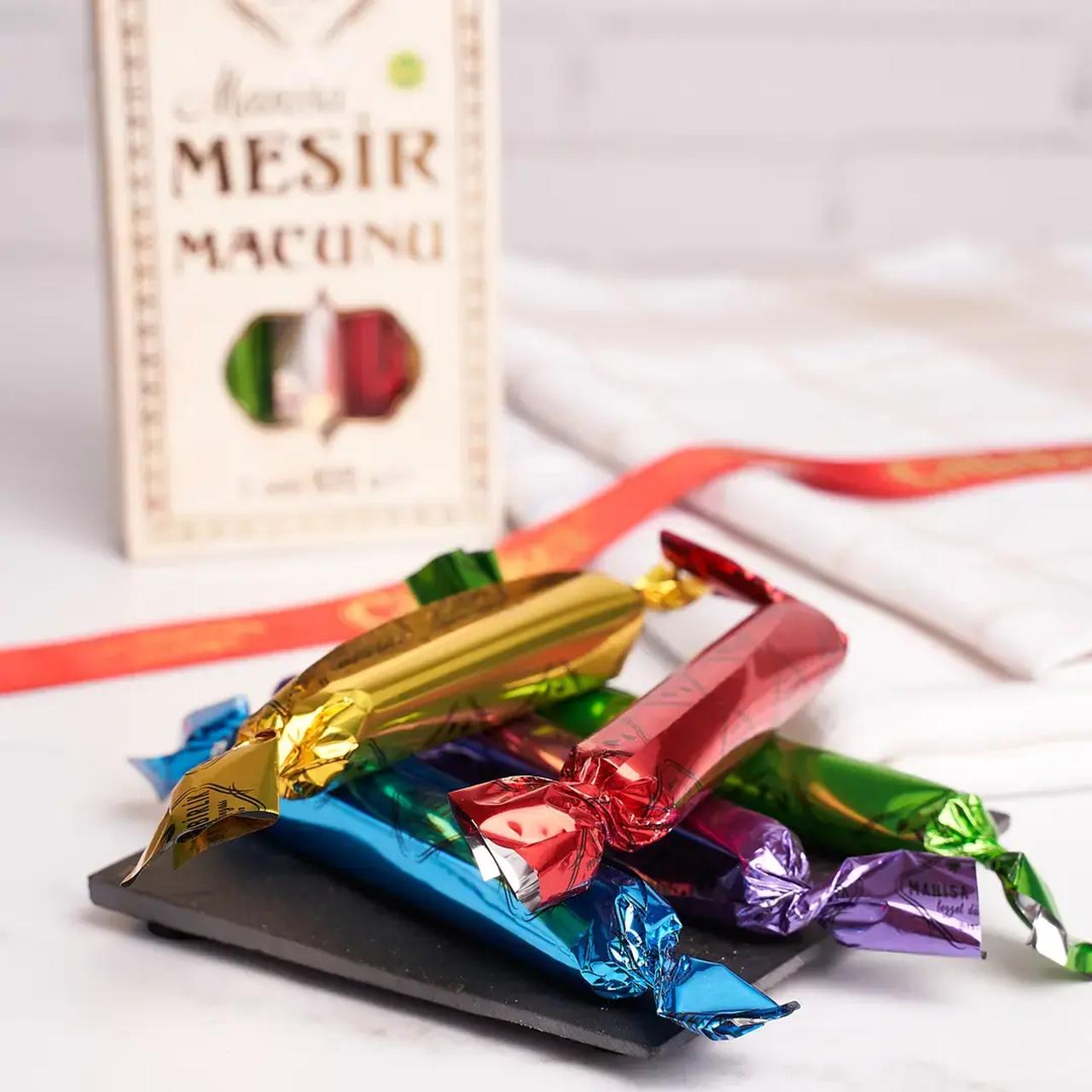
Nowadays, every springtime in Manisa sees 8 tons of the paste scattered from 44 points simultaneously—minarets, domes, and whatever balconies are within range—while a 45-piece orchestra in Ottoman costume plays and actors re-enact Hafsa Sultan's recovery with the dramatic commitment of people who have done this 500 times and have stopped questioning it.
Tens of thousands come to catch what falls, some deploying upturned umbrellas to improve their yield.
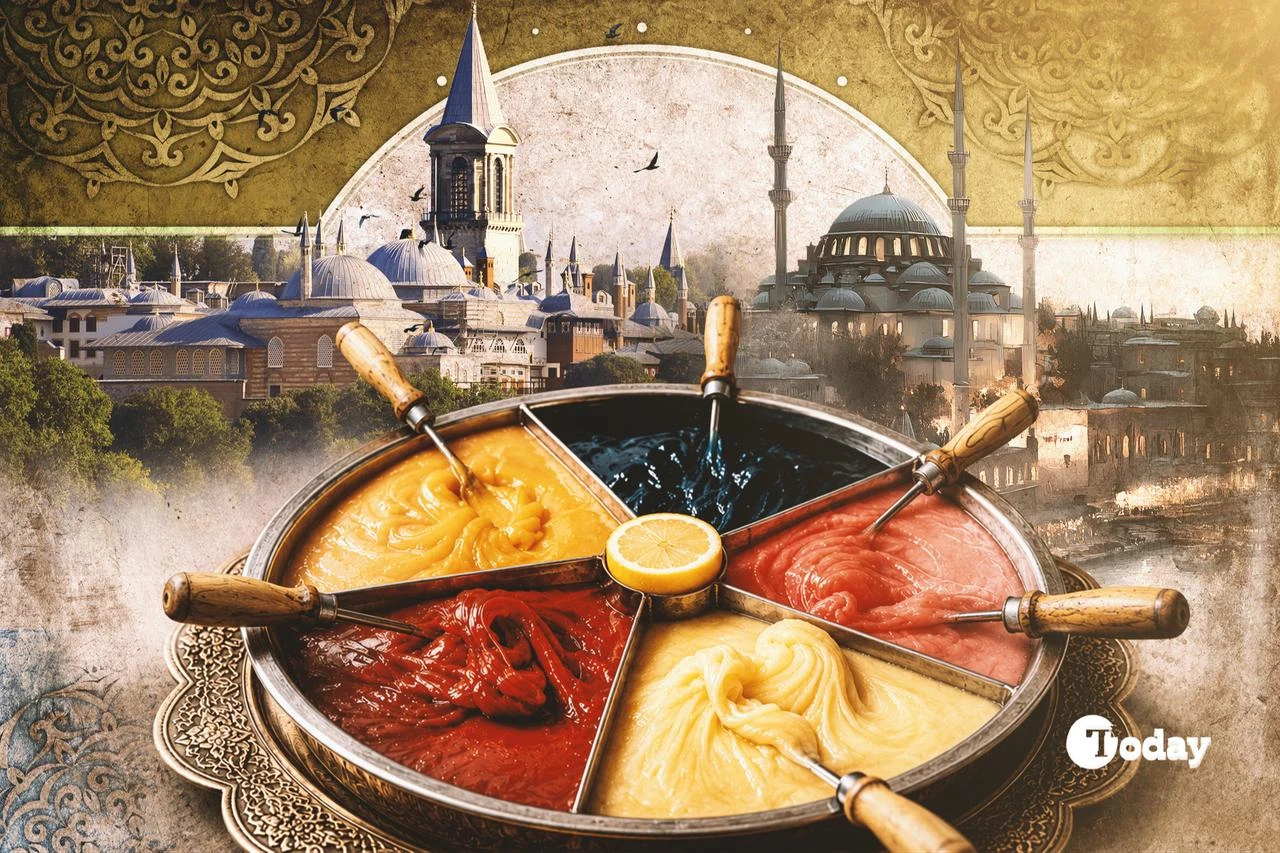
Their reward is sticks spun with neon spirals of yellow, pink and green, smelling of ginger and something more insistent underneath. Galangal. Long pepper. The back of the throat suddenly paying attention.
The first bite always anticipates sweetness but gets heat instead—not pepper-sauce heat but something older and slower, the warmth of a body being quietly reorganized from within.
It is medicinal in the way that wine is: in other words, it’s technically defensible and entirely beside the point.
The final word should go to Merkez Efendi's sarcophagus in Istanbul, which is surrounded by a wooden railing inlaid with mother-of-pearl and tortoiseshell and a plaque that describes him as "the light, the truth, and the center of the cosmos.”
Macun is also currently available on Amazon, marketed as Turkish Viagra, with a claimed 48-hour effect and a five-star review section that describes it in similar terms.
Ingredients
Method
1) Combine the spices
Mix the galangal, ginger, long pepper, cinnamon, cloves, black pepper and mastic in a small bowl. If grinding long pepper from whole, use a spice grinder rather than a mortar—it is denser than it looks and will defeat optimism.
2) Warm the honey
Warm the honey in a small saucepan over the lowest possible heat. You are loosening it, not cooking it. It should be fluid and fragrant but not bubbling. If it bubbles, you have made a different and inferior thing.
3) Bring it together
Remove from the heat. Stir in the spice mixture and the rosewater. Mix thoroughly until the paste is uniform and dark. It will smell, at this point, like the helvahane is supposed to smell: serious, medicinal and faintly imperial.
4) Jar and rest
Pour into a small sterilized jar. It will be quite fluid now and will thicken considerably as it cools to a dense, spreadable paste. Seal and leave at room temperature. Do not refrigerate—the honey is the preservative, which is why the Ottomans trusted it.
Notes
On galangal: Do not substitute regular ginger. They are related but not equivalent, and the galangal is the point. Both galangal powder and long pepper are available from Turkish supermarkets, Middle Eastern grocers, or online.
On mastic resin: Ground damla sakizi is available in Turkish supermarkets. It contributes the faintly resinous, piney note that palace recipes had and modern versions have largely lost. Its absence is noticeable only once you have used it.
On dosage: A hazelnut-sized amount after a heavy meal. The halvari would have been precise about this. You should be too.
On storage: Keeps for several months sealed at room temperature. The flavor deepens over the first week as the spices continue to work into the honey.
On the stick: Optional. Historically correct. Structurally inadvisable indoors.


 Set as preferred source
 Set as preferred source




 6 min read