Newsletters


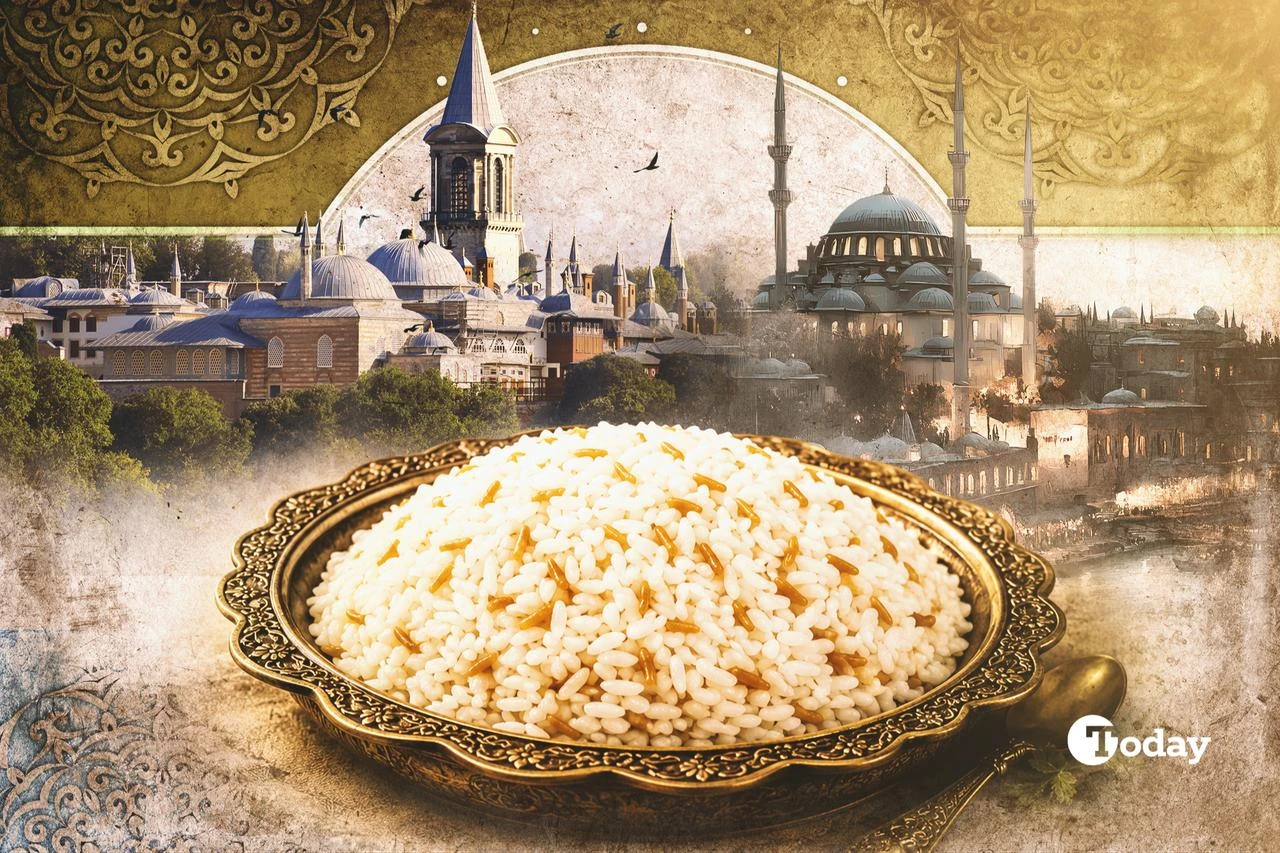


At five in the morning, while the rest of Tashkent is still staring down its alarm clock, a queue is already forming outside a low building near the television tower.
By six, it's several hundred strong, all waiting on a man with a ladle the size of a canoe paddle, standing over a cauldron you could bathe a horse in.
This is Besh Qozon—"five cauldrons"—the closest thing Central Asia has to a cathedral built around a single dish. The cauldrons run 350 kilograms apiece. The men who tend them are called "oshpaz" (master), and a good one can serve a thousand people from a single pot without it ever looking empty.
You can have it with quail eggs, with horse-meat sausage, all for less than the price of a flat white in London’s Borough Market, where a man in a quilted gilet will tell you, unprompted, about the bean's provenance. Which tells you everything about which economy got the better deal out of the last millennium.
Pilaf has only one real job, and it isn't nutritional: it's the dish that tells you when to leave. Every culture that adopted it kept this function and lost almost everything else.
Pilaf—pilav, pilau, palov, plov, depending on your society's relationship with the letter "u"—descends from the Persian pilav, itself a distant cousin of the Sanskrit pulaka, "a ball of rice," which already suggests there was too much of it. Soldiers marched on it and merchants crossed deserts on it, certainly, but none of that explains its quiet omnipresence.
Not even the backstories help. Central Asia's version, for instance, casts Alexander the Great in the lead role. Tired of losing men to three meals a day, he supposedly had his campaign cooks invent a dish that could feed an army once daily instead of thrice and then claimed the credit himself.
The version told at weddings involves a prince who fell for a woman beneath his station, was forbidden the marriage, and, utterly fearless of cliche, did what every lovesick prince does: went on hunger strike, and began the slow business of becoming what Victorian texts might describe as "wan" and "fey" as he (melodramatically) wasted away.
After several court physicians failed him in sequence, the king sent for Ibn Sina, aka Avicenna. "Let him marry the girl," Ibn Sina told the king, "or feed your son onion, carrot, meat, fat, salt, water, rice"—seven ingredients whose initials, in Uzbek, spell out the dish's own name, palov osh, a mnemonic so suspiciously neat it wasn't a diagnosis so much as a marketing department with a prescription pad.
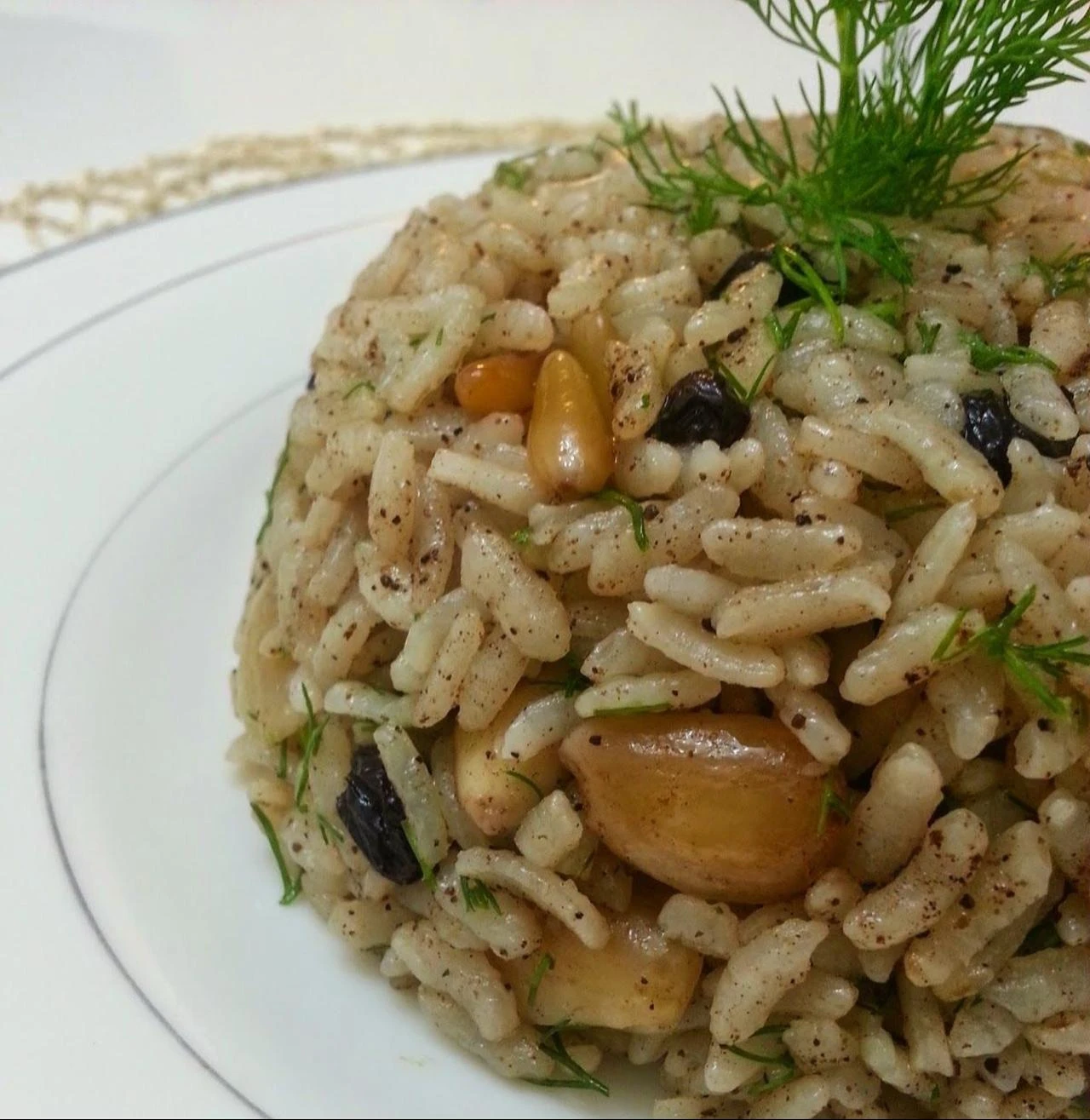
The Ottomans, characteristically, inherited the dish and immediately promoted it past its rank, so that it became iç pilav, rice buried alive beneath thick carpets of currants, pistachios, pine nuts, dried apricot and liver, dressing a soldier's ration in finery that suggested it had entirely forgotten where it came from.

Yet the remarkable thing about palace pilaf was never the contents but the social cues it summoned. At an Ottoman banquet, dishes arrived in an order that obeyed no European logic whatsoever.
Cake turned up between meat courses. Pastries appeared like foxes at dusk. Meat preceded soup, and soup preceded nothing in particular.
The whole performance had the structure of a fever dream, catered by men who had worked out, centuries before marketing departments did, that confidence is a better seasoning than consistency, and that nobody complains about a menu they don't understand.
Only pilaf followed a rule: it came last, always.
And it only ever struck one pose: heaped into a ginormous dome, a shape that could only be pulled off by flipping it perfectly onto the serving plate, a small piece of theater that demanded total confidence, since a pilaf that collapses on the flip has ruined the only flamboyance it had to offer.
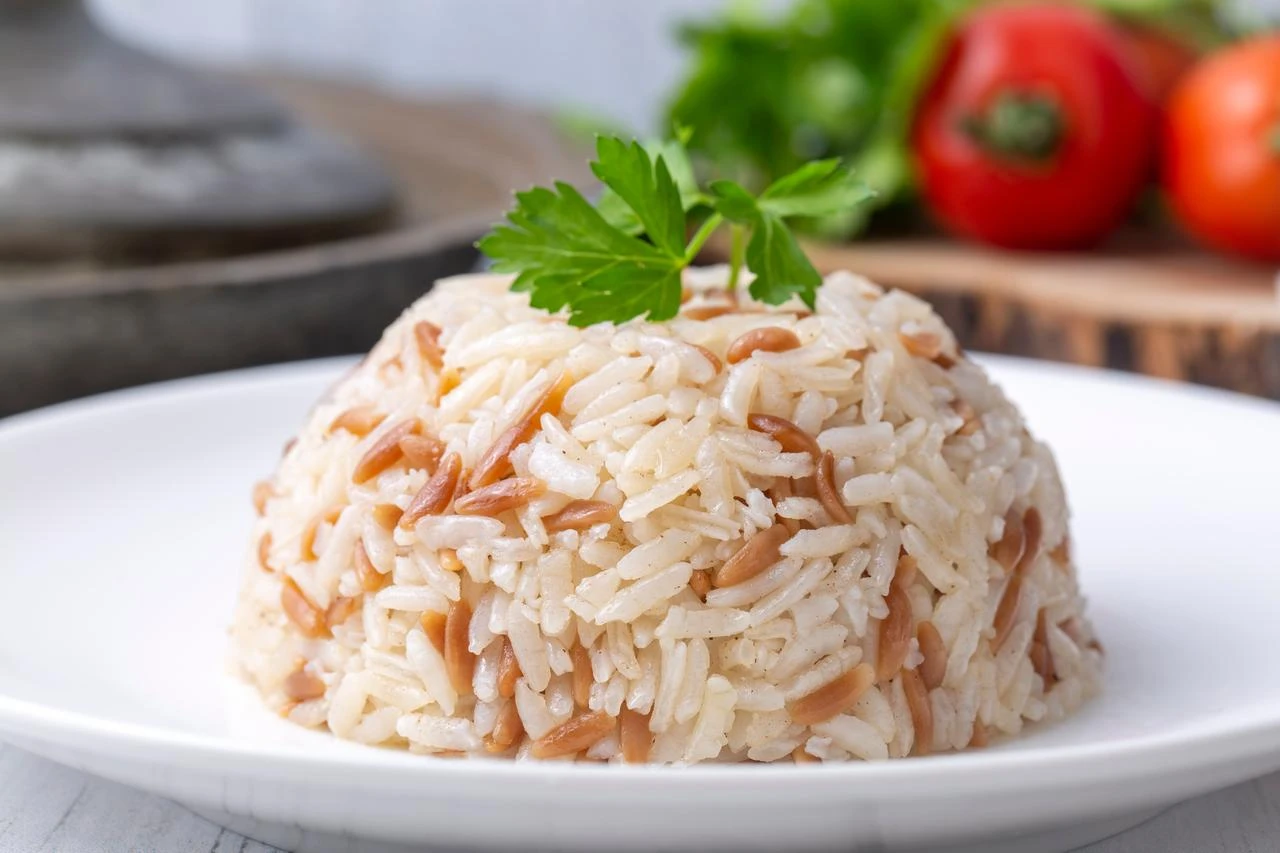
Done properly, its arrival meant one thing: the empire had decided you'd had enough of its hospitality. Everything eaten up to this point had been a delight, but past this grain-based Rubicon, absolutely nobody gobbles with impunity.
All this lore is, naturally, wasted on the West, which has invented many paths to disrespect the dish. One aggressor is the wellness industry. Unable to improve on rice, it replaced it with blended cauliflower—a vegetable psychologically broken and made to impersonate a staple.
The second aggressor is the British gastropub, which serves pilaf as a £7.50 side dish, served underdone (an overcorrection of their grandmother’s overdone version) in a miniature copper pan, and three pomegranate seeds positioned with tweezers by a set designer who once saw a documentary about Istanbul.
The whole thing is then described on the menu as "fragrant"—a word doing the work of several apologies at once. It’s mood-setting for a romantic evening in the Orient while simultaneously screaming that it’s actually Thursday night in Balham.
If you've read this far, you've found a marvelous detour to avoid staring down the pot on your actual stove. It's all that's left of last night's meal, and it has spent the hours since compressing quietly, muttering darkly about fate, now that it suspects it has outlived its original purpose.
This puts you in good company. Many of us have stared down the same cold dawn and the same accusing starch. The Gujaratis solved this with vagharelo bhaat, leftover rice fried hard with mustard seed and curry leaf until it improved on what it used to be. The Chinese fried rice is a riff on the same theme. The English bubble and squeak … well, actually, that’s its own thing.
You will solve it on Wednesday morning, standing at the counter, eating it cold with a fork, telling nobody—which is not a tradition and certainly not a cuisine, but is, at least, an ending. And endings, nobody can dispute, are the only thing a pilaf knows how to serve.
(the version you make tonight and are still dealing with on Thursday)
*Serves four. Or six. Or, in practice, you and a Tuesday.
For the iç pilav (Ottoman palace version, if you're feeling ambitious):
On quantity: you will make too much. This is not a mistake. It is the dish working as designed.
On leftovers: the next day, fry in butter with an egg cracked in, season aggressively, eat standing at the stove. Do not plate it. Do not tell anyone.
On the palace version: add the currants, pine nuts and almonds after fluffing, with the dill. Serve to guests you wish to impress, then inform them, via the pilaf's arrival, that the evening is over.
On the cinnamon stick, cardamom pods, cloves and bay leaf: fish them out before serving, or tell your guests they are traditional and watch them eat around them with misplaced confidence.


 Set as preferred source
 Set as preferred source



 3 min read