Newsletters


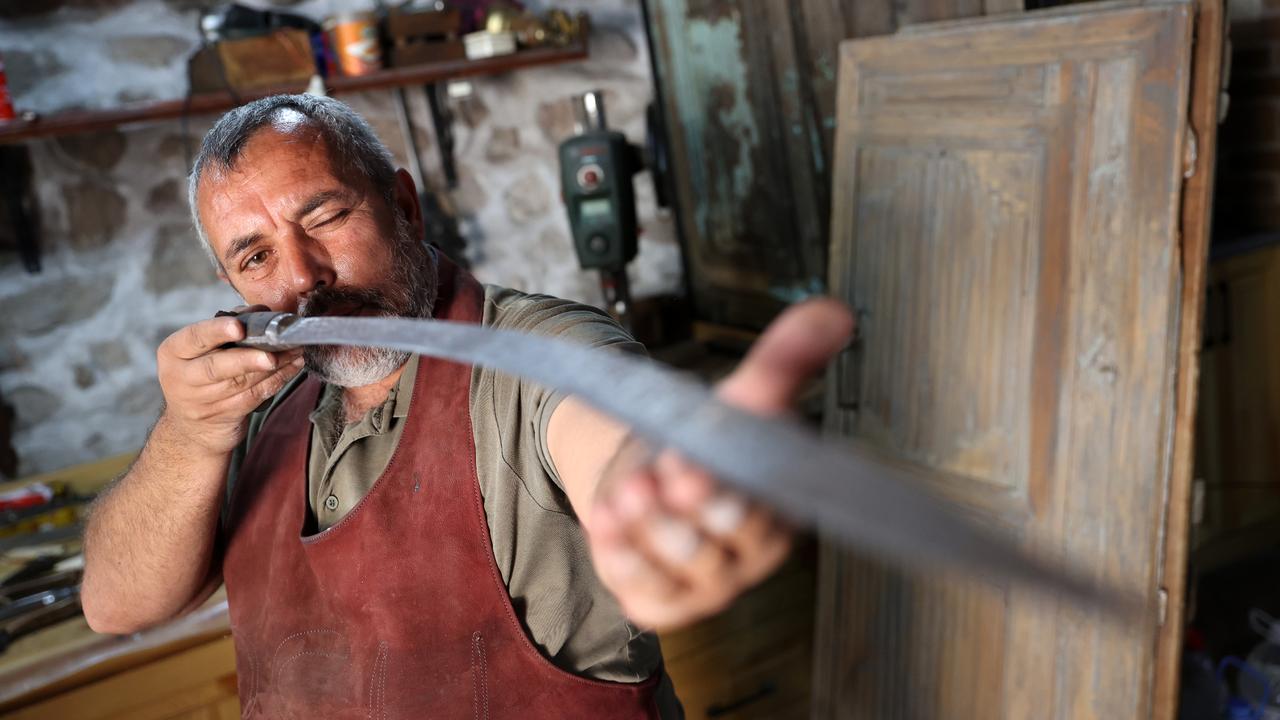
In a stone workshop tucked into Sille, a 5,000-year-old district on the edge of Konya in central Türkiye, 46-year-old Selim Karabulut bends over a glowing forge.
For years he has shaped raw steel into hand-made Damascus knives, each one emerging from the fire looking like no other.
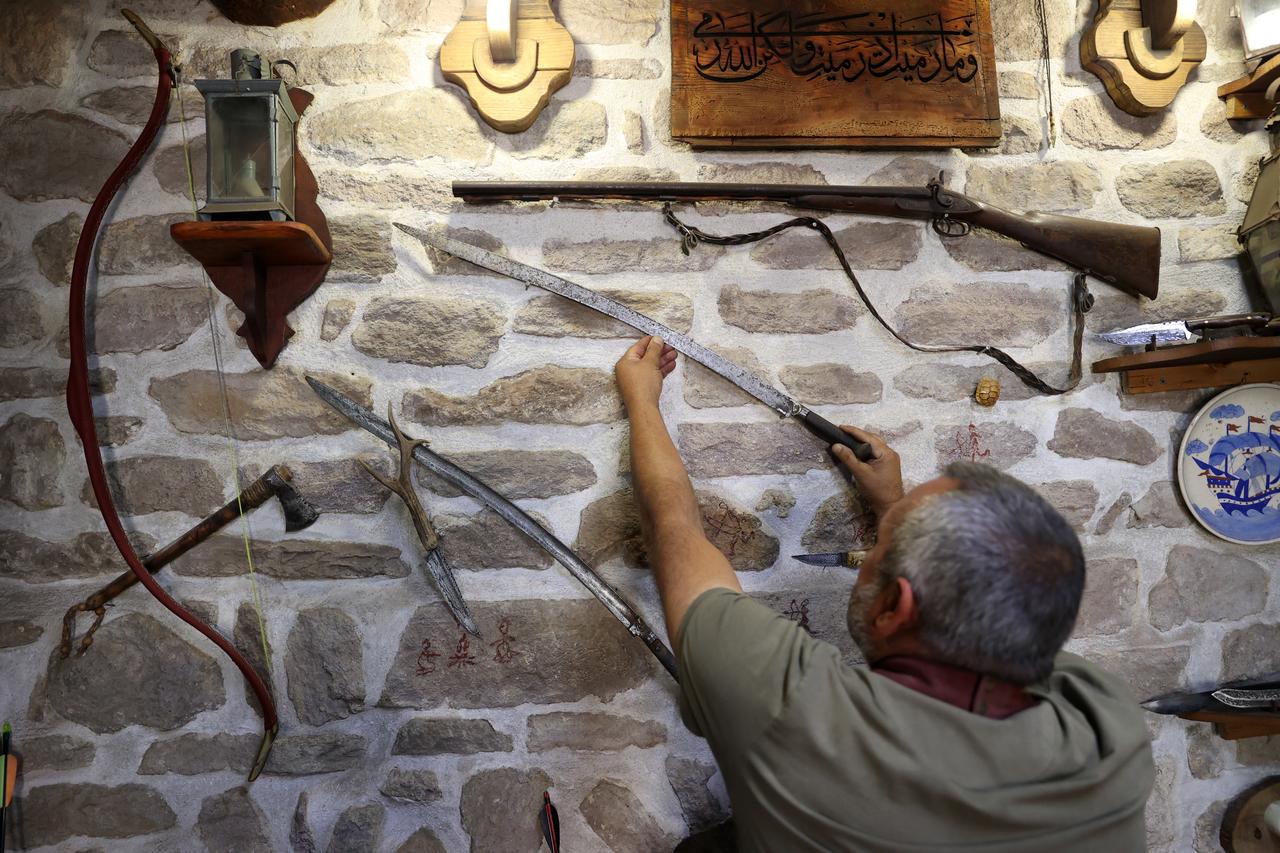
Sille's narrow lanes and stone houses have sheltered craftsmen for centuries, and Karabulut's workshop sits inside that same historic fabric.
The neighborhood's weathered walls and quiet workshops form the backdrop against which his knife-making unfolds, a trade as old as the streets around it.
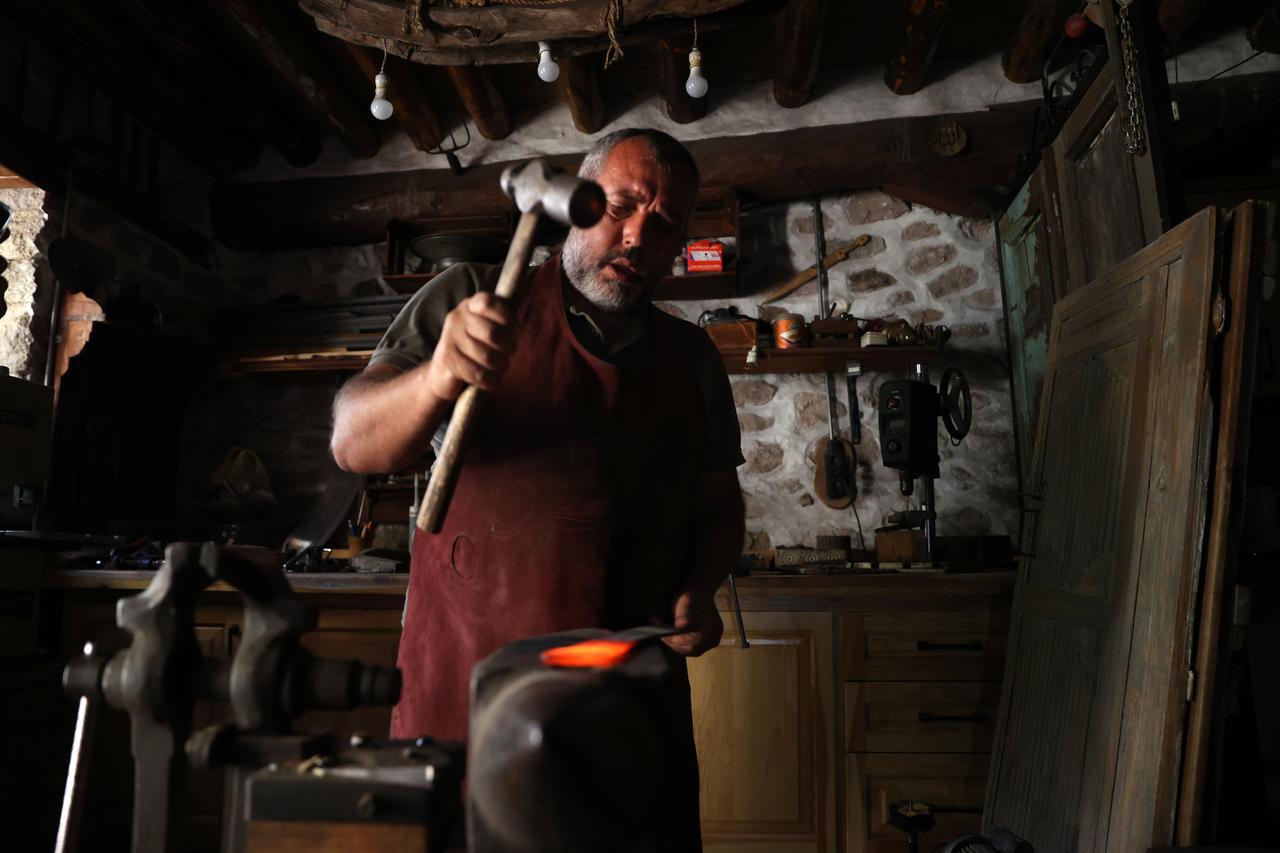
Karabulut has worked with blades since childhood, and knife-making has stayed his craft ever since.
What began as an early fascination grew into a trained hand, one now capable of turning a bar of raw steel into a finished blade through heat, force, and years of accumulated judgment.
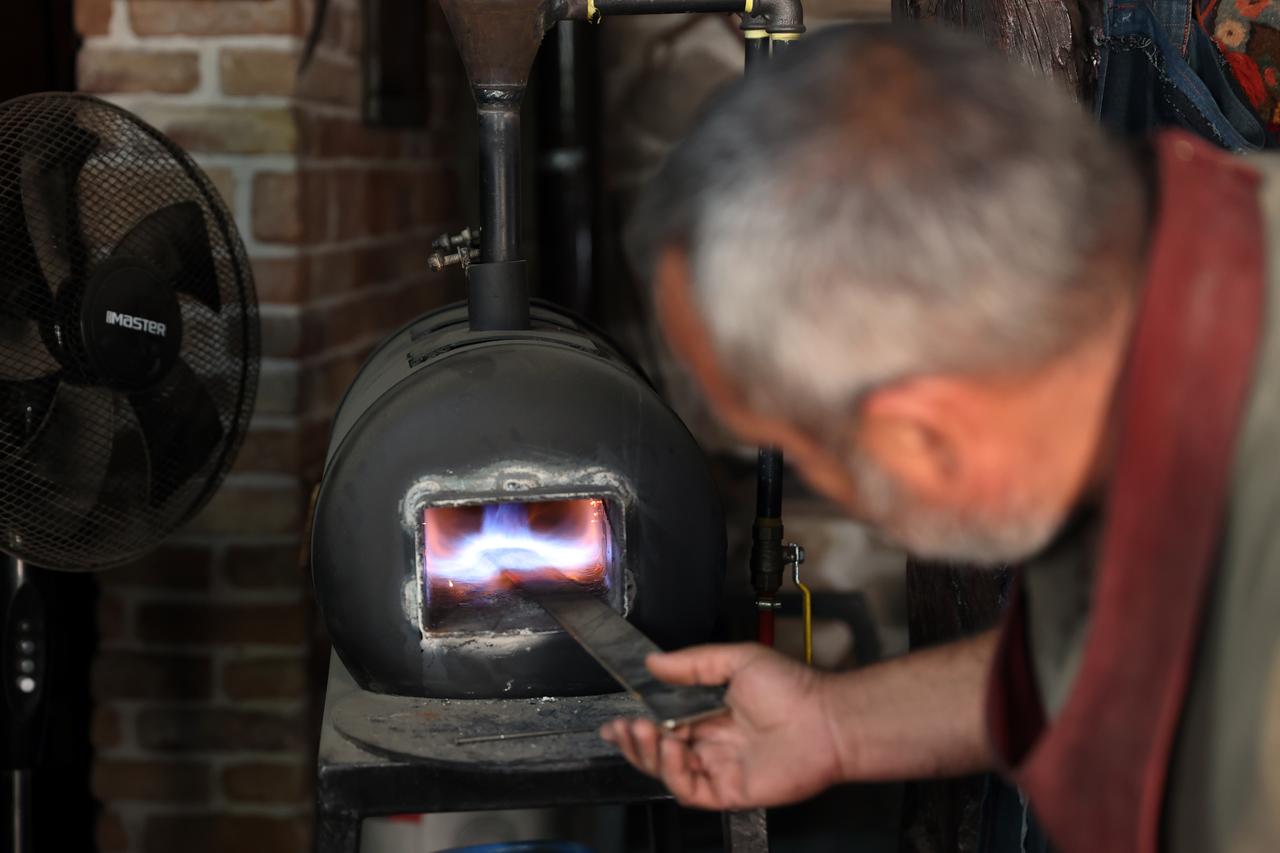
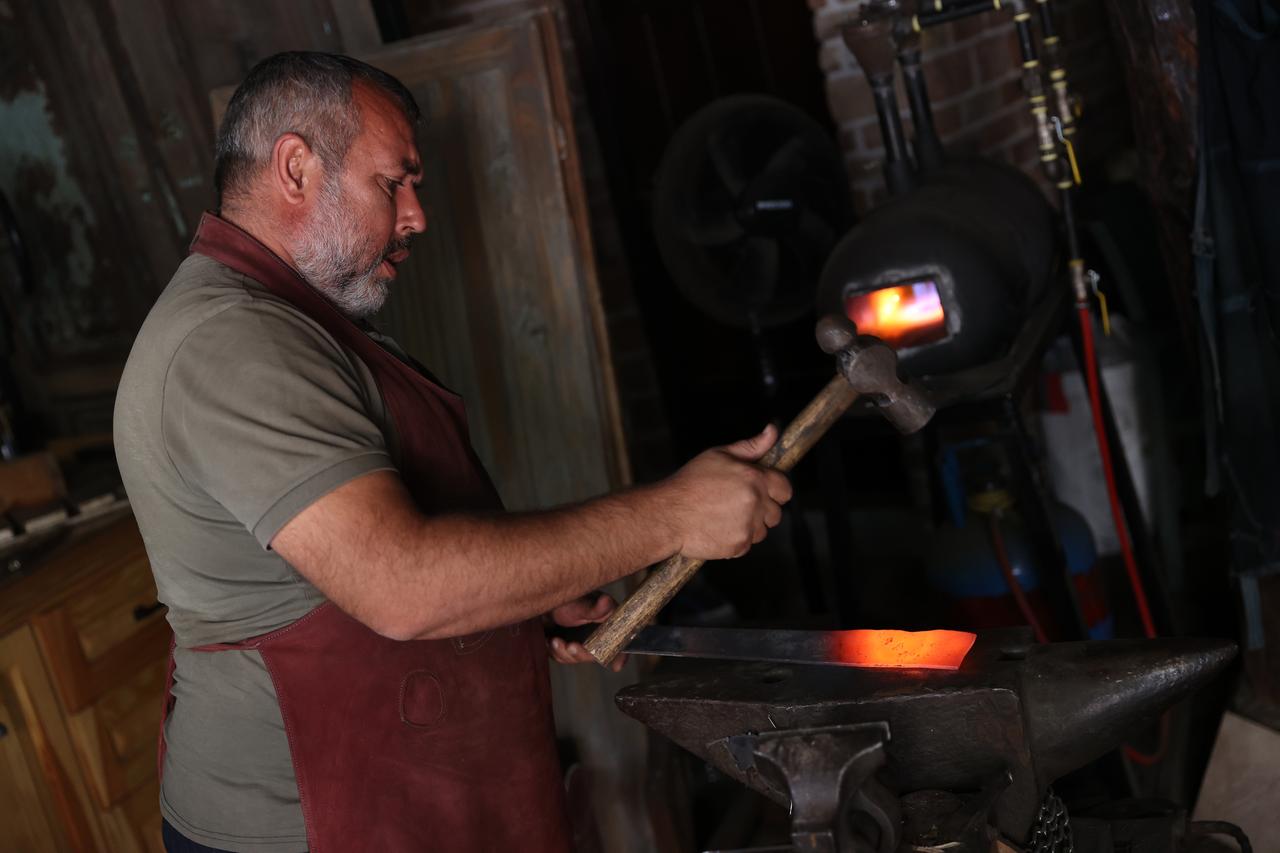
The process starts at a furnace Karabulut calls his "inferno," where temperatures climb past 1,000 degrees Celsius (1,832 degrees Fahrenheit).
High-carbon steel is fed into the heat until it glows, softened enough to be worked but still demanding total control over every second it spends in the fire.
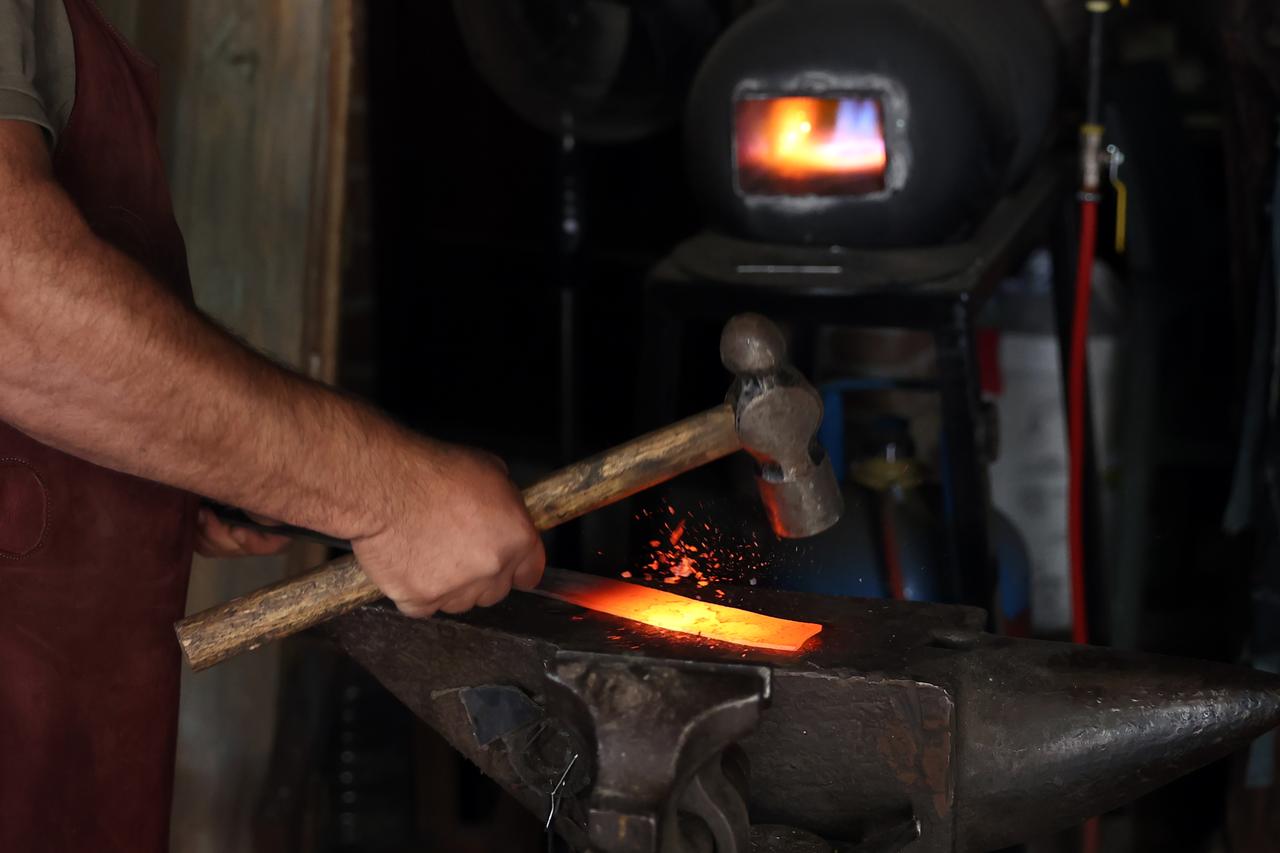
Once the steel is hot, Karabulut hammers it by hand, relying on patience as much as physical strength.
Each strike shapes the metal further, and the process cannot be rushed. He has said the forging and patterning stage is his favorite part, precisely because its outcome is never fully predictable.
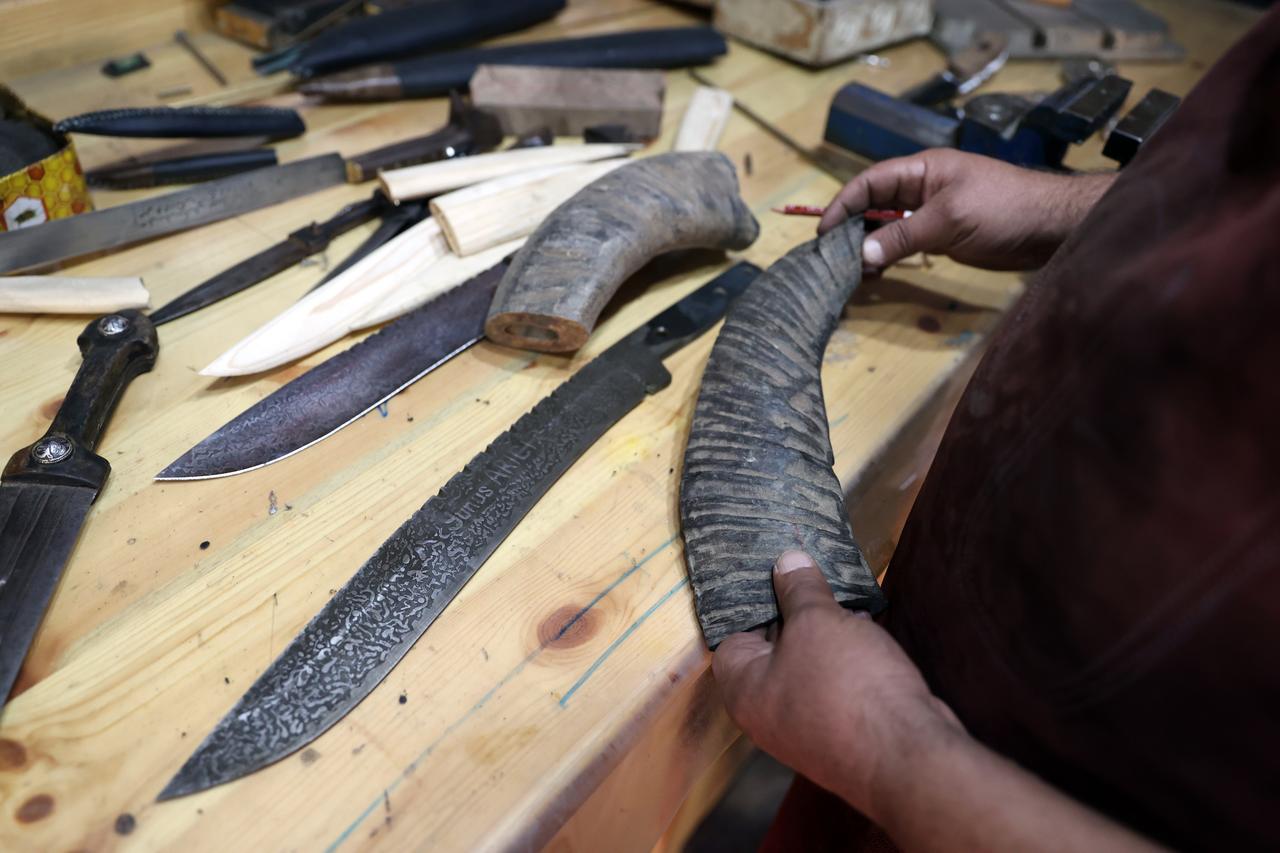
What Karabulut makes is Damascus steel, formed by layering carbon and non-carbon, rust-resistant and rust-prone steels together in the furnace, then folding the mass repeatedly, up to 512 times.
The result is a dense, banded metal whose internal structure will later surface as pattern once the blade is finished.
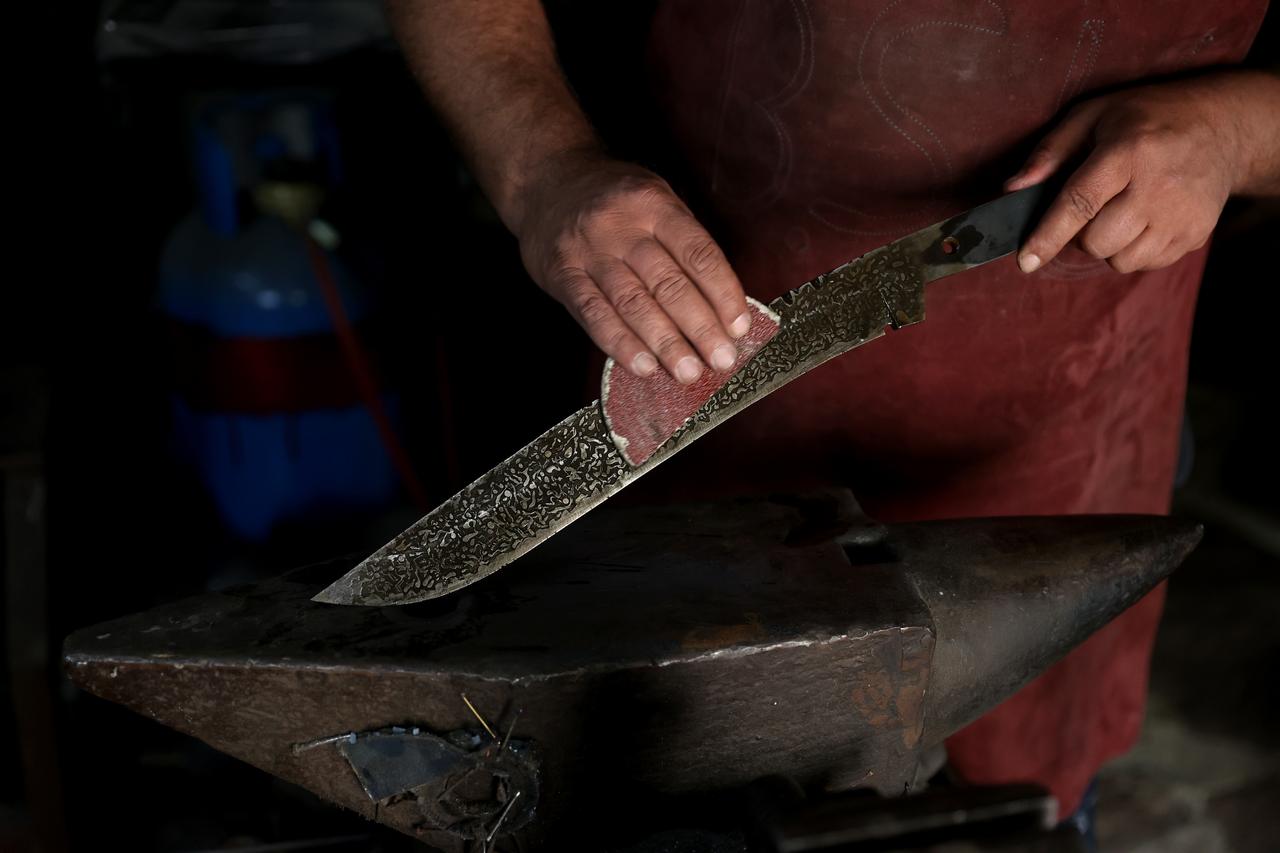
After forging, Karabulut treats each blade with acid, a step that brings the steel's folded layers to the surface as pattern.
No two results are alike; the swirling lines depend on how the metal folded and reacted, which means every blade carries a marking that cannot be reproduced.
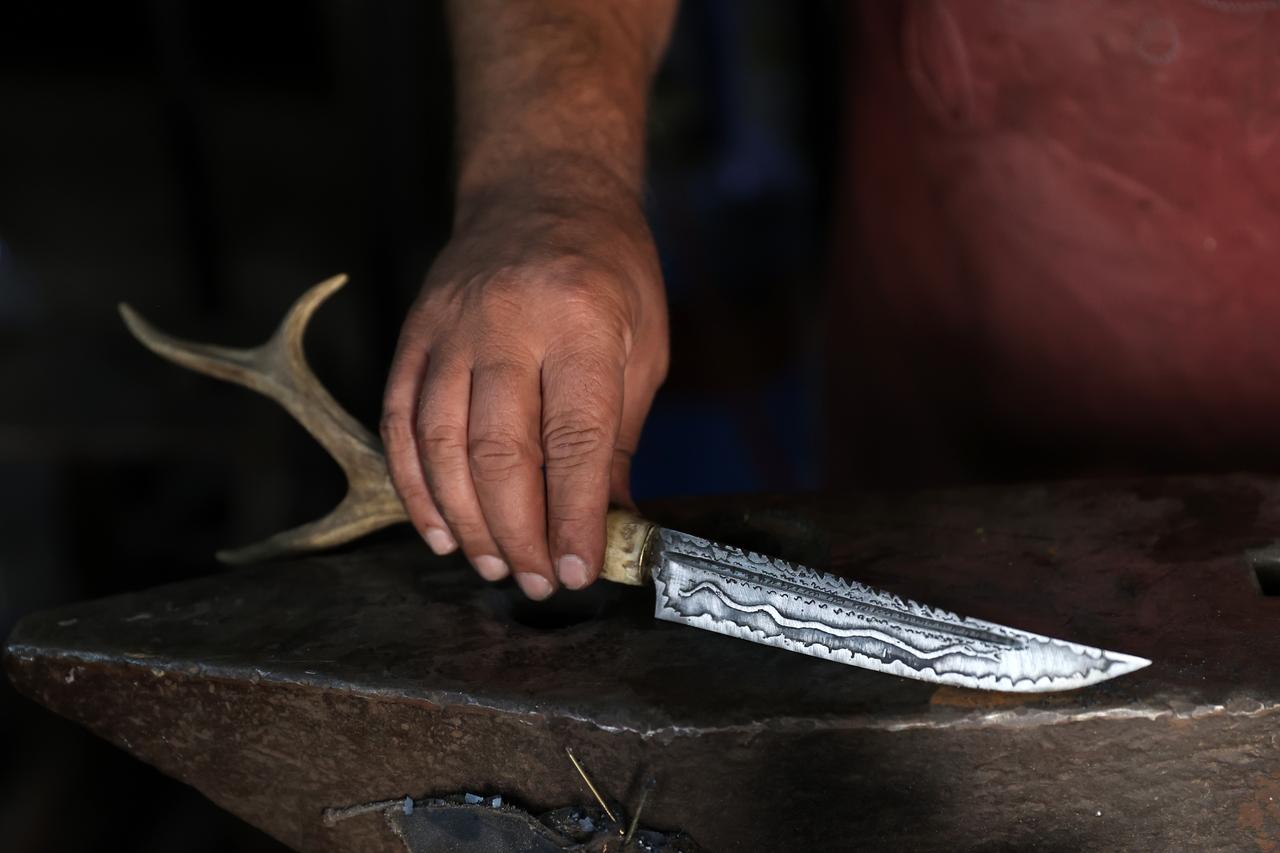
Blades take their final form with handles Karabulut shapes from buffalo horn, deer horn, or walnut and other woods, chosen to match each customer's request.
The handle work is as deliberate as the forging that came before it, giving every knife a grip as individual as its blade.
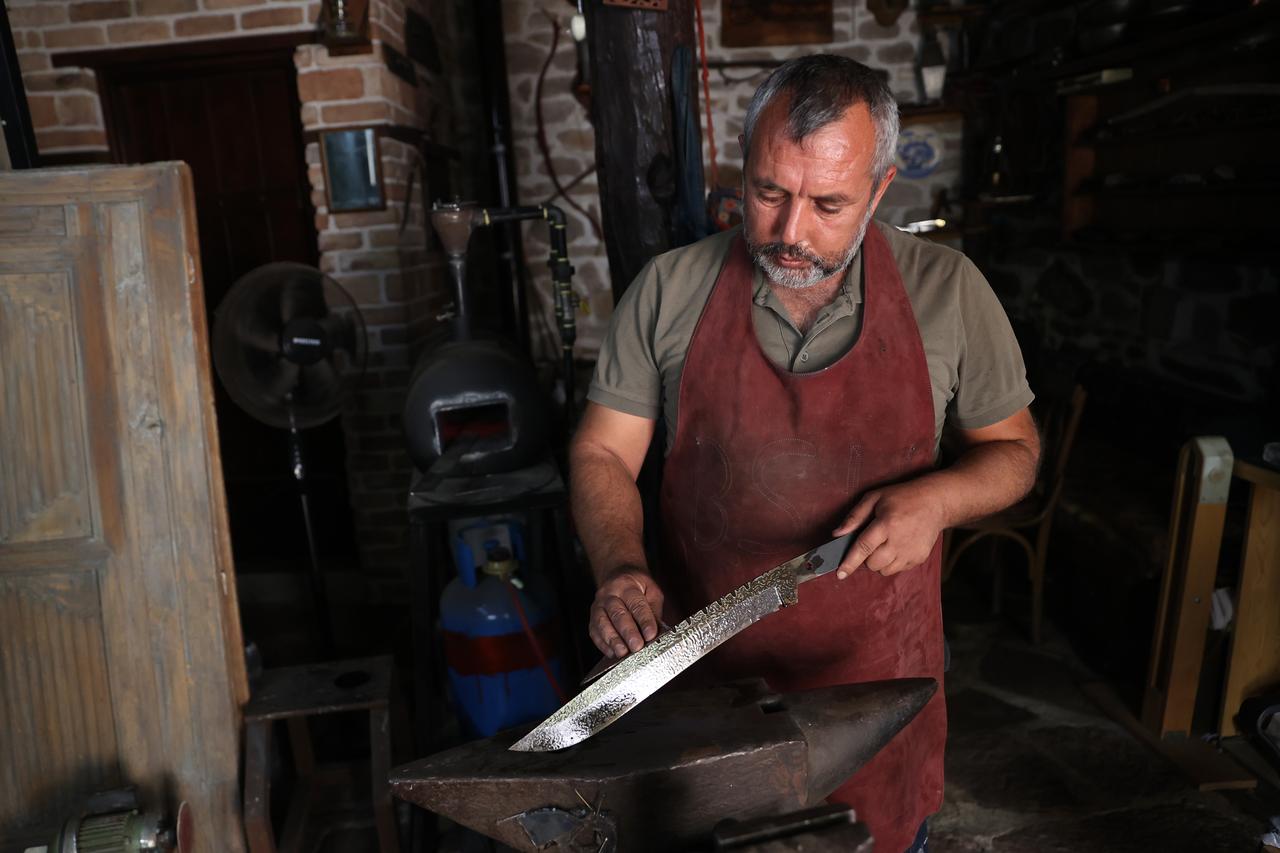
Karabulut's output ranges from custom-designed knives to chef's knives, hunting knives, and blades used for cutting calligraphy pens.
Each type calls for its own balance of weight, edge, and shape, and he varies his materials and technique from piece to piece rather than repeating a single template.
Finished blades are paired with leather sheaths that Karabulut makes to order, matched to how each customer intends to carry or display the knife.
This final, practical step turns a forged blade into a complete object ready to leave the workshop.
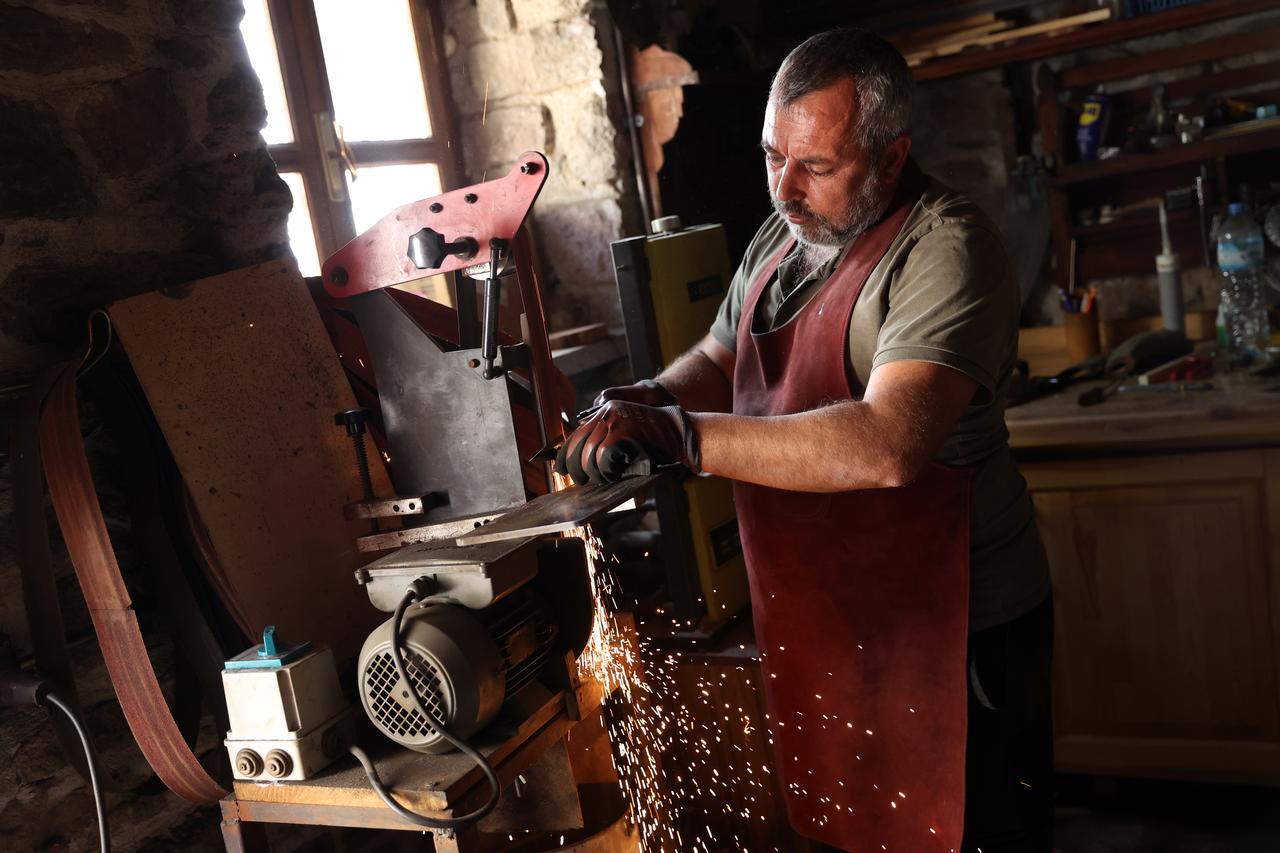
Beyond new commissions, Karabulut also restores antique daggers, swords, and knives, returning old blades to working condition.
The skill draws on the same forging and finishing knowledge behind his own knives, applied instead to objects that have already lived a history before reaching his bench.
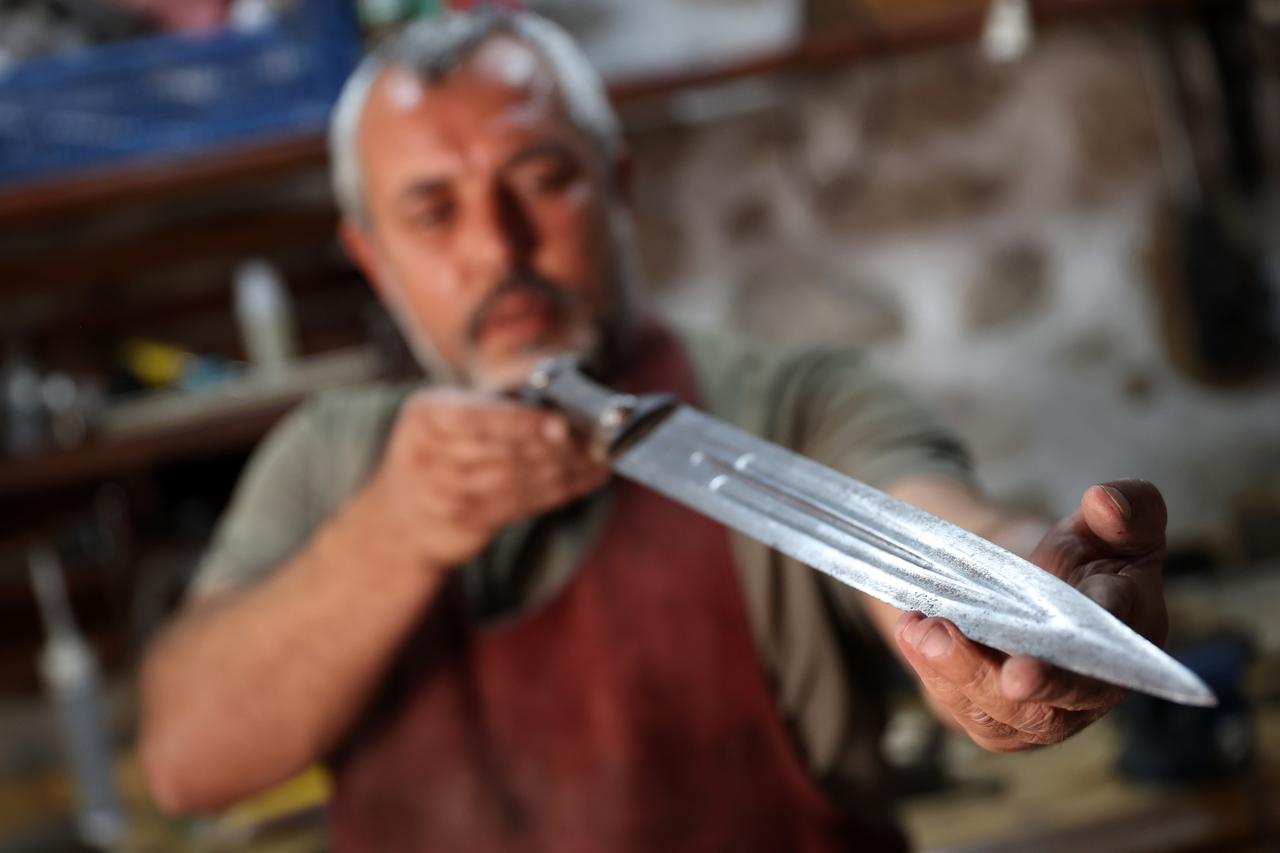
Customers often arrive with a sketch drawn at home or a screenshot of a blade seen in a film, and Karabulut works from those references to build what they picture.
Because every pattern forms differently in the acid, each finished knife ends up unique, no two ever quite the same.


 Set as preferred source


 3 min read