Sign in
 Newsletters


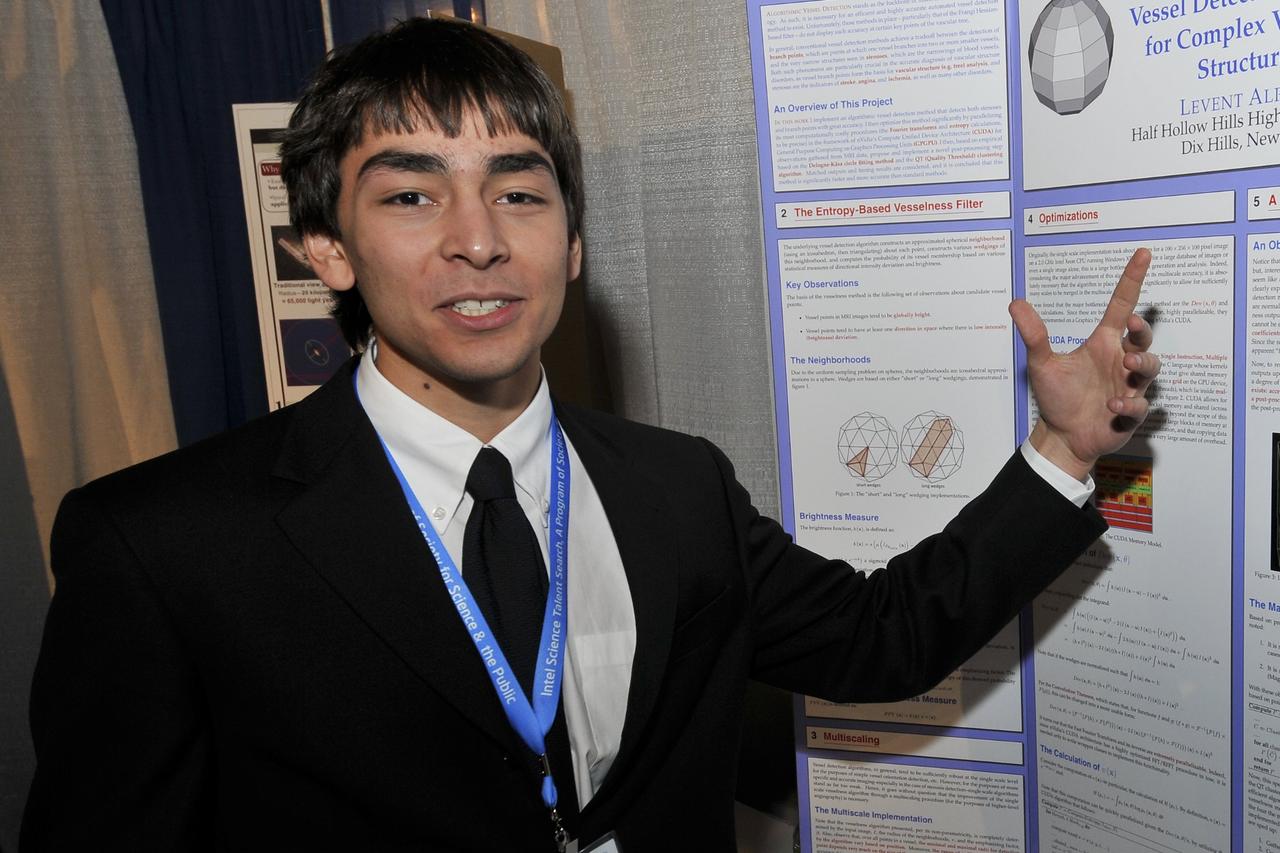


A Turkish mathematician at the U.S. artificial intelligence company Anthropic says he has proved the Riemann hypothesis, a problem that has stumped mathematicians for 167 years.
He says the company's AI model, Claude, helped him do it.
Levent Alpoge, a number theorist, announced the result on his personal website on Nov. 20.
"I believe I have, working with Claude, discovered a proof of the Riemann Hypothesis," he wrote. He said the same method also solves the Generalized Riemann Hypothesis, a broader version of the problem.
Alpoge posted the proof as computer files written in Lean, software that checks whether each step of an argument is logically sound. He said an early draft ran past 250,000 pages, and he wanted to avoid releasing an unreadable document.
Mathematicians now have to examine the files before anyone can say whether the proof is valid.
He also said the "timing is horrible." The announcement came in the same week Anthropic went public on the Nasdaq, which could lead some people to doubt the result. Anthropic had not issued an official assessment.
German mathematician Bernhard Riemann proposed the hypothesis in 1859. It concerns prime numbers, such as 2, 3, 5, 7 and 11, which are divisible only by 1 and themselves. A proof would explain how primes are spread across the number line with far greater precision than anyone has managed.
The problem is one of seven Millennium Prize Problems, each carrying a $1 million award from the Clay Mathematics Institute. To win it, a solution must be published, remain open to scrutiny for at least two years and win broad acceptance from mathematicians.
Alpoge's work has not been accepted by the institute.


 Set as preferred source
 Set as preferred source


 1 min read

 1 min read