Newsletters




Türkiye has removed about 2.9 million square meters of so-called “ghost nets” from its seas over the past 11 years as part of a nationwide project to protect marine life and support sustainable fishing practices.
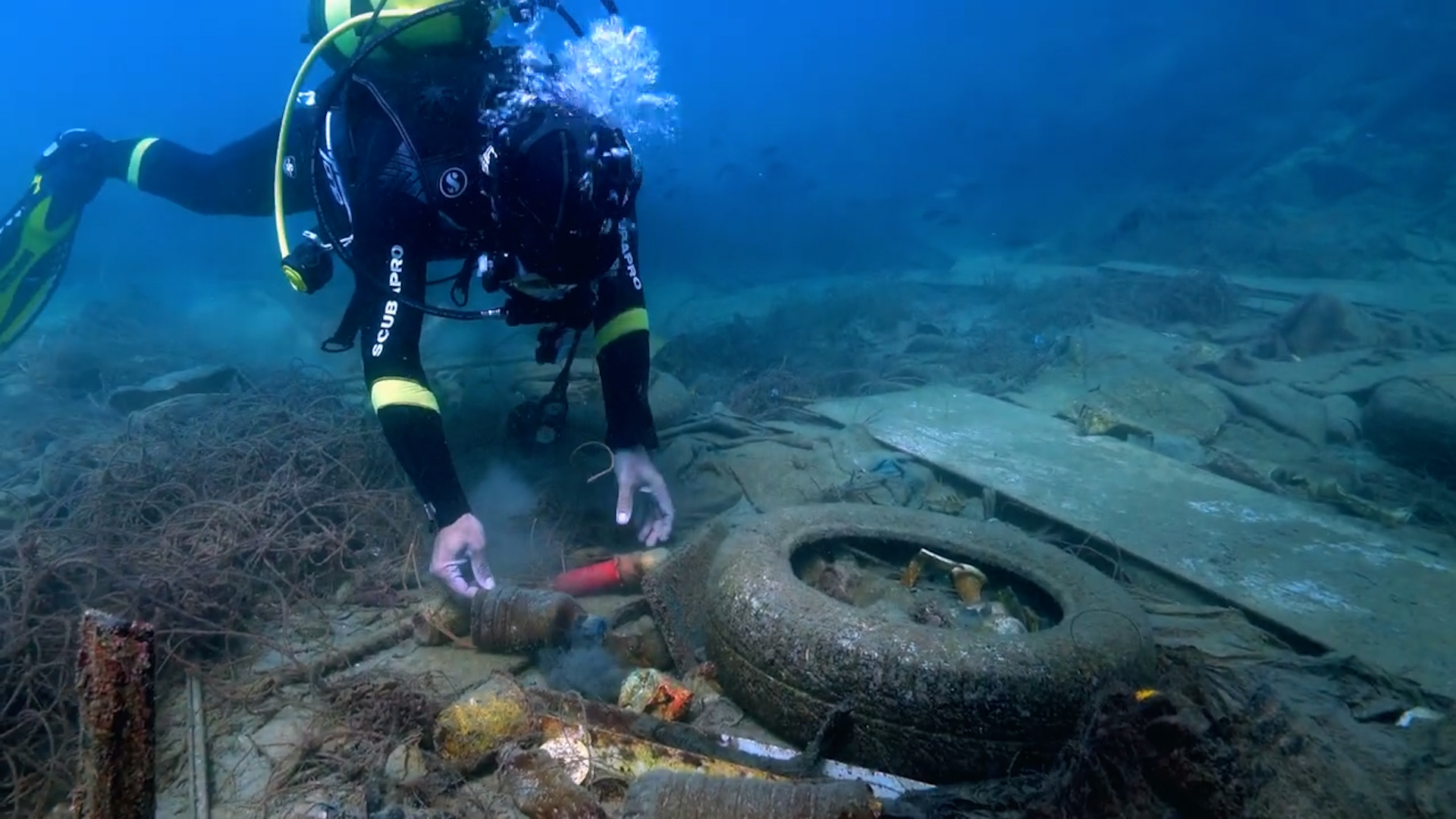
Ghost nets are fishing nets that, as officials explain, are unintentionally left behind or lost during fishing operations and remain drifting or lying on the seabed, where they continue to trap marine creatures.
Speaking at a cleanup operation off the coast of Kumkale in the northwestern province of Canakkale, Turgay Turkyilmaz, Director General of Fisheries and Aquaculture at the Ministry of Agriculture and Forestry, said the effort began in 2014 under the project titled “Cleaning Abandoned Fishing Gear from the Seas.”
Turkyilmaz took part in the latest fieldwork together with provincial and central officials, including Canakkale Provincial Director of Agriculture and Forestry Ergun Demirhan, Hunting and Control Department Head Ilhan Uze and Fisheries and Aquaculture Branch Director Seydi Ali Doyuk, as well as representatives of local fisheries producer unions and ministry staff.
Before heading out to sea, the group viewed an exhibition of underwater photographs taken during previous ghost net removal operations and received briefings from experts.
Turkyilmaz underlined that the project aims both to help fishers improve their catch conditions and to safeguard the broader marine ecosystem.
He recalled that fishermen make their living by catching fish and bringing them to consumers’ tables, yet the unintended loss of nets at sea can harm the very resources on which their livelihoods depend.
Sharing key figures from the work carried out since 2014, Turkyilmaz said that authorities have “scanned 805 million square meters of the marine ecosystem,” an area he described as equivalent to about 112,000 football fields.
Within this vast area, teams have removed 2.9 million square meters of ghost nets from the sea, and he noted that the project has helped an estimated 9.5 million marine creatures to survive.
Turkyilmaz stressed that this result directly benefits the fishing sector itself, because nets that remain on the seabed continue to trap fish and other marine organisms in an uncontrolled way.
By pulling these nets out, he argued, fishers not only protect marine biodiversity but also reduce long-term losses to their own stocks.

According to Turkyilmaz, Canakkale ranks among the leading provinces in terms of ghost net removal efforts and has “signed off on very important work.”
In this region alone, around 1 million square meters of sea floor have been scanned, and some 30,000 square meters of ghost nets have been removed.
He pointed out that this outcome demonstrates a clear link between the unintended environmental damage caused by lost nets and the economic impact on coastal communities.
While fishers set out simply to earn their living, the abandoned gear left behind can continue to harm sea life for many years, which in turn reduces future catches and creates indirect losses for the same fishers.
Turkyilmaz also highlighted that local fishers cooperate closely with the authorities.
During sea surveys, teams collect feedback from fishers and receive precise coordinates for areas where nets are believed to have been lost. Divers then descend to these locations and retrieve the gear from the seabed.
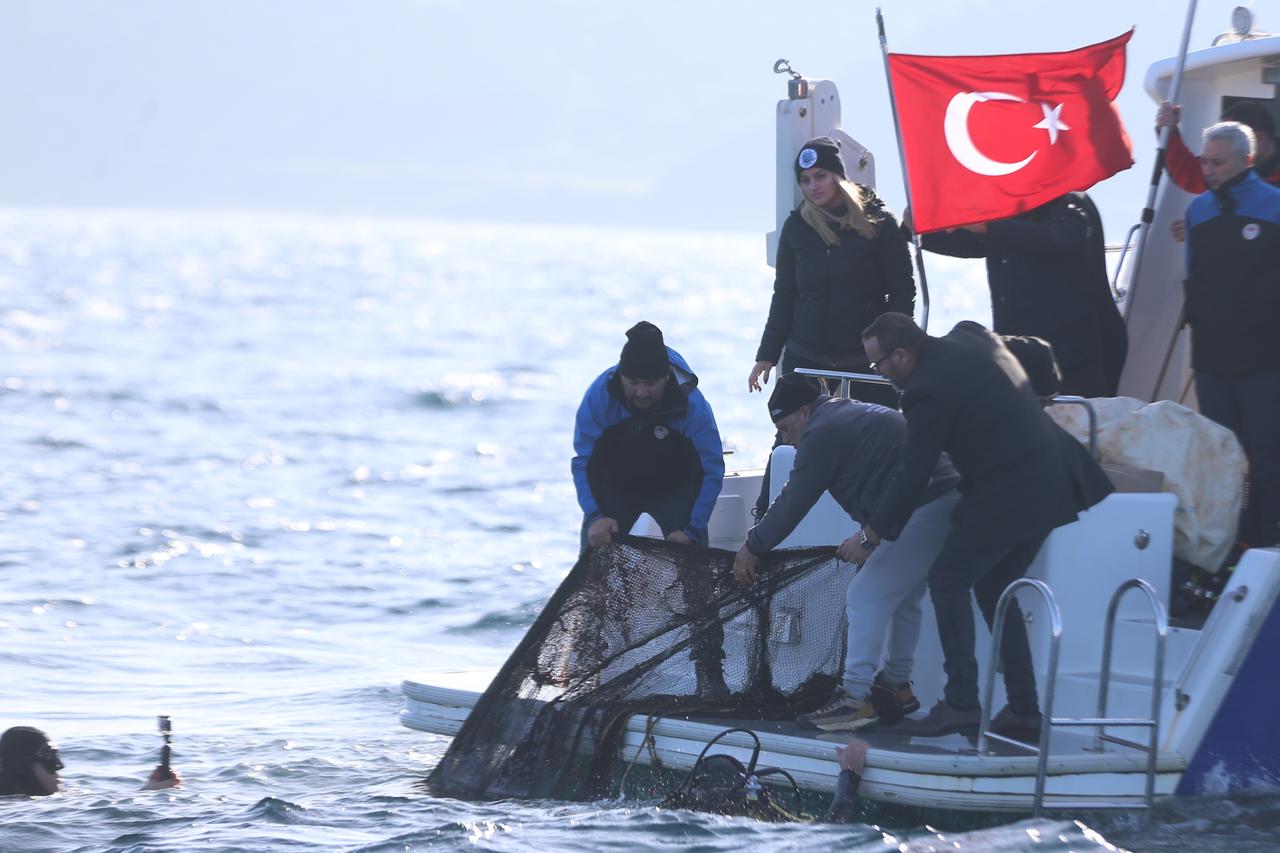
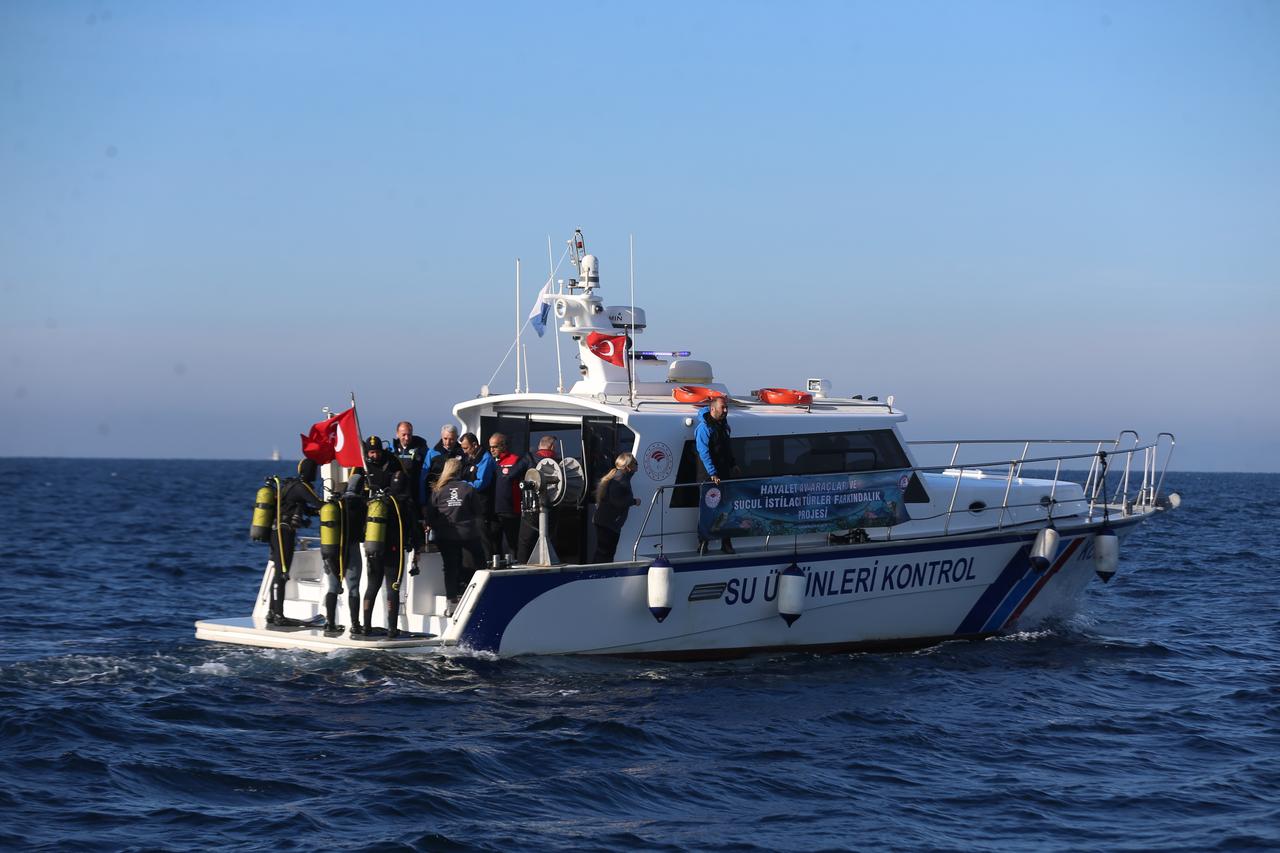
After his remarks, Turkyilmaz and accompanying officials boarded the “Su Urunleri Kontrol” (Fisheries Control) vessel and left Kumkale Port for the latest operation site.
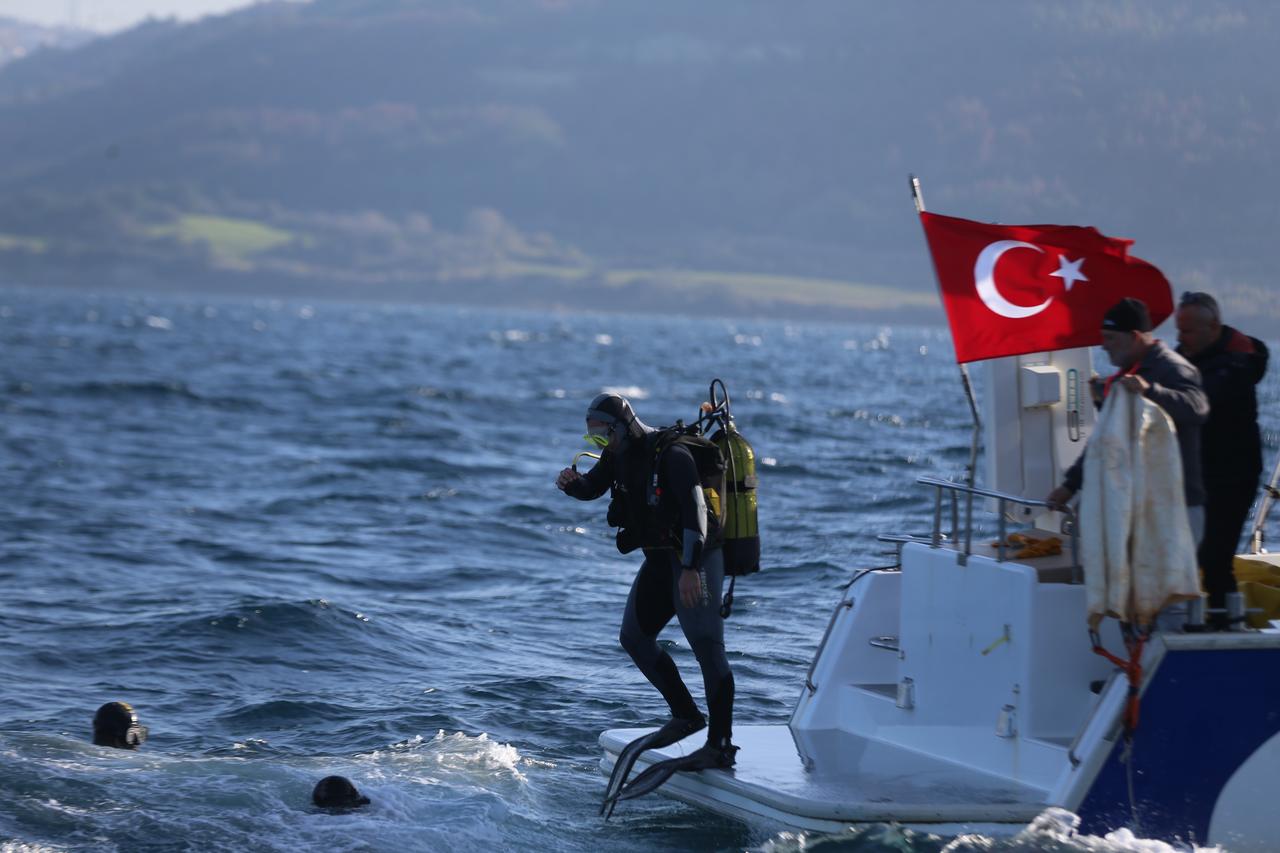
There, Fisheries and Aquaculture Branch Director Seydi Ali Doyuk and divers from the private company Eftelya Dina Denizcilik carried out a dive to a depth of 12 meters (39.3 feet).
Underwater, the divers attached a parachute system to a ghost net, enabling it to be lifted safely to the surface and then brought on board the vessel.
Subsequent checks revealed that a variety of marine species had become entangled in the net, including starfish, red coral, red crabs, sea slugs and sea shells, illustrating how abandoned gear continues to affect sea life long after it has been lost.
The Directorate’s Fisheries and Aquaculture Branch in Canakkale has also continued to focus on smaller-scale but targeted interventions during 2025.
In two locations, teams removed 300 octopus traps from a total area of 10,000 square meters. In addition, they carried out scanning operations in three further locations over an area of 12,000 square meters and cleared 1,000 square meters of ghost nets from these sites.
Overall, since the local implementation of the project in 2014, work has been conducted in 64 different locations across Canakkale waters.
Within these areas, authorities have scanned a total of 1,037,700 square meters of sea floor and collected 35,620 square meters of ghost nets for safe disposal.
Turkyilmaz noted that the project has attracted considerable attention beyond Türkiye’s borders.
He said that many international organizations present the initiative as a model and that the General Fisheries Commission for the Mediterranean, which covers the Black Sea, the Aegean and the Mediterranean, points to the project as an example and encourages similar work in other countries.
“This is both a source of pride for our country and an important contribution to protecting our own marine ecosystem,” Turkyilmaz said, adding that the effort also supports the Zero Waste Project led by First Lady Emine Erdogan by helping to increase the visibility of work carried out under that agenda.
By combining systematic scanning, cooperation with local fishers and international recognition, officials argue that the ghost net cleanup project has grown into a long-term framework that protects marine life while reinforcing Türkiye’s broader environmental and sustainability goals.


 Set as preferred source
 Set as preferred source


 1 min read
 1 min read