Newsletters





Türkiye's Family and Social Services Minister Mahinur Ozdemir Goktas has sparked debate after claiming that men were sterilized through a state-backed program in the 1990s, while newspaper archives from the period describe voluntary vasectomy services offered as part of Türkiye's family planning policies.
The historical reports, compiled by Turkish news outlet T24, show that public hospitals worked with nonprofit organizations to provide free vasectomies to men who did not want more children. The reports do not establish that a systematic or compulsory sterilization campaign took place.
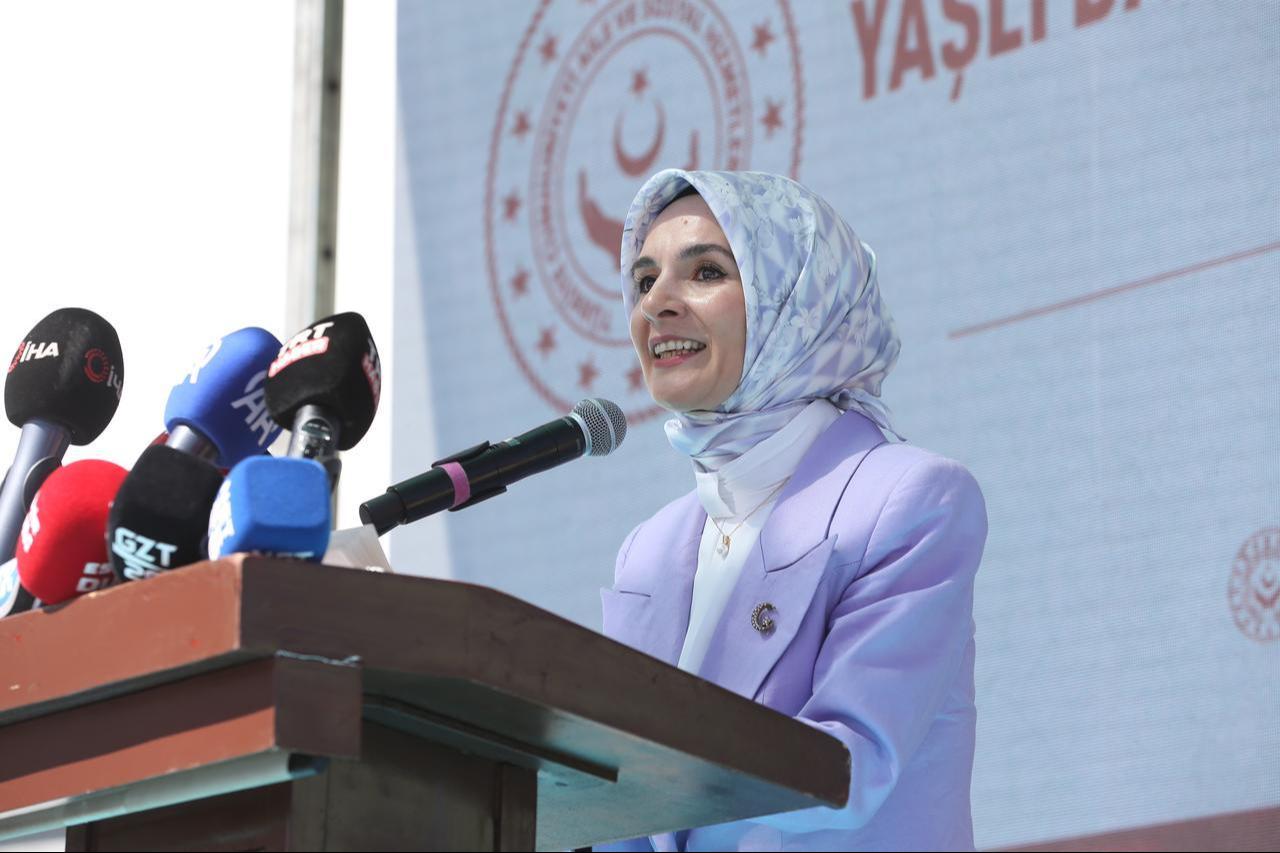

Speaking during parliamentary budget discussions, Goktas criticized the sterilization practices of the 1990s, saying they had been carried out with support from the country's social security system.
"Men were sterilized through SGK in this country. Is that normal? In the 1990s. I can show you newspaper headlines. This is a fact," she said, referring to Türkiye's Social Security Institution.
Goktas described the practices as shameful but clarified that she was not alleging a systematic operation, instead maintaining that sterilizations had taken place with social security support.
Opposition lawmakers challenged her statements, questioning whether she was suggesting that a systematic sterilization campaign had been carried out.
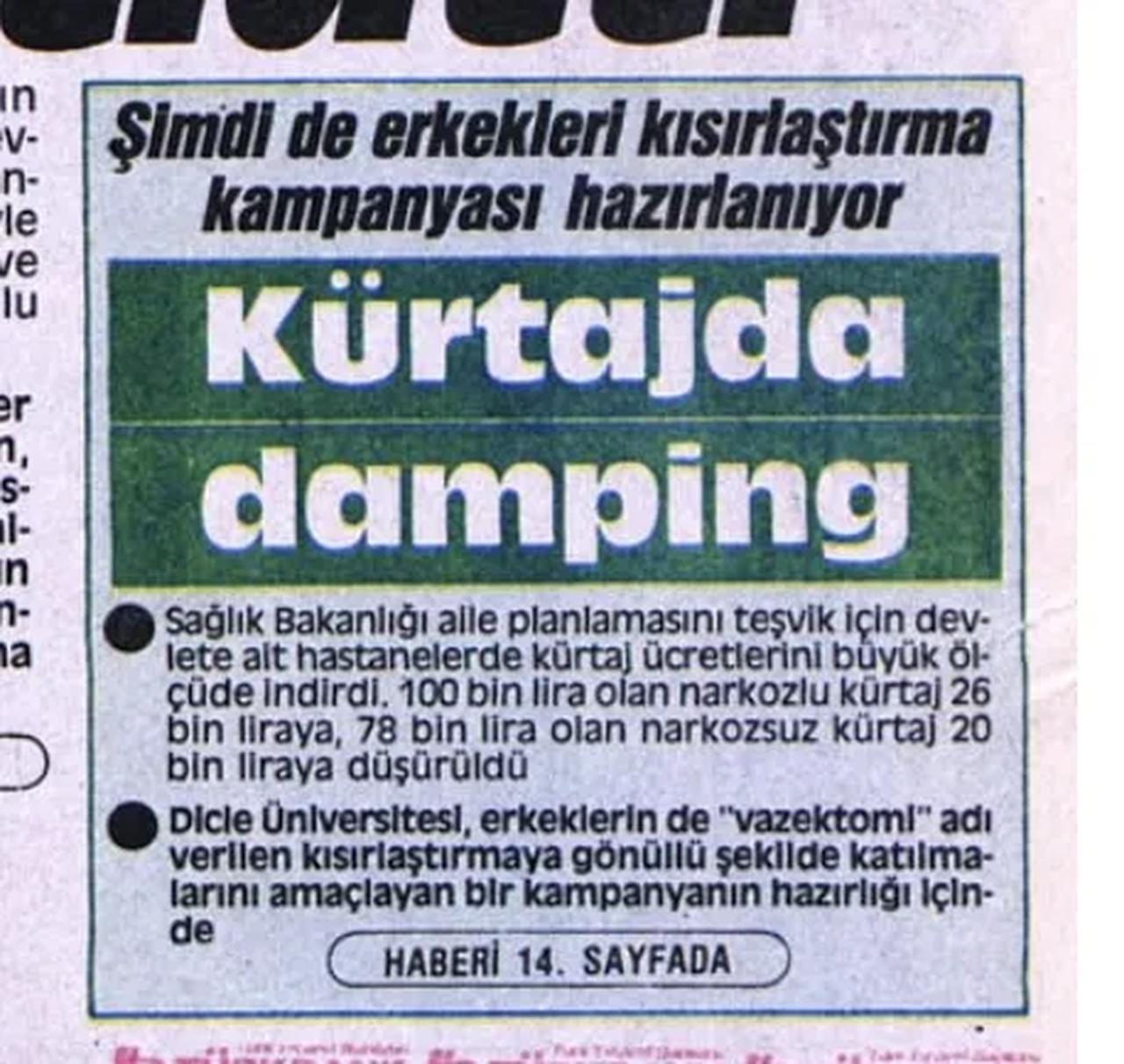
A Milliyet report published on Aug. 8, 1988, described preparations for a voluntary male sterilization campaign in southeastern Türkiye, where officials were concerned about rapid population growth.
Unal Sert, head of the urology clinic at Dicle University, said the initiative aimed to encourage men with more than three children to consider vasectomy, a procedure that prevents sperm from entering semen.
The report also documented resistance among local residents, including a village imam who rejected the procedure despite explanations from university doctors.
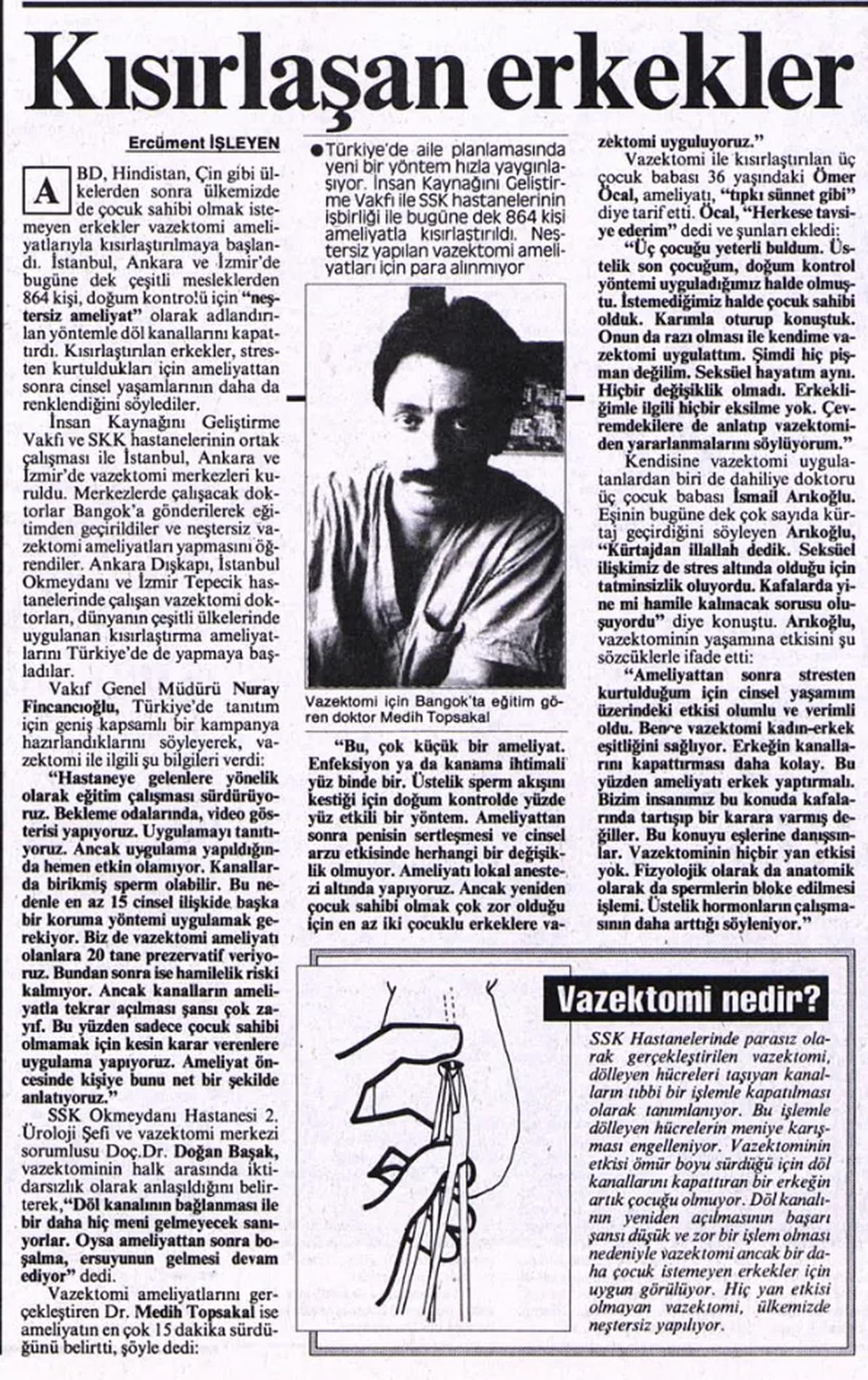
By September 1991, Cumhuriyet reported that Ankara's SSK Diskapi Hospital was offering free no-scalpel vasectomies, a technique that avoids a conventional surgical incision.
A subsequent Milliyet report, published on Aug. 15, 1992, stated that 864 men had voluntarily undergone vasectomies through cooperation between the Human Resource Development Foundation and SSK hospitals, which operated under Türkiye's former Social Insurance Institution.
The program continued into the following years. In March 1994, Cumhuriyet reported that SSK Tepecik Hospital in Izmir had established a dedicated counseling service to explain the procedure and provide free treatment to men who decided against having additional children.
Türkiye's population policy had begun shifting toward family planning with legislation introduced in 1965.
A subsequent law enacted in 1983 defined family planning as enabling individuals to have children in the number and at the time they wished. It also permitted voluntary surgical sterilization for both men and women.
Within this framework, voluntary vasectomy services began at Ankara's Diskapi Hospital in 1989 and later expanded through cooperation between SSK hospitals and the Human Resource Development Foundation.
Historical records cited in the T24 review describe the procedures as voluntary medical services carried out following counseling, rather than a compulsory sterilization policy.


 Set as preferred source
 Set as preferred source


 2 min read