Newsletters





Nearly 2.6 million people relocated between cities in Türkiye for education-related reasons over the past five years, with Istanbul remaining the top destination throughout the period, according to figures compiled from data released by the country's Turkish Statistical Institute (TurkStat).
The data, part of TurkStat's Internal Migration Statistics series, shows that education continues to be one of the primary drivers of domestic migration between Turkish provinces, alongside factors such as employment, family relocation and housing.
A total of 2.61 million people changed their city of residence for education between 2021 and 2025, the figures show.
The number of people migrating for this reason has declined every year since the start of the period, falling from 686,973 in 2021 to 406,144 last year, a drop of more than 40% over five years.
Migration for education dropped to 526,008 in 2022, then to 512,011 in 2023, and to 479,622 in 2024, continuing a steady downward trend after an initial peak in 2021.
That year's high figure followed widespread disruption to in-person education during COVID-19 restrictions, when many students and families relocated once campuses and schools reopened.
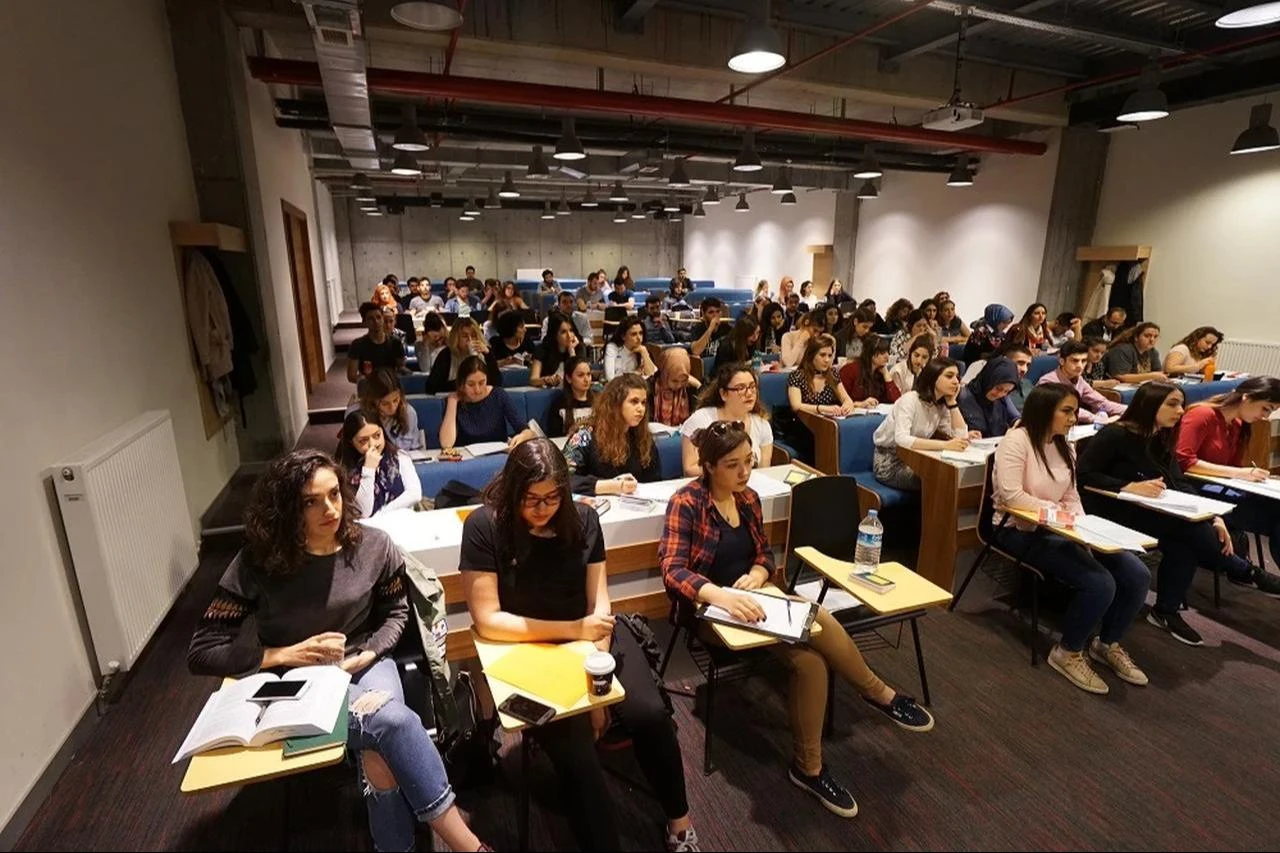

Istanbul, Türkiye's largest city and its commercial and cultural center, took in more people for education than any other province in each of the past five years.
The city, home to dozens of public and private universities, welcomed a combined 271,856 people for education-related reasons between 2021 and 2025, more than any other province by a wide margin.
Annual figures for Istanbul also declined over the period, from 77,296 new arrivals in 2021 to 43,258 last year, mirroring the nationwide trend of falling education migration.
Ankara, the Turkish capital, ranked second among the country's 81 provinces, drawing 181,023 people for education over the five-year span.
Izmir, Türkiye's third-largest city and a major port and university hub on the Aegean coast, ranked third with 105,106 arrivals for the same reason.
Together, Istanbul, Ankara and Izmir accounted for more than 557,000 of the 2.6 million people who migrated internally for education over the period, underscoring how much of Türkiye's education-driven mobility is concentrated in its largest urban centers rather than being spread evenly across the country.

Türkiye's internal migration statistics are drawn from the country's Address-Based Population Registration System, which records changes in residents' officially registered addresses.
Turkish cities have long attracted domestic migrants seeking access to higher education, as many of the country's top-ranked universities are concentrated in a handful of major metropolitan areas.
Istanbul alone hosts dozens of state and private universities, drawing students and their families from across the country each academic year, while Ankara and Izmir similarly serve as regional education hubs for central and western Türkiye, respectively.
The steady decline in education-related migration since 2021 comes as enrollment patterns and university capacity have shifted across various Turkish provinces in recent years, including the expansion of universities outside the three largest cities.
TurkStat's release does not specify the reasons behind the year-on-year decrease, though the drop follows the return to normal academic life after pandemic-era disruptions eased.
The figures form part of a broader dataset on internal migration in Türkiye, which also tracks movement for reasons including employment, housing, health and natural disasters, offering a wider picture of how domestic mobility patterns have shifted across the country in recent years.
Istanbul sits at the crossroads of Europe and Asia and functions as the country's economic and cultural capital, despite Ankara holding the status of political capital.
Izmir, meanwhile, is often described as Türkiye's gateway to the Aegean and is known for its university district and coastal lifestyle, which continue to draw domestic students each year.


 Set as preferred source
 Set as preferred source



 2 min read