Newsletters


Police in Ankara detained nine suspects, seven of them minors, accused of sharing racist and violence-promoting content online, state-run Anadolu Agency reported.
The operation is the latest in a string of law enforcement actions targeting a far-right online subculture that has drawn increased scrutiny since a neo-Nazi-inspired knife attack in Eskisehir two years ago.
Teams from the Ankara Security Directorate's Child Branch and Intelligence Branch launched the operation after identifying suspects who had allegedly posted racist and violent material on digital platforms.
Searches of the suspects' addresses turned up a blank-firing pistol, an air rifle, three knives, and digital material bearing Nazi and other racist symbols, according to the report. Legal proceedings against the detained suspects are ongoing.
The operation is the most recent instance of Turkish authorities moving against individuals and groups linked to online far-right and neo-Nazi networks, a phenomenon that first drew widespread public attention following an attack in the central Turkish city of Eskisehir in August 2024.


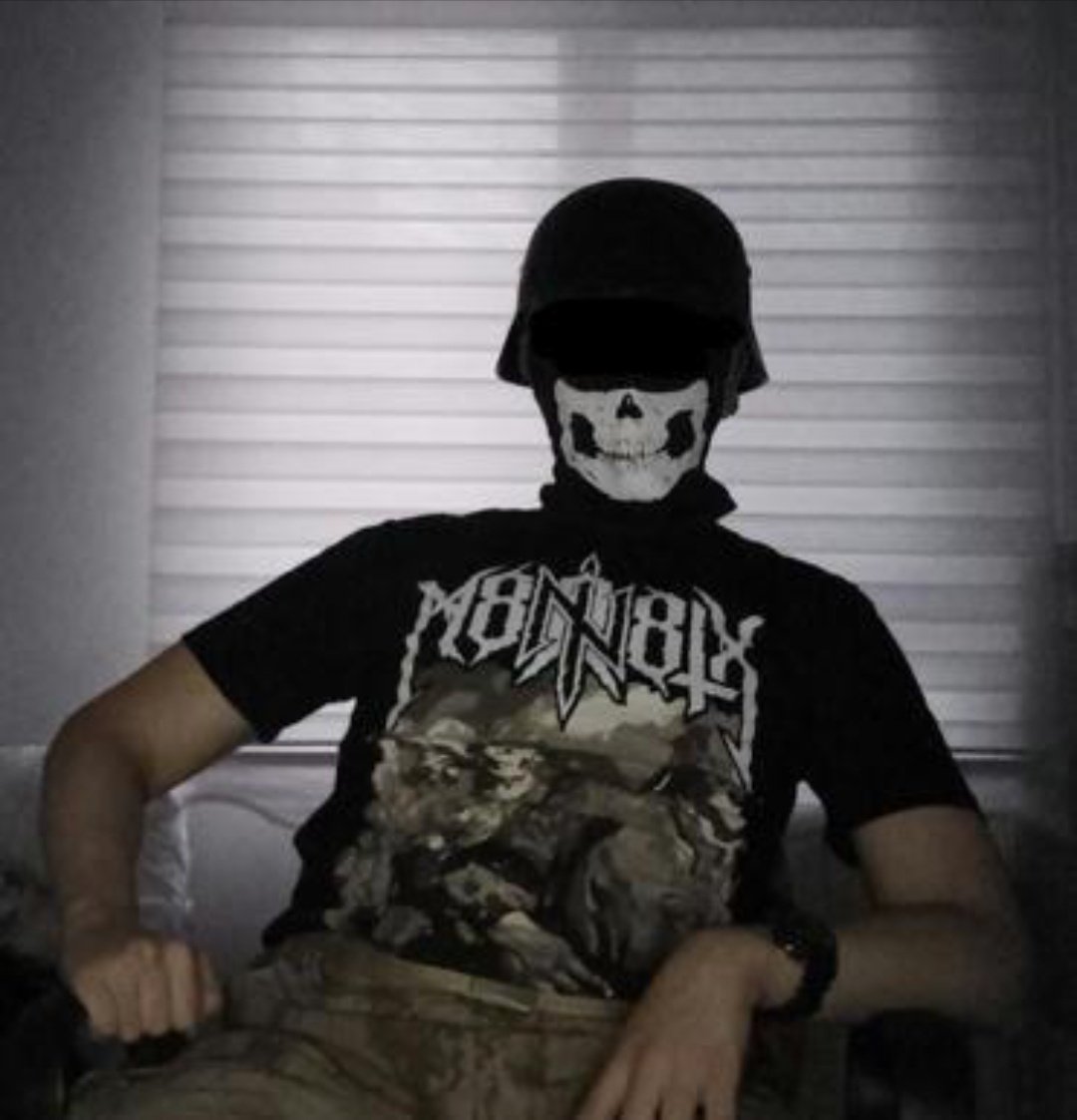
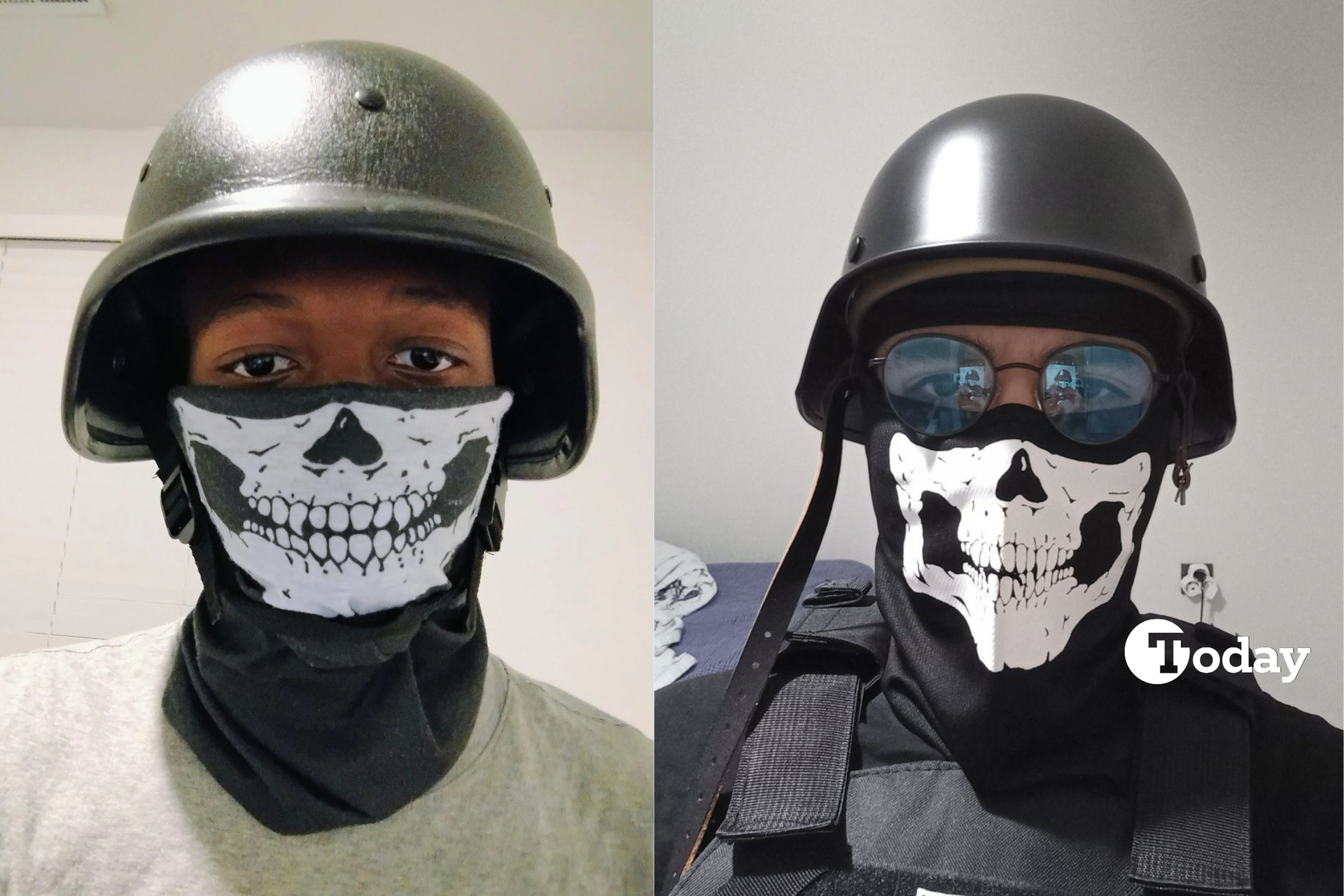
On Aug. 12, 2024, an 18-year-old identified as Arda Kucukyetim stabbed five people, ranging in age from 52 to 88, at a park near a mosque in Eskisehir's Tepebasi district while livestreaming the assault. He wore a helmet, ski mask, goggles, and a tactical vest bearing Nazi symbols, including the "Black Sun" emblem.
Prosecutors said Kucukyetim had written a 16-page manifesto praising Norwegian mass killer Anders Behring Breivik and Christchurch mosque shooter Brenton Tarrant as "saints," and that he told investigators his violence was driven not by religion but by a broader contempt for humanity.
He is reported to have said, "I did this because I do not like people and wanted to create a sensation." He was charged with attempted premeditated murder and creating public panic, facing a potential sentence of up to 108 years, with his case proceeding before Eskisehir's 6th High Criminal Court.
Investigators later determined that Kucukyetim had exchanged messages with an unidentified individual online who used the pseudonym "Fjotolf Hansen" and who discussed making explosives and acquiring weapons, prompting several European countries to seek Turkish assistance on the matter.

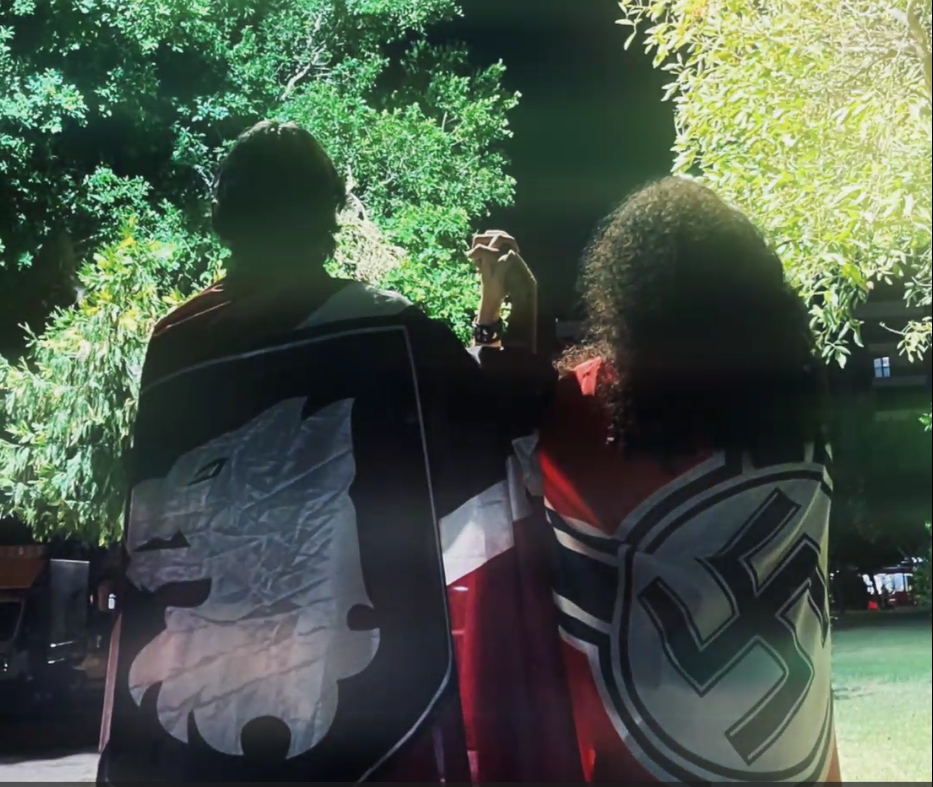
The circular emblem, known as the "Black Sun" or Schwarze Sonne, consists of twelve radial sig runes arranged like a sunwheel. It originated as a floor mosaic at Wewelsburg Castle, a site remodeled under SS chief Heinrich Himmler during the Nazi era, though its meaning to the SS itself is not documented.
The symbol was popularized decades later, in 1991, through a German novel that linked the Wewelsburg mosaic to occult Nazi mysticism, and it has since been adopted by neo-Nazi and white-supremacist movements internationally as a substitute for the swastika, according to the Anti-Defamation League.
The same symbol appeared prominently on the tactical vest worn by Brenton Tarrant during his March 2019 attack on two mosques in Christchurch, New Zealand, which killed 51 people, according to Washington Post reporting on the writing and imagery covering his gear.
Tarrant is the same attacker Kucukyetim praised as a "saint" in his own manifesto, and Kucukyetim's helmet bore the identical Black Sun emblem during the Eskisehir assault, according to Turkish investigators, directly linking his imagery to the man he sought to emulate.
The symbol also opened the manifesto of Payton Gendron, who killed 10 people in a racially motivated shooting at a Buffalo, New York, supermarket in May 2022; the Anti-Defamation League found the symbol on his weapons and gear alongside other white-supremacist references.
Gendron, too, cited Tarrant as an inspiration in his own writings. Analysts have described the Christchurch, Buffalo and Eskisehir attacks as part of a chain of copycat violence in which perpetrators reference, and visually pay homage to, earlier attackers who used the same imagery.
In the aftermath of the Eskisehir attack, reporting identified a group calling itself the National Front, described as a mostly underage membership that circulated Nazi salutes, symbols and propaganda on Telegram and claimed a presence in 27 Turkish cities, with stated centers on the island of Buyukada near Istanbul and in Bursa.
The group traced its ideological lineage to an earlier, now-disbanded group called the Ataman Brotherhood, and its leadership was said to include a self-described "chief" who claimed the organization's true leader was a former military officer.
Turkish authorities have separately linked Kucukyetim to the Terrorgram Collective, an online network the U.S. State Department designated as a Specially Designated Global Terrorist entity in January 2025.
That designation covered three foreign leaders of the network and followed earlier federal charges against two American members accused of soliciting hate crimes and conspiring to provide material support to terrorists.
U.S. officials tied the network to a string of attacks, including a 2022 shooting outside a bar in Slovakia and a foiled 2024 plot targeting energy facilities in New Jersey.
Kucukyetim's case was also referenced in the manifesto of a 17-year-old who carried out a school shooting in Antioch, Tennessee, in January 2025.


 Set as preferred source
 Set as preferred source


 1 min read
 1 min read