Newsletters


Turkish defense giant Aselsan has announced that its Ejderha (Dragon) 200 AD High-Power Electromagnetic (HPeM) countermeasure system has entered the production phase following successful tests in 2025, with the directed energy weapon system set for operational deployment this year as a critical component of Türkiye's Steel Dome integrated air defense system.
Aselsan General Manager Ahmet Akyol announced the developments during the SAHA Istanbul "SAHA Talk" program, confirming that the Ejderha system has entered low-volume serial production and will be operationally deployed this year.
"The Ejderha system has entered the low-volume serial production phase and will be put into operational service this year," Akyol stated.
During the tests conducted in 2025, the Ejderha 200 A.D. successfully neutralized UAV swarms, addressing one of the most significant emerging air defense challenges. The demonstrated threat-to-cost ratio of drone swarm attacks has elevated this threat category to the forefront of modern air defense concerns.
Akyol noted that Ukrainian drone swarm attacks on Russian airbases exemplified the critical nature of this threat, with such coordinated attacks rendering numerous aircraft unable to operate.
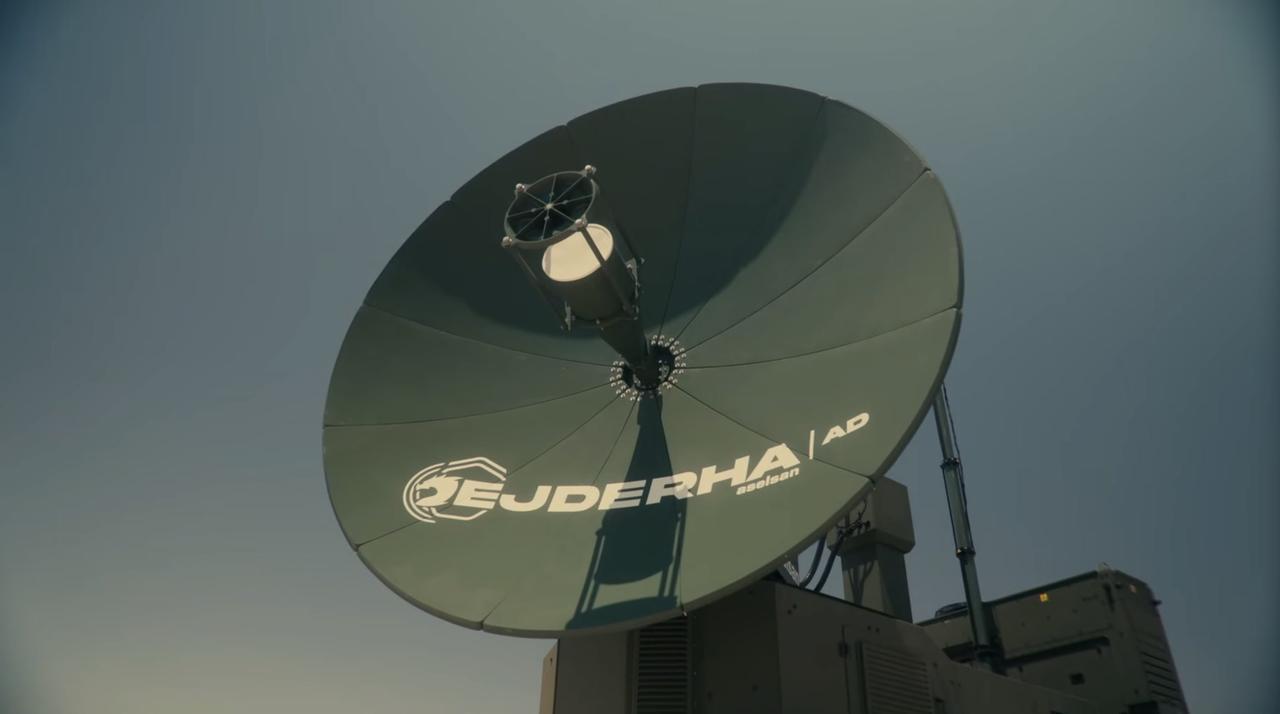

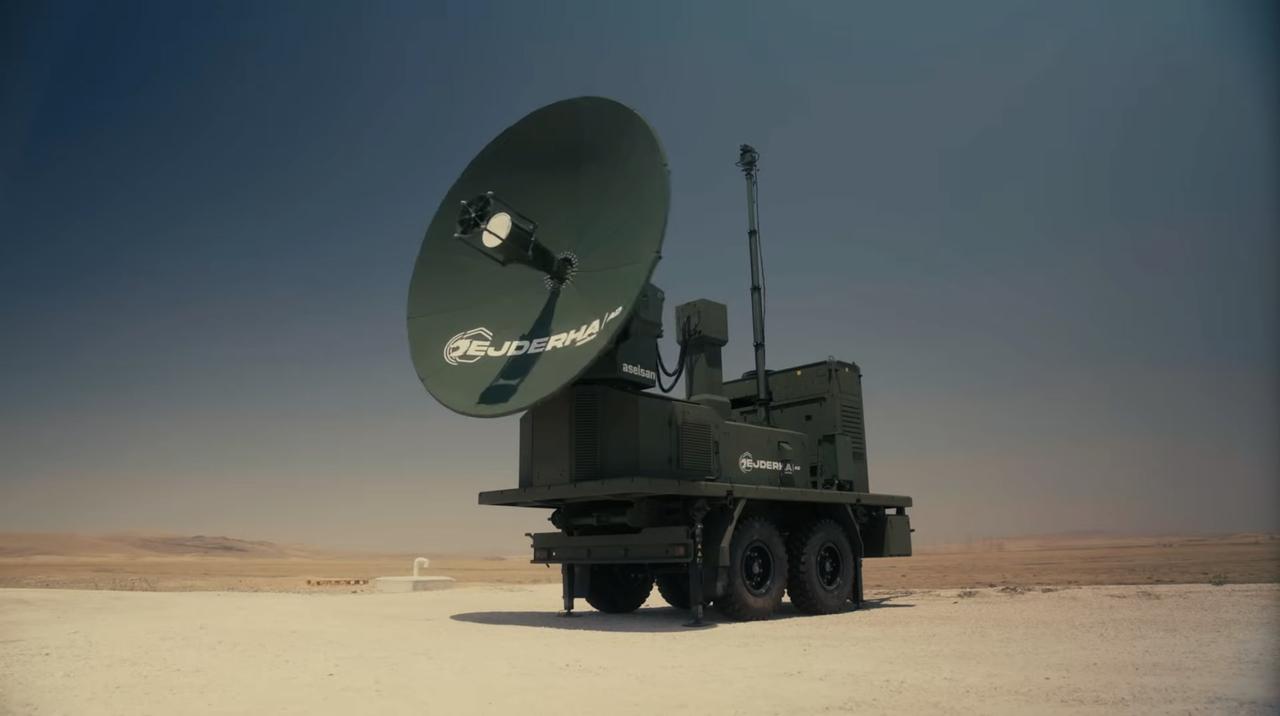
The Ejderha 200 A.D. was unveiled during IDEF 2025 as a towed system, similar in deployment configuration to the Ihtar jammer and Sahin 130/40GL airburst grenade launcher system currently in operational service.
Like laser weapons, HPeM weapons are classified as directed energy weapons. However, HPeM systems possess significantly different operational characteristics compared to laser-based directed energy weapons.
Whereas laser weapons function by heating targets until structural damage occurs, HPeM weapons disable the circuits of small electronic assemblies, resulting in a complete loss of function. This operational characteristic provides a critical advantage: HPeM weapons can neutralize unmanned aerial vehicles equipped with fiber optic cables, which render traditional electromagnetic jamming of communication links ineffective.
"HPeM weapons knock out the circuits of small electronic assemblies, resulting in loss of function. This characteristic allows HPeM weapons to take down UAVs equipped with fiber optic cables, which render traditional jamming of the communication link ineffective," according to technical specifications.
Aselsan, a pioneer in electronic warfare capabilities, has developed the next-generation Ejderha/A.D.200 High-Power Electromagnetic (HPeM) countermeasure system.
The innovative system stands out particularly for its capability to neutralize small and medium-sized unmanned aerial vehicles (UAVs).
Akyol emphasized that Steel Dome, the multi-layered integrated air defense system, was built upon years of accumulated radar, communications, navigation, command-and-control, and electronic warfare expertise.
He noted that the system's foundation consists of artificial intelligence (AI)-based software developed by Aselsan and a military 5G-based network.
Akyol highlighted that the facility in Ankara is Europe's largest integrated air defense facility, where radars operating at different frequencies, Infrared Search and Track (IRST) sensors, and electronic warfare (EW) capabilities are integrated within the same structure.
The Ejderha system, as a component of Steel Dome, provides a highly effective solution against swarm attacks and First Person View (FPV) drones.
"The Ejderha system provides a highly effective solution against swarm attacks and FPV drones. Aselsan's long-accumulated expertise in solid-state and vacuum electronics is reflected in this product," Akyol noted.
"We have completed delivery of 47 new Steel Dome systems. In 2026, we will deliver more than double that number of systems," he announced.


 Set as preferred source
 Set as preferred source


 1 min read


 1 min read