Newsletters


Turkish drone manufacturer Baykar on Saturday revealed the K2 Kamikaze unmanned aerial vehicle, the largest kamikaze platform in its class, featuring artificial intelligence (AI)-based autonomous swarm flight, GPS-denied navigation, and a range exceeding 2,000 kilometers.
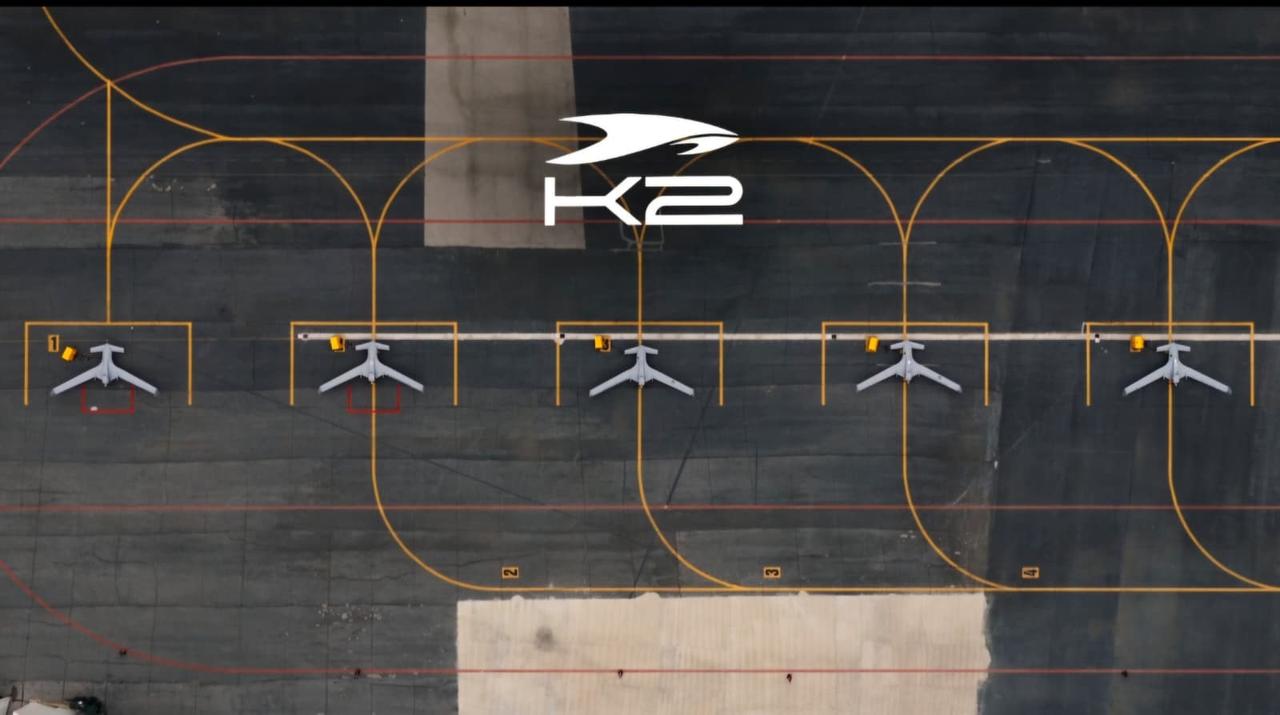
Five K2 Kamikaze UAVs took off from the Kesan Flight Training and Test Center in Edirne and successfully completed multi-day formation flight tests over the Saros Gulf, performing right echelon, line, and V-formation flights.
In test scenarios, the K2 platforms used artificial intelligence, sensors and software to position themselves relative to other aircraft in the swarm and maintained their positions within the formation without error, completing all assigned missions successfully.
Baykar Chairman Selcuk Bayraktar commented on the platform via social media, saying: "Never neglect to make 'small surprises' from time to time."
The promotional video released by Baykar showed the drone taking off, flying in formation and performing coordinated maneuvers, set to Waltz No. 2 by Soviet composer Dmitri Shostakovich.
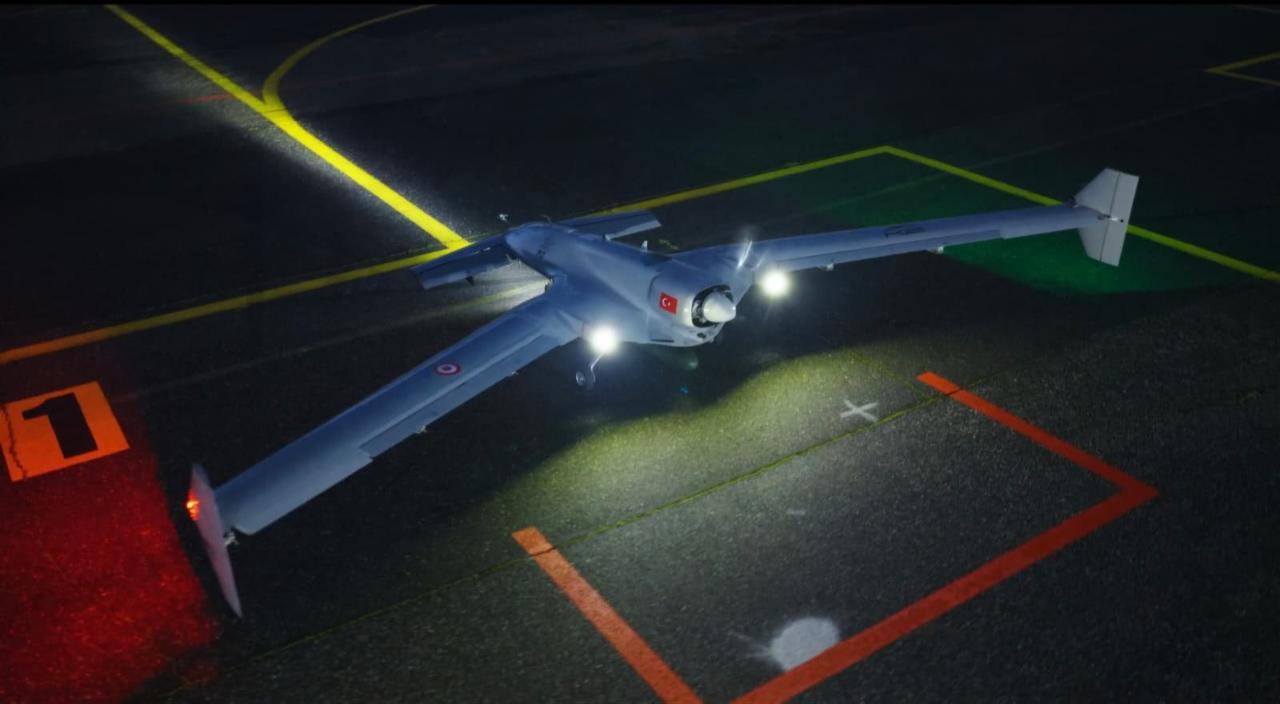

The K2 is described by Baykar as the largest kamikaze platform in its class. It has a maximum takeoff weight of 800 kilograms and carries a 200-kilogram warhead, distinguishing it from comparable platforms.
Its range exceeds 2,000 kilometers, its speed surpasses 200 kilometers per hour and its endurance exceeds 13 hours in the air, enabling long-range strategic missions.
The platform can take off and land from short runways, providing logistical flexibility in the field. Baykar said the project aims to field high-impact platforms that can be mass-produced at low cost, minimizing reliance on expensive munitions and enabling cost-effective neutralization of critical enemy targets.
In the next phase of research and development, Baykar plans to develop versions of the platform capable of returning to base after delivering their munitions, enabling reuse.
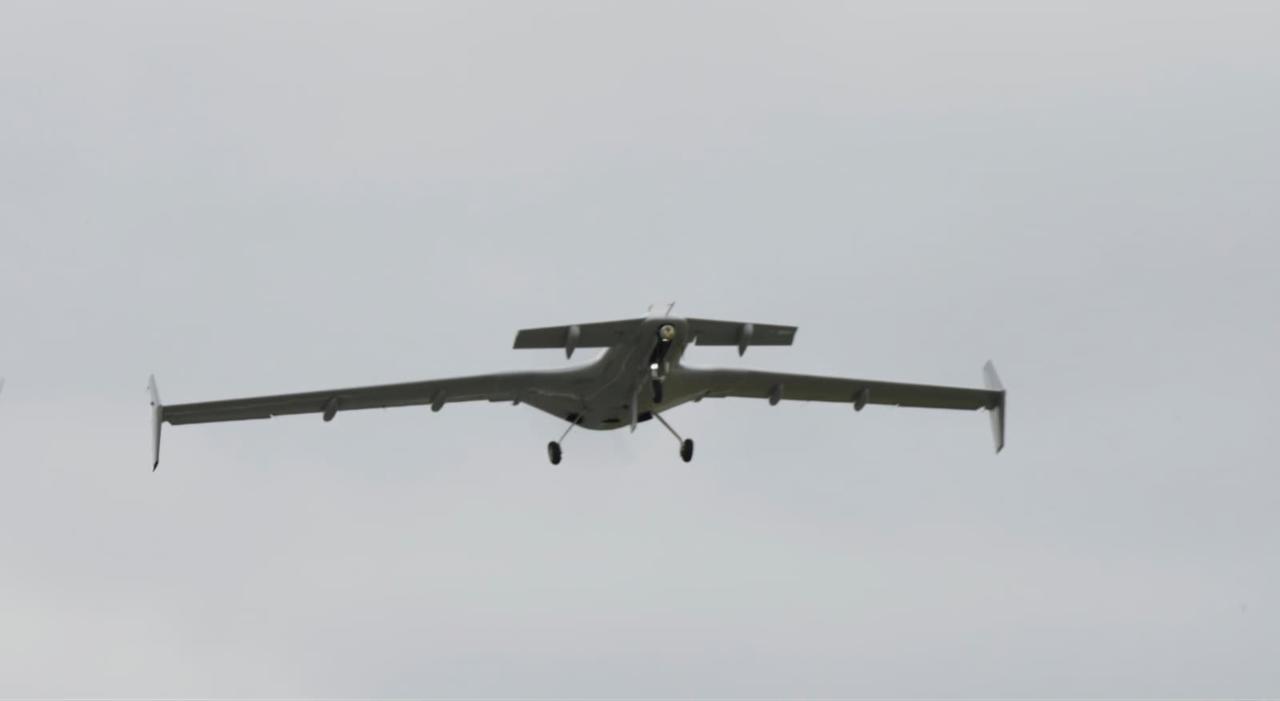
The K2's navigation architecture is designed to operate in electronic warfare environments where global navigation satellite systems are absent or subject to heavy jamming.
The platform uses a gimbal camera and a night-vision-capable camera system mounted under the fuselage to visually scan terrain and estimate its position. This allows the K2 to navigate continuously and advance toward its target autonomously, even in environments entirely devoid of GNSS signals.
The EO/IR gimbal camera system provides both reconnaissance and surveillance capability and enables precise target engagement through visual lock-on.
The platform also has coordinate-based precision strike capability. Line-of-sight and beyond-line-of-sight satellite data links further maximize operational flexibility.
Baykar remained the world's largest exporter in the unmanned aerial vehicle segment in 2025, setting a new record with an export volume of $2.2 billion.
The company has derived 90% of its revenues from exports in recent years and has become the locomotive of Türkiye's high-technology exports.
Baykar has signed export agreements with 37 countries in total, 36 for the Bayraktar TB2 and 16 for the Bayraktar Akinci.
Its existing platforms include the tactical Bayraktar TB2, the high-altitude Bayraktar Akinci, the ship-capable Bayraktar TB3 and the jet-powered Bayraktar Kizilelma.


 Set as preferred source
 Set as preferred source


 2 min read