Newsletters


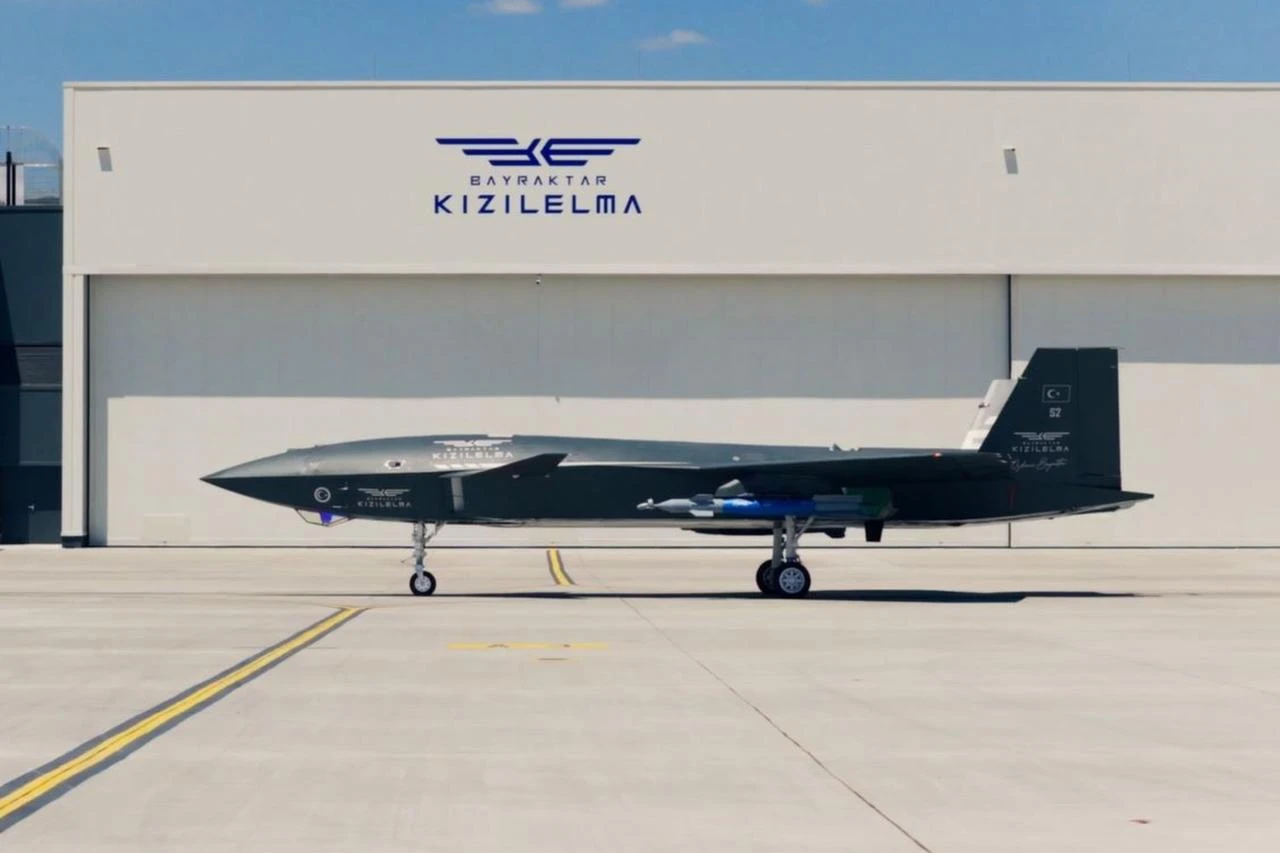


Turkish drone giant Baykar's Chairman Selcuk Bayraktar told visiting NATO parliamentary leaders that unmanned fighter aircraft (UFA) will likely replace the world's roughly 15,000 fighter jets within 30 years, calling the shift a major revolution in combat aviation.
"In 30 years probably. And that's going to be a big revolution in combat aviation," Bayraktar said during a guided field visit at the Ozdemir Bayraktar National Technology Center. The tour was hosted for a Turkish parliamentary delegation led by Parliament Speaker Numan Kurtulmus and a NATO Parliamentary Assembly delegation headed by NATO PA President Marcos Perestrello de Vasconcellos.
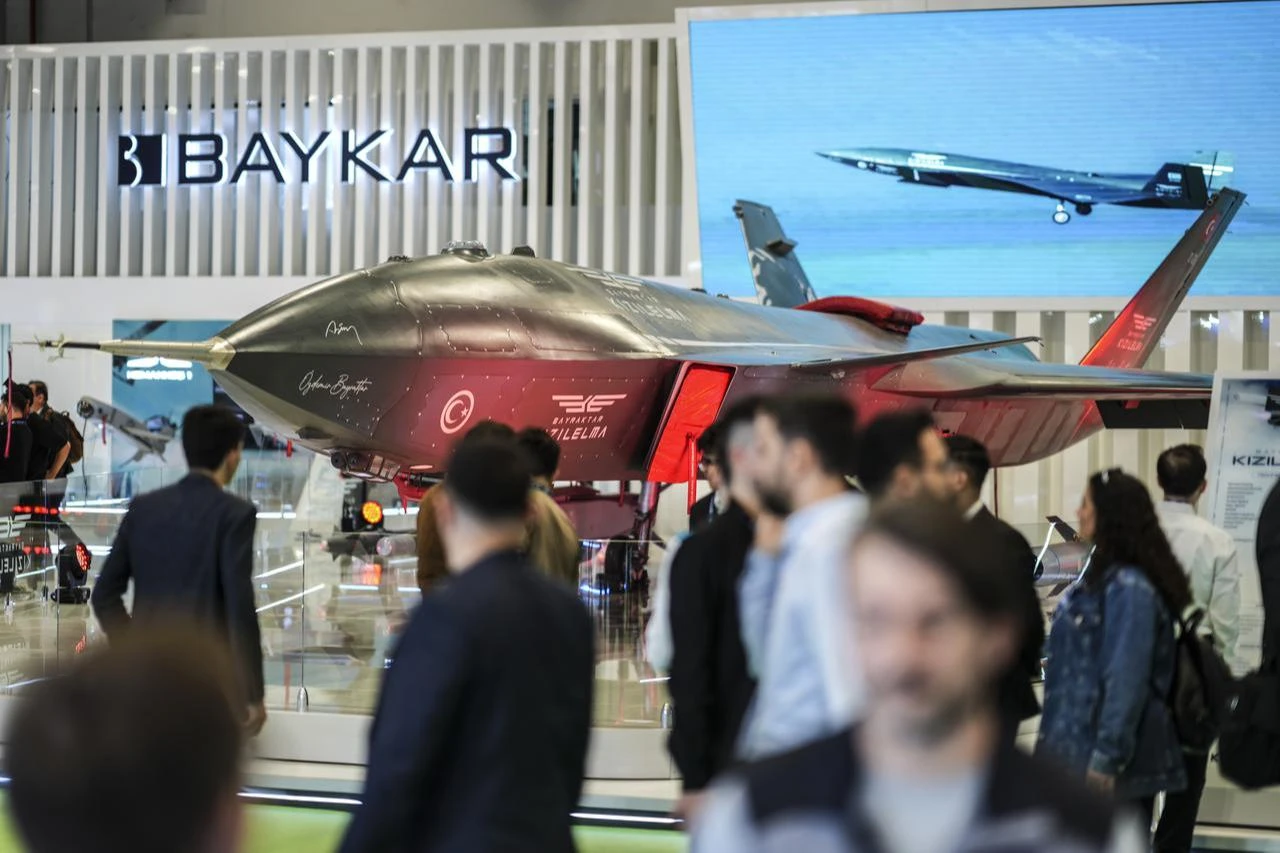
Bayraktar said Kizilelma should not be evaluated within the traditional generational framework used for manned fighter jets.
"They're not the seventh generation, or they're not a generation of unmanned fighter jets. They're a different species. These are robots," he said, pointing to comparable U.S. sixth-generation fighter programs.
"That's a manned platform. This is an unmanned platform, which doesn't have a generation. It's a robot. It's a monster. It's very dangerous. It's cheap," he added.
He compared Kizilelma's impact on combat aviation to the machine that defeated chess grandmaster Garry Kasparov in the 1990s.
"Kasparov was the grand chess master. Maybe he trained for 40 years to become so. But a machine the size of a refrigerator beat Kasparov. And after that day, my cell phone beats Kasparov. So the match doesn't make any sense," Bayraktar said.
"Here, you don't have any man inside the aircraft. It can do anything that a manned fighter can do, and do more, because it doesn't have the human. And it's much cheaper," he noted.

Bayraktar highlighted a fundamental economic advantage of unmanned systems: the elimination of pilot training as a cost and capacity drain.
"Imagine you have 10 aircraft. Throughout the lifecycle, nine of them are being used for training. So you only have one aircraft left to fight. Whereas here, you don't need to train, because a computer doesn't need it. It's just software," he said, adding, "once it's optimized, and it's continuously being optimized, that's it. You can copy the capability right away. It's microseconds to copy the capabilities, software update."
He also noted the human cost that unmanned systems remove from the equation.
"You need to train a pilot may be 10 years to become a fighter pilot. And he has a lot to lose; he has a family. The human element is the most expensive item, actually," Bayraktar explained.
Bayraktar acknowledged that the transition to unmanned fighters will take significant time.
"It's going to take a long time. But it will come once the capacities are demonstrated in a war. And it will come," he said, noting, "we are the frontier. Probably we're going to demonstrate it to the world."
Asked how he imagined the technology in 10 to 20 years, Bayraktar said forecasting over decades is difficult in an exponential era.
"Everything is changing. In 30 years, that's hard to imagine. Five years, yes. Ten years, I think we can do," he said.
He said that in 10 years, drones and UAVs will grow across all sizes.
On the longer horizon, he expressed hope that the world might eventually step back from accelerating weapons production, while acknowledging that it has not happened yet, saying, "I'm a roboticist and a UAV maker. Why am I saying such a thing? But the problem is the imbalance in the world."
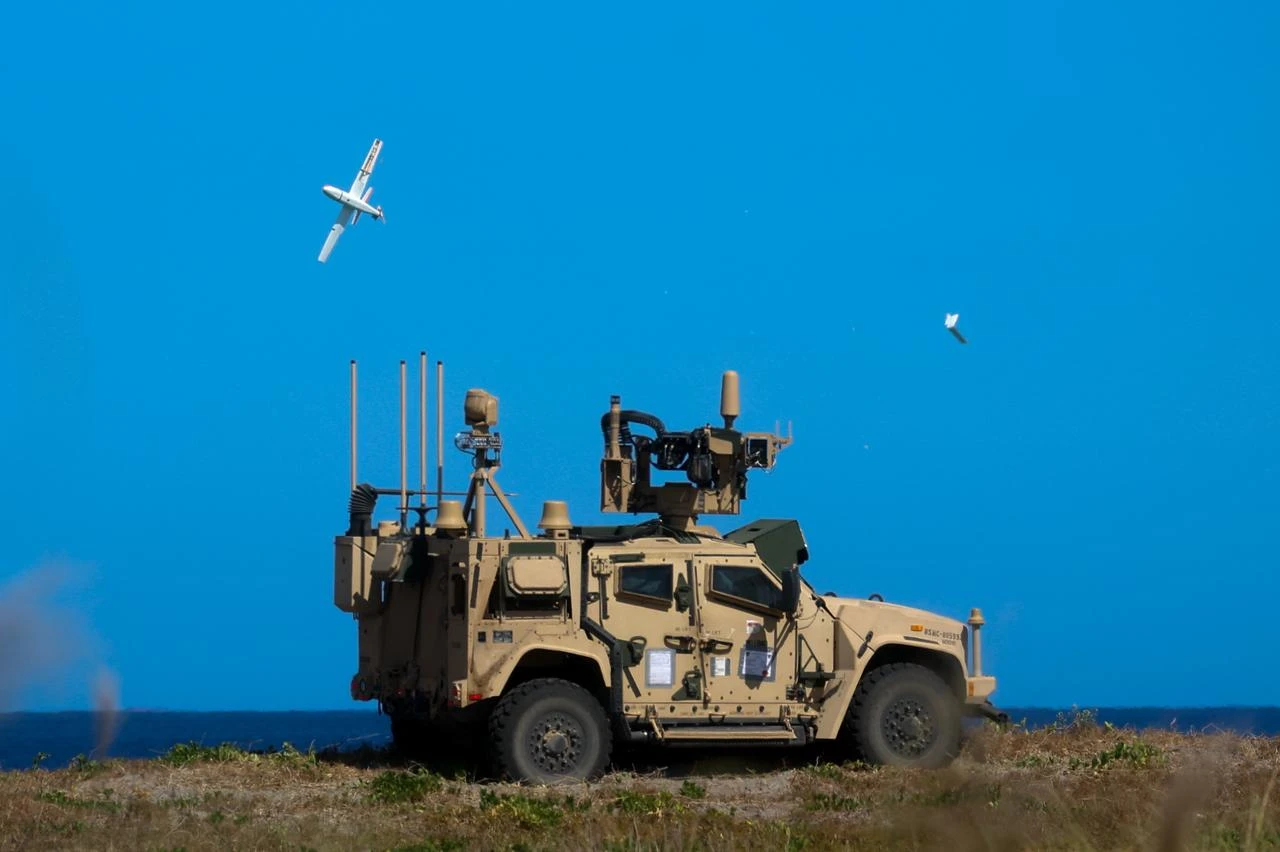
Asked about the economics of drone interception, Bayraktar said countering low-cost kamikaze drones is difficult and structurally disadvantageous for defenders.
"It's always going to be much more expensive to intercept," he said, citing the Russia-Ukraine war, where attacks sometimes involve 1,000 units simultaneously.
"You can't intercept all of them. There's always a saturation limit. And so, where do we come here? Either destruction for both sides, or we stop fighting."
He warned of the risks posed by the proliferation of drone technology.
"In this day and age, technology cannot be stopped from spreading. In terms of terror activities, it's extremely dangerous," he said. "It's always much smarter to stop the wars."
Separately, Baykar announced that it has outperformed its first-year targets for Italian aviation firm Piaggio Aerospace, surpassing initial commitments across production, employment, investment and industrial restructuring since completing the acquisition on June 30, 2025.
"When we acquired Piaggio Aerospace, we made a promise to its people, to Italy, and to the aerospace sector. One year on, we have kept the promise and gone further," said Haluk Bayraktar, CEO of Baykar and chairman of Piaggio Aerospace.
"We have invested well beyond our commitments, protected every job we pledged to protect, and given this 140-year-old company a new industrial plan, a new identity, and a new future. Piaggio Aerospace's best days are still ahead," he added.
Against a pledge to retain around 675 employees, the workforce stood at 677 as of April, with new hires balancing natural departures.
Baykar injected by April 2026 an amount significantly higher than originally planned, and said the investment has already exceeded the total multi-year cash requirement foreseen in the acquisition plan.
The company unveiled a new brand identity, Avanti Next, on February 28 and announced the Avanti NX, the latest evolution of the iconic P.180 Avanti twin-turboprop aircraft.
Piaggio Aerospace's board approved a new industrial plan in March outlining the path to stabilization and growth. Baykar has set a target to scale production to 20 to 25 aircraft per year using existing facilities and supply-chain capacity.
The company's engine division has also secured new machined-parts work packages expected to generate turnover from late 2026, including MRO engine support for the Italian Air Force's MB-339 fleet, the Italian Army's CH-47 Chinook and A129 Mangusta fleets, and component manufacturing for the F-35's F135 engine.


 Set as preferred source
 Set as preferred source


 6 min read