Newsletters


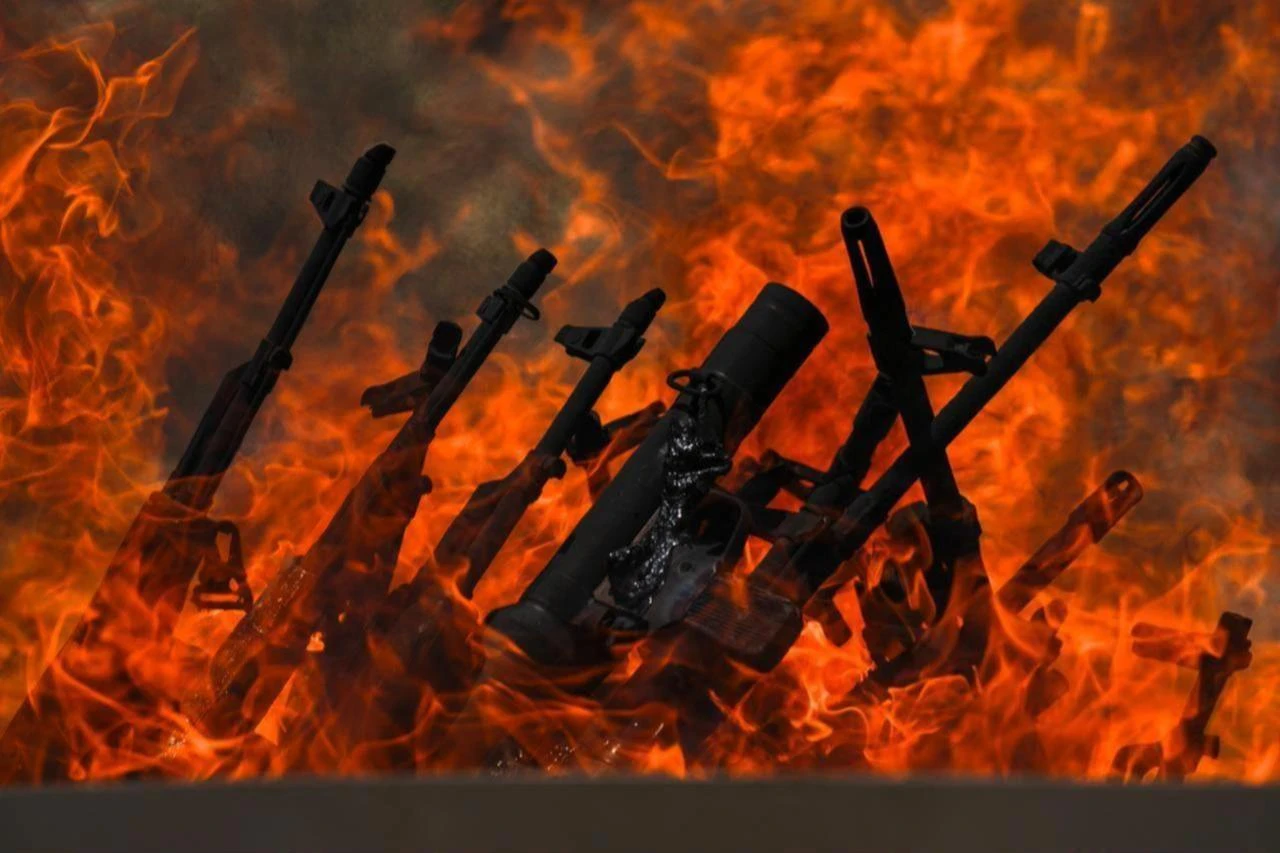


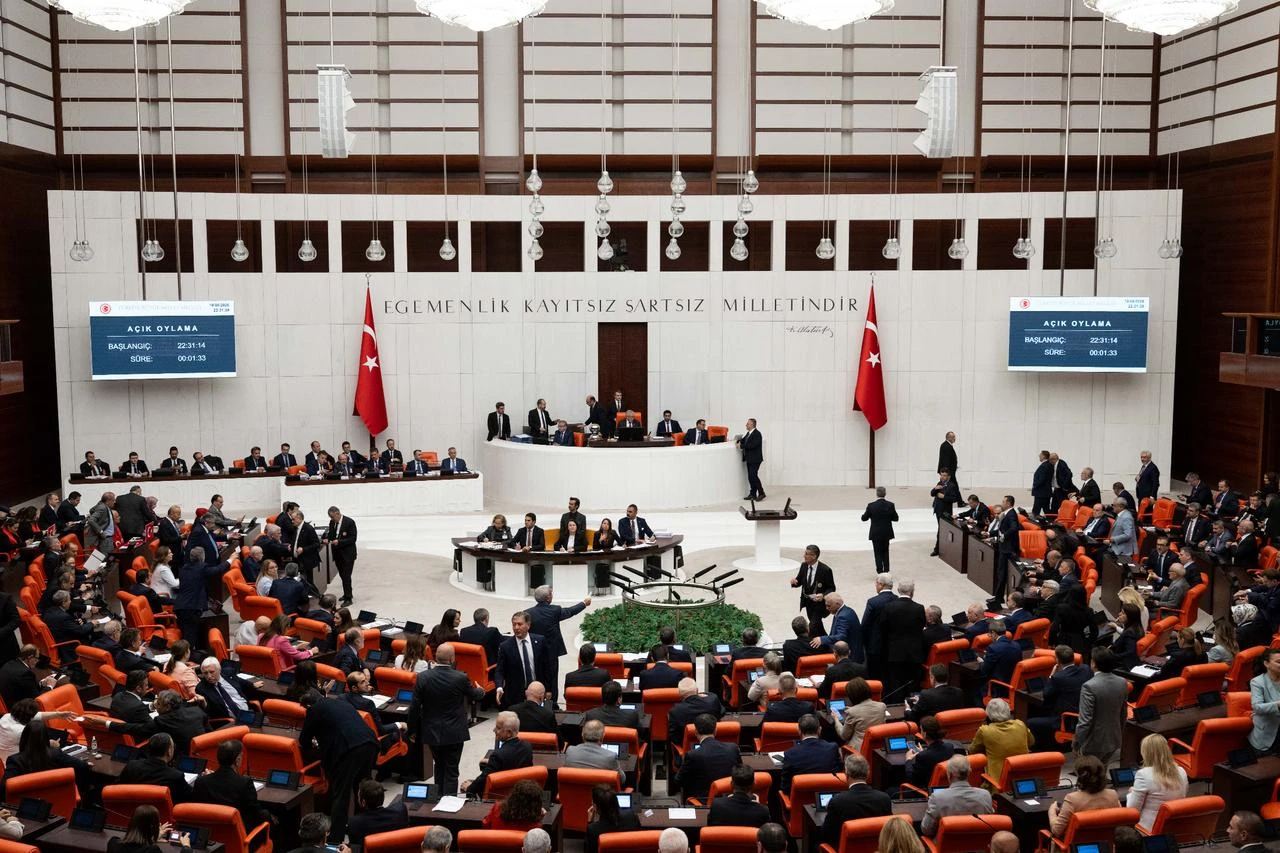
Türkiye's parliament passed the National Solidarity and Social Cohesion Strengthening Law with 467 votes in favor, a measure officials described as a historic step toward ending the PKK's decades-long insurgency, as senior government figures fanned out across the country to explain the legislation's scope.
Parliament Speaker Numan Kurtulmus called the near-unanimous vote a success belonging to the whole country.
"This success is not just one party's success, this success belongs to all of Türkiye," Kurtulmus told reporters at parliament.
"We will now follow the next steps together, carefully and meticulously, and demonstrate as a nation that we have taken ownership of this process even more clearly," he added.
Ruling Justice and Development Party (AK Party) Deputy Chairman Hayati Yazici, addressing the law's scope in Ankara, said its purpose is to dismantle an organization he said has betrayed Türkiye's unity and integrity for nearly 50 years.
"We are trying to eliminate the focal point of betrayal," Yazici said, adding, "We are eliminating an organization, a focal point, that has betrayed Türkiye's unity and integrity for close to 50 years. That is the goal of this effort, that is, Terror-Free Türkiye."
Yazici said the law excludes those who have committed killings.
"Those under investigation or prosecution, or already convicted, for having committed an act of killing, the perpetrators of killings, as well as those sentenced to life imprisonment or aggravated life imprisonment for crimes committed before the new Turkish Penal Code took effect on June 1, 2005, are also outside the scope of this law," Yazici said.
He said anyone convicted of killing a soldier, police officer or civilian would remain outside the law's scope regardless of the stage of proceedings, adding: "Those who martyred our soldiers, our police and our citizens will also be excluded."
For lesser offenses, such as membership in a terrorist organization, propaganda, knowingly assisting a terrorist organization, or acting in furtherance of a terrorist organization's aims, where the penalty prescribed by law is under 15 years, investigations and prosecutions will be postponed for five years, Yazici said.
Where the prescribed penalty exceeds 15 years, or involves life imprisonment or aggravated life imprisonment, a 15-year postponement will apply instead.
"Through this postponement, these cases will be formally recorded, and all data and evidence related to these files will be specially preserved," Yazici said.
The ruling party official said the preservation of evidence sets the law apart from a general amnesty.
"If someone whose case, prosecution or sentence has been postponed commits any terrorism-related crime during the postponement period, their postponed file resumes from where it left off," he said.
"If a verdict had already been issued, enforcement of that sentence begins, and the improvements this law provides for them are voided.
That person will then be liable both for the new crime committed and for the postponed offenses.
Therefore, this postponement and waiting period is intended to facilitate the person's adaptation, their reintegration into society. This is a detailed, carefully prepared law," Yazici noted.
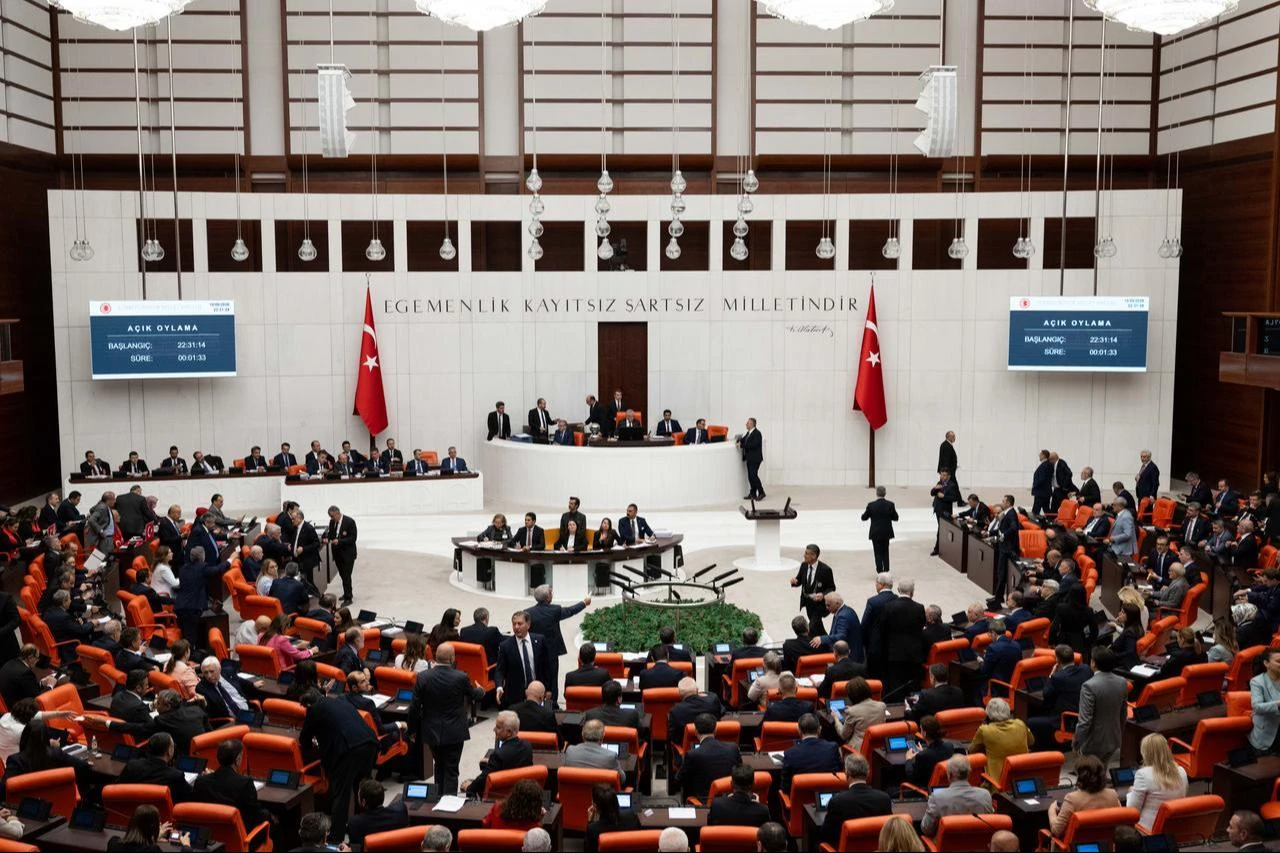

Addressing debate over whether the law amounts to an amnesty, Yazici said it does not, explaining by stating, "Under Article 87 of the Constitution, an amnesty measure requires a qualified majority; a general or special amnesty requires a three-fifths majority.
This is not an amnesty measure; it is a very different kind of arrangement, namely, the postponement of prosecution, investigation or sentence enforcement.
When we speak of amnesty, all consequences of a court judgment are lifted upon the law's entry into force.
Here, do the judicial proceedings or investigation and prosecution stages concerning individuals disappear once the law takes effect? They do not.
There are defined stages involved. So this is a distinct arrangement, different from an amnesty. There are also prior Constitutional Court rulings on this matter, since it has been brought before the court before."
AK Party spokesman Omer Celik said at a press briefing in Ankara that the legislation aims to end the presence of the PKK/KCK terrorist organization "with all its legal and illegal extensions in Türkiye, Syria, Iraq, Iran and Europe."
Celik spoke as the AK Party Central Decision and Executive Board (MKYK), chaired by President Recep Tayyip Erdogan, was meeting.
The ruling party official said the world order had shifted from a rules-based system to a "ruleless" one over roughly the past decade, arguing this had allowed what he described as imperialist and Zionist networks to try to fracture the region.
"In the end, what happened is this: all these waves raised through terrorist organizations caused the peoples of the region to suffer more," Celik said.
"Turks, Kurds, Arabs, Sunnis, Shiites, Yazidis suffered, and in the midst of all this, the region paid a heavy price for its inability to assert its own will under its own conditions.
This will that we have put forward, calling it Terror-Free Türkiye and a terror-free region, is in fact one of the strongest responses to imperialist and Zionist aggression aimed at our region with ill intent," he added.
Celik said the priority is removing the "armed threat" from Türkiye's agenda, saying, "The legal arrangement reached today aims for the PKK/KCK terrorist organization to be removed from the agenda and come to an end, with all of its legal and illegal extensions in Türkiye, Syria, Iraq, Iran and Europe."
"This has been stated very clearly up to now, and this is the matter that will continue to be tracked going forward," he added.
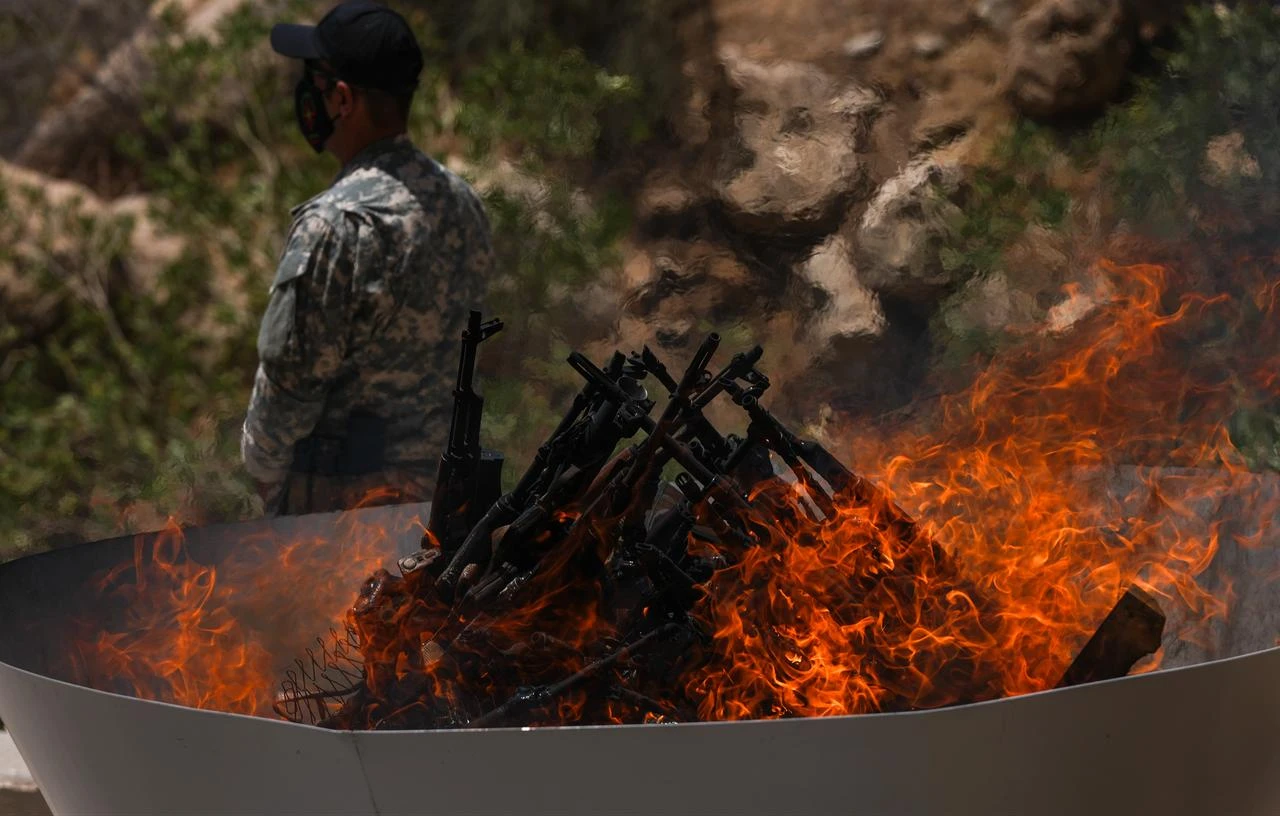
The AK Party spokesperson rejected the notion that the process required international oversight, stating, "One of the debates during the Terror-Free Türkiye process was whether, looking at different models around the world, there needed to be a third eye."
"We insistently opposed this. Türkiye does not need a third eye. Some countries have civil wars, and a third eye becomes necessary there. Today, speaking for our 86 million citizens, having a third eye come between Turks and Kurds would be the most absurd matter in the world. No third eye is needed at all. There is a national eye watching over this entire process, and that national eye is all 86 million of us," he added.
He said several prominent international figures had sought to become involved in the process.
"Many well-known individuals from various countries who have worked on similar processes elsewhere in the world wanted to be part of this process," Celik said, adding, "Our answer is clear: we do not even put such a possibility on our agenda for discussion. We do not discuss this. There is no third eye, only a national eye."
Defense Minister Yasar Guler also commented on the latest developments.
He called the law's passage a historic step, noting, "With the National Solidarity and Social Cohesion Strengthening Law, accepted by an overwhelming majority in our Grand National Assembly last night, a historic step has been taken to bring this process to success."
He said Türkiye's internal peace would in turn strengthen its international influence.
"A Türkiye that makes social peace and tranquility permanent at home will of course further increase its powerful influence internationally, and will bring great pride to our nation and to the oppressed who have placed their hope in Türkiye," he said.
Kurtulmus and Interior Minister Mustafa Ciftci are set to meet with all 81 provincial governors in a coordination meeting focused on the Terror-Free Türkiye process, according to a statement from the Interior Ministry.
The meeting will address coordination on the process at the provincial level, social integration and rehabilitation efforts, and measures to maintain public order.
Governors and security officials are also expected to discuss potential challenges in the field and steps to counter provocation and disinformation attempts.


 Set as preferred source
 Set as preferred source


 2 min read
 1 min read