Newsletters




Türkiye’s Blue Homeland, the maritime doctrine, has generated its own small English-language library of think tank papers, NATO threat assessments, and wire copy out of Athens and Nicosia every time the Turkish and Greek navies get uncomfortably close in the Aegean.
There's a Sky Homeland for national airspace, patrolled by the same drone fleet Ankara now exports.
And there is, increasingly, a third entry that almost nobody writing in English has bothered to name: the Space Homeland, a phrase that the Turkish ministers mentioned repeatedly when talking about the country’s aspirations on the final frontier.
In a way, while Greek pundits are busy monitoring the Blue Homeland doctrine at sea, Artemis, the ancient Greek goddess of the Moon, has already arrived at Türkiye’s "Space Homeland."
That gap matters more than it looks.
On Aug. 31, when Technology Minister Mehmet Fatih Kacir signed Türkiye onto the Artemis Accords at NASA headquarters in Washington, becoming the 71st country to do so, most of the coverage treated it as a single transaction: minister flies out, minister signs, minister flies home.
Read next to a doctrine that already treats the Aegean and Turkish airspace as extensions of sovereign home turf, the signature looks more like the next line item on a list Ankara has been keeping for a long time.
Rather than a country forced into an ally's ceremony, Türkiye has spent years building a vocabulary for claiming its space before it gets there, finally applying that vocabulary to the orbit of diplomacy, let’s say.
Call the Artemis Accords what they actually are underneath the legal language. They're the Moon's homeowners association: no dues, no clubhouse, just a shared understanding among the neighbors about whose hardware gets a buffer zone, who shares the good scientific data, and who agrees not to bulldoze the historic sites.
Nobody signs an HOA charter for the thrill of it. You sign because the empty lots are filling in fast, and the rules about fences and shared driveways get decided by whoever shows up to the meeting, not by whoever moves in after the vote has already happened.
For a country that has spent twenty years insisting the sea and the sky are extensions of its own home, skipping the meeting on the newest domain was never going to last, but it was a matter of time.
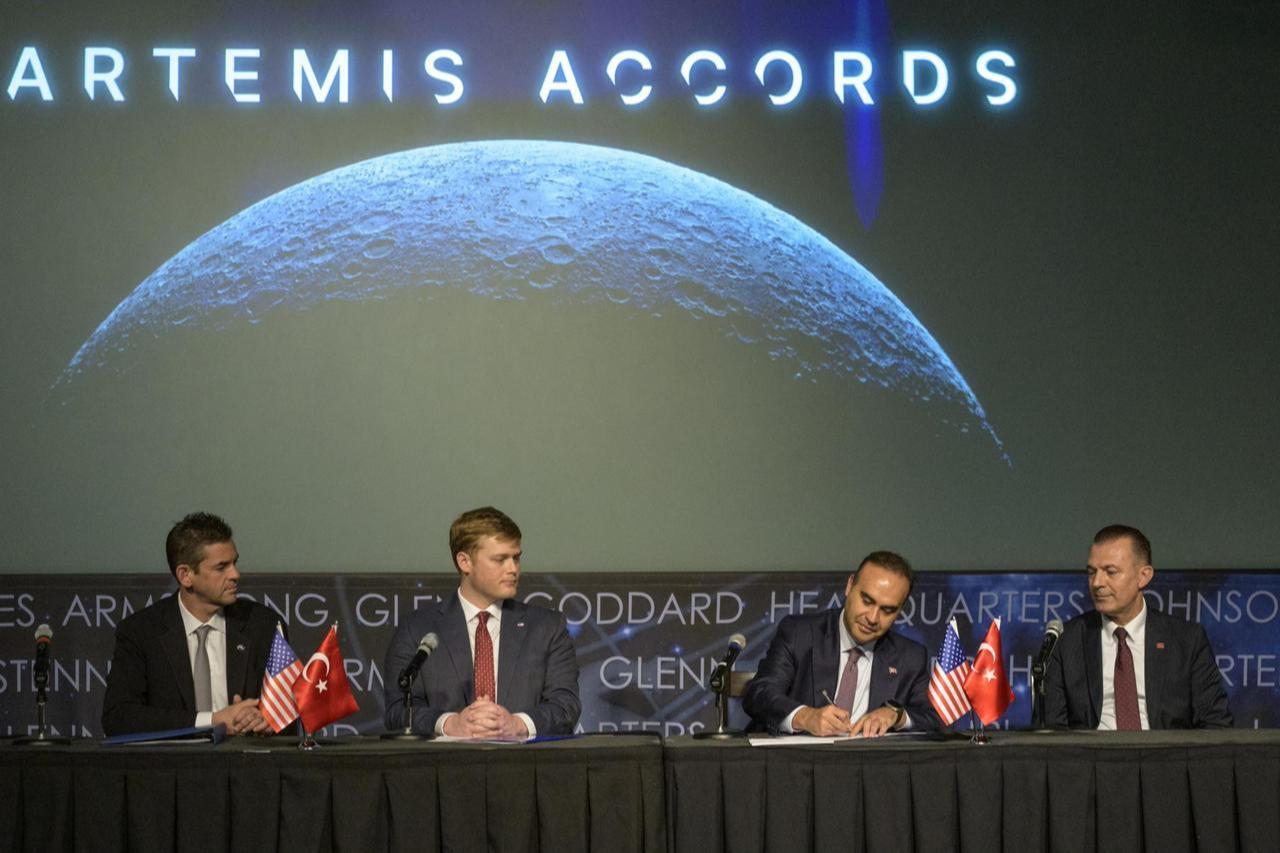

Washington first pitched the Accords to Ankara back in 2022, according to the Turkish Space Agency's own activity reporting. Türkiye passed. It kept building its national program on its own terms and, by 2024, had applied to join the China-Russia-led International Lunar Research Station instead.
China's National Space Administration went a step further and booked a Turkish-built rover onto the Chang'e-8 mission.
For two years, Ankara's most tangible lunar partnership ran through Beijing while Washington's flyer sat unanswered in whatever drawer diplomatic invitations go to die.
Three things kept Türkiye off the sign-up sheet that long. There was the geopolitical balancing act: signing a U.S.-led framework risked reading as a choice against China and Russia, both of which Ankara has spent the same years courting with equal enthusiasm during the Biden administration.
There was legal caution, what Turkish commentary around the signing called ‘legal reservations,' over whether the Accords' language on lunar mining and safety zones amounts to a rebranded colonial land grab dressed up as property law, a suspicion Moscow and Beijing have voiced just as loudly.
And there was a simpler calculation underneath both: Türkiye's space program was still finding its legs, and joining someone else's club before you've built your own house is a strange flex for a country whose entire homeland doctrine runs on the opposite instinct: claim first, negotiate later.
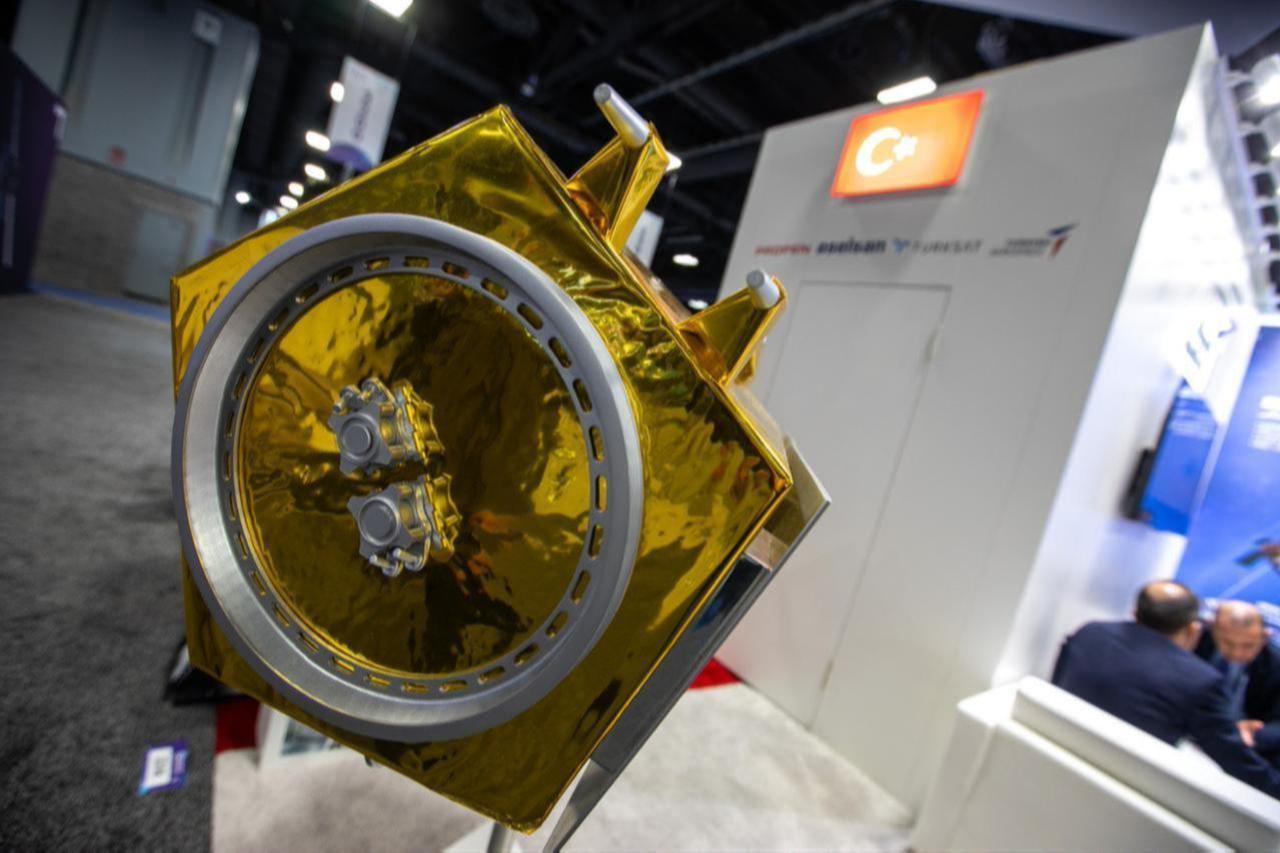
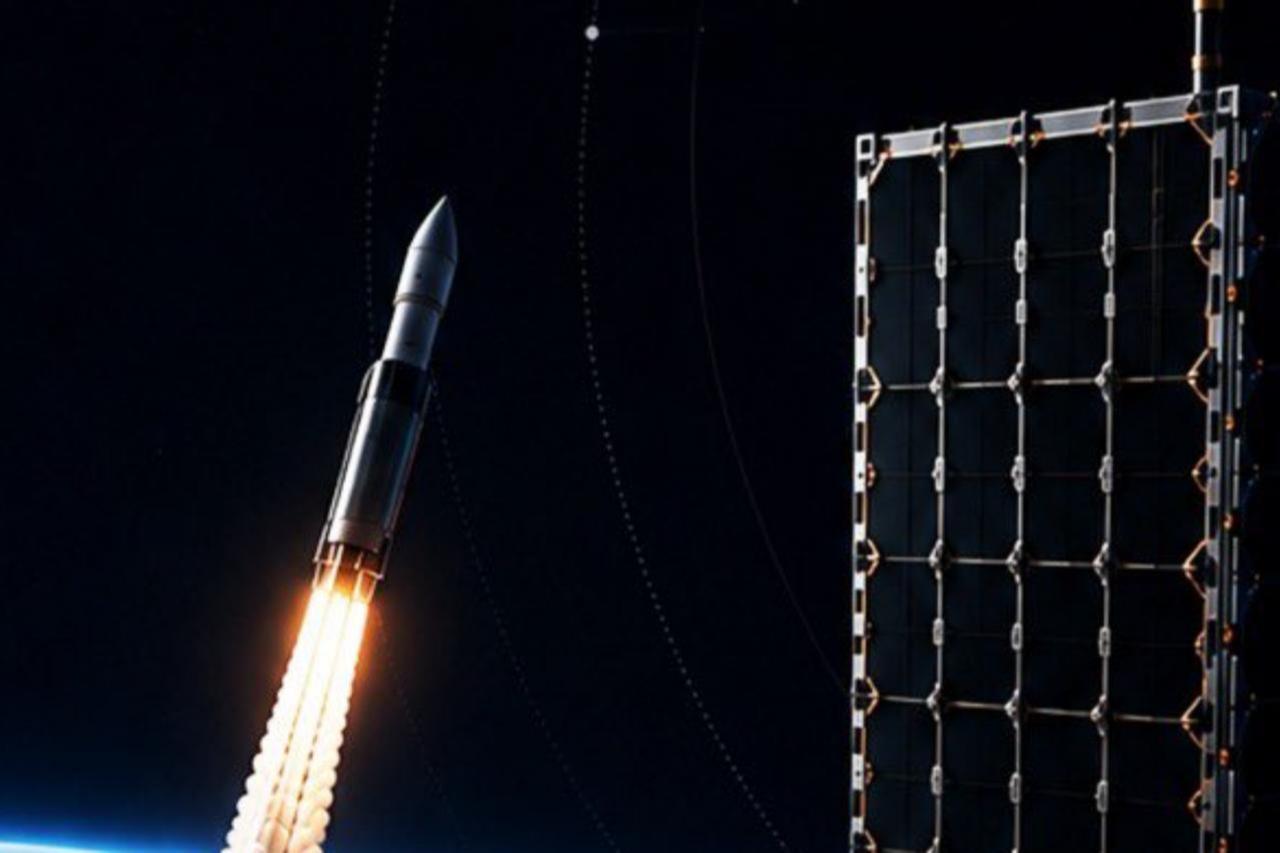
What changed wasn't the politics. It was the calendar. AYAP-1, Türkiye's first national lunar mission, is targeting a 2027 launch, Kacir told reporters right after the ceremony, describing a hybrid-propulsion spacecraft built to collect lunar orbit data and put Türkiye among the small group of countries that have actually reached the Moon.
That's the equivalent of finishing a custom sports car in the garage and only then realizing nobody gave you a license to the toll road that leads out of the neighborhood.
Türkiye has genuine hardware to show for the buildup behind that deadline: astronaut Alper Gezeravci's 2024 flight to the International Space Station aboard Axiom Mission 3, Tuva Atasever's suborbital hop on Virgin Galactic 07 that same year, and a satellite program expanding fast enough that officials now count it among the country's proudest exports.
What it still doesn't have is a complete, independent pipeline for deep-space operations.
Tracking, communications relays and launch access run largely through partners, and most of those partners now sit inside the Artemis system. A mission still years from launch can afford to stay outside every framework and keep its options open. A mission entering its final 18 months cannot, not when the neighbors effectively control the driveway.
There's a harder logic sitting underneath the scheduling problem, and it's the one that should worry planners in any middle-tier space program watching from the sidelines. Property lines get drawn while the lots are still empty, not after the houses go up.
Turkish commentary circulating alongside the signing coverage made this point directly: the real contest isn't whether any single country's rocket reaches the dust first; it's whether that country had a seat when the rules for lunar mining, orbital security and traffic management got fixed. Missing the meeting will only lead you to inherit whatever layout the early arrivals already agreed on, safety zones and all, with no vote on where they went.
Signing the Accords doesn't mean Ankara handed in its other membership card. The framework carries no exclusivity clause, and Türkiye hasn't walked back the ILRS application or the Chang'e-8 arrangement.
Minister Kacir described the US track as additive, pointing to what he called accelerating cooperation with Washington, boosted, in his account, by President Trump's attendance at July's NATO summit in Ankara. Türkiye is trying to hold a US parking pass while keeping things ready in case of a political change by holding a Chinese one at the same time, in the same driveway, daring either side to make it choose.
Türkiye is also building its own equatorial spaceport in Somalia, a project Kacir has tied directly to cutting the country's dependence on anyone else's launch infrastructure. It's the third option on offer: pave a private driveway so you're never stuck asking either HOA for the gate code.
But Washington and Beijing are drawing increasingly separate lines around technology access, mission architecture and even who gets to buy which components, and a middle-tier power trying to hold VIP status in both camps may find the gap between them narrowing faster than its own program can adapt to.
Ankara has escaped one kind of vacuum by finally opening the flyer it left unread for four years. It has entered a corridor that keeps getting tighter on both sides, and a homeland doctrine, however well named, doesn't widen it by itself.


 Set as preferred source
 Set as preferred source


 2 min read