Newsletters


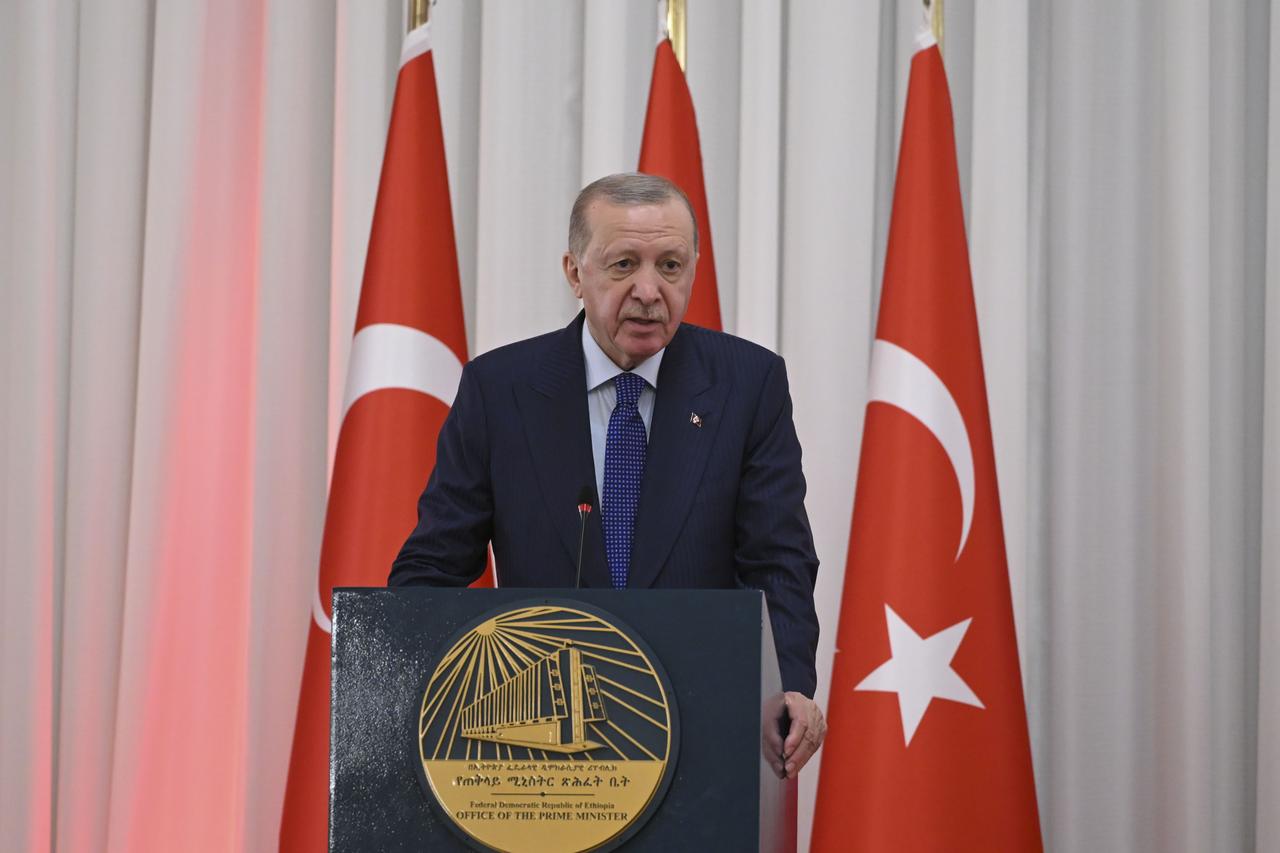


Dent Recep Tayyip Erdogan of Türkiye on Tuesday sharply criticized Israel's recognition of Somaliland as an independent state, warning that the move would bring no benefit to the breakaway region or the wider Horn of Africa, as he used an official visit to Ethiopia to reaffirm Ankara's position as a stabilizing force in the volatile region.
Speaking at a joint press conference with Ethiopian Prime Minister Abiy Ahmed at the National Palace in Addis Ababa, Erdogan said Türkiye firmly opposed the introduction of new conflicts into a region that has already endured decades of instability. "I would like to reiterate that Israel's recognition of Somaliland would benefit neither Somaliland nor the Horn of Africa," Erdogan said, adding that Ankara believes the countries of the region should develop their own solutions rather than allow the Horn of Africa to become "an arena of struggle for foreign powers."
The remarks represent Erdogan's most direct public comments on the issue since Israel became the first United Nations member state to formally recognize Somaliland as a sovereign nation in December 2025, a move that drew condemnation from Somalia, the African Union, and a coalition of regional governments including Türkiye, Egypt, and Djibouti. Somalia has called the recognition an attack on its sovereignty, while critics at the UN Security Council warned it set a dangerous precedent.
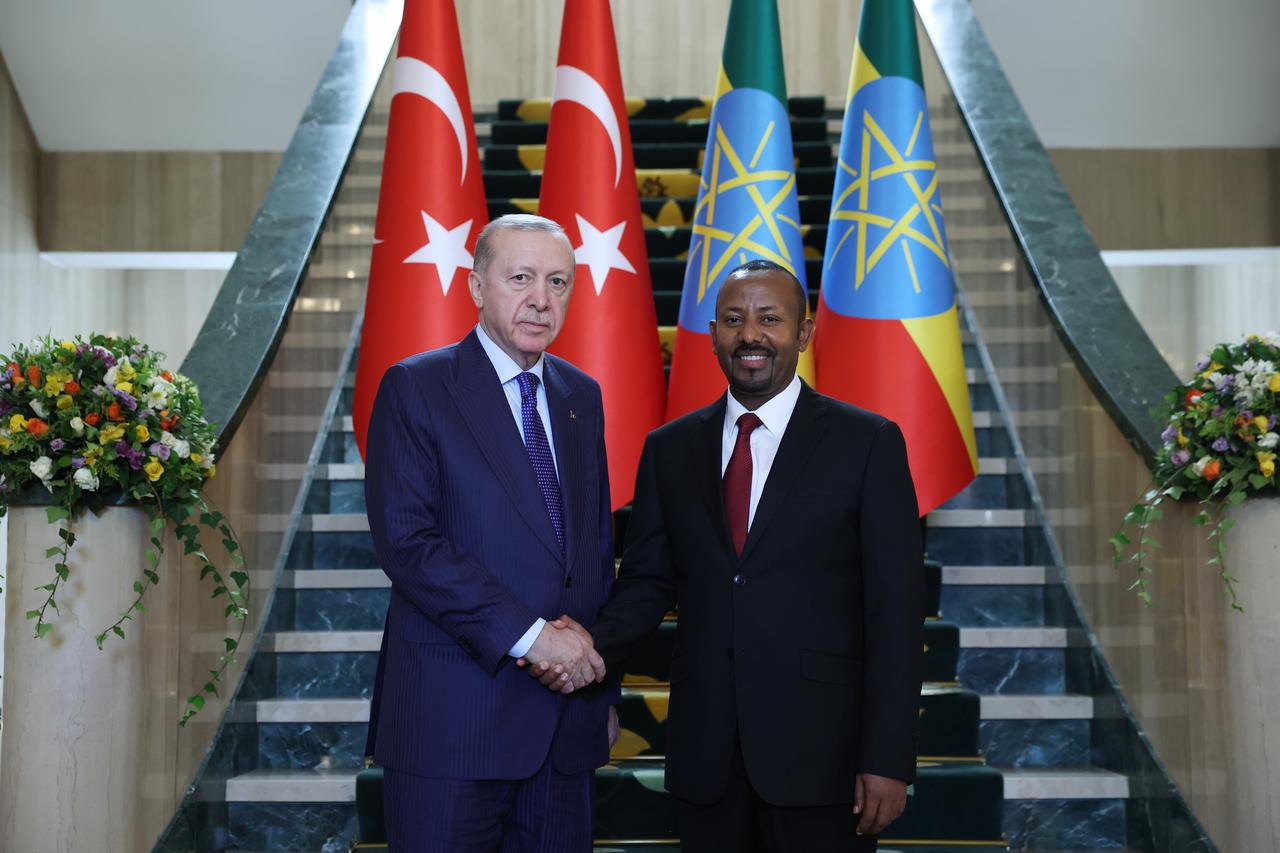

Erdogan used the Addis Ababa visit to underscore Türkiye's commitment to sovereignty and territorial integrity across the Horn of Africa, a message calibrated to resonate with Ethiopia, which has its own complex history with Somaliland's bids for autonomy.
Erdogan also highlighted Ankara's role in mediating between Ethiopia and Somalia through what has become known as the Ankara Process, a diplomatic initiative launched by Foreign Minister Hakan Fidan in mid-2024 to defuse tensions between the two countries.
The process culminated in the Ankara Declaration of December 2024, in which Ethiopian and Somali leaders agreed to de-escalate disputes, respect each other's sovereignty and territorial integrity, and pursue cooperation rather than confrontation.
Beyond the geopolitical messaging, the visit carried significant economic substance. Erdogan said the two leaders discussed how to reach a bilateral trade target of $1 billion, and he expressed pride in Türkiye's standing as the second-largest foreign investor in Ethiopia.
More than 200 Turkish companies have invested approximately $2.5 billion in Ethiopia, supporting roughly 20,000 jobs in the country, Erdogan said, calling the figures "a source of pride." The leaders also discussed expanding cooperation in energy, mining, and agriculture, and Erdogan pledged that Türkiye's international development agency, TIKA, would continue building cultural bridges between the two nations.
Erdogan's visit to Ethiopia comes amid an intensifying competition for strategic influence across the Horn of Africa, a region whose proximity to the Bab el-Mandeb Strait and the Red Sea makes it critically important for global maritime trade and security.
Israel's recognition of Somaliland in late December was widely interpreted as a strategic maneuver to secure a foothold near vital shipping lanes and counter Iranian-backed Houthi threats in the Red Sea corridor. Israel framed the move within the Abraham Accords framework, while Somaliland's leadership said it would join the accords. But the decision drew fierce opposition from Somalia's federal government, the Arab Group at the United Nations, and the African Union, all of which view it as a violation of Somali sovereignty.
Türkiye has steadily expanded its own footprint in the region over the past decade, investing heavily in Somali infrastructure, opening its largest overseas military base in Mogadishu, and signing a defense and economic cooperation agreement with Somalia in 2024. The Ankara Process between Ethiopia and Somalia was seen as a diplomatic counterweight to a rival alliance among Egypt, Eritrea, and Somalia that had formed in response to Ethiopia's 2024 memorandum of understanding with Somaliland over Red Sea port access.
Erdogan was welcomed at the National Palace by Prime Minister Ahmed with a formal ceremony that included national anthems, a review of the honor guard, and the introduction of delegations from both countries. The two leaders held a one-on-one meeting before delivering their joint press statements, underscoring what both described as a fraternal relationship between their nations.


 Set as preferred source
 Set as preferred source


 6 min read