Newsletters


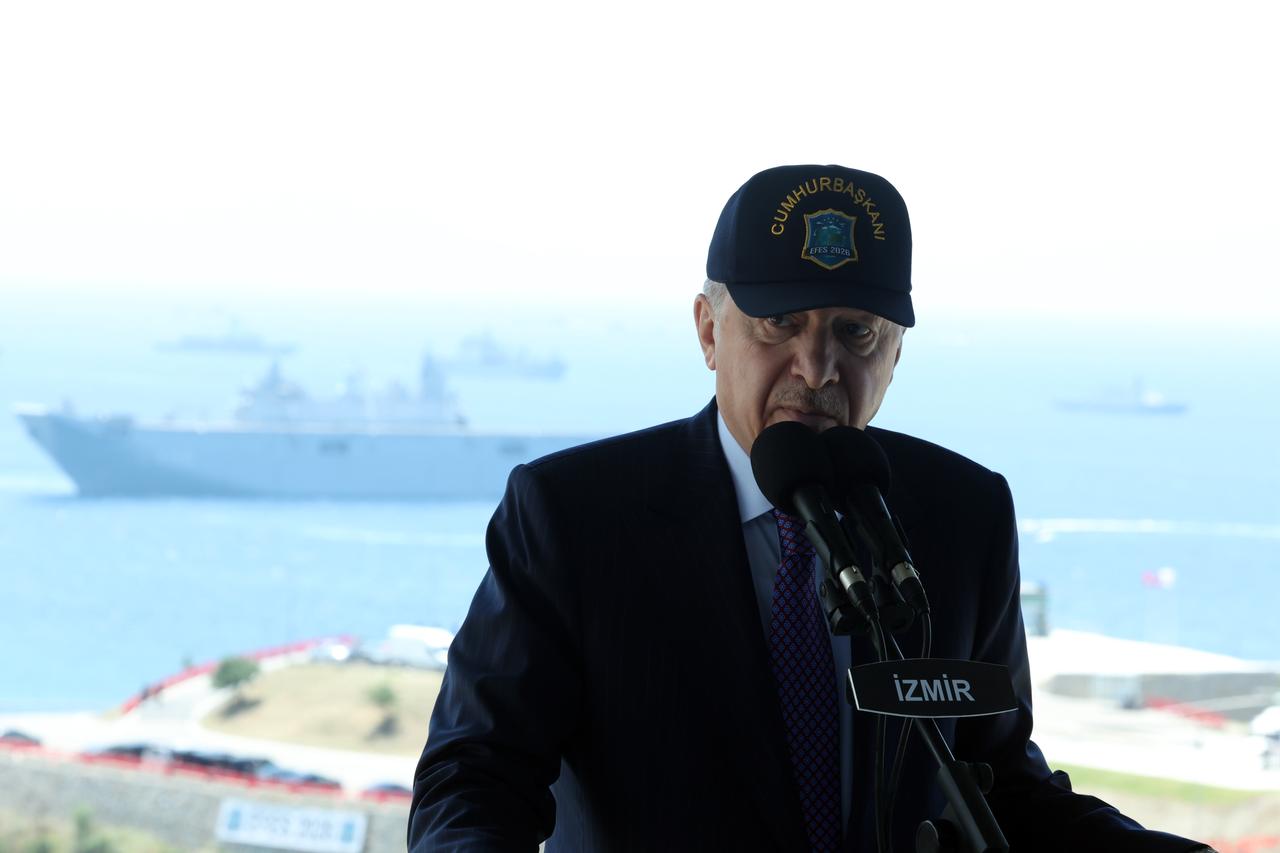


President Recep Tayyip Erdogan stated Thursday that Türkiye would continue standing against those who invest in war and chaos, and defending the shared values of humanity against networks responsible for killing civilians in Gaza and Lebanon.
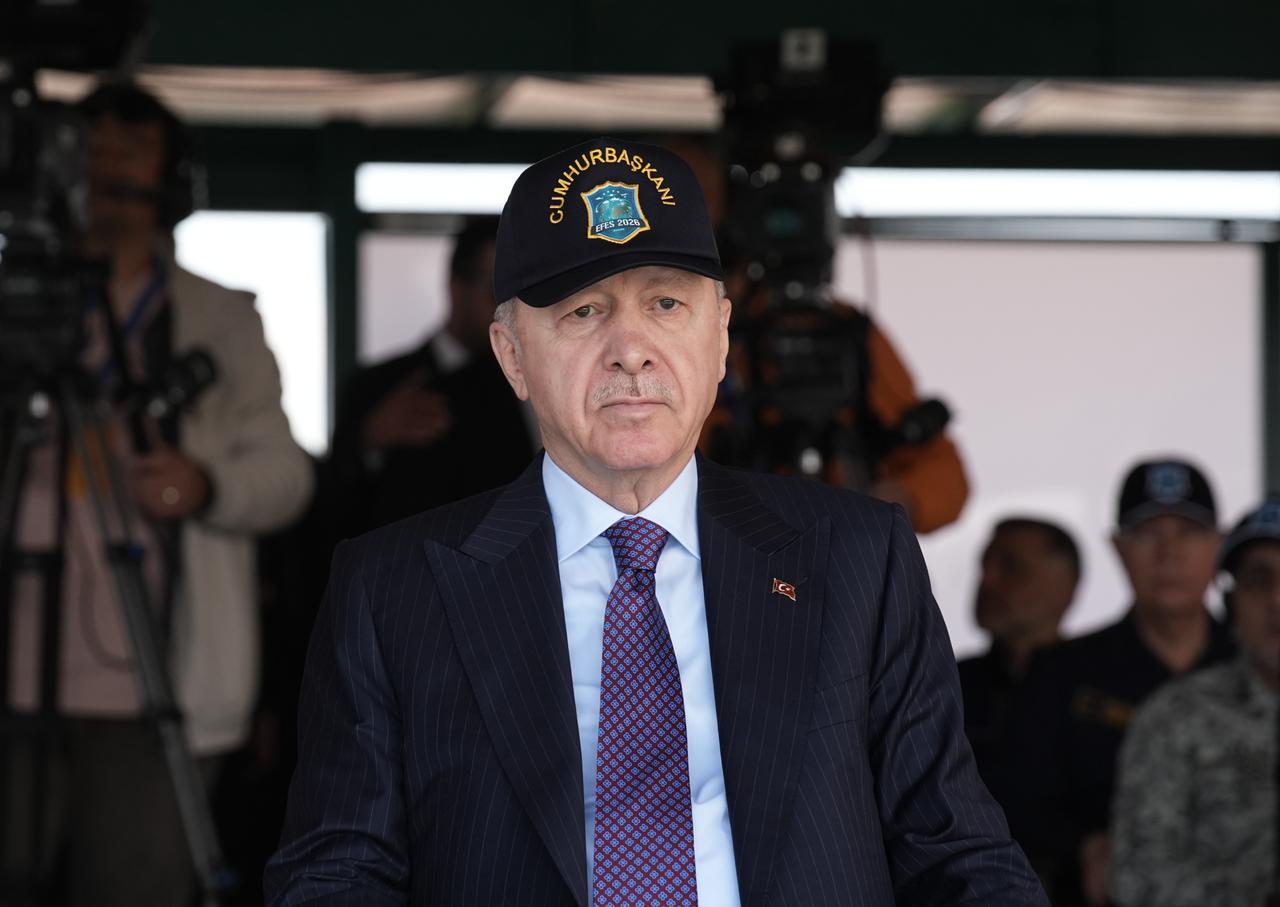
Speaking at the distinguished observer day of the EFES-2026 Combined, Joint and Live-Fire Field Exercise in Izmir's Seferihisar district, Erdogan said, "Türkiye will continue to stand for peace and stability against those investing in war and chaos."
"We will continue with determination to defend the common values of all humanity against the genocide networks that kill indiscriminately, children, women, the elderly, in Gaza, Lebanon and other parts of our region," he added.
Erdogan said the world was rapidly evolving from a status quo designed by a handful of major powers into a multipolar, multi-actor structure.
He said Türkiye's name was increasingly cited as an effective actor in this new era, adding, "While pessimistic scenarios are being written about the future, we are trying to position our country as a key actor in every field, especially in regional peace."
Erdogan said Türkiye aimed to navigate turbulent times by increasing its deterrence, strengthening its defense capabilities, accelerating its defense industry drive, and building new partnerships with allies based on mutual benefit and respect.
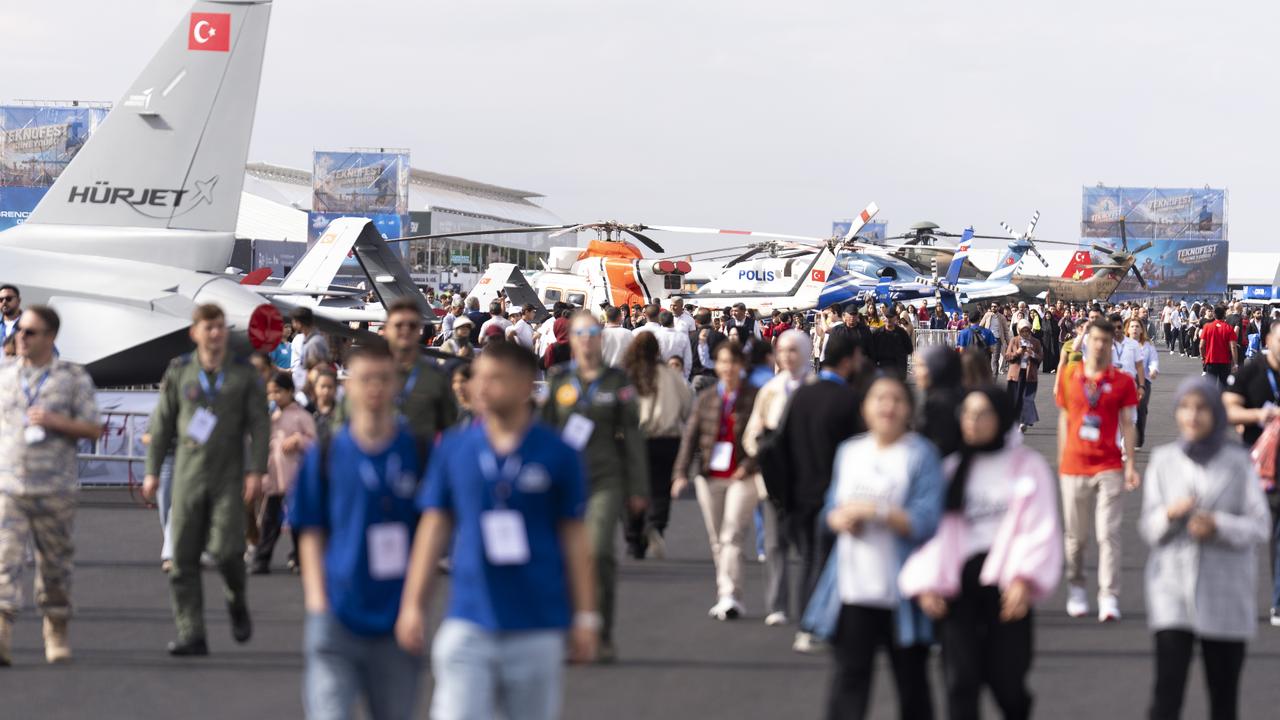
He cited the SAHA EXPO 2026, held earlier this month with participation from more than 1,700 firms across 120 countries, as evidence of that trajectory.
"The Turkish army is the army of independence. Throughout history, the Turkish army has never destroyed any place it went; on the contrary, it has repaired the places that were destroyed," Erdogan said.
He added that the Turkish Armed Forces (TAF) were a guarantee of regional and global peace as well as the security of the country and its people.

Turkish Defense Minister Yasar Guler stated that Türkiye had reached a level of defense industry development it could be proud of, driven by strong vision, determined will, and strategic investment in recent years.
"Many critical systems that we once used to import from abroad are today developed and used by our own engineers and national means," Guler said.
Guler said the participation of military personnel from 50 countries at EFES-2026 was concrete evidence of confidence in Türkiye, the respected position of the Turkish Armed Forces, and the strength of the relationships Ankara had developed.
He said Türkiye had become one of the leading actors in international security architecture and negotiation processes in recent years.
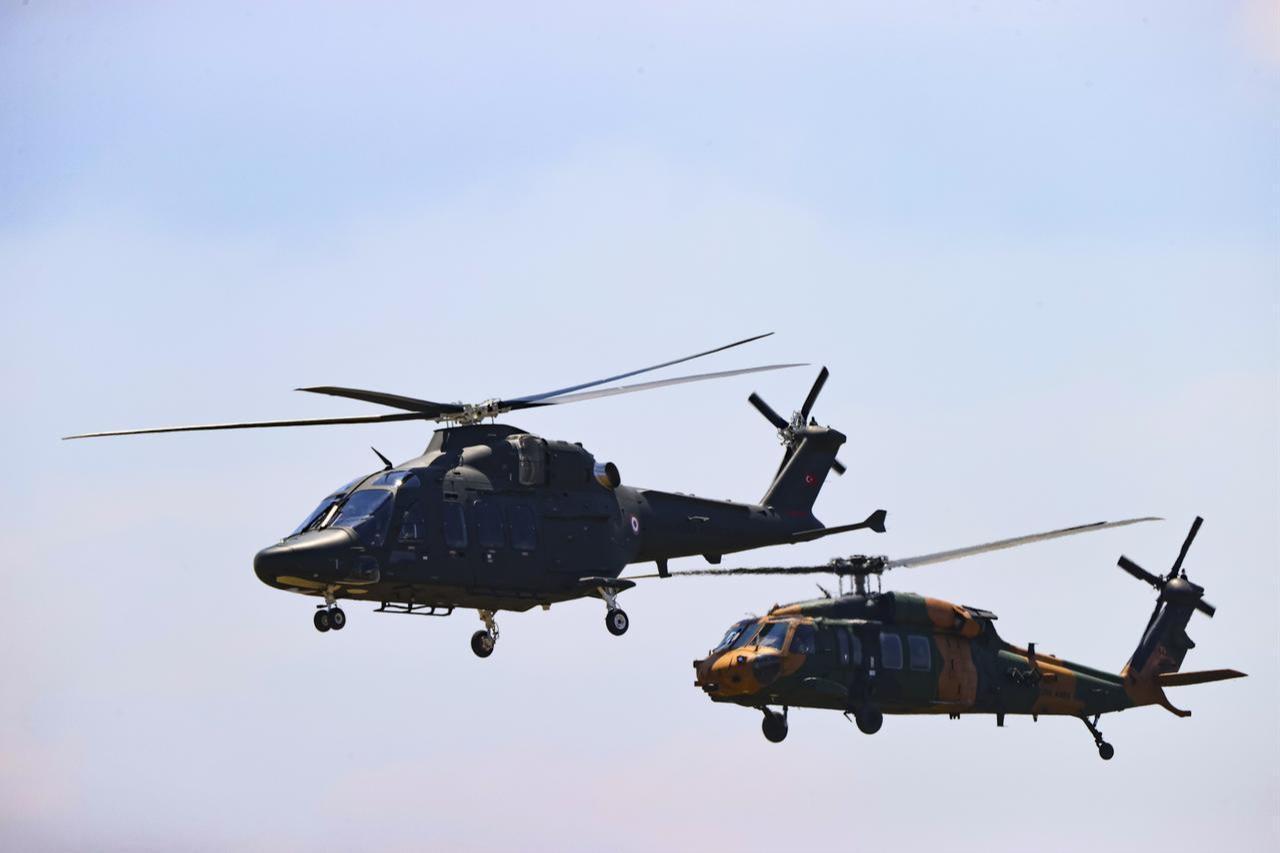
Turkish Chief of General Staff Gen. Selcuk Bayraktaroglu stated that the TAF had high combat power and the means and capability to conduct all types of operations.
"Particularly in the fields of unmanned aerial vehicle (UAV) and unmanned combat aerial vehicle (UCAV) management and operations, as well as electronic warfare, Türkiye has taken its place among the top ranks of modern armies, achieved record-breaking successes, created a conceptual change in global military literature, and introduced the concept of 'UAV diplomacy,'" Bayraktaroglu noted.
Bayraktaroglu said 50 different domestically produced weapons and systems were used for the first time during the exercise across the land, naval and air forces.
Highlights included the Bayraktar TB3 UCAV conducting a live-fire mission after launching from the TCG Anadolu, the new submarine Hizir Reis demonstrating its capabilities in naval operations, and a kamikaze swarm drone attack by Baykar that Bayraktaroglu said "has taken its main place in the combat concept of the future."
Other systems used for the first time included the Karaok anti-tank missile, MAM-T, and Teber munitions fired from UCAVs, an electronic warfare pod on UCAVs, and unmanned ground vehicles. AI-assisted programs were also used effectively in command-and-control processes during the exercise, Bayraktaroglu said.
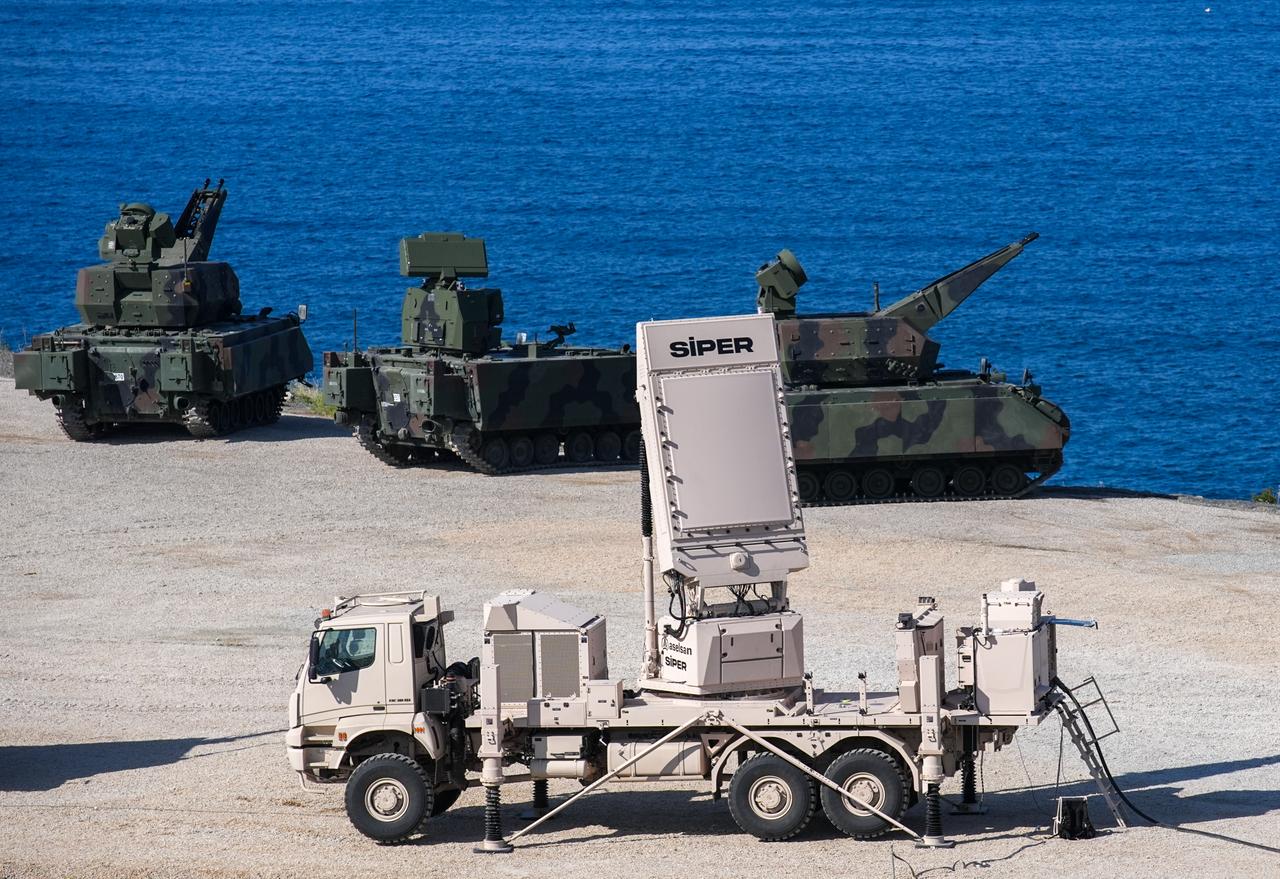
The exercise, held between April 20 and May 21 at the Doganbey Live-Fire Training Area in Seferihisar, involved a total of 10,388 Turkish personnel from TAF, Gendarmerie General Command, Coast Guard Command, and public institutions, alongside 1,305 personnel from 50 allied and friendly nations.
Five ministries, nine public institutions, and 54 defense industry firms participated.
A computer-assisted command post phase ran from April 11-17, with 22 allied and friendly nations participating for 24 hours.
Bayraktaroglu said the exercise was among the largest conducted by any NATO member state, covering all types of combined and joint operations, including amphibious assault, submarine warfare, all forms of naval operations, close air support, unmanned systems, all types of land operations including offensive, defensive and air assault, and live fire from warships, aircraft, helicopters, unmanned systems and land fire support assets.


 Set as preferred source
 Set as preferred source


 2 min read