Newsletters




A new administrative practice introduced in November 2026 allows foreign professors working at Turkish universities to apply for the Turquoise Card, which brings important benefits and residency rights, according to information obtained after reviewing official documents. Academics seeking to establish long-term careers in Türkiye can now do so without relying on conventional residence permit renewals or employer-dependent work authorization.
According to sources, the Turquoise card was usually offered to foreign academics with Turkish roots. However, with the new implementation, the Turkish Ministry of Labor and Social Security began contacting foreign academics, urging them to apply for the Turquoise card. One foreign academic at Bilkent University confirmed the ministry's e-mail. According to a source, the card is offered to assistant professors, associate professors, and full professors. However, it is currently unknown whether the ministry uses specific criteria when reaching out to foreign professors via email.
Although the Turquoise Card does not grant Turkish citizenship, it provides a combination of indefinite residence and employment rights that brings its holders closer to the privileges enjoyed by Turkish citizens than any ordinary residence permit or standard work authorization.
Introduced under Law No. 6735 on International Labor Force, the Turquoise Card is a special immigration and employment status administered by the Ministry of Labor and Social Security.
Under the law, the Turquoise Card may be granted to foreign nationals who fall into several qualifying categories.
The legislation identifies five main categories of eligible foreign nationals:
1. Highly qualified professionals
Foreign nationals who are considered highly qualified workers based on their education, salary, professional knowledge and experience, contributions to science and technology, and similar qualifications.
This category may include senior executives, experienced specialists, highly qualified engineers, technology professionals and other individuals with substantial professional expertise.
2. Highly qualified investors
Foreign nationals considered highly qualified investors based on the scale of their investments or exports, the number of jobs they are expected to create, their contributions to scientific and technological development, and similar economic factors.
3. Scientists and researchers
Scientists and researchers who contribute to scientific and technological development or conduct research and studies considered strategically important to Türkiye's national interests at the international level, particularly in science, industry and technology.
4. Internationally accomplished artists and athletes
Foreign nationals who have achieved international success in cultural, artistic or sporting activities.
5. Individuals promoting Türkiye internationally
Foreign nationals who contribute to the international recognition or promotion of Türkiye or Turkish culture, or who conduct international activities related to Türkiye's national interests.
These categories demonstrate that the Turquoise Card is not exclusively an immigration option for academics or investors. Highly qualified professionals from various industries may also be eligible.
Meeting one of these descriptions does not automatically guarantee approval. Each application is evaluated by the ministry according to the applicable criteria and administrative procedures.
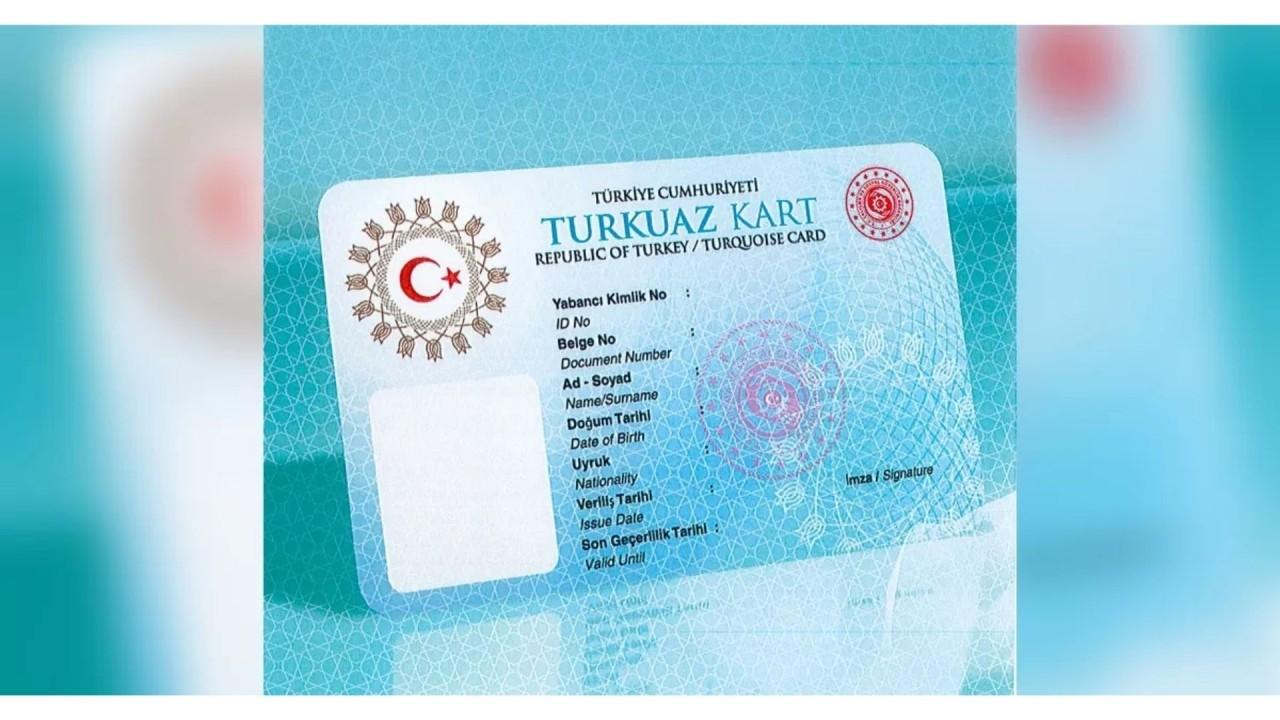

The November 2026 development is particularly relevant to foreign academics already employed by universities in Türkiye.
Under the new administrative practice, foreign nationals holding academic positions at Turkish universities can apply for the Turquoise Card, providing them with an alternative to conventional work and residence permits.
Importantly, this development does not represent a new amendment to Turkish immigration legislation. Rather, it is a new administrative implementation within the existing legal framework.
The most significant advantage of the Turquoise Card is that it combines indefinite residence and employment rights in a single status.
Unlike an ordinary residence permit, which does not independently authorize employment, Turquoise Card holders benefit from the rights granted under an indefinite work permit.
This means they can work independently or for an employer without having to obtain a separate work permit. Their employment rights are not tied to a specific employer in the way conventional employer-dependent work permits are.
The card also provides long-term immigration benefits to the holder's immediate family. The spouse and dependent children can receive Turquoise Card Dependent documents that serve in place of residence permits.
The distinction from Turkish citizenship, however, remains important. Turquoise Card holders do not automatically acquire Turkish nationality, voting rights, the right to hold public office, or other rights reserved for Turkish citizens.
Nevertheless, when it comes to residence security and employment freedom, the Turquoise Card offers privileges considerably broader than those provided by ordinary immigration documents.
The Turquoise Card is initially issued with a three-year transition period.
During this period, the Ministry of Labor and Social Security may monitor the cardholder's professional activities and request supporting information and documents from the foreigner or their employer.
Provided that the card is not canceled during the transition period, the holder can apply to have the transition-period restriction removed.
This application must be submitted within the final 180 days of the three-year period and, in all cases, before the transition period expires.
Following approval, the transition-period restriction is removed, and an indefinite Turquoise Card is issued.
Failure to submit the application within the prescribed timeframe can result in the card becoming invalid.
The Turquoise Card also provides immigration benefits to the cardholder's immediate family.
Under the applicable legislation, the spouse and dependent children can receive Turquoise Card Dependent documents, which serve in place of residence permits while the primary card remains valid.
However, dependent status does not automatically grant family members the same employment rights as the primary Turquoise Card holder. They must meet the applicable requirements if they wish to work in Türkiye.
Applications are processed by the Ministry of Labor and Social Security through its Directorate General of International Labor Force.
Potentially eligible applicants can access the ministry's official information and application procedures through the ministry's page.
Applicants should review the relevant application requirements and prepare supporting documents demonstrating their academic position, professional qualifications, investment activities, or other relevant achievements.
The evidence required will depend on the applicant's eligibility category. All applications remain subject to the ministry's assessment and approval.
Prepared exclusively by Expat Solutions.
About the author: Kagan Orhan is a human resources and immigration consultancy expert at Expat Solutions Turkey, dedicated to facilitating the adaptation processes of foreigners in Türkiye with expertise and knowledge in managing legal procedures such as residence permit applications, work permits, business establishment, real estate, and citizenship processes for foreigners settling in Türkiye, with their team of lawyers and consultants.


 Set as preferred source
 Set as preferred source




 2 min read