Newsletters


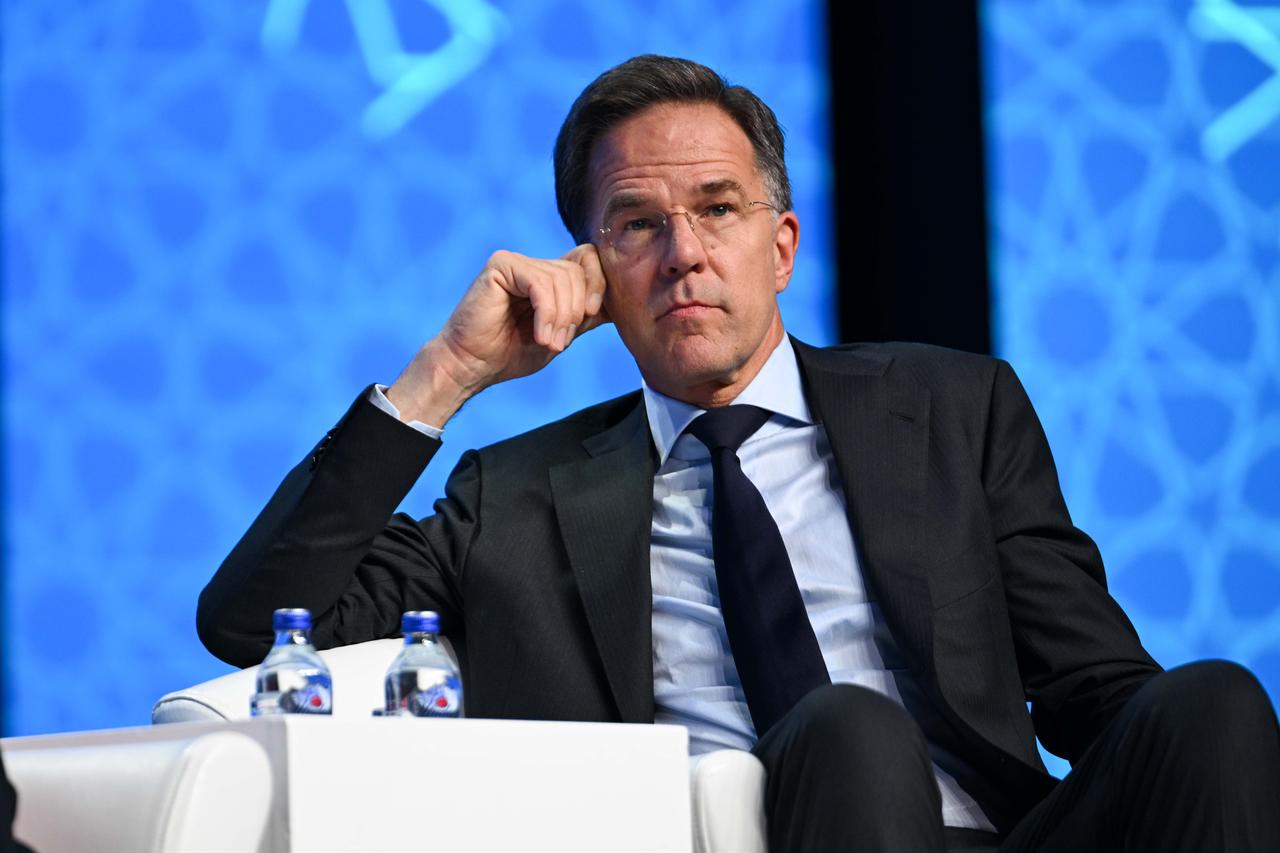


NATO Secretary-General Mark Rutte said some allies are studying Türkiye's defense industry model to see whether it could be applied in their own countries, describing it as an example of a whole-of-society approach to defense production.
Rutte spoke at a panel with European Commission President Ursula von der Leyen during the Defense Industry Forum held on the first day of the NATO Ankara Summit.
He said Türkiye's defense industry is organized under the Presidency of Defense Industries (SSB), which operates directly under the president, and includes about 3,000 defense companies of different sizes working in close cooperation.
Rutte said the companies first meet Türkiye's own needs, while also exporting across NATO territory and to countries outside the alliance.
"I think this is an extremely interesting model," Rutte said. "As far as I know, some allies are also studying whether they can implement this in their own countries. This is a good example of a whole-of-society approach in the defense industry."
Rutte said the main priority is for the defense industry infrastructure in Europe, Canada and the U.S. to produce more.
"We are making progress on this. We are really getting to a much better point. We see more production lines and more factories opening in Europe," he said.
He added that production capacity should not be limited to ammunition.
Rutte said Russia's entire economy is now being shaped around a war economy and that even its automotive sector is producing for the war effort.
He said Europe, Canada and the U.S. must act in the same direction.
"What we are seeing now is an unprecedented transformation since the end of the Cold War," Rutte said.
He said Europe is taking on much more responsibility for the conventional defense of this part of NATO and NATO territory.
Rutte said the U.S. will continue to maintain a military presence in both nuclear and conventional areas, but added that NATO is now being transformed, with the U.S. having a much stronger partner in Europe than it had four or five years ago.
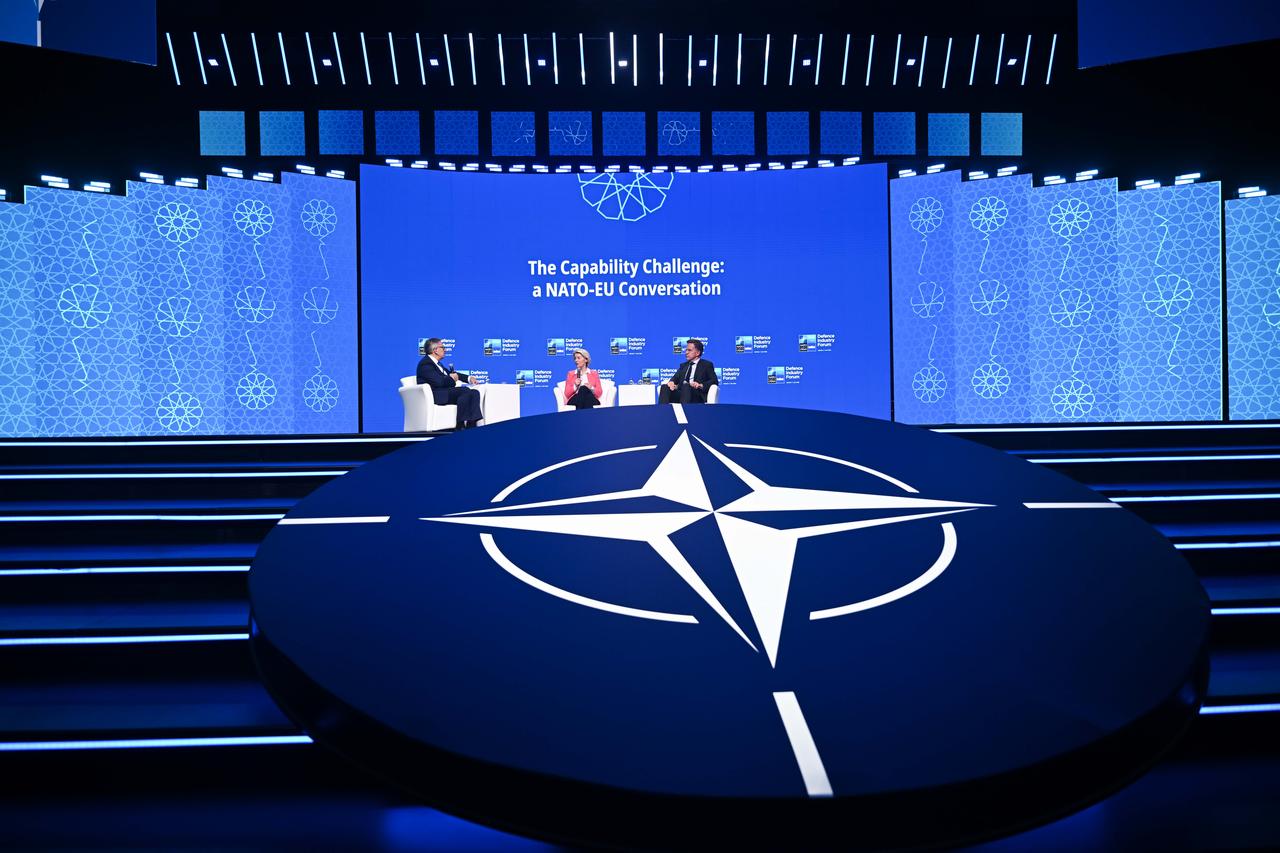

Rutte said cooperation between NATO and the European Union is also bringing about an important transformation and making the alliance stronger.
He said there is a clear division of tasks agreed between the EU and NATO.
"Therefore, we can strengthen each other's roles," Rutte said.
Von der Leyen also pointed to the importance of NATO-EU cooperation, saying EU member states and NATO allies have a single force structure.
"The same forces are assigned to NATO operations, EU missions, United Nations duties or coalitions of the willing," she said.
She said interoperability is essential for this to work and added that the current geostrategic and geopolitical environment requires a major increase in defense investment.
Von der Leyen said the EU is taking major steps on defense investment and pointed to the Security Action for Europe, or SAFE, mechanism.
"The SAFE mechanism is particularly important for us because it encourages joint procurement," she said.
She said 10 agreements with a total value of €100 billion have been signed under the mechanism.
Von der Leyen said SAFE is open to partner countries by design, adding that 35% of cost elements can come from countries outside the EU, while 65% must be within the EU.
She said the reason for this structure is to strengthen the European defense industrial base.
"We want these investments made with taxpayers' money to return to Europe, create jobs in Europe and support research and development activities," she said.
Von der Leyen said non-EU countries could benefit from wider cooperation opportunities if they sign a security and defense agreement, adding that Canada was the first country to do so.
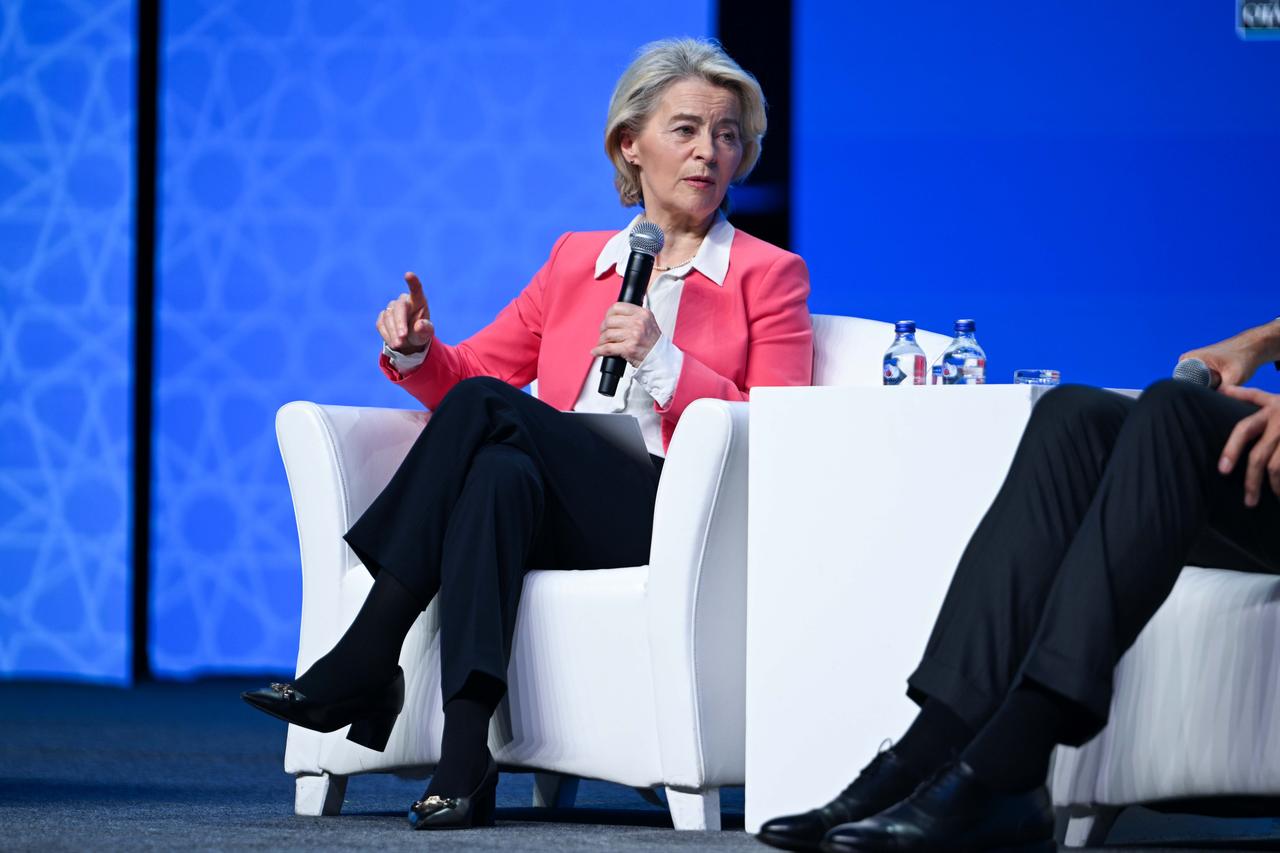
Von der Leyen said Türkiye has always played a very important role within the alliance and is also highly important for the EU's relations.
She said there is an opportunity to work with Türkiye under the 35% part of SAFE.
She added that the planned €800 billion ($914.6 billion) investment by 2030 depends on member states' decisions on where to direct their own defense budgets, creating broad opportunities for close cooperation with Türkiye.
Von der Leyen said the most important issue for the EU is to act fully in line with NATO's targets.
"We have a single force structure. We know where the gaps are, and we need to work together to close them in a cost-efficient way," she said.
She said NATO's Defense Planning Process, or NDPP, is important for the EU because it helps fill capability gaps in the most cost-effective way.
Von der Leyen also said close work with Ukraine is necessary because defense capabilities must be developed quickly, smartly and at reasonable costs.
She said Ukraine had proven this successfully in recent years under the pressure of war.


 Set as preferred source
 Set as preferred source


 1 min read
 1 min read