Newsletters




This article is an extended introduction to The Istanbul Memo. To access the full dataset and explore more data-driven insights on Türkiye and beyond, subscribe to our newsletter.
Back in the early 2000s, sending a child to a private school was still something of a rarity in Türkiye, regardless of a family's socioeconomic background. Public schools were the default; private education had yet to become the middle-class industry it is today.
That has changed dramatically.
For families in Türkiye's major cities, sending a child to a private school has increasingly become less of a choice than a necessity. And for some families, even when the money isn't there, taking on debt to pay for private education has become part of the equation.
But the latest PISA results, released on September 8, suggest that some of the assumptions Turks have made about their education system may be off.
A striking finding shows that public-school students in Türkiye outperform private-school students across all three assessment areas.
The Programme for International Student Assessment, or PISA, is an OECD study that compares education systems across member and non-member countries by testing 15-year-old students in mathematics, science and reading. PISA 2025 has drawn particular attention in Türkiye this year because of the country's steady—and, by some measures, surprising—rise in the rankings.
Some have questioned how the statistics were compiled, while others have pointed to a broader distrust of institutions. But the data itself is not new: it is based on the same assessment that has been conducted for years. So what exactly about these results has surprised Turks so much about their own education system?
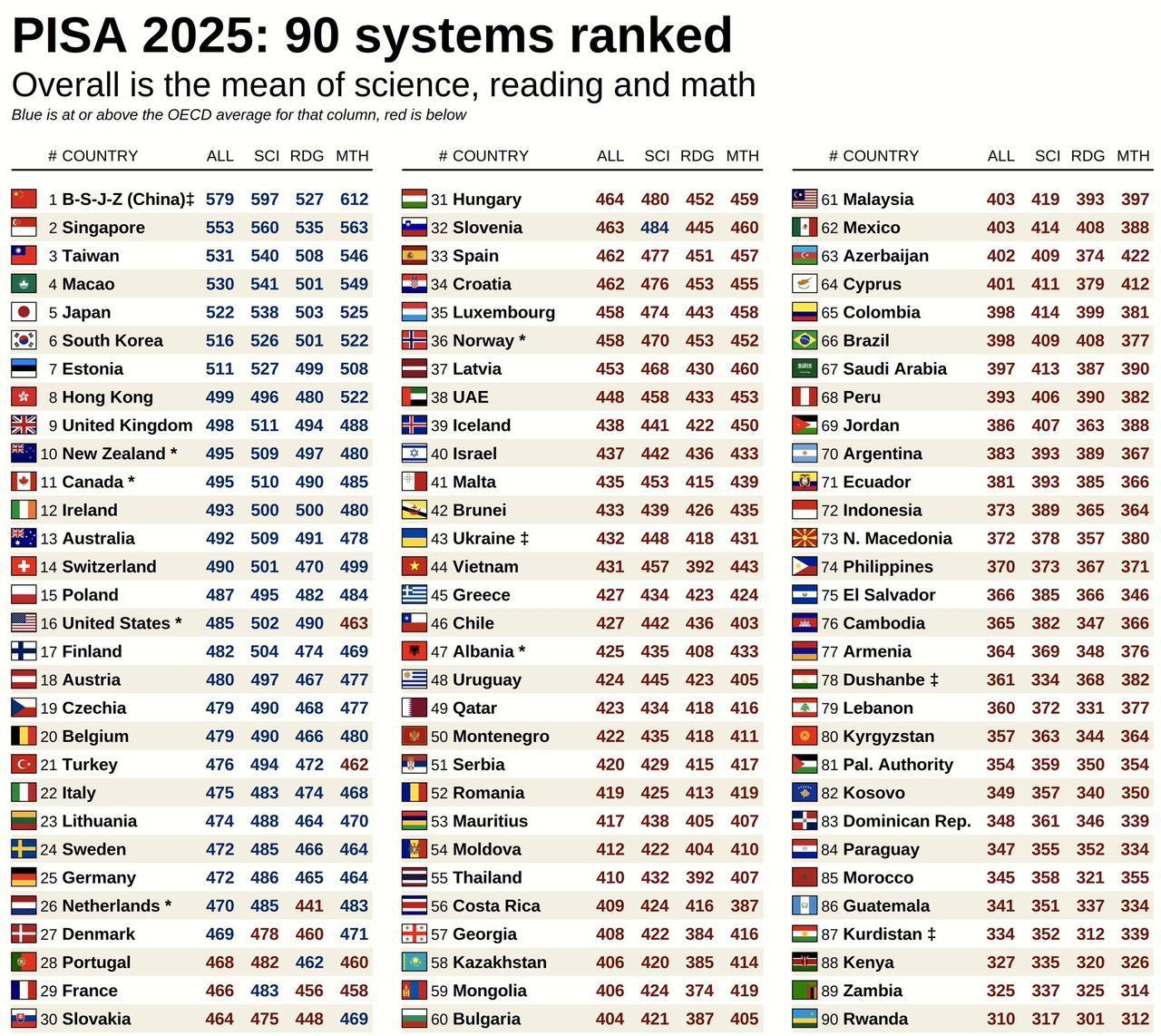
Türkiye posted its highest scores in PISA history, climbing from 34th to 19th in science, from 36th to 18th in reading, and from 39th to 28th in mathematics among participating countries.
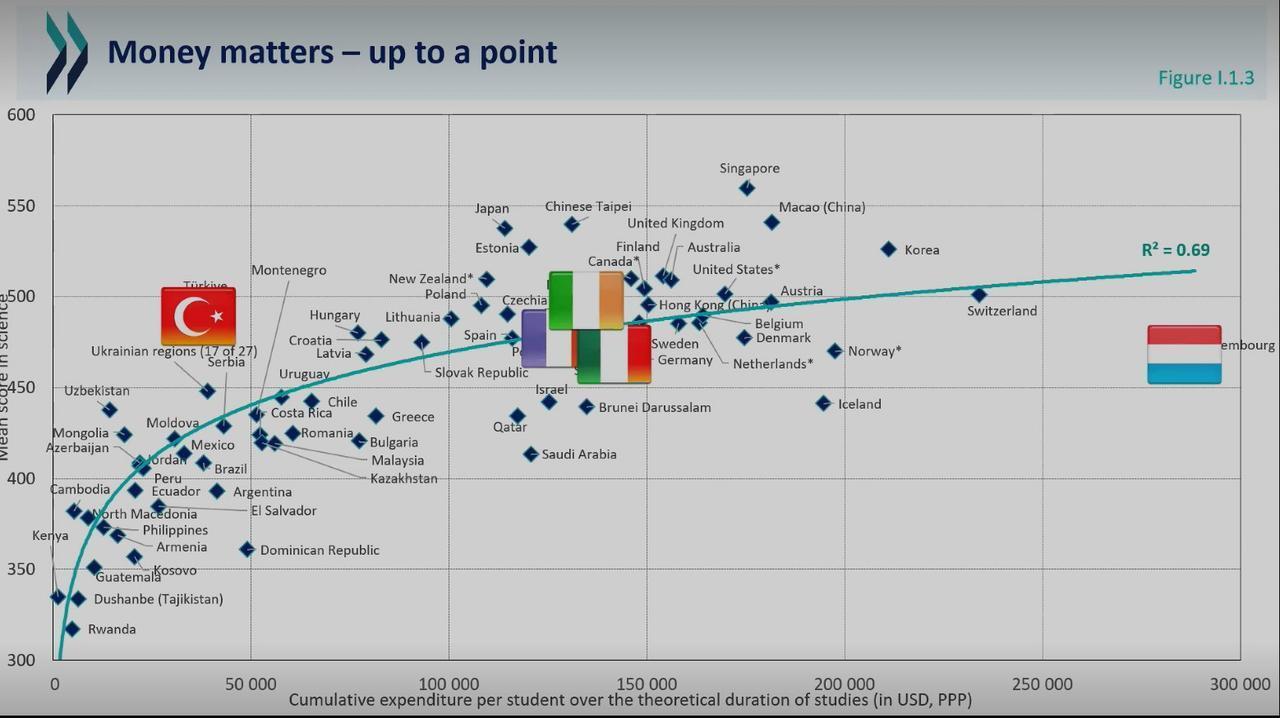
And it did this while remaining one of the countries that spend the least per student.
The report also finds that Türkiye's physical and social learning environments are better than the OECD average.
But that's only part of the story.
There is one Turkish journalist who has followed these results particularly closely—and who, a decade ago, was probably the first name that came to mind whenever PISA was mentioned in Türkiye: Emin Capa.
Although not an educator himself, opposition journalist Capa became widely known for his analyses of PISA results. In a TEDx talk in 2015, he argued that Türkiye would not be able to reach its national goals with an education system performing at those levels—a claim that generated considerable public attention. For years, he shared a highly pessimistic picture of Türkiye's future across various platforms. Now, social media users are asking him to praise the latest results with the same enthusiasm.
Whether that pessimism had a broader effect on Turkish society is open to debate. But there is little doubt that the journalist helped put PISA on the public radar and made Turks pay closer attention to what the scores actually mean.
And the latest results have quite a bit to say about Türkiye beyond the headline rankings.
What is actually driving Türkiye's performance?

Experts have a fairly straightforward explanation for the PISA results making headlines in Türkiye: the Ministry of National Education has spent years bringing its own testing system closer to the PISA model.
Previous national exams looked very different from PISA.
A few changes appear to have made a difference:
According to Dr. Osman Bagdat of Anadolu University, there is another piece of the puzzle. Türkiye’s faculties of education have undergone a major transformation in recent years. They are producing research that is increasingly published internationally, and the findings are feeding into the Ministry of National Education.
The growing number of specialists with master’s and doctoral degrees working within the ministry is another sign of that shift.
But the PISA report offers plenty of other things worth looking at.
Take the gender gap.
Girls in Türkiye score 22 points higher than boys in reading. While in mathematics, the picture flips: boys score 18 points higher than girls.
And this is not particularly unusual. Türkiye is hardly an outlier when it comes to gender differences in academic performance.
Then there is the spending question.
Belgium posts scores close to Türkiye's, but spends more than three times as much per student.
Türkiye also shares another problem with much of Europe: educating its immigrant population.
The report shows one of the widest gaps in educational performance between native-born and immigrant-background students in Türkiye, with Germany among the countries showing an even more pronounced divide. The United Kingdom, by contrast, is one of the few countries where the gap between immigrant and native students is nonexistent.
And PISA is not the only dataset pointing in this direction.
The International Association for the Evaluation of Educational Achievement's (IEA) Trends in International Mathematics and Science Study (TIMSS) 2023 study also put Türkiye among Europe's top performers in mathematics and science, with the country ranking first or second among European countries for both the highest and lowest socioeconomic groups.
Perhaps the more surprising finding is that Turkish students performed strongly across Europe regardless of socioeconomic background.
That does not mean socioeconomic inequality has disappeared. Far from it.
The absolute gap between the groups remains large, roughly 100 points in mathematics, showing just how clearly socioeconomic inequality within Türkiye still translates into differences in academic performance.
For now, the surprising results present an opportunity to take the situation a step further for both Türkiye's national goals and for the future of its education.


 Set as preferred source
 Set as preferred source


 2 min read