Sign in
 Newsletters


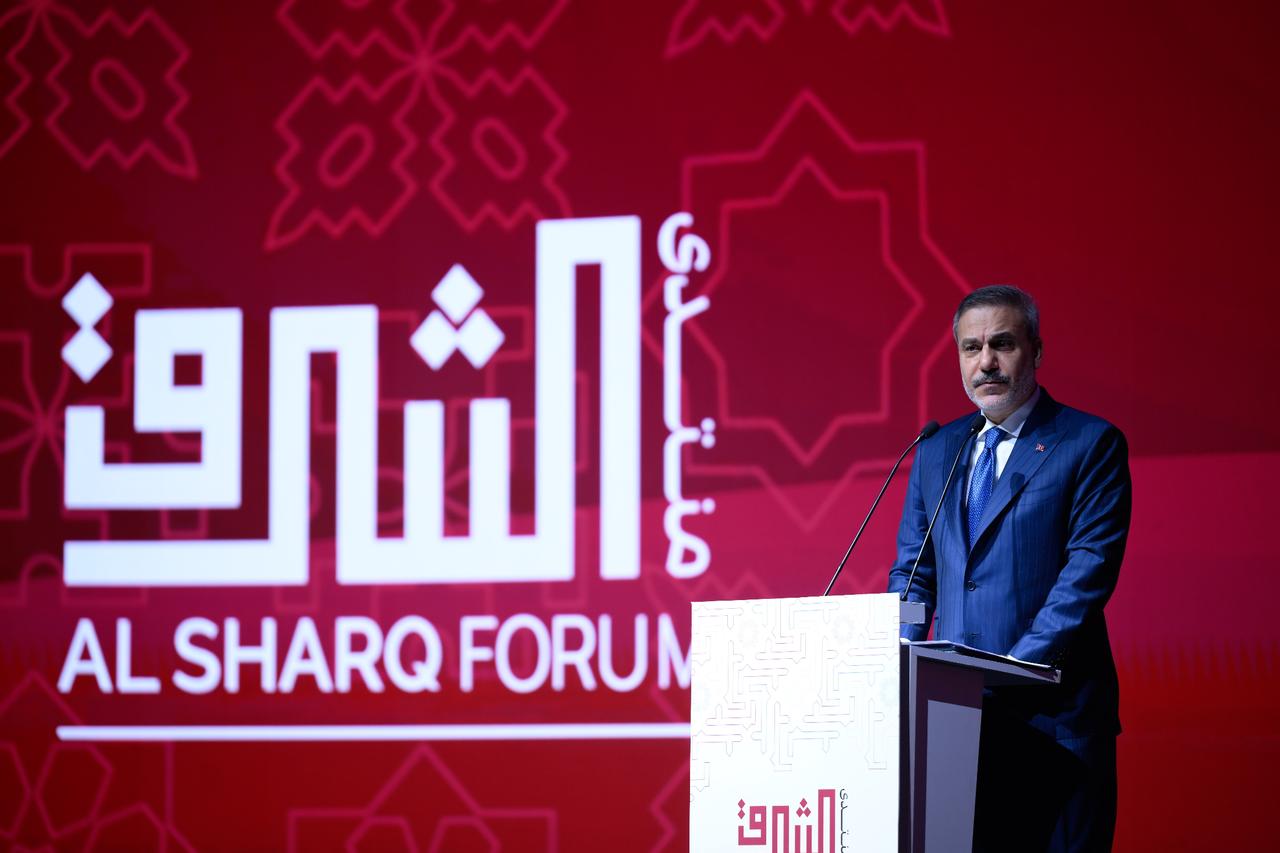


Turkish Foreign Minister Hakan Fidan told Al Sharq Forum 2026 in Istanbul on Saturday that Muslim countries, home to more than a quarter of the world's population, must help shape the emerging international system.
"The choices we make today will be decisive in shaping the future of the Muslim world," Fidan said at the forum's opening.
"For decades, our fate depended largely on decisions taken elsewhere," he noted.
Addressing some 2,000 participants from more than 50 countries, Fidan said the international system is undergoing a deep transformation, and its final shape is still being debated.
"The global center of gravity is shifting. New centers of political influence, economic dynamism and technological innovation are emerging all over the world, and especially in the East," he said, adding, "The Muslim world is right at the center of this great transformation."
"Those who were here last year will remember. I came before you to share our vision on how we can encourage cooperation in the Muslim world. Today, in the same spirit, I have returned among you to share how we can turn this vision into action," the Turkish foreign minister said.
He warned that those who hesitate and stay passive will have others speak and decide for them. The current moment offers a historic opportunity not only to shape the emerging order but also to determine one's own destiny, he said, calling this the essence of the forum's "Awan Al Sharq" (Moment of the East) theme.
The Organization of Islamic Cooperation (OIC), representing 57 Muslim states, is the largest international organization after the United Nations, Fidan noted. "Acting in unity, Muslim countries could help build a world where justice prevails," he stated.
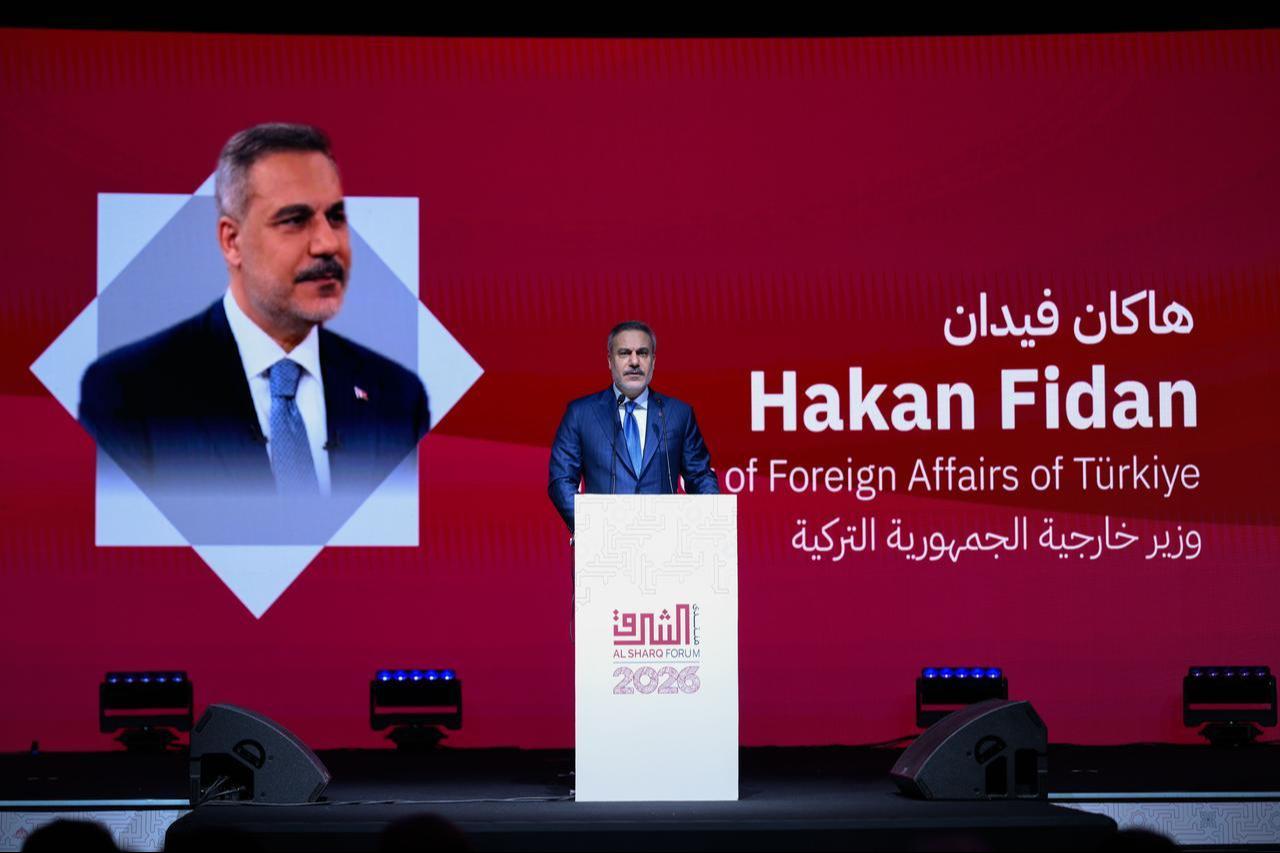

FM Fidan said global power balances are changing and international institutions are struggling to cope with increasingly complex crises.
"Today's crises no longer recognize borders; even the smallest seed of crisis has the potential to become a source of major instability across the world. None of us can overcome these challenges, these trials, alone," he said.
"We must combine our growing capacities and pursue common policies to increase our security and prosperity. We are at a historic turning point where taking the initiative is not a matter of choice," Fidan added.
Citing the Muslim thinker Ibn Khaldun, who stressed that the "bond of solidarity" grows stronger in difficult times, the top Turkish diplomat said: "Our faith is the strongest bond that ties us to one another. Our religion defines the core values we all share. These bonds transcend borders and unite our societies."
"Combined with our civilizational heritage, these bonds form a solid foundation for collective action. Your presence here, representing different corners of the Muslim world, is clear proof of this strong bond. Throughout history, at decisive moments, we have drawn strength from this very spirit," he noted.
The Turkish foreign minister noted that the Muslim world must speak with one voice on issues that deeply wound humanity's shared conscience.
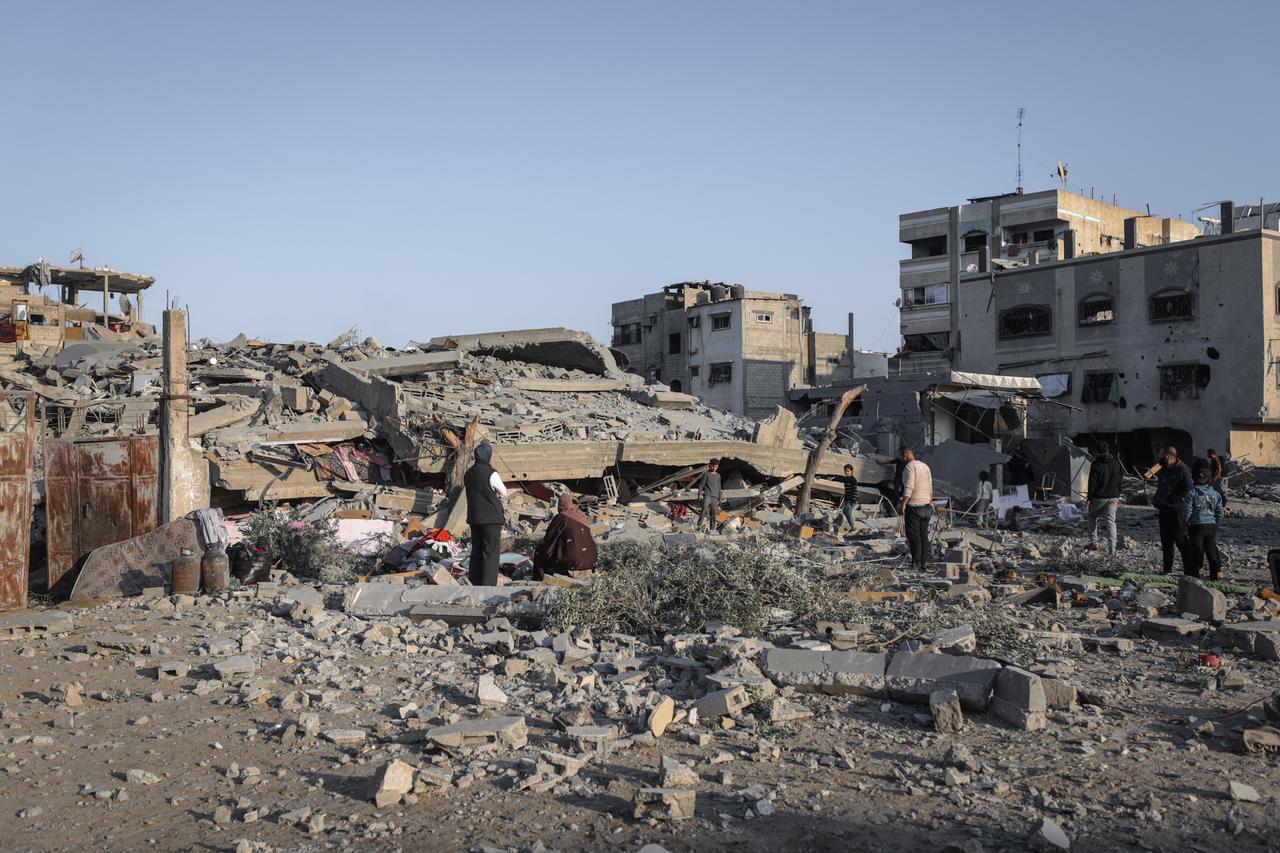
"For us, for example, Palestine continues to be the most important moral compass. We stood against the genocide in Gaza and settler terror in the West Bank," he said.
"We must continue to lead on the delivery of humanitarian aid, the reconstruction of Gaza and the defense of the Palestinian cause until freedom and justice prevail. Today we are working tirelessly, and we will never give up until a just and lasting peace is achieved," FM Fidan stated.
"This peace can only be possible through a two-state solution in which an independent Palestinian state with East Jerusalem as its capital is established," he added.
Fidan said the surest way to strengthen solidarity and turn it into action is regional ownership. "Those who must live with the consequences of a decision should lead in shaping it," he said, adding that regional ownership does not mean isolation from the rest of the world but provides a stronger basis for engaging other international actors.
"Under President Recep Tayyip Erdogan's leadership, Türkiye has made regional ownership a cornerstone of its foreign policy," the Turkish foreign minister said, noting that, "We must take ownership of our problems and act together in our region. We are pleased to see this principle take concrete shape across the Muslim world."
He pointed to two recent examples. The first is the Mecca Defense Alliance formed by Türkiye, Saudi Arabia and Pakistan, whose committee met in Islamabad on Friday. "Each country brings unique capabilities and valuable experience to overcome the challenges in our region," he said.
As the alliance strengthens its institutional capacity, it will become more inclusive with the participation of other regional countries, Fidan said.
The second is the Regional Quartet (R4) platform of Türkiye, Egypt, Pakistan and Saudi Arabia, which he described as an open, results-oriented dialogue mechanism for producing joint solutions to complex regional challenges.
Cooperation should extend beyond security to economic integration, trade, connectivity, and science, technology and innovation, Fidan said.
"Functional and effective regional mechanisms such as the Mecca Alliance and the Regional Quartet are vital for building a more stable and balanced international order," he said.
"Our goal is not only to gain more influence within the existing system. It must also be to build a more inclusive and representative system based on justice and legitimacy," the Turkish foreign minister added.


 Set as preferred source
 Set as preferred source


 1 min read
 1 min read