Newsletters


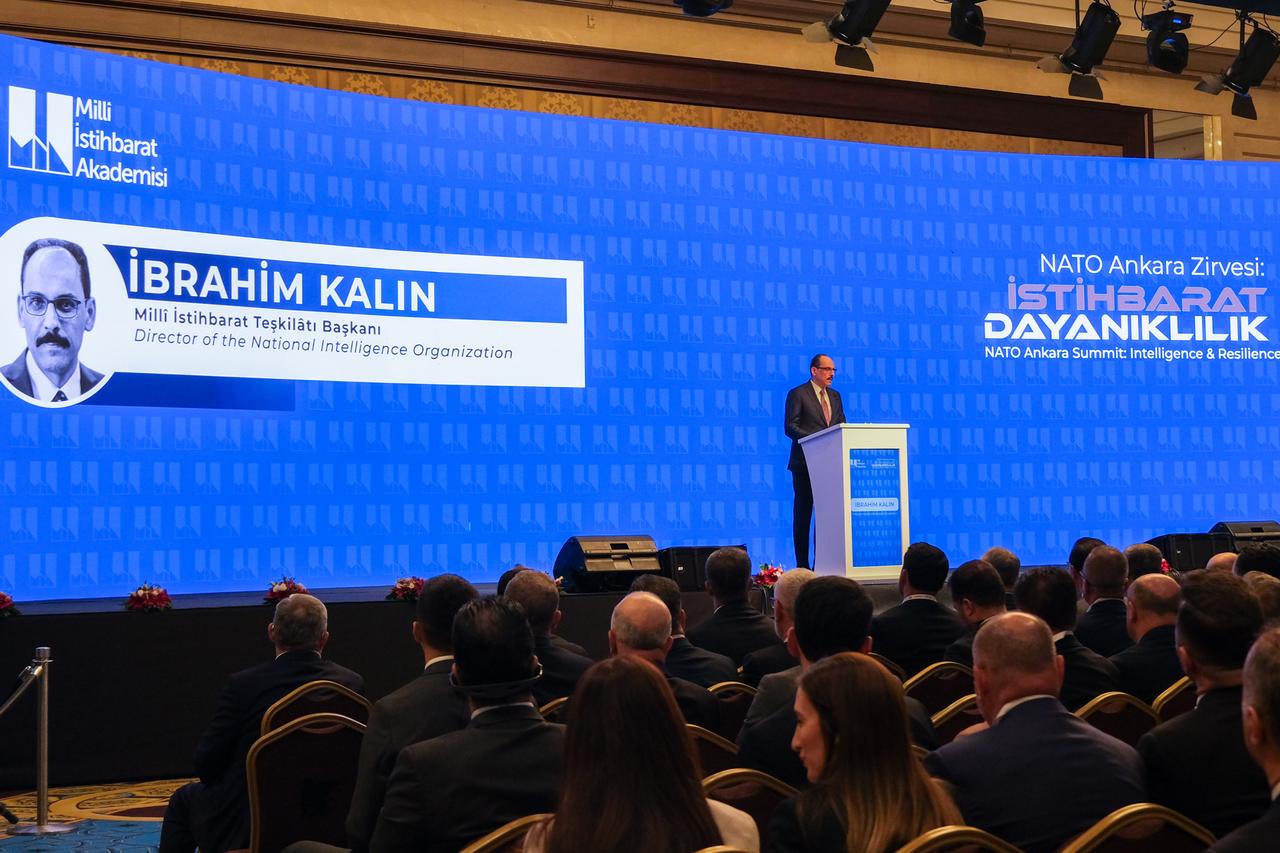


Türkiye's National Intelligence Organization (MIT) Director Ibrahim Kalin confirmed Monday that Ankara contributed to the negotiation process that produced the U.S.-Iran peace agreement, placing Türkiye alongside Pakistan and Qatar as a credited party in the diplomatic effort during remarks at an intelligence and resilience panel convened in Ankara ahead of the July 7-8 NATO Leaders Summit.
"The news announced last night of an agreement being reached between the United States and Iran was welcomed by all of us. But we are in a state of cautious optimism, because the days and weeks ahead will be a difficult process in which the main subjects of the negotiations are addressed, discussed, and negotiated," Kalin said.
"We congratulate all the actors who contributed to this process, primarily Pakistan, then Qatar, including our country. We congratulate all countries and leaders who showed determination in this regard," he added.
"We hope this step will constitute an important milestone for the construction of permanent peace in the Middle East," the Turkish official noted.
The panel, titled "NATO Ankara Summit: Intelligence and Resilience," was organized by the National Intelligence Academy at a hotel in Ankara and brought together NATO's Deputy Secretary General for Intelligence and Security Scott W. Bray, former NATO intelligence official David Matthew Cattler, Akron University Emeritus Professor James Clyde Sperling, Presidential Foreign Policy and Security Chief Adviser Ambassador Akif Cagatay Kilic and senior academics and diplomats.
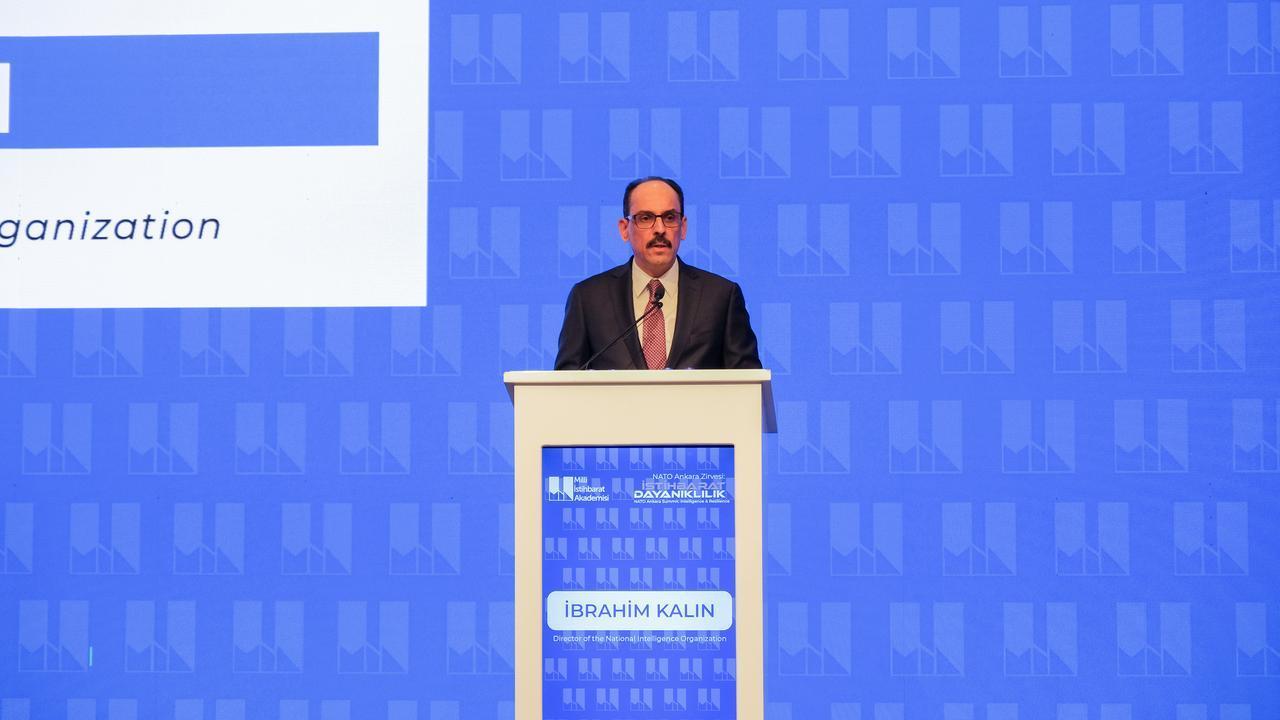

In wide-ranging remarks, Kalin argued that the global security landscape had entered a period of deep structural transformation in which conventional deterrence, intelligence capacity, technological readiness, and societal resilience could no longer be treated as separate domains.
"In today's world, where the security paradigm has changed fundamentally, reading the transformation correctly, grasping new threats promptly, and producing strategic responses to these threats are of critical importance," he said.
"For this, we need resilient societies, strong institutions, effective intelligence capacity, technological equipment and shared strategic thinking more than ever," Fidan noted.
Kalin addressed the Russia-Ukraine war, calling it a conflict that had moved beyond a bilateral military confrontation to produce global consequences across a wide geographic arc. He said Israel's policies in Gaza, which he described as violations, occupation and annexation, become a threat to the security of the entire Middle East and called the U.S.-Israel war with Iran a development that had taken on a character shaping global balance beyond regional limits.
On Syria, Kalin described Türkiye's role in the post-Assad reconstruction period as one that had earned the acknowledgment of former critics.
"Those who criticized us by saying 'Türkiye is attacking our Kurdish allies who are our most important partner in fighting Daesh' are now saying 'we thank you' because we prepared the ground for the integration process," he said.
"Türkiye stood in the right place here too," Fidan stated, adding that there was currently no threat emanating from Syria toward Türkiye, its neighbors or the NATO Alliance.
Kalin also addressed the "Terror-Free Türkiye" process initiated under President Recep Tayyip Erdogan, describing it as not only a security policy but a foundation for democratic consolidation and economic development that would strengthen Türkiye's position as a strategic contributor to Alliance security.
Scott Bray, NATO's Deputy Secretary General for Intelligence and Security, said he expected the July summit in Ankara to produce significant results.
"We think this key summit will also bring very important outcomes," he said, adding that NATO's primary value was its threat-based response capability and that the Alliance aimed to build a "stronger NATO" with stronger alliances.
"Every day we continue to grow stronger under the NATO umbrella," he said.
Bray highlighted Türkiye's expertise in counterterrorism as a valuable contribution to the rest of the Alliance and said the summit's agenda would be particularly dense, covering developments in the defense industry, which he said could be among the summit's most important topics, as well as the ongoing threat environment from Russia's campaign of destabilization against Ukraine and NATO member states.
"There are different measures we have taken within our Alliance, and at the same time, we are trying to prevent all threats," Bray said.
The panel's two discussion sessions highlighted recurring themes: constraints on intelligence sharing within the Alliance and the need to upgrade NATO's conceptual framework for the new threat environment.
Former NATO intelligence deputy secretary general Cattler, addressing the panel by video message, noted that multinational corporations had in recent years assumed decision-making roles previously held by sovereign states and said NATO intelligence architecture needed to respond to that shift.
"Intelligence helps us get the right priorities and determine the way forward collectively. These guide our actions," he said.
He also disclosed that NATO had detected the trajectory of Russian aggression before the full-scale invasion of Ukraine in 2022.
"We understood that Russia was targeting something bigger," he said.
Sperling noted that intelligence sharing within NATO remained shaped by national interests and trust asymmetries.
"Intelligence is a resource that is shared only when it is advantageous and shared with those you trust," he said.
He warned that EU strategic autonomy debates continued to impede information sharing, noting that "some countries see intelligence as private property."
He said NATO needed to move quickly and clearly in intelligence exchange, particularly at the periphery of alliance-wide sharing frameworks.
 1 min read
National Intelligence Academy (NIA) President Prof. Talha Kose framed the summit's significance in terms of what he called "NATO 3.0," an updating and deepening of the Alliance's capabilities to match new threat realities rather than a rejection of its accumulated institutional knowledge.
"Processing data correctly, converting information into foresight, and accelerating decision-making processes are growing in importance as strategic capabilities," Kose said.
He described total societal resilience as a concept built from the bottom up, from family to school, from media to university, from private sector to civil society, rather than imposed top-down by state structures.
Kalin presented Bray with a reproduction of a mosaic panel by the painter Bedri Rahmi Eyuboglu, which was gifted to NATO in 1960, at the close of the event.


 Set as preferred source
 Set as preferred source


 1 min read