Newsletters


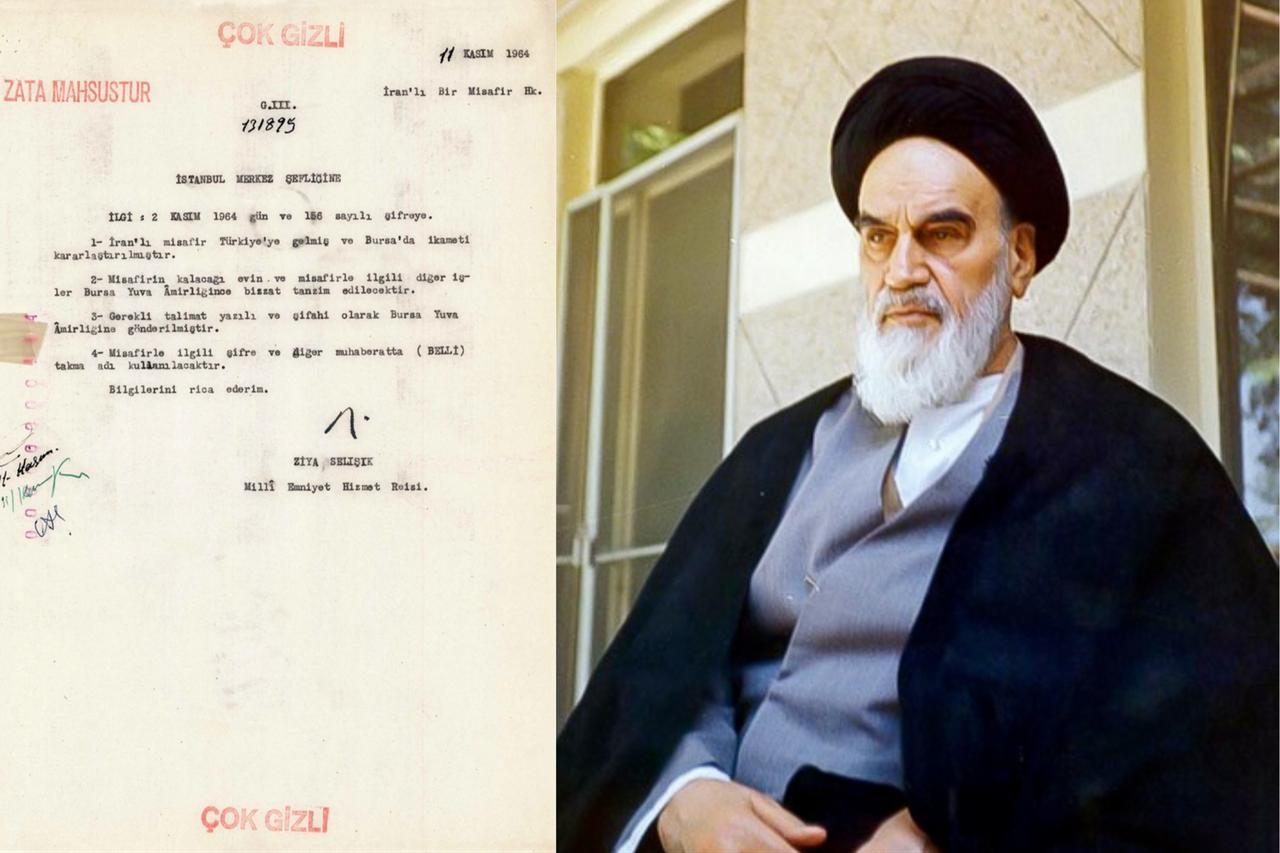


Türkiye’s National Intelligence Organization (MIT) has released a previously classified document on Ruhollah Khomeini’s exile in Türkiye, revealing how the future leader of the 1979 Iranian Revolution was handled under a coded and closely supervised arrangement in Bursa.
The document, published under the “Special Collection” section of MIT’s official archive, is dated Nov. 11, 1964, and marked “top secret.”
It was sent by then National Security Service chief, Ziya Selisik, to the Istanbul Central Directorate, shortly after Khomeini was brought to Türkiye following his exile from Iran.
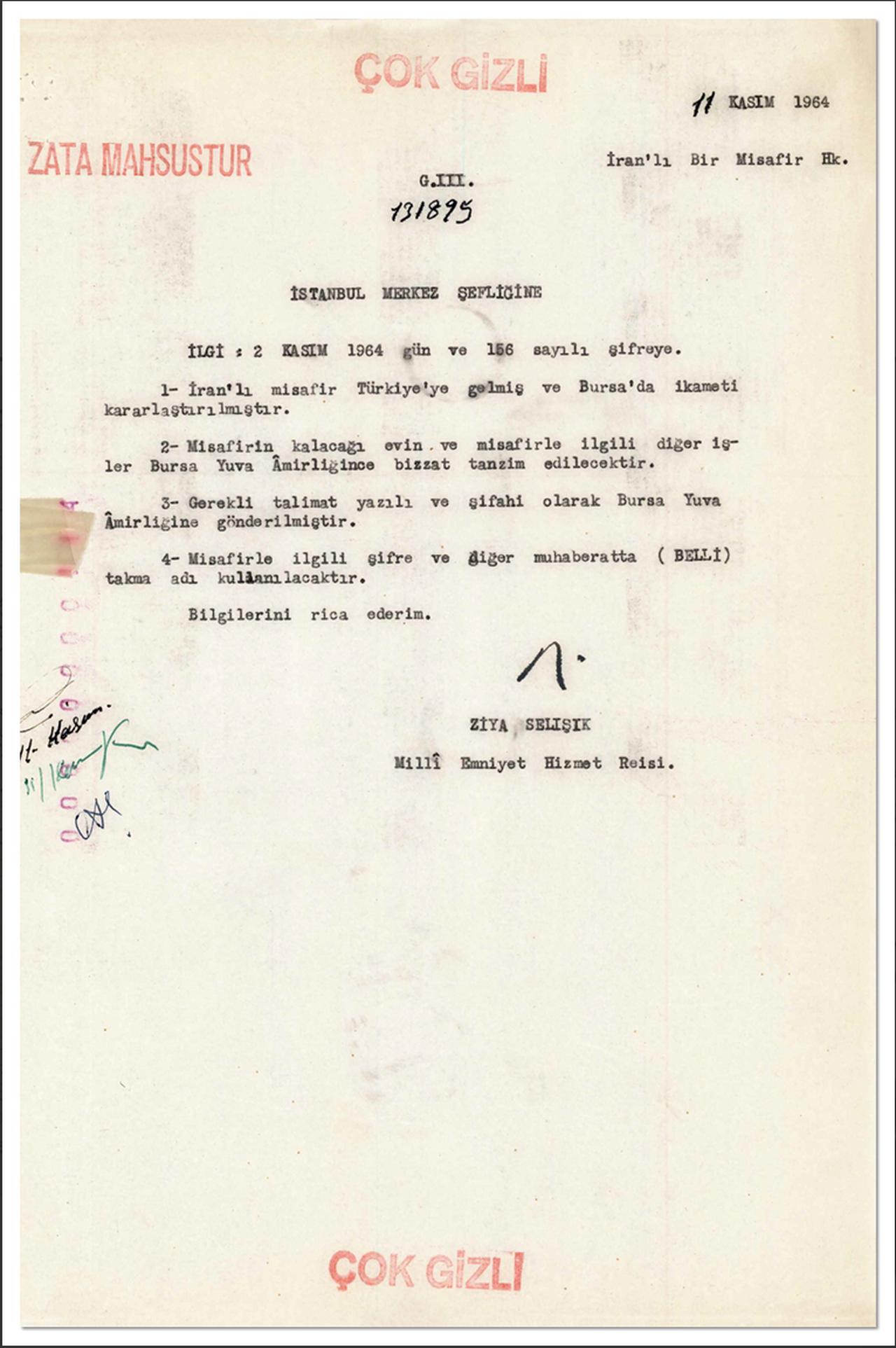

The file does not name Khomeini directly. Instead, it refers to him as an “Iranian guest,” a phrase that turns a future figure of regional consequence into a discreet administrative subject.
“The Iranian guest has arrived in Türkiye, and his residence has been arranged in Bursa,” the document states. “The house where the guest will stay, and all other matters related to the guest, will be organized directly by the Bursa unit.”
The instruction also says that written and verbal orders had already been sent to the Bursa unit. In encrypted and other correspondence, officials were told to use the codename “Belli” for Khomeini, which means "obvious" in Turkish.
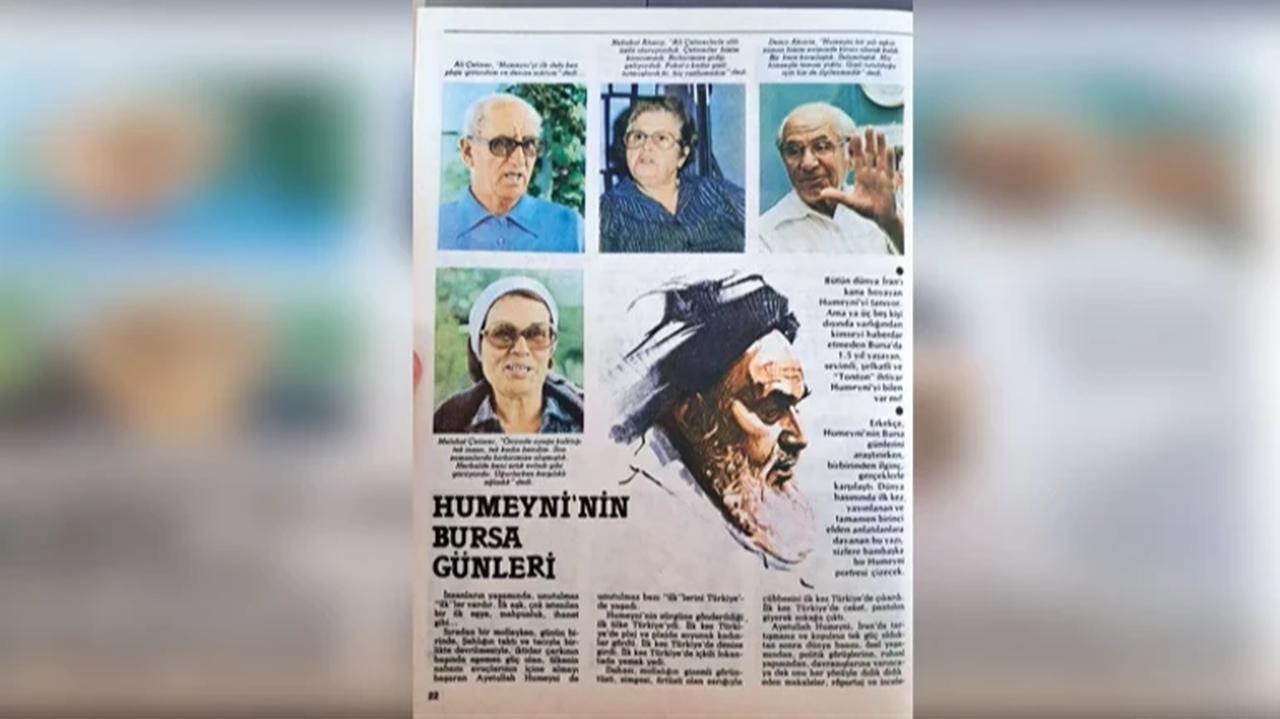
Ruhollah Khomeini arrived in Türkiye on Nov. 4, 1964, after opposing Shah Mohammad Reza Pahlavi’s reform program, known as the White Revolution. He was first brought to Ankara and later moved to Bursa, where he remained under Turkish supervision until Oct. 5, 1965.
The newly released document is striking because of what it does not try to do. It does not describe Khomeini as a revolutionary leader in waiting, nor does it offer political interpretation. Its tone is narrow, procedural, and guarded, focused on residence, communication, and chain of responsibility.
That restraint is what makes the file revealing. It captures Khomeini before the image that later defined him globally, at a moment when Turkish authorities treated his presence as a politically sensitive exile to be managed quietly.
Earlier accounts of his time in Bursa have described a life shaped by secrecy and restricted movement. His identity was kept hidden to avoid public attention, and local arrangements were built around discretion.
Later reporting also linked his Bursa years to different residences in the city, including homes in Cekirge and Setbasi, while local accounts placed part of his stay near the Ulu Mosque area.
The MIT file itself does not provide those daily details. It confirms the official architecture behind the exile: Khomeini was placed in Bursa, handled by a local intelligence unit, and referred to through a codename in communications.
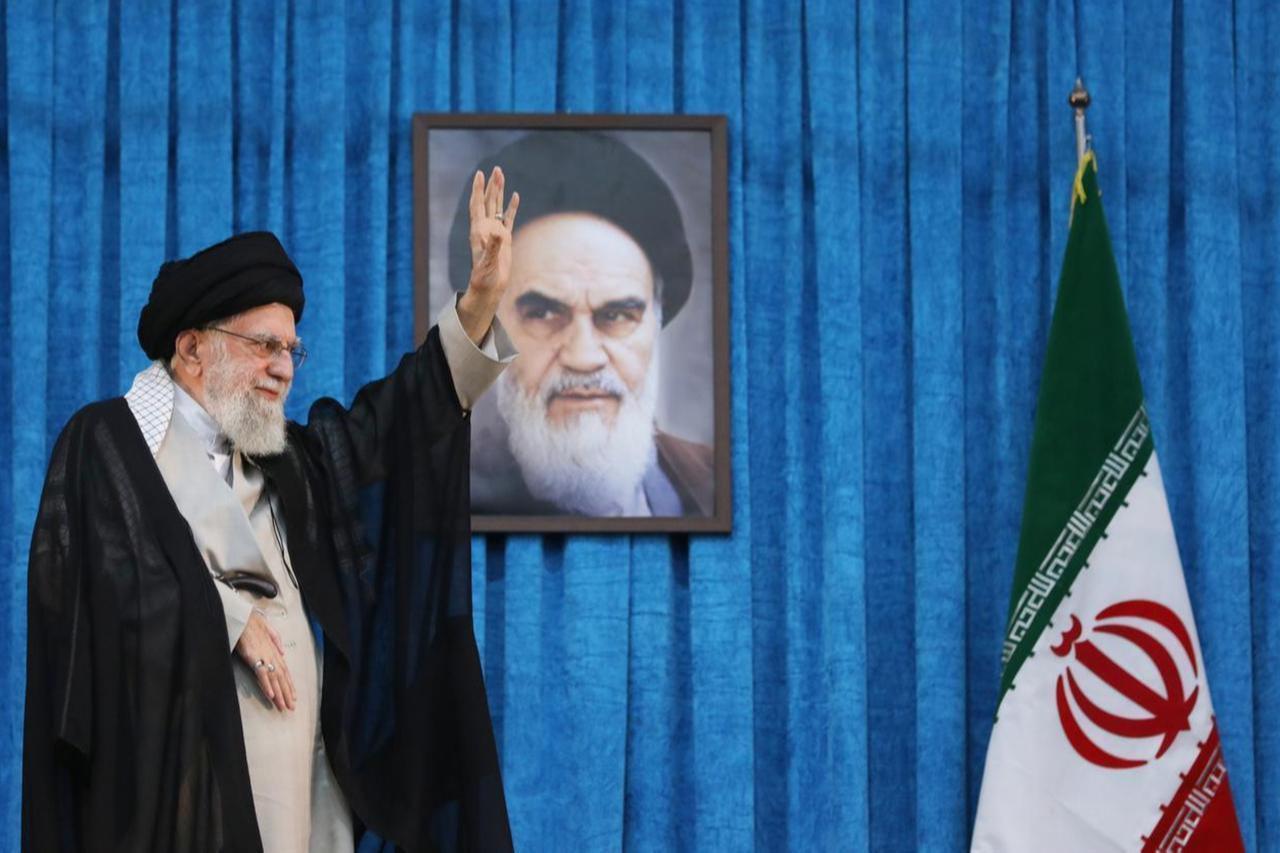
Ruhollah Khomeini stayed in Türkiye for nearly a year before moving to Najaf, one of the major centers of Shiite religious scholarship in Iraq.
There, he continued to build his religious and political influence, while his speeches and anti-Shah messages spread among supporters in Iran.
His movement gained strength as opposition to the Shah deepened in the 1970s. After leaving Iraq for France, Khomeini returned to Iran following the Shah’s departure and became the central figure of the 1979 Iranian Revolution.
The revolution ended Iran’s monarchy and led to the establishment of the Islamic Republic, with Khomeini serving as the country’s first supreme leader until his death in 1989.
In hindsight, the 1964 file reads almost paradoxically.
The man who would later reshape Iran appears not as a public revolutionary icon, but as a monitored guest in Türkiye, assigned a residence, placed under local supervision, and hidden behind a codename.


 Set as preferred source
 Set as preferred source



 2 min read