Newsletters


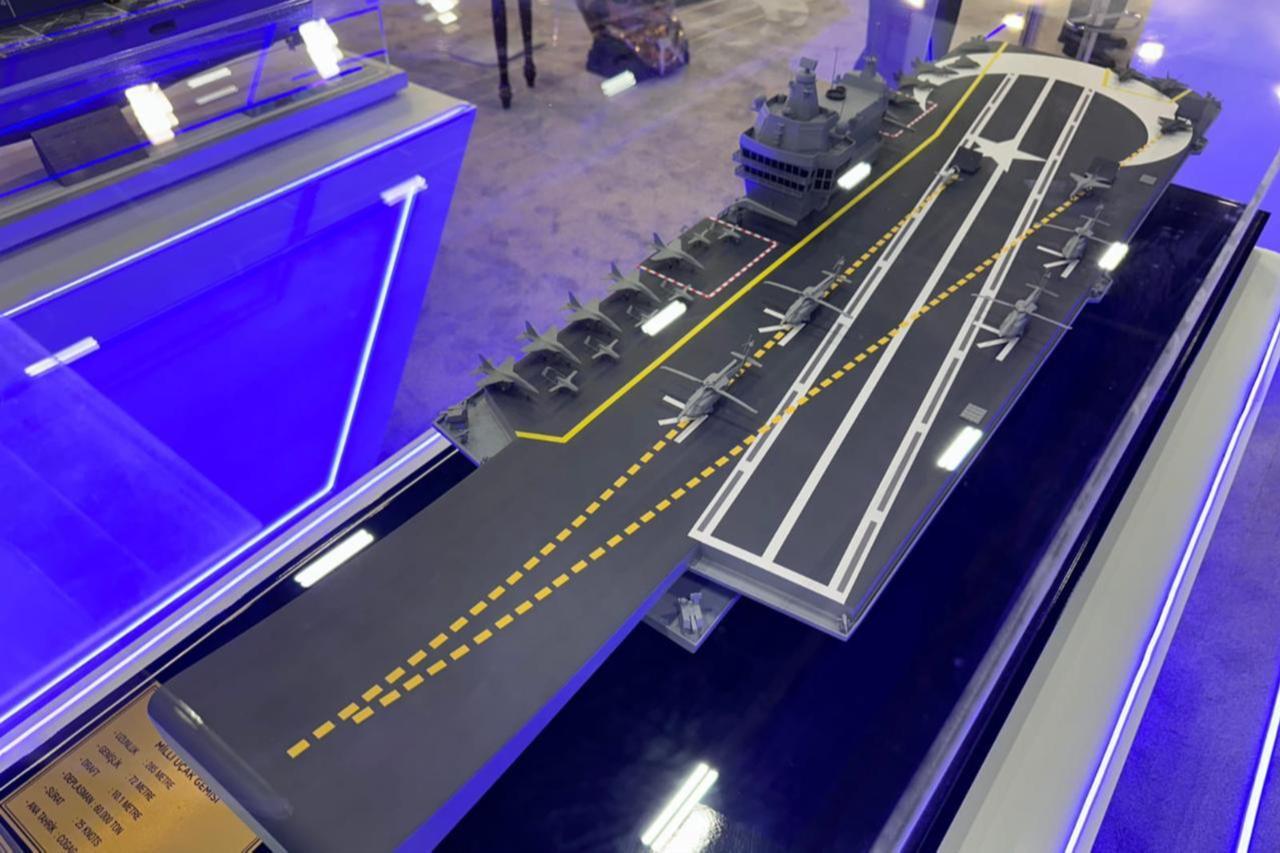


The Turkish Navy confirmed that construction of its indigenous aircraft carrier "MUGEM" (Milli Ucak Gemisi)—meaning National Aircraft Carrier—is officially underway with delivery slated for 2032. The announcement was made at the Combined Naval Event 2026 (CNE 2026) in Farnborough, England.
Rear Admiral Hakan Ucar of the Naval Technical Command presented the most detailed public specifications of the program to date, including updated performance figures, a full indigenous sensor suite, a multi-domain unmanned vehicle concept, and confirmed combat systems, Naval News reported.
The CNE 2026 presentation confirms MUGEM has moved from conceptual to physical construction, positioning Türkiye as the first NATO member outside the United States, the United Kingdom, and France to build a full-size aircraft carrier.
The project timeline presented by Ucar showed development beginning in 2023 with concept of operations development, feasibility studies, and analysis of alternatives, progressing through preliminary design.
Detailed design and contract design are expected around 2026, with the construction, testing, and verification phases leading to delivery in 2032.
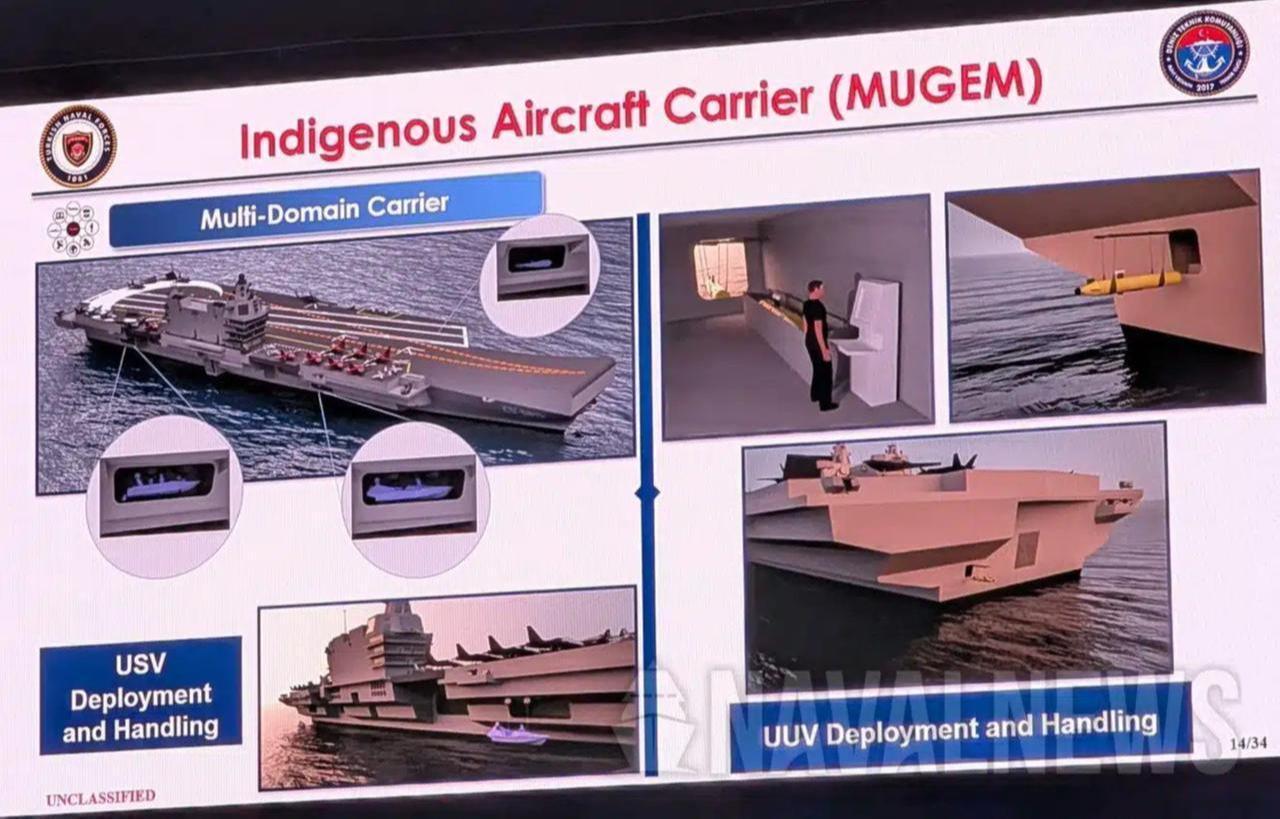
The actual construction photographs were also shown during the presentation, depicting steel blocks being assembled at what appears to be the Istanbul Naval Shipyard.
This constitutes the first official photographic confirmation that physical construction work is ongoing.
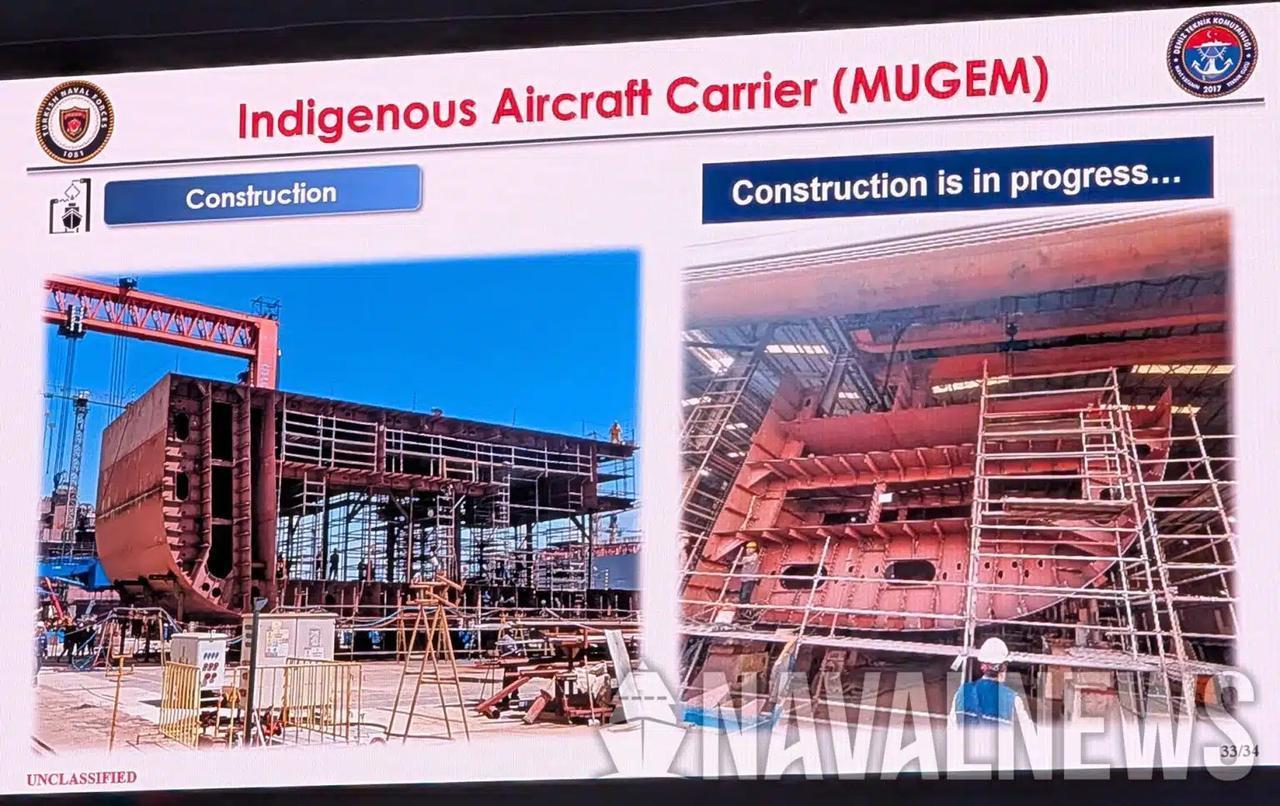

A new concept presented at CNE 2026 was MUGEM as a "multi-domain carrier."
Beyond operating air vehicles, the carrier will have dedicated launch and recovery areas for Unmanned Surface Vehicles (USVs) and Unmanned Underwater Vehicles (UUVs).
The command and control section confirmed that the ship will have the "ability to operate in three domains" through network-centric control of manned and unmanned vehicles.
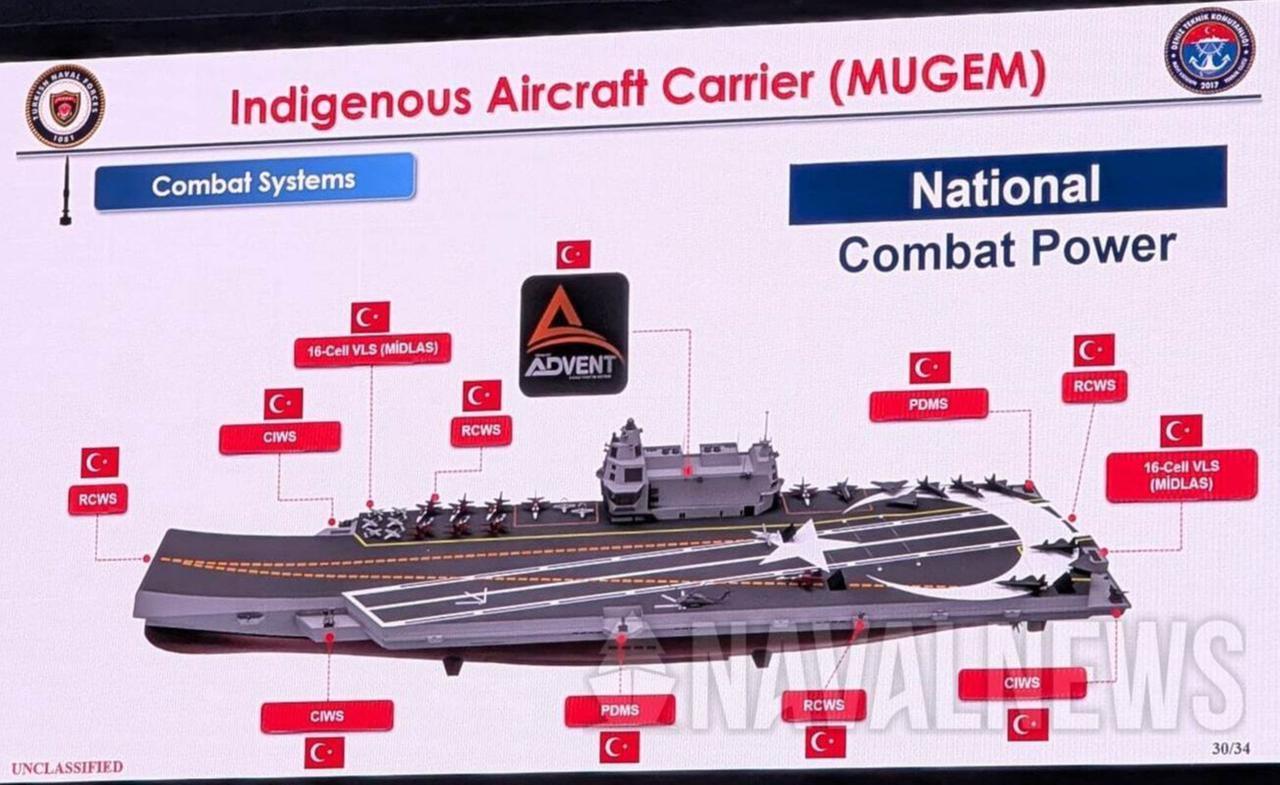
The combat management system (CMS) will be the indigenous ADVENT CMS network-supported data-integrated combat management system, developed by Havelsan.
The mast design slide revealed a fully indigenous sensor suite including multi-functional and long-range CAFRAD radars, X-Band, Ku-Band, and Ka-Band satellite communication systems, IFF antenna, HF antenna, LPI radar, electronic support and electronic attack systems, infrared tracking system, laser electronic attack system, and an electro-optic director.
For self-defense, the combat system's layout showed two 16-cell VLS modules using the MIDLAS system, three CIWS installations, four RCWS systems and two point defense missile systems.
The presentation labeled all combat systems under "National Combat Power."
Towing tank experiments and computational fluid dynamics analysis have been conducted to optimize the hull form at 26 knots, with the goal of minimizing bow wave splash on the deck, improving seakeeping, and reducing resistance.
Propeller design is being done in-house by the Design Project Office, targeting a silent propeller with an efficiency of 70% or higher.
Air wake analysis and flight envelope studies are ongoing in cooperation with Middle East Technical University (METU).
The carrier is designed for unrestricted flight operations up to sea state 6 conditions.
The ship will carry role 2 enhanced medical facilities, including two surgery rooms, two dental clinics, a dental surgery room, triage areas, an intensive care unit, a burn treatment unit, radiology units, an isolation room, 30-bed wards, a medical laboratory, and a pharmacy.


 Set as preferred source
 Set as preferred source


 1 min read

 1 min read