Newsletters


The Turkish Navy's fleet of 24 Sikorsky S-70B Seahawk helicopters is facing mounting operational pressure as Ankara pursues a relatively aggressive naval expansion program, which includes at least 31 warships currently under construction.
This raises questions about whether the service's rotary-wing assets can keep pace with its Blue Homeland maritime strategy.
The Seahawks, which form the backbone of the Turkish Naval Forces Command's anti-submarine warfare (ASW), surface strike, and reconnaissance capabilities, have also found themselves conducting aerial firefighting operations and must now cover an expanding operational theater spanning the Mediterranean, Black Sea and beyond.
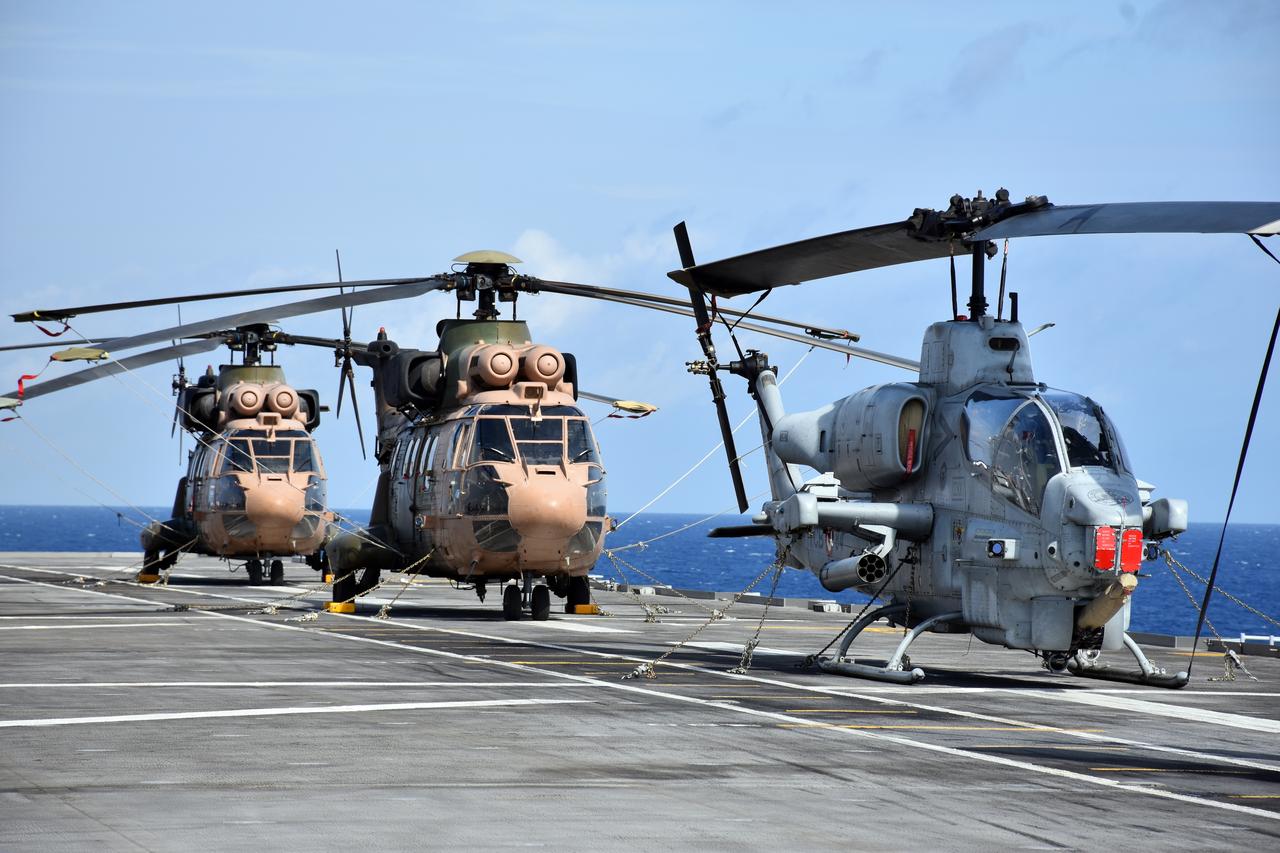

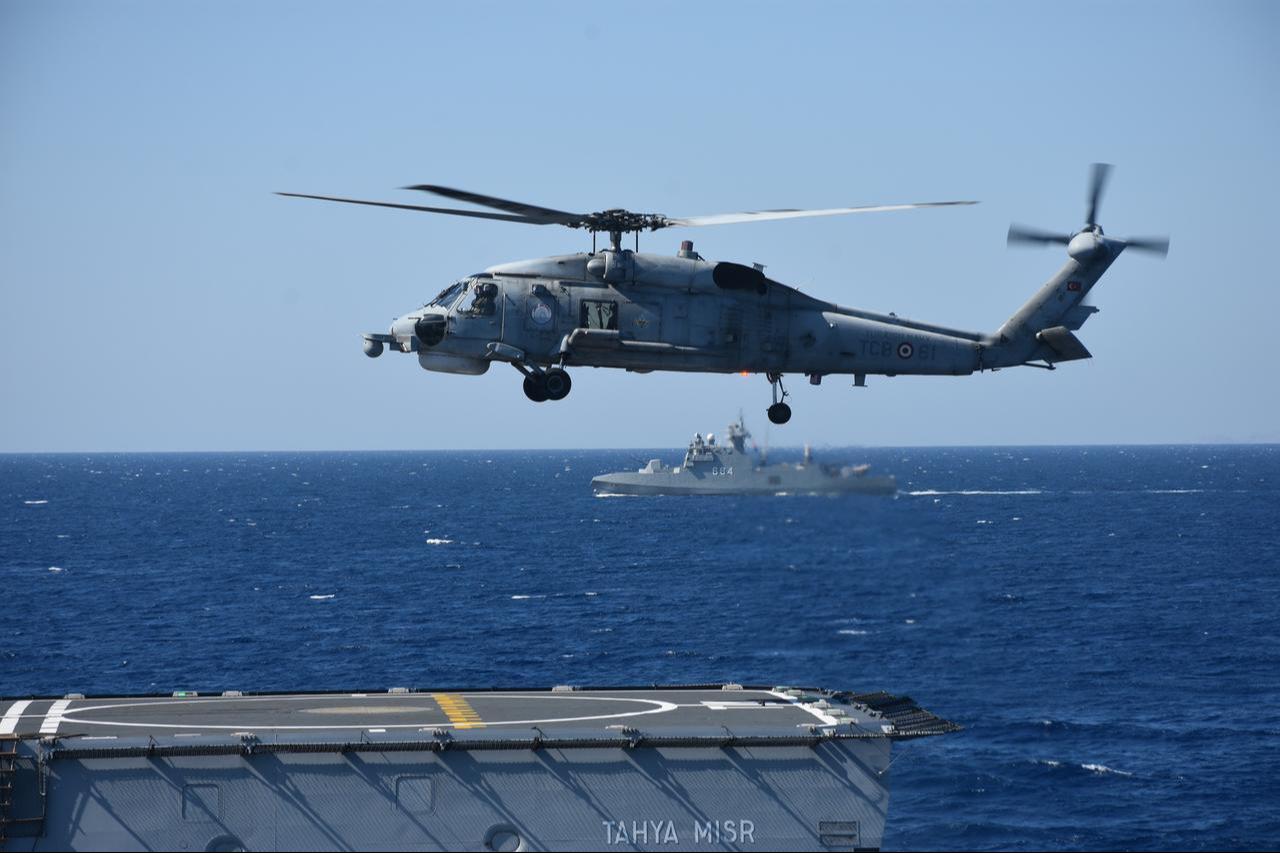
The Turkish Naval Aviation Command currently officially operates at least 24 S-70B Seahawks bearing tail codes TCB 50, TCB 52 through TCB 65, and TCB 67 through TCB 75.
With some frigates—the Oliver Hazard Perry class, also known as the Gabya class—capable of carrying two Seahawks for full-spectrum operations, the current ratio stands at approximately one helicopter per two to three ships, creating coverage gaps during multi-axis threat scenarios.
These numbers may have changed following the commissioning of the TCG Anadolu multi-purpose amphibious assault ship.
When asked whether the Navy's S-70 Seahawk fleet is numerically and technologically sufficient given the increasing number of ships and the expanding operational area, defense analyst Kozan Selcuk Erkan told Türkiye Today, "A total of 24 S-70 Seahawks were procured, and 23 remain operational. However, with the expanding fleet, this number is already insufficient."
"These helicopters have also been used extensively during earthquakes and wildfires. They are starting to lag technologically, but we are now in a position to modernize them with domestic capabilities," Erkan noted.
Defense industry analyst Cem Devrim Yaylali, a correspondent for Warships IFR, Jane's, Defence News, and Defence Türkiye, also addressed the issue in comments to Türkiye Today.
"The Turkish defence industry has reached a level of maturity that allows the technological sustainment of the Sea Hawk fleet by modernising critical subsystems—such as the sonar, radar, FLIR, datalink and mission computers—with indigenous solutions. For this reason, the technological adequacy of these helicopters will be maintained," Yaylali said.
The 2022-2025 Turkish Navy Activity Report highlights a tripling of operational activity and an expanded footprint in the Eastern Mediterranean and other seas.
The 31 warships under construction include eight Istanbul-class frigates under the MILGEM program, four TF-2000 air-defense destroyers, and MUGEM—the National Aircraft Carrier—all of which will require dedicated rotary-wing support.
Türkiye's Seahawk procurement dates back to February 1997, when Ankara acquired an initial batch of four S-70B-8 variants from Sikorsky. The pivotal Lot-I contract followed on June 19, 1998, for eight S-70B-28 variants.
Deliveries commenced in the early 2000s, bolstering the Turkish Navy’s frigate fleet, including MEKO-class and Oliver Hazard Perry derivatives. By 2006, Türkiye had committed to a $550 million contract for 17 additional S-70B-28s, designated Lot-II, which expanded the fleet to its current strength.
The 231-meter TCG Anadolu was commissioned in 2023 as a drone-carrying amphibious assault ship. The vessel's evolution into a UAV-centric platform required an interim solution for close air support and amphibious strike missions.
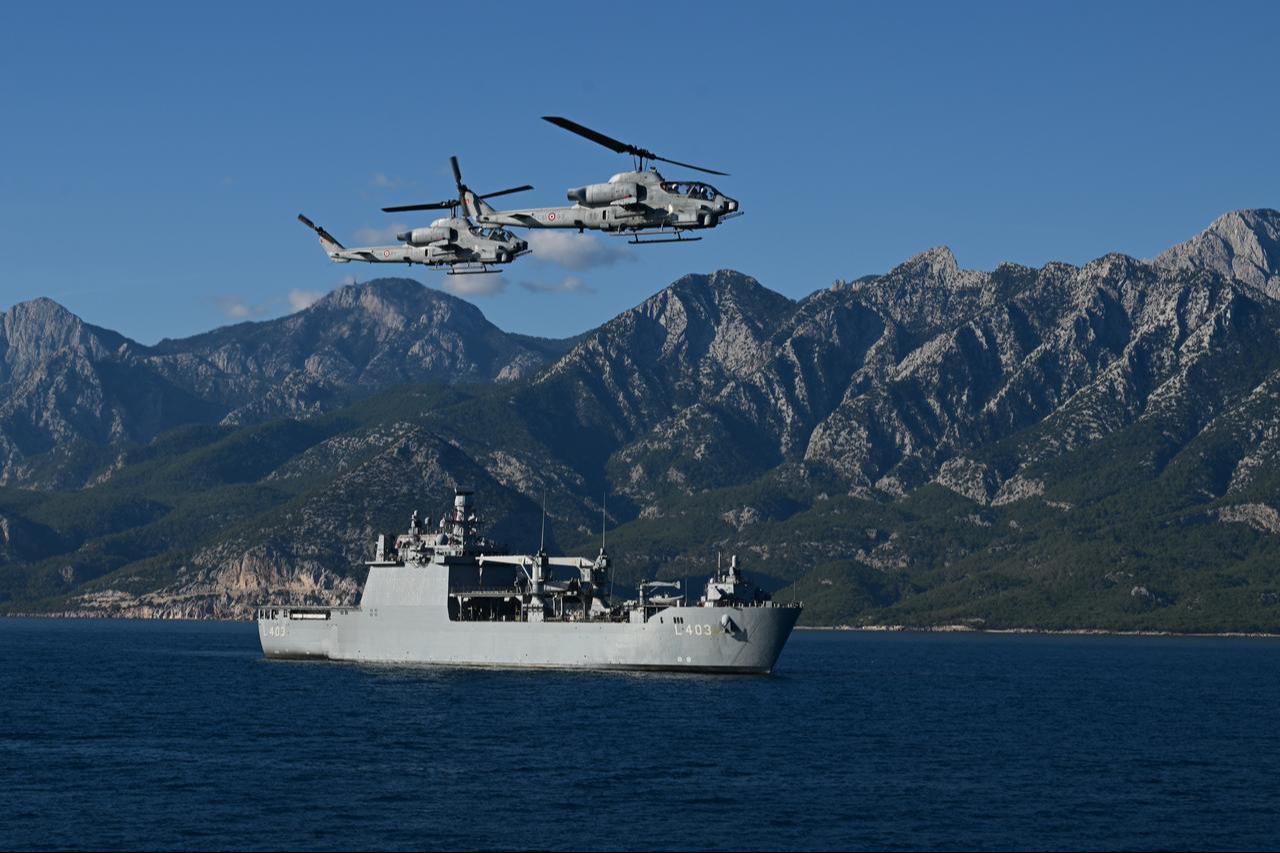
Nine AH-1W Super Cobra attack helicopters transferred from the Turkish Land Forces inventory now fill this gap, bearing tail codes TCB 80 through TCB 88. On Feb. 21, 2022, the first four of the Super Cobras were handed over to the Naval Air Command, marking a 'historic first' landings alongside S-70Bs during November 2022 trials.
The transfer proved pragmatic as the AH-1Ws, acquired in the 1990s, had become surplus to Army requirements following a successful shift to T129 Atak platforms.
When asked which platform would meet the Navy's requirement for a combat helicopter capability to support amphibious operations and task group defense once the AH-1Ws reach the end of their service life, Kozan Selcuk Erkan said, "The AH-1W helicopters were originally built for the Navy. With the Army’s acquisition of Atak helicopters, it became possible to transfer the AH-1Ws to the Naval Forces."
"If the service requests modernization, these helicopters can be upgraded to the Zulu version, as done by the U.S. Marine Corps," Erkan noted.
"This would prevent any capability gap until the Atak-2 enters service," Erkan added.
"There are two reasonable alternatives for a helicopter to replace the AH-1W fleet in the long term. The first is a navalized version of the Heavy Class Attack Helicopter currently being developed by TAI," Cem Devrim Yaylali stated, adding that, "The second is fulfilling the AH-1W’s missions through unmanned aerial vehicles (UCAVs) operating from TCG Anadolu and the future MUGEM."
The TAI T929 Atak-2, a 10-ton heavy attack helicopter under development by Turkish Aerospace Industries (TAI), represents the planned successor, with a slight delay, of course. TAI recently announced that it will prioritize the T-925 Heavy Utility Helicopter instead of the Atak-2 Heavy Class Attack Helicopter Project.
According to official data, the Turkish Navy continues to operate seven AB-212 helicopters in utility and training roles. Beyond ASW, Turkish Navy frigates, replenishment ships and TCG Anadolu's auxiliaries require vertical replenishment, search-and-rescue (SAR), and troop transport capabilities—missions that demand a rugged, corrosion-resistant general-purpose helicopter.
When asked how critical the need is for a corrosion-resistant general-purpose helicopter developed on the Gokbey platform to perform vital missions for frigates and support vessels, Cem Devrim Yaylali said, "Helicopters are extremely important for naval forces.
Their suitability for multiple mission types and their ability to extend the ship’s striking power and situational awareness beyond the range of onboard sensors make them indispensable."
"In the long term, the Turkish Navy will require both manned and unmanned aerial platforms to replace the S-70 Sea Hawk helicopters," Yaylali noted.
"I believe that TAI’s 10-ton T-925 helicopter, currently under development, is a more suitable candidate than Gokbey to meet the Navy’s future helicopter requirements.
It is not sufficient for the new platform to simply be corrosion-resistant; it must also be capable of folding to fit into the hangars of existing and planned frigates and similar warships," Yaylali added.
"Independent of this project, it is reasonable to expect that VTOL unmanned aerial vehicles currently under development will assume part of the helicopter mission load, reducing the burden on manned platforms," Yaylali also stated.
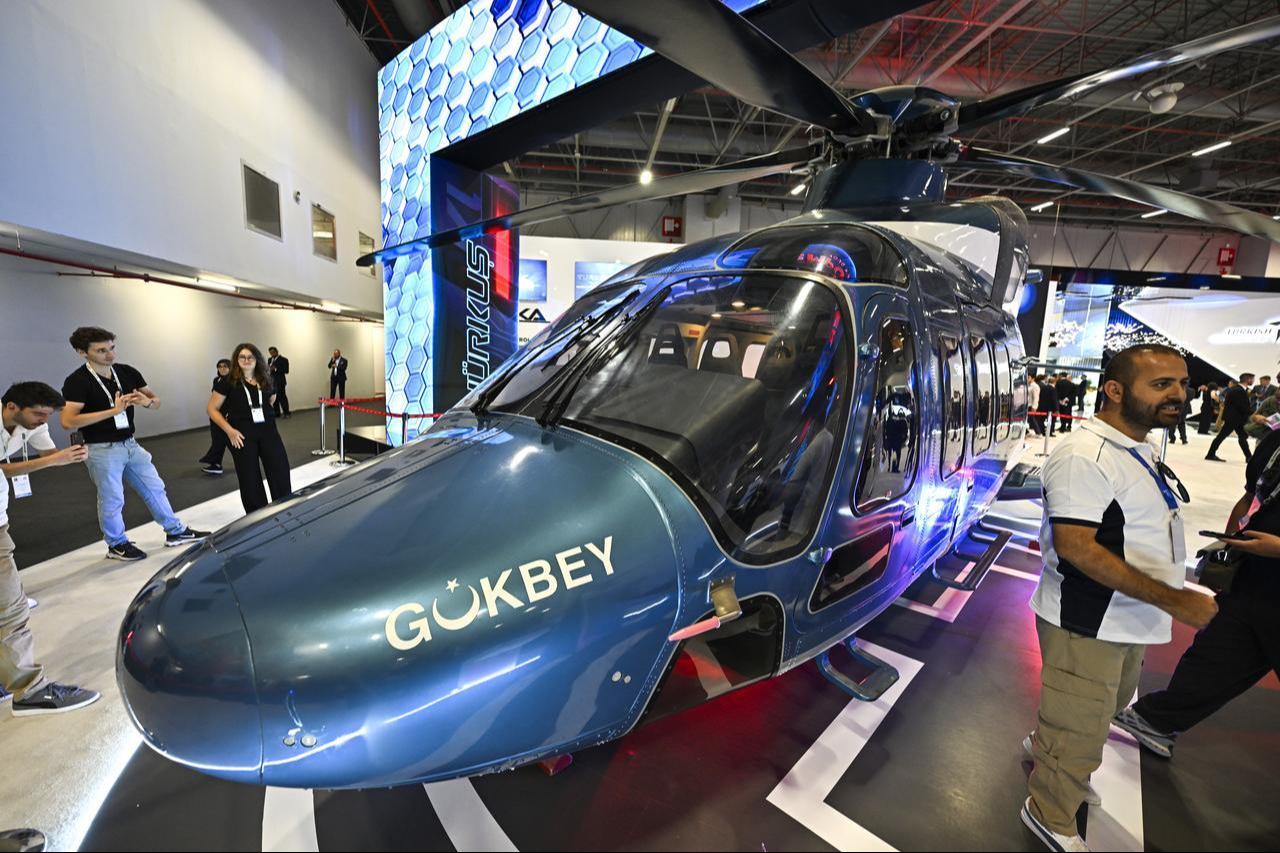
The TAI T-625 Gokbey, Türkiye's 6-ton twin-engine helicopter, which performed its maiden flight on September 6, 2018, has already begun slowly replacing UH-1s in service.
A naval Gokbey variant with folding blades, salt-fog-resistant avionics, and modular bays for sonobuoys or winches could offload Seahawks from utility roles and replace the aging AB-212 fleet, which appears to be the Turkish Navy's current plan.
On July 24, during IDEF 2025, an agreement between Türkiye's Defense Industries Presidency and TAI was signed covering 57 T625 Gokbey general utility helicopters: three for the Naval Forces Command, 15 for the General Directorate of Security, 11 for the Air Force Command, 14 for the Gendarmerie General Command, eight for the Land Forces Command, and six for the Coast Guard Command. With this latest deal, the total number of Gokbey helicopters on order has reached 83.
Commenting on the Gokbey helicopters, Kozan Selcuk Erkan stated, "As the navy grows, the Gokbey helicopter is being developed to withstand corrosion and harsh maritime conditions for anti-submarine warfare and vertical lift missions. Procuring the new version of the S-70 is not currently on the agenda; the plan is to meet this need entirely with Gokbey."
"This requirement can be considered urgent," he noted, adding that, "For roles other than anti-submarine warfare, temporary solutions are being implemented with support from Cougar helicopters, especially aboard TCG Anadolu, as seen in exercises."
"Naval helicopters need to enter production urgently," Erkan said.
When asked whether the Turkish Navy needs specialised platforms such as an Airborne Early Warning and Control (AEW&C) helicopter/aircraft for over-the-horizon detection and identification? And how is this capability gap being filled at present?
"Whether on land or at sea, AEW&C capability is vital for protecting military units against airborne threats and directing defensive measures effectively. This need becomes even more critical for naval task groups operating far from the mainland and without support from friendly air bases," Cem Devrim Yaylali noted.
"At present, the AEW&C assets of the Turkish Air Force are employed to protect other services as well. The Navy relies on Air Force AEW&C aircraft for the over-the-horizon detection and identification of hostile air assets," Yaylali stated.
"In the future, when Turkish Navy task groups conduct operations from Anadolu at extended distances and without the support of friendly air bases, they will need their own AEW&C systems," Yaylali added.
"The most plausible solution for this requirement is a ship-based AEW&C system carried by an unmanned aerial vehicle specifically designed for this mission," Yaylali stated, adding that he is not aware of whether any work is currently underway in this area.
"Although the Turkish Naval Forces intend to acquire an Airborne Early Warning and Control (AEW&C) Helicopter platform, nothing is finalized yet. If no foreign procurement occurs, this requirement will likely be addressed through the T-925 helicopter," Kozan Selcuk Erkan said.
"For now, the need is being met through ground-based radar systems and the Air Force’s airborne early warning aircraft," Erkan concluded.


 Set as preferred source
 Set as preferred source


 2 min read