Newsletters




A think tank focused on the Nordic-Baltic region has been established in Türkiye for the first time, the organization announced Tuesday.
The Nordic Baltic Institute Association (NBI), an Istanbul-based civil society organization, said it has officially begun operations with the aim of strengthening ties between Türkiye, the wider Turkic world and the Nordic-Baltic region.
The institute describes itself as the world's first and only regional think tank and civil society organization focused specifically on the Nordic-Baltic region.
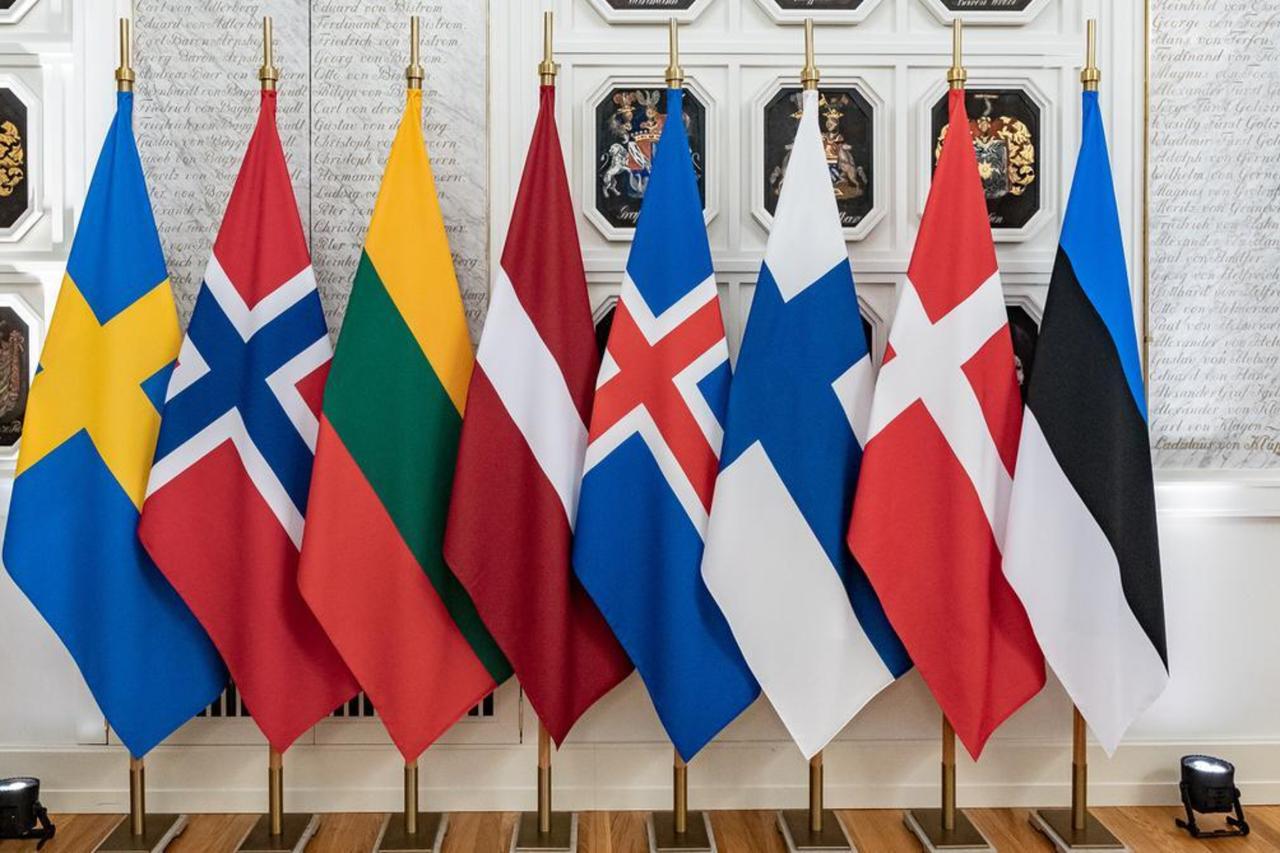
According to its founding charter, the institute aims to develop multidimensional cooperation with Denmark, Estonia, Finland, Iceland, Sweden, Latvia, Lithuania and Norway.
Its objectives include strengthening academic cooperation, expanding media engagement, building sustainable partnerships among civil society organizations, promoting social and cultural interaction, developing business ties and supporting economic cooperation.
The institute said its areas of work will include foreign policy and international relations, security and defense technologies, economics and international trade, technology and artificial intelligence, energy security and renewable energy, Arctic and polar research, migration, education and higher education, culture and creative industries, public diplomacy and regional development.
The founding board is chaired by Esra Ozturk, with Mustafa Furkan Durmaz serving as vice president.
The institute said its advisory board is designed to include representatives from all countries in the region.
Members include Nordic affairs expert Evren Kucuk, polar researcher Ebru Caymaz, former Turkish Industry and Business Association (TUSIAD) Secretary-General Bahadir Kaleagasi, former Latvian Deputy Prime Minister Artis Pabriks, former Norwegian Climate and Environment Minister Erik Solheim and former Estonian Defense Minister Jaak Aaviksoo.
The institute said the structure is intended to bring senior-level experience and regional perspectives to its research and policy recommendations.
NBI founding president Esra Ozturk said the Nordic and Baltic countries represent an increasingly important area of strategic cooperation for Türkiye.
"The Nordic and Baltic countries are not simply a geographically distant region for Türkiye; they represent a partnership of growing strategic importance," Ozturk said.
She pointed to Sweden and Finland's accession to NATO, saying the region had gained a stronger security position.
"In security and defense industry cooperation in particular, we see a genuine positive interdependence; Türkiye's defense industry is becoming an increasingly critical actor for the broader European security ecosystem," she said.
Ozturk also highlighted green transition and climate policy as another area with significant potential for cooperation.
She said many of the world's happiest countries, strongest education outcomes, most advanced e-government systems and leading examples of green transition are found in the Nordic-Baltic region, offering models and pilot practices that could be brought to Türkiye.
Combined with Türkiye's young population, Europeanizing structure and goal of expanding trade volume, the potential for cooperation becomes even greater, she said.
"As an institute, our goal is to make this mutual benefit tangible through civil society work, and to contribute to these processes as a multidimensional, multilayered and multifunctional structure between both sides," Ozturk said.
The Nordic Baltic Institute will use Turkish and English as its working languages.
It said it aims to develop cooperation among public institutions, the private sector, academia, media and civil society through research, publications, educational programs, conferences and dialogue platforms.


 Set as preferred source
 Set as preferred source


 1 min read
 1 min read