Newsletters


The Greek Cypriot Administration of Southern Cyprus (GCASC) is signaling a notable shift in its long-standing foreign policy posture, exploring avenues to move closer to NATO after decades of deliberate neutrality.
At the center of this recalibration is a transactional approach that links Türkiye’s interests in the European Union’s defense architecture with GCASC’s own security ambitions.
GCASC President Nikos Christodoulides recently confirmed that his government intends to use its upcoming presidency of the Council of the European Union to improve relations with Ankara. The stated objective is to create political space for Greek Cyprus to engage more closely with NATO structures, beginning with NATO’s Partnership for Peace (PfP) initiative.
For a polity that rejected NATO membership as recently as 2022, this is quite a new strategy for the southern part of the Island. The plan reflects a broader reassessment of regional security dynamics, shaped by the war in Ukraine, shifting EU defense priorities, and Türkiye’s growing leverage across both NATO and European security institutions.


Cyprus has historically adopted a policy of non-alignment as a survival strategy. The island’s first president, Archbishop Makarios III, was a founding participant in the Non-Aligned Movement in 1961, and for decades, Nicosia (Lefkosa) avoided formal military alliances to limit exposure to regional power rivalries.
Accordingly, the Greek side historically had warm relations with Russia, as they had deep military and economic ties.
In January 1997, Greek Cyprus signed an agreement for the purchase and delivery of 40 S-300 batteries in a deal valued at $200 million. It triggered tensions with Ankara, which threatened to blockade the island to stop delivery and did not rule out military action. Later on in the 2000s, the system was ultimately delivered to Greece.
On the economic side of things, Nicosia has historically been a major source of foreign investment in Russia, often cited as one of the largest. Much of this, however, represented Russian capital routed through Cyprus for tax efficiency and protection, creating an offshore hub for Russian money before geopolitical shifts complicated these flows.
Greek Cyprus joined the EU in 2004, a step that formally ended its Non-Aligned Movement status but did not fundamentally alter its security doctrine. At the time, the EU lacked a robust defense dimension, and several EU members maintained neutrality while remaining outside NATO.
Importantly, Nicosia’s EU accession did not initially signal a pivot against Türkiye. In the early 2000s, there was widespread optimism that Ankara itself would eventually join the EU, reducing the strategic asymmetry between Greece, Cyprus, and Türkiye.
Today, the Greek part remains the only EU member state that is neither part of NATO nor the PfP initiative, a status that has increasingly appeared anomalous amid Europe’s evolving security environment.
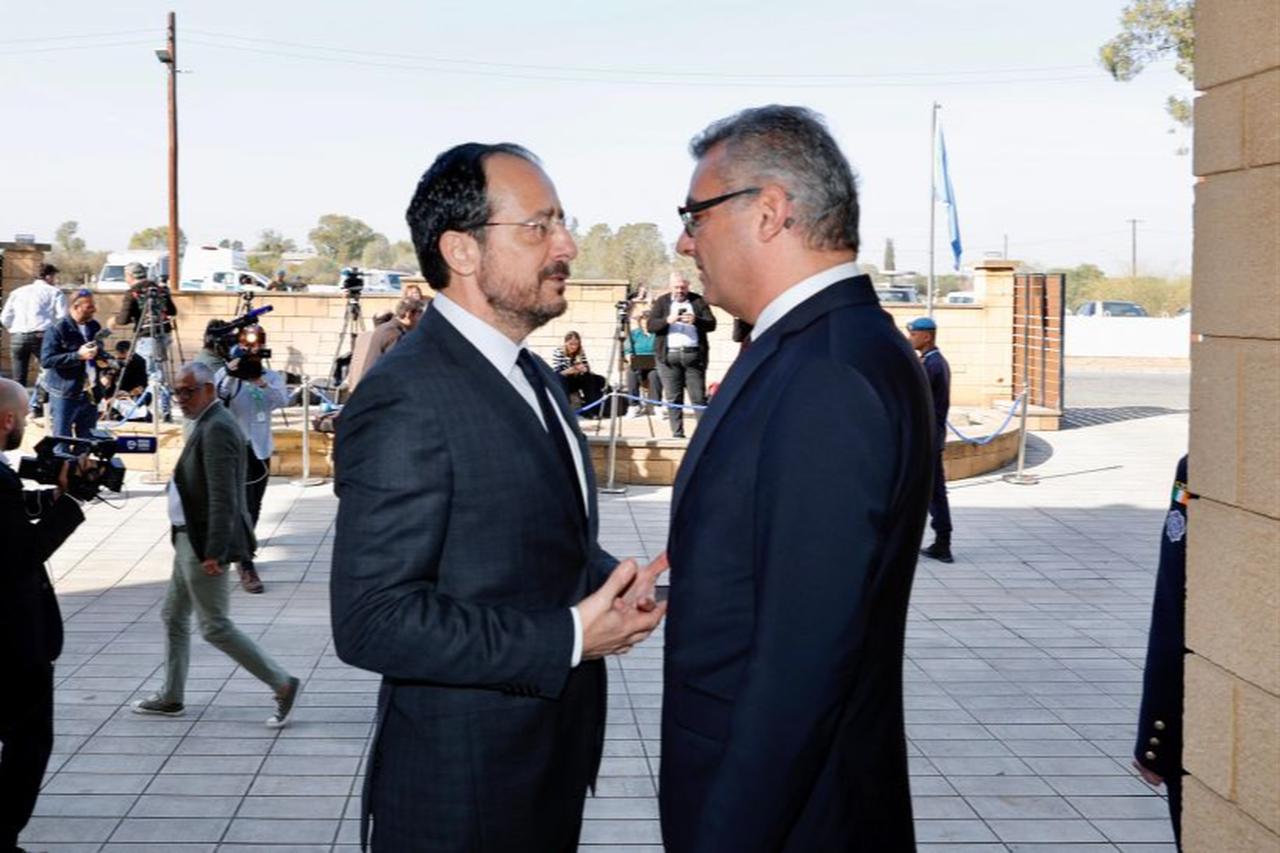
Any Greek Cypriot move toward NATO faces a structural barrier: Türkiye. Given the unresolved territorial dispute on the island and consistent violation of Turkish Cypriot rights, Türkiye would firmly oppose such integration into NATO mechanisms.
President Christodoulides has openly acknowledged this constraint, stating that he would apply to NATO only if acceptance were assured.
Despite this, GCASC is now pursuing a workaround. Rather than seeking immediate NATO membership, the focus has shifted to incremental engagement through PfP and enhanced cooperation, using EU-level incentives to make the proposal more palatable to Türkiye.
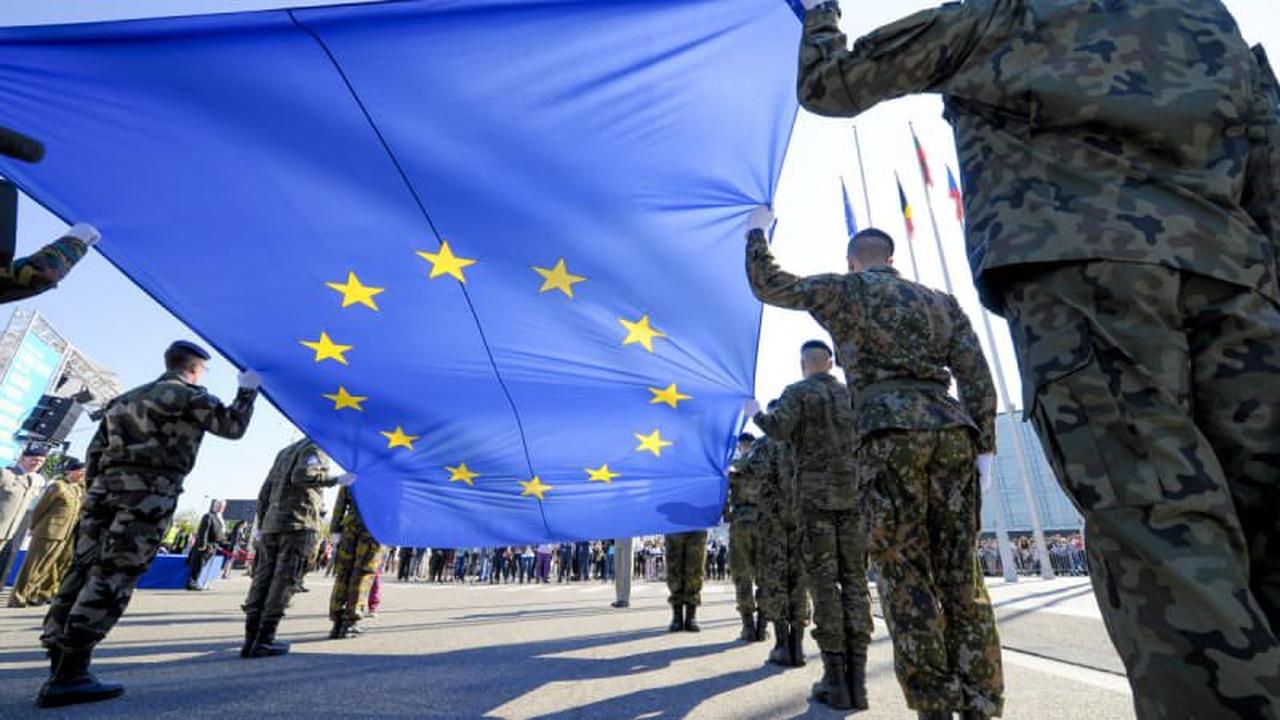
The core of GCASC’s proposal centers on the EU’s Security Action for Europe (SAFE) initiative, a €169 billion ($198.06 billion) defense procurement framework designed to strengthen Europe’s industrial and military capacity. Türkiye is currently excluded from SAFE, despite possessing a well-developed and internationally competitive defense industry.
Under the emerging plan, GCASC would use its six-month presidency of the EU Council to advocate for Türkiye’s inclusion in SAFE-related mechanisms. This would allow EU funds to be spent on Turkish-made defense systems and deepen Ankara’s integration into European defense supply chains.
In exchange, the hope is that Türkiye would lift its objections to GCASC joining NATO’s Partnership for Peace. While PfP falls short of membership, it would mark a historic first step for Southern Cyprus and significantly alter its security positioning.
Beyond SAFE, other confidence-building exchanges are being floated. One option involves Türkiye withdrawing its veto on NATO sharing classified information with the European Defence Agency, an EU body that includes GCASC as a member.
In return, GCASC could support more favorable EU visa arrangements for Turkish citizens, a long-standing demand from Ankara. Such measures would not resolve the Cyprus dispute, but they could create a framework for limited, issue-specific cooperation.
Even if the proposed exchanges succeed, most analysts see little chance of Türkiye supporting Cyprus’ full NATO accession without a comprehensive settlement on the island. The recent and continuing violation of the Turkish Cypriot rights on the Island remains the central strategic fault line shaping Ankara’s position.
Recent political developments in the Turkish Republic of Northern Cyprus, including the election of a pro-unification leader, have revived cautious optimism around negotiations. Still, any breakthrough is likely to be gradual and uncertain.
Complicating matters further is the broader geopolitical environment. Discussions around a potential Ukraine peace framework have raised speculative but consequential questions about NATO’s future expansion, including the possibility of temporary freezes on new members.
GCASC’s outreach represents a calculated attempt to align its security ambitions with Türkiye’s European priorities. By leveraging its EU Council presidency, Nicosia hopes to derive some interest in Europe’s much-needed win-win agreements that it has previously blocked.
Whether this approach delivers concrete results remains unclear. Türkiye’s strategic leverage and past bargains on NATO expansion, the unresolved Cyprus issue, and shifting global security dynamics all limit the scope of what can realistically be achieved.
What is clear is that in seeking a foothold in NATO structures, the Greek Cypriot Administration of Southern Cyprus is testing a new diplomatic playbook.


 Set as preferred source
 Set as preferred source


 2 min read
 1 min read