Newsletters


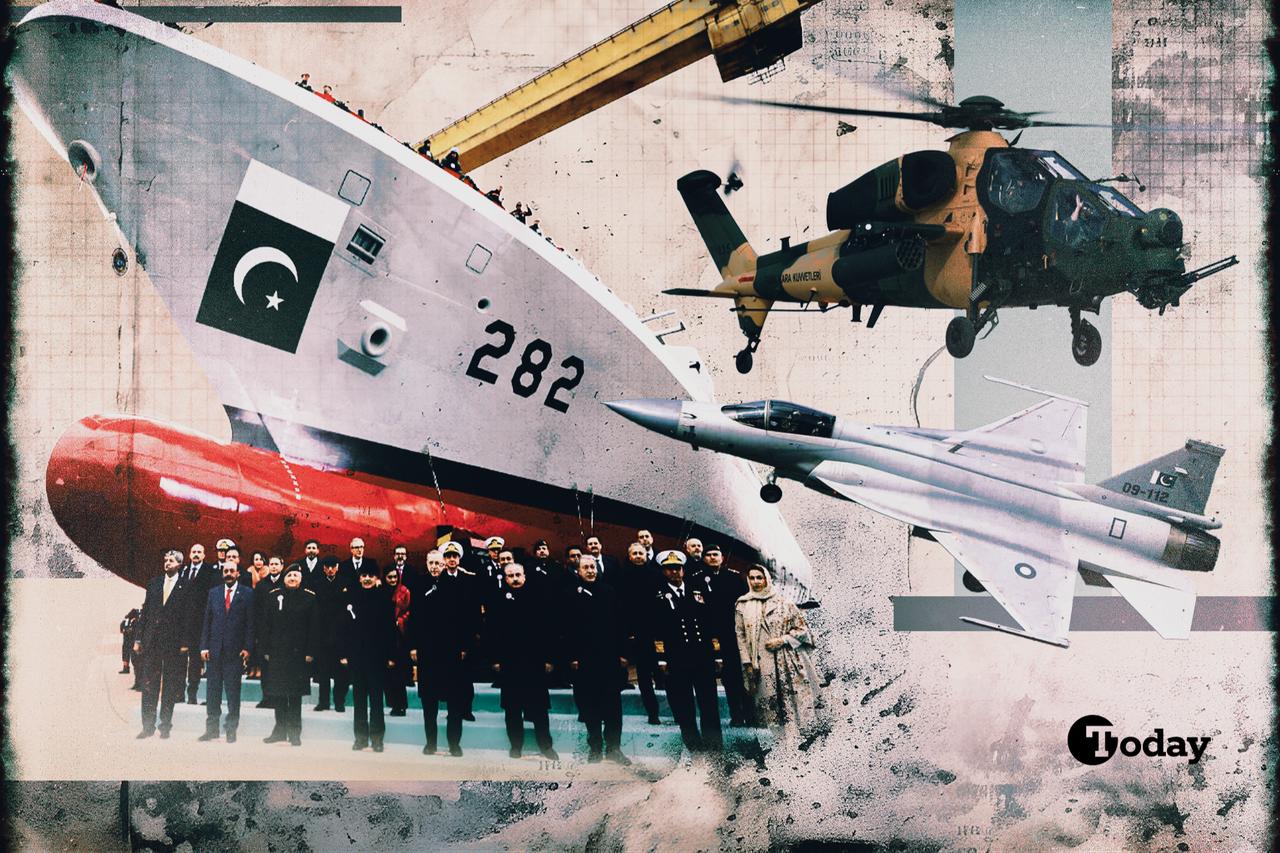


Arriving against a backdrop of sharper maritime posturing by India, the induction of the second MILGEM-class corvette into the Pakistan Navy will upgrade maritime deterrence by reinforcing the security of sea lanes leading to Karachi, the country’s primary commercial and energy lifeline.
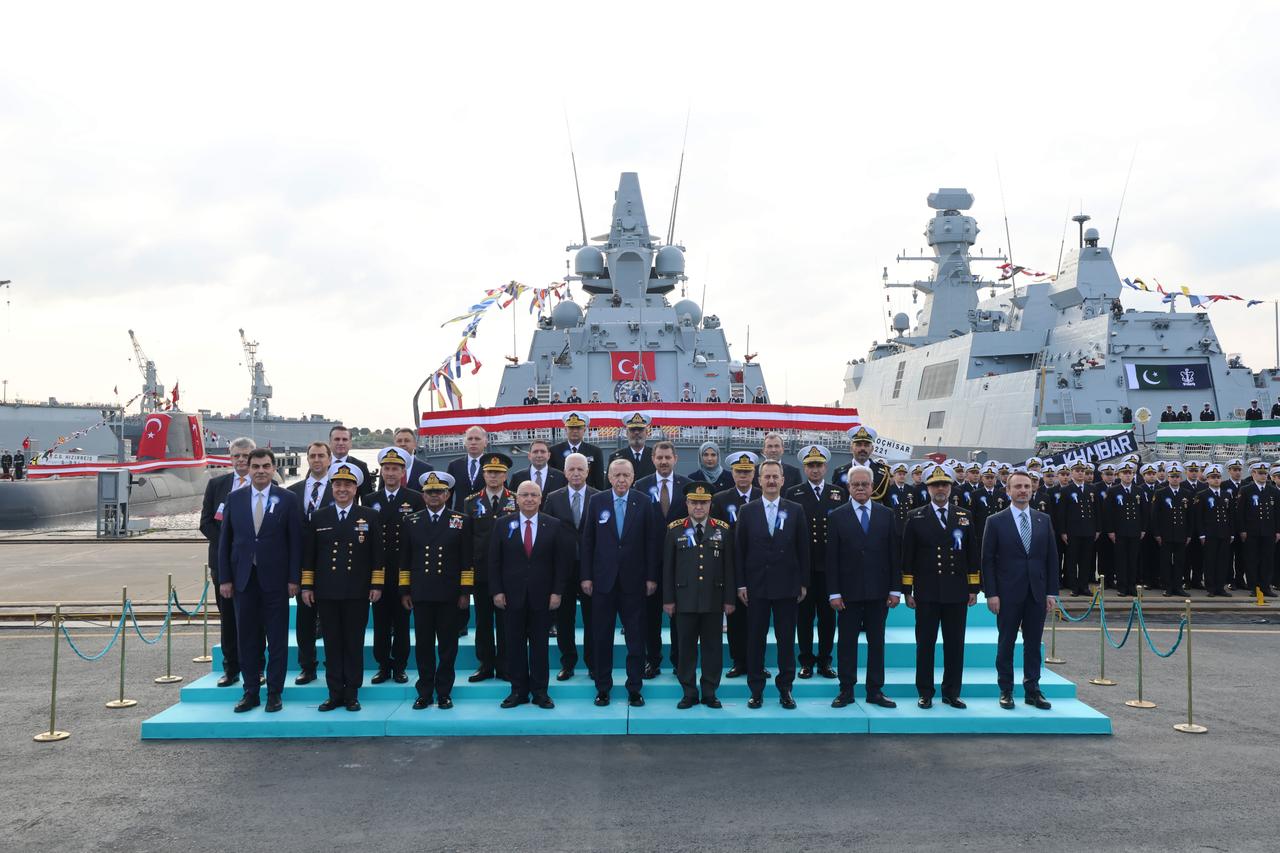
Held at the Istanbul Naval Shipyard on Dec. 20 in the presence of Turkish President Recep Tayyip Erdogan, the commissioning ceremony of the 2nd Pakistan Navy MILGEM-class ship PNS Khaibar also highlighted the depth of Pak-Turk defense ties.
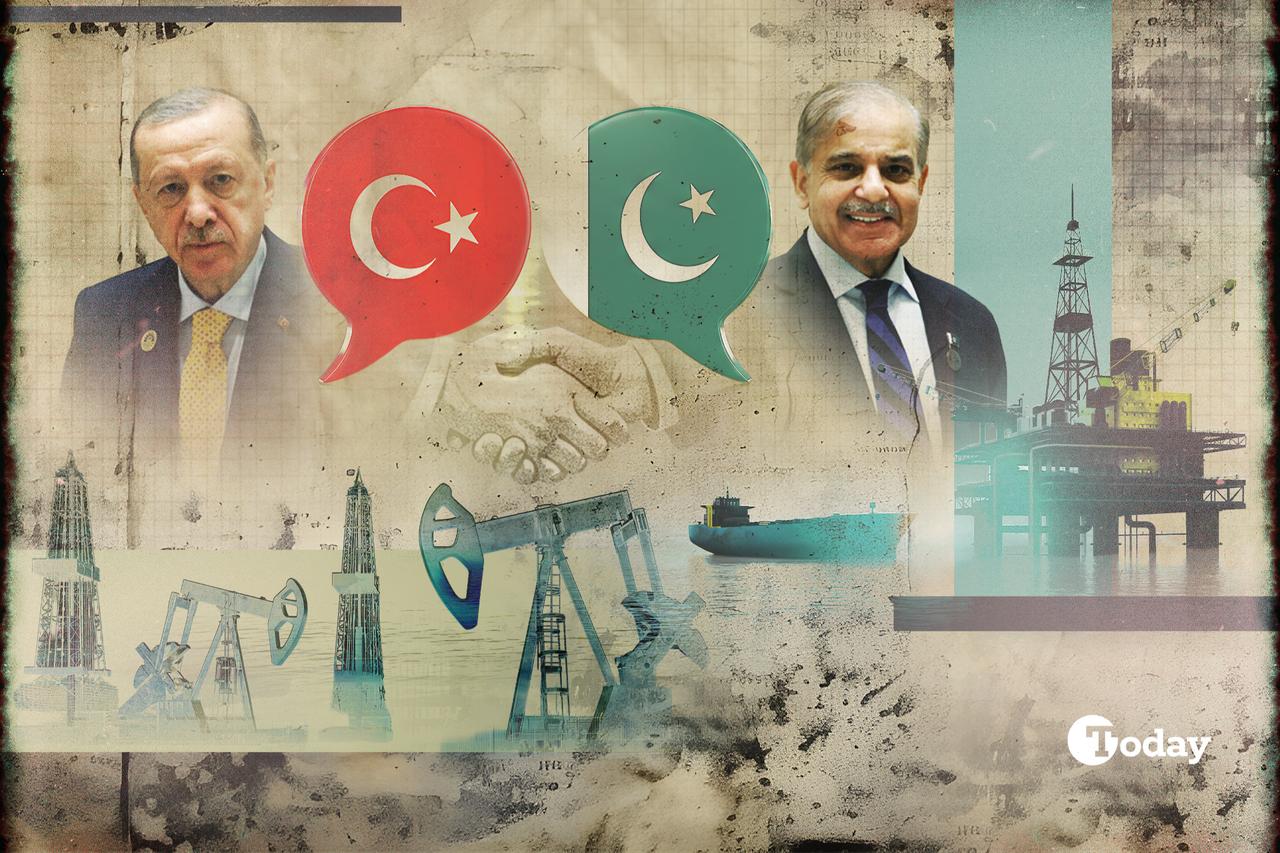
Addressing the gathering, Erdogan said that the long-standing friendship between Türkiye and Pakistan, rooted in shared history, will continue, grow, and strengthen in the years ahead. Describing relations between Islamabad and Ankara as “exemplary,” Erdogan said that he hoped the state-of-the-art vessels would benefit the “brotherly Pakistan Navy,” while stressing the need for more collaboration in defense production.
Meanwhile, lauding the deepening ties between the two navies, Pakistan’s Chief of the Naval Staff Admiral Naveed Ashraf said that sustained bilateral naval engagements reflected their enduring partnership and significantly enhanced mutual defense capabilities.
Following the ceremony, President Erdogan went on board PNS Khaibar, where he received a guard of honor and met the ship’s crew.
Standing for Milli Gemi (national ship), the MILGEM is a Turkish national warship program designed to build versatile and exportable corvettes indigenously, focused on anti-submarine warfare and stealth technology.
According to details provided by Pakistan Army’s Inter-Services Public Relations (ISPR) in a press release, the construction contract for four MILGEM-class ships for Pakistan was signed between the Ministry of Defense Production, Pakistan, and M/s ASFAT, Türkiye, in 2018.
As per this deal, the first two ships would be constructed in Türkiye, while the remaining two would be constructed in Pakistan. And now, with the induction of PNS Khaibar into the Pakistan Navy, the first phase of the program is complete.
In the second phase, the third ship, PNS Badar, would be ready in June 2026, while the fourth vessel, PNS Tariq, is scheduled for the first quarter of 2027.
Moving beyond simple procurement to co-production and technology transfer, the maturity of the MILGEM program is evident in the fact that the last two corvettes are being built locally in Pakistan.
Equipped with the latest Command and Control Systems and integrated with modern weapons and advanced sensors, PN MILGEM warships are highly advanced and technologically sound surface platforms.
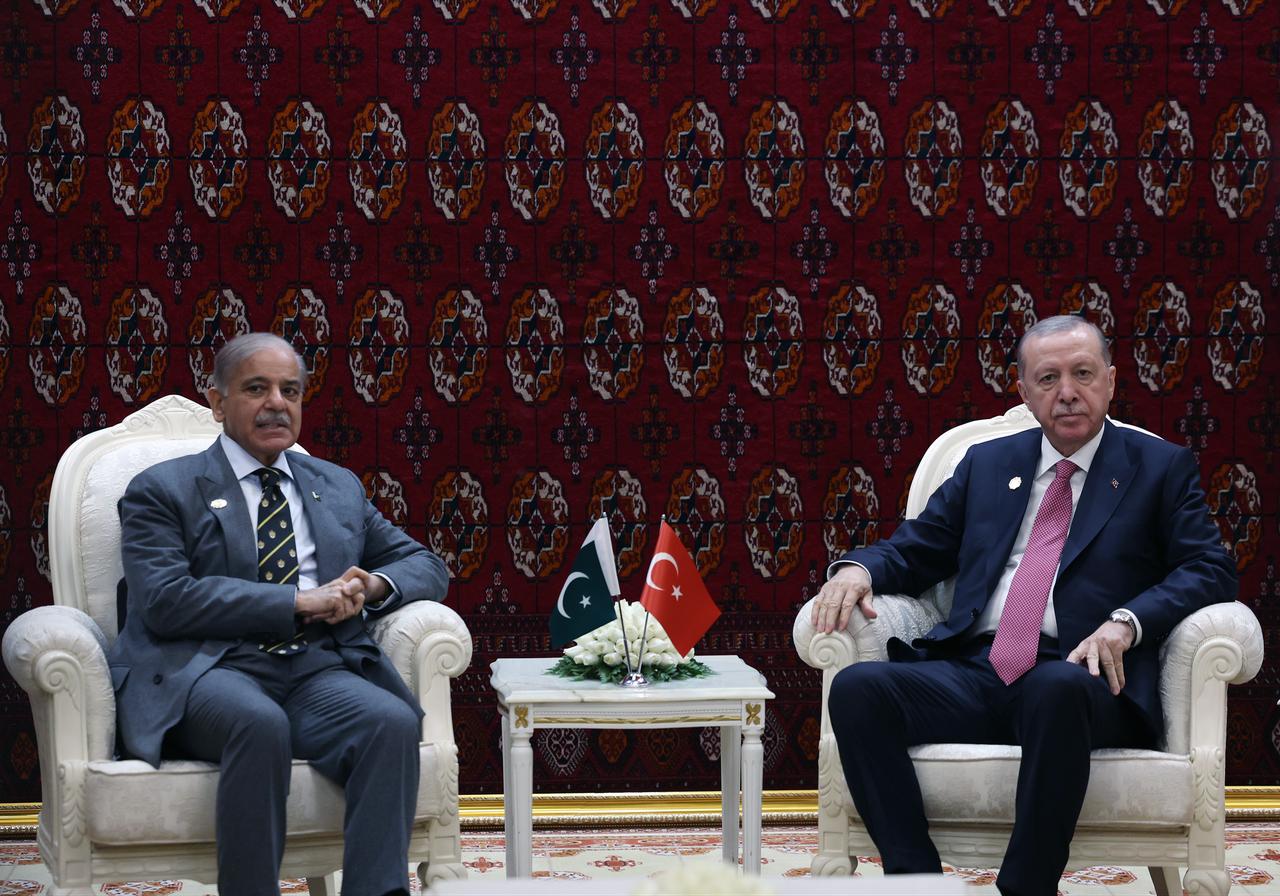

Reflecting the depth of defense ties, rooted in decades of political alignment and military trust dating back to Pakistan’s early years, PNS Khaibar is just the latest expression of the Pak-Turk partnership.
Initially, upgrading defense ties became essential when Islamabad faced hurdles in the maintenance of F-16 aircraft provided by Washington, and Ankara came to the rescue.
And since then, Türkiye has become Pakistan’s second biggest arms supplier after China. Apart from this $1.5 billion corvette deal in 2018, Pakistan had placed an order for 30 T129 ATAK helicopters.
In addition, Türkiye has shown interest in aerospace collaboration for Pakistan’s JF-17 aircraft. Driving industrial cooperation, R&D exchange, and providing employment in both countries, such contracts form a significant part of Pak-Turk military cooperation.
In tandem, both the intelligence services and military departments maintain strong links.
In May 2025, conditions in South Asia deteriorated due to a short but fierce aerial spat between India and Pakistan, further ratcheting up levels of future military conflict. In turn, these simmering frictions have prompted more military alliances, becoming increasingly active in the geopolitics of this region. Ankara has moved closer to Islamabad.
Zeeshan Shah, a keen observer of Türkiye-Pakistan relations, told Türkiye Today that the term “Bir Millet, Iki Devlet” or two states but one nation is routinely used to describe the closeness between the two countries, not just on the political and military level, but on a people-to-people level as well.
Going all the way back to the Ottoman and Mughal empire eras, “solidifying after Pakistan gained independence in 1947 and expanding in the 1950s,” Shah noted that, in addition to China and Saudi Arabia, Türkiye is one of Pakistan’s closest allies.
And now, this special relationship includes Azerbaijan, since both countries assisted Baku in its 2020 war against Armenia, adopting a "three brothers" format.
Discussing the significant amount of interoperability between both countries due to their joint military exercises, Shah said that this allows Pakistan to regularly train its military on NATO standards, and both countries have been U.S. allies for decades.
Shah recalled that this factor had allowed Pakistan to “offer its Air Force pilots to fly Turkish fighter jets in the aftermath of the 2016 coup attempt when Türkiye had a temporary shortfall of pilots to fly its fighter jets.”
He added that, “from MILGEM-class corvettes to the upgrading of Pakistan’s Augusta 90 submarines, supplying targeting pods for Pakistan’s JF-17s, and the provision of a number of drones from both, the Baykar and TAI, Türkiye is now the second-largest arms supplier to Pakistan after China.”
Shah said rumors have long circulated that Pakistan could partner in the KAAN fighter jet program, with a possible production line in Pakistan alongside Türkiye’s drone manufacturing there. Therefore, he said that, “Pakistan’s military relations with Türkiye are only second to that of Islamabad’s military relations with Beijing, but almost equally important.”

Pakistan’s long and exposed coastline stretches over 1,000 kilometers along the Arabian Sea, encompassing major ports at Karachi, Port Qasim and Gwadar. Spanning from the Indian border in the east to Iran in the west, it is divided between Pakistan’s provinces of Sindh (250 kilometers) and Baluchistan (800 kilometers).
Carrying the bulk of the country’s trade, energy imports, and economic activity, these ports make maritime security central to national defense planning for Pakistan. Any disruption to shipping lanes or port access would have immediate economic and strategic consequences.
Even during the short war between India and Pakistan in May this year, the Indian Navy was reportedly on standby, locking onto strategic land and sea targets, including Pakistan Navy vessels docked in Karachi.
However, the Indian Navy could not advance due to the strict surveillance and constant presence of the Pakistan Navy, and even their aircraft carrier INS Vikrant remained confined to Indian territorial waters. Nevertheless, trying for a naval blockade of Karachi will always remain a fallback strategy for the Indian military.
According to the National Institute of Maritime Affairs, a think-tank based in Islamabad, India could unleash preemptive naval strikes in any future conflict, raising the stakes in an already volatile region.
Attempting to cripple Pakistan’s maritime power projection at the outset of war through multiple precision strikes, India’s strategy would focus on paralyzing Pakistan's naval infrastructure and degrading its ability to sustain operations in the Arabian Sea. Among targets, PNS Jinnah at Ormara and PNS Qasim at Karachi top the list.
As seen in the 1971 war, missile attacks remained a focal point of the Indian targeting doctrine. Warning of “asymmetric disadvantage,” the think-tank report has stressed that India’s navy plans to double its fleet to 160 vessels within the next decade.
It is in this scenario, against an increasingly assertive Indian naval posture in the Arabian Sea, that the PNS Khaibar will serve as both a combat asset and a strategic signal, reinforcing Pakistan’s ability to secure its coastline, deter coercive maritime strategies, and protect vital ports that underpin national stability.


 Set as preferred source
 Set as preferred source


 2 min read
 1 min read