Newsletters


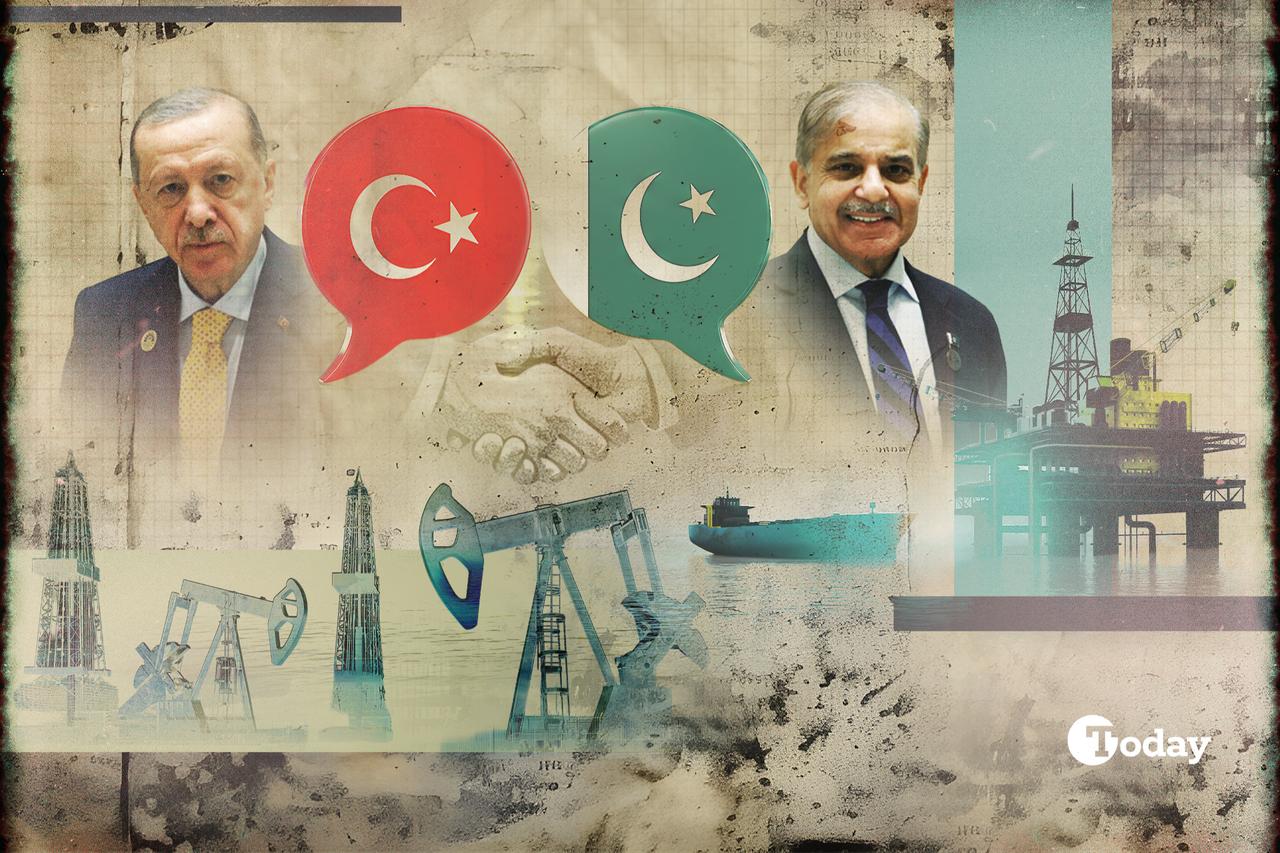


Marking a pivotal moment in Islamabad’s long-stalled quest to unlock its offshore energy potential, and Ankara’s expanding ambition to export its energy expertise across Asia, Pakistan-Türkiye deals are laying the groundwork for a strategic partnership both countries have long signaled.
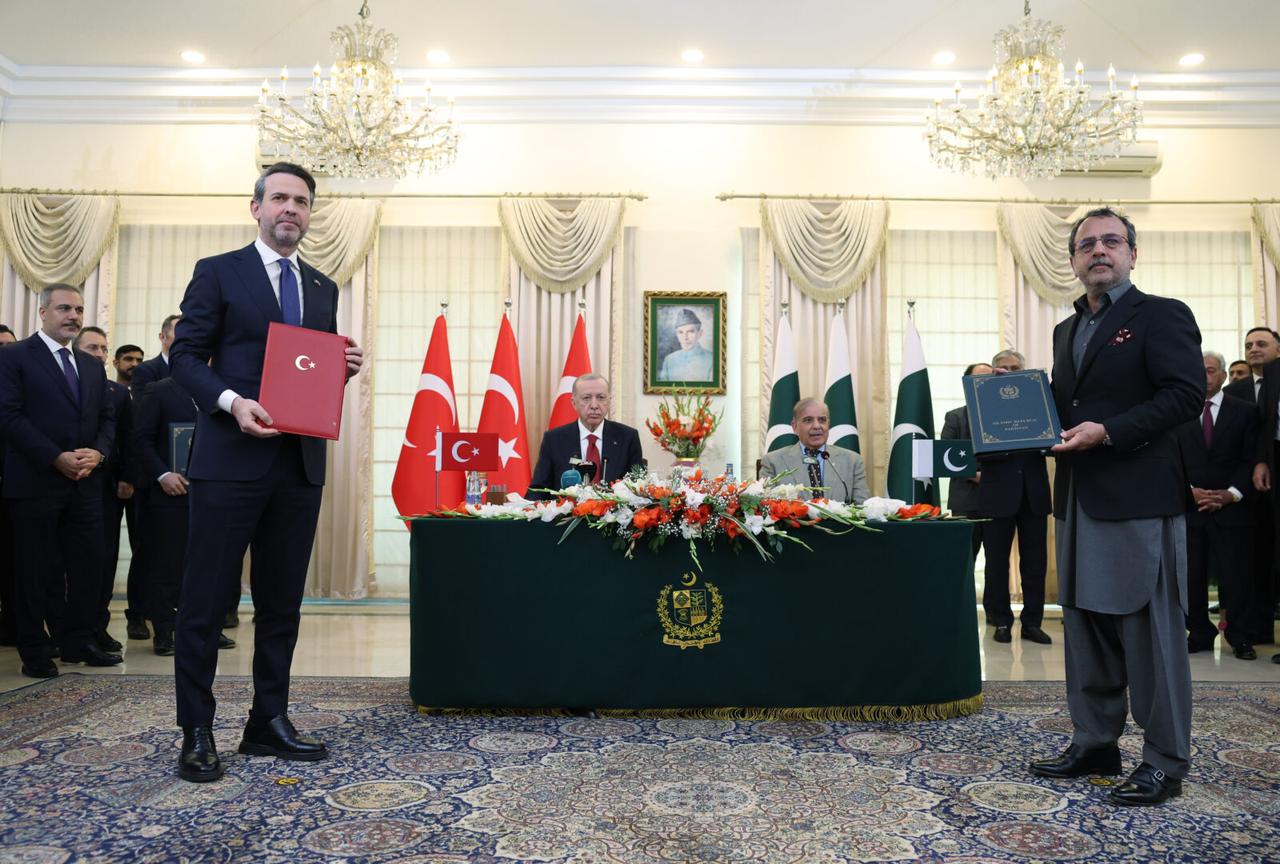
Arriving in Islamabad with a high-level delegation, Turkish Energy Minister Alparslan Bayraktar witnessed the signing of Türkiye’s first deep drilling and offshore exploration agreements with Pakistan this week. Starting early 2026, state-owned Turkish Petroleum Overseas Company (TPOC) would begin exploration in three offshore blocks and two onshore fields across Pakistan.
Having clinched hydrocarbon and exploration deals with five Pakistani energy companies, Mari Energies, Fatima, Oil and Gas Development Corporation (OGDC), Pakistan Petroleum Limited (PPL), Prime and GHPL, the TPOC has a 34% working interest, OGDC 26% and Mari Energies 20%, granted by Pakistan’s Economic Coordination Committee in advance.
Alongside, both countries are working on a joint procurement model for energy products, including LNG, to leverage scale and reduce costs, in order to reach the trade target of $5 billion set by President Recep Tayyip Erdogan during his visit to Pakistan this year.
During his meeting with Pakistan’s Minister for Petroleum Ali Pervaiz Malik, Bayraktar observed that energy and mining collaboration would also be critical in reaching-and potentially surpassing the goal. Both ministers decided to open an office of Turkish Petroleum in Islamabad this month, where Turkish and Pakistani staff would work together.
Announcing that the new energy cooperation would be complemented by a broader partnership in mining as well, Bayraktar said that Pakistan has considerable mineral diversity and untapped potential. He added that Turkish mining companies, MTAIC and Eti Maden would soon become active in Pakistan’s mining sector, similar to their efforts in both Africa and Central Asia.
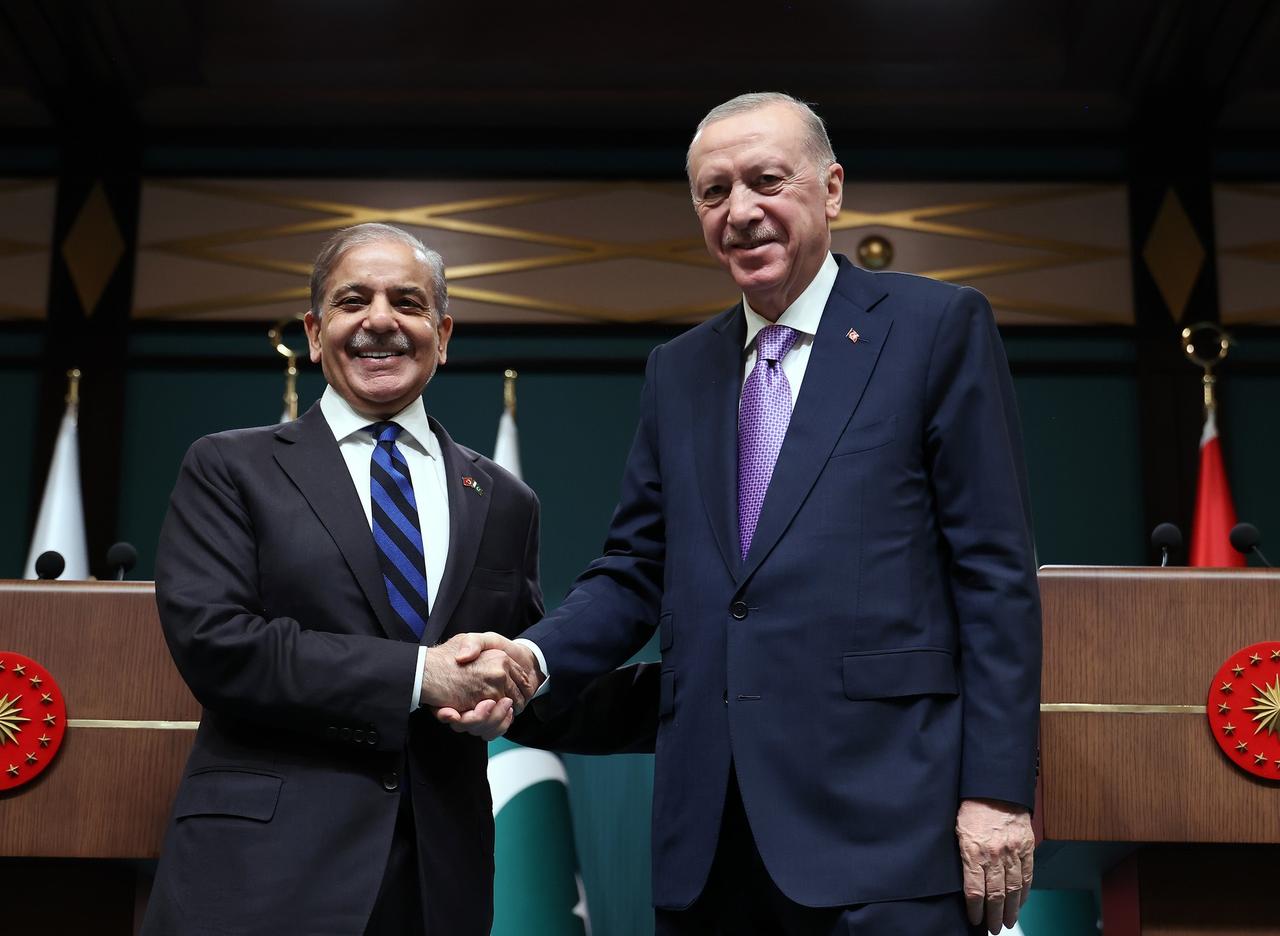

Having already deepened their security and defense partnership in recent years, Pakistan and Türkiye are now pushing energy and minerals to the forefront of their relationship. Lately, Turkish state-backed companies have been expanding their operations in Central Asia, North Africa, and the Eastern Mediterranean, and Pakistan represents an entry point into a strategically critical, under-explored basin along the Arabian Sea.
Though Turkish firms are not part of Pakistan’s Reko Diq copper and gold project, a copper and gold mining lease might be provided in the 15-kilometer-long mining zone.
Discussing Türkiye and Pakistan’s latest bilateral deals with Türkiye Today, Dr. Umud Shokri, senior visiting fellow at George Mason University and energy strategist, said that it was “a notable, strategic step” which would “bring together advanced technology, technical expertise and international best practices ”to assess Pakistan’s largely unexplored offshore hydrocarbon potential in the Makran and Indus basins, “a process that could unlock sizable reserves and bolster investor confidence in the region.”
According to Shokri, both sides would gain meaningful advantages, as “Pakistan would like to attract foreign direct investment in its upstream energy sector and Türkiye would potentially benefit from downstream activities such as infrastructure development and energy transit.”
Shokri added that Pakistan’s strong solar resource base could create additional avenues for Turkish investment, and “over the longer term, strengthen Türkiye’s ambition to position itself as a regional energy player and transit hub.”
For Pakistan, these agreements could reshape its entire energy trajectory at a time when the country is still locked into costly fuel imports and volatile LNG markets. This partnership arrives as Islamabad grapples with chronic shortages, and there is a renewed push to attract foreign investment.
Though it has an offshore zone of 300,000 square kilometers bordering energy-rich Oman, the UAE and Iran, Pakistan has been sluggish in properly assessing its hydrocarbon potential, as only 18 wells have been drilled since its independence in 1947. In recent years, Italy’s ENI and U.S giant ExxonMobil, along with Pakistan’s OGDC and PPL, had given it a joint try, without much success.
Now, by bringing in a technologically capable partner with deep-water experience in the Black Sea, Pakistan may finally gain the capacity to pursue large-scale offshore finds that have eluded it for decades due to technological constraints and inconsistent policies.
Commenting that the agreement was a “fairly significant move”, Zeeshan Shah, an analyst at FINRA in Washington, told Turkiye Today that from the Turkish perspective, it showed that Türkiye was becoming a major player in oil and gas exploration, and it added to “Türkiye’s growing portfolio of offshore oil and gas exploration, including off the coast of Somalia and off the Turkish Black Sea.”
Referring to the ENI-Exxon-Mobil-OGDC-PPL exploration bid, Shah said that this energy accord showed that Pakistan is able to attract interest in hydrocarbon development after the “white elephant” experience of the Kekra offshore block a few years ago.
Moreover, the Pakistan-Türkiye oil drilling deals could face risks such as the challenge of managing geopolitical tensions in a region prone to energy competition. Also, any delays or underperformance in exploration might put a strain on the Pakistan economy, already vulnerable to energy import shifts.
Shah highlighted the economic and geopolitical implications of this development, recalling reports from last year suggesting the potential for vast oil and gas reserves in Pakistan’s exclusive economic zone in the Arabian Sea. He noted that this was based on a three-year geological survey done by a “country friendly to Pakistan, never named but rumored to be either China or Türkiye.”
Shah said that if reserves of that magnitude are discovered, it would "dramatically change the face of Pakistan’s economy, as well as give Türkiye a reliable source and supply of oil and gas.” In that case, “Pakistan might even become a serious competitor to Iran, Iraq and the smaller Gulf Arab states in this field, even become a major supplier to China, but the major risk of this whole scenario is if nothing is discovered and it proves to be a hype.”
Meanwhile, Shokri noted that since the agreement was both a strategic economic venture and a geopolitical signal, its long-term success would depend on an array of technical, political and regional security challenges. He observed there were considerable risks, “particularly technical complexities associated with deep offshore drilling, which demands advanced technology and rigorous safeguards to manage environmental and operational hazards.”
In Shokri’s opinion, there could be political volatility or policy shifts within Pakistan, while regional security tensions with India could complicate project execution. In addition, he said that “global energy price fluctuations and ongoing energy-transition trends could introduce economic uncertainty for such capital-intensive fossil-fuel exploration efforts.”
Nevertheless, with these deals, Pakistan-Türkiye cooperation extends from defense into long-term energy security, and by entering Pakistan’s offshore and onshore fields, Ankara strengthens its footprint in South Asia’s emerging energy landscape, linking its technical expertise to broader geopolitical influence.
Not only that, this partnership counters regional energy dependencies by giving Islamabad an alternative to Gulf and Chinese investment channels.
Finally, as per Shokri, these deals could enhance Pakistan’s energy security while broadening its network of international energy partners and turn Türkiye into a “key energy stakeholder” in South Asia and the wider Indian Ocean region.
As a result, this move could “heighten tensions with India. Given existing rivalries across South Asia and could draw Türkiye and Pakistan into closer alignment with China, which already backs Pakistan’s energy and connectivity projects through initiatives such as the China-Pakistan Economic Corridor.”


 Set as preferred source
 Set as preferred source


 1 min read
 1 min read