Newsletters





What has unfolded in Yemen over the past 48 hours is not just the fall of a port city; it is a test of whether any regional or global power actually intends to stop the Houthis from controlling Bab el-Mandeb. So far, the answer looks like no.
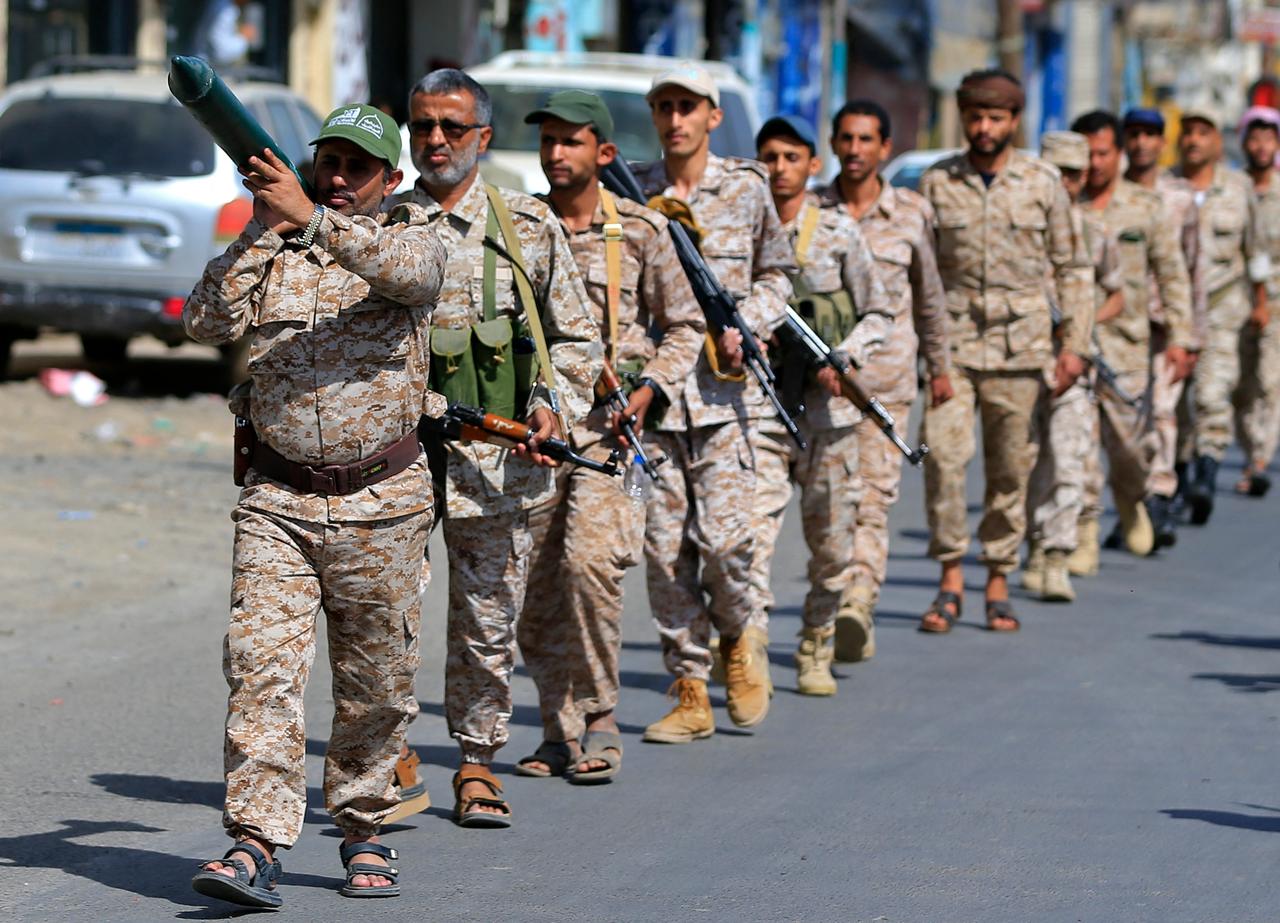
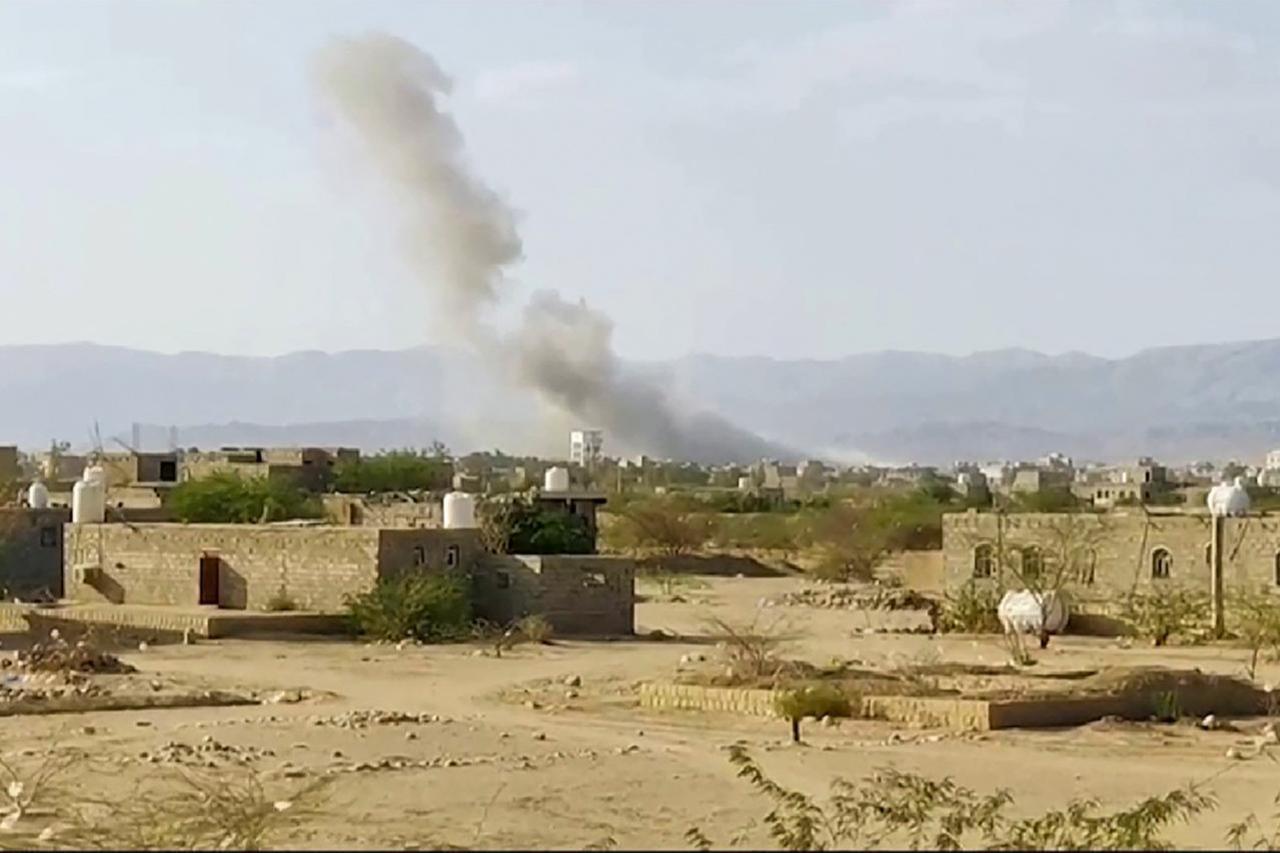
The capture of Mocha by Houthis is both the culmination of the Houthis’ six-year campaign along the western coast and a strategic turning point that brings the southern gateway to the Red Sea under direct pressure.
With three Yemeni government officials confirming the development, there is little doubt left that the port city is now under Ansarallah’s control.
According to a recent battlefield map, the distance separating government-held territory from the Bab el-Mandeb Strait has narrowed to roughly 60 kilometers (37 miles).
This advance did not happen in a vacuum.
The past two days have illustrated the dynamics of a classic battlefield trade-off. While government forces achieved significant gains in al-Jawf Governorate along the Saudi border, Houthi forces simultaneously pushed south along the Red Sea coast, advancing through Hays, al-Khawkhah, Mocha, and al-Waziyah.
The coastal offensive came just one day after the government's breakthrough in al-Jawf. The timing was hardly accidental. Both sides appear to be exploiting weaknesses elsewhere on the front rather than confronting each other’s strongest positions directly.
Al-Jawf is strategically valuable because it connects the Saudi border to Saada and Amran while also providing access to the energy-rich provinces of Marib and Hadramawt. Yet Mocha carries a different level of significance.
It is Yemen’s closest major urban center to Bab el-Mandeb and sits at the entrance to the maritime corridor linking the Red Sea with the Gulf of Aden and, ultimately, the Suez Canal. Nor is Mocha an isolated development.
During the last 48-hour period, Ansarallah announced that it had also seized Zukar Island south of the main international shipping route. Mocha’s location could allow the Houthis to establish what amounts to a new and potentially lethal choke point at the entrance to the Red Sea.
The heavy fighting currently underway around Jabal al-Rawa in the al-Waziyah area forms part of the same strategic picture.
Should the position fall, Houthi forces could gain access to the Bani Omar highlands and potentially sever Taiz’s primary supply route. In that sense, Mocha is not the end of the offensive but rather the most visible milestone in a broader campaign to reshape the balance of power along Yemen’s western coast.
The government’s response has been swift, but its effectiveness remains uncertain.
National Resistance commander Tariq Saleh has ordered forces along the western coast to regroup and establish an alternative command structure in coordination with the Presidential Leadership Council and the Arab Coalition.
The move is difficult to interpret as anything other than an acknowledgment that the existing command framework failed to contain the Houthi advance.

The diplomatic picture is equally striking. Nearly every regional actor expresses concern, yet few appear willing to take meaningful action.
Lebanese Druze leader Walid Jumblatt captured this contradiction succinctly when he condemned both the growing pressure on Gulf states and attempts to close the Bab el-Mandeb Strait, warning that such policies would only prolong the conflict.
While calls for a return to a compromise between the U.S. and Iran are seen as a solution for broader regional peace, this proposal, which has proved ineffective in the Strait of Hormuz, remains questionable.
Pakistan’s position reflects the same caution. Islamabad has stated that no discussions are currently underway regarding a military response to Houthi attacks under the Mecca Defense Agreement, while emphasizing that action could be taken “when the time comes.”
The statement amounts to neither a commitment nor a rejection. It is, above all, a declaration of strategic patience.
Iran’s messaging remains similarly ambiguous. Foreign Ministry spokesman Esmaeil Baghaei continues to insist that Ansarallah operates independently and takes orders from no external actor.
Yet those claims sit uneasily alongside Reuters reporting, based on unnamed Iranian sources, suggesting that Tehran has encouraged greater pressure on Saudi Arabia while offering additional military and financial support to the Houthis.
That contradiction may be the most revealing aspect of the current moment. No regional actor wants to assume responsibility for the consequences of Bab el-Mandeb effectively falling under Houthi influence, yet none appears prepared to take decisive steps to prevent it.
 2 min read

Washington’s posture reinforces this impression. Recent comments from Donald Trump suggesting that the confrontation with Iran could ease after the U.S. midterm elections, while simultaneously threatening new strikes against Iranian nuclear facilities, indicate that Yemen remains a secondary theater within a broader regional contest centered on Iran and the Strait of Hormuz.
The persistence of Brent crude above $100 per barrel may already reflect this reality. Markets appear to be pricing in not only the risks associated with Hormuz but also the growing possibility of sustained disruption in the Red Sea.
The broader trend is becoming increasingly clear. The Houthis are extending the boundaries of the de facto state they established in northern and western Yemen toward one of the world’s most critical maritime corridors.
Their opponents, meanwhile, have struggled both to halt the advance on the battlefield and to assemble a credible deterrent coalition diplomatically.
Full control of Bab el-Mandeb would represent more than a symbolic victory. It would provide the Houthis with a powerful operational lever and a tangible source of regional influence.
The central question now is whether Tariq Saleh’s restructured command can generate a meaningful counteroffensive, or whether the fall of Mocha will ultimately be remembered as the moment Yemen’s western coast entered a new and difficult-to-reverse phase of the war.


 Set as preferred source
 Set as preferred source


 1 min read